



Description
Collector's Note – Why This Issue Matters
Mad Magazine No. 135, June 1970, with its "Sleazy Riders" cover, is a primary document of American satirical culture at one of its most historically charged and creatively productive moments — and the specific parody target tells the story of the issue's cultural position precisely. "Sleazy Riders" is a parody of Easy Rider, Dennis Hopper and Peter Fonda's 1969 film that had become one of the most discussed and culturally consequential American movies of the era, and by June 1970 its status as a generational statement was fully established and therefore ripe for the kind of affectionate but sharp deflation that Mad specialized in. The timing of the parody — approximately a year after the film's July 1969 release — places it in the specific window when a cultural phenomenon has achieved maximum public recognition but not yet passed into pure nostalgia, the window in which satire is most effective and most revealing about the anxieties and enthusiasms of its moment. The cover art itself would have reflected the specific visual vocabulary of the biker film genre and the counterculture aesthetic it represented, translated through Mad's characteristic exaggeration and comic deflation. For collectors building a serious archive of the magazine's engagement with American popular culture across this pivotal decade, the Mad magazine collection provides the most comprehensive resource for situating this issue within the publication's broader satirical history.
June 1970 was itself one of the most historically charged months in recent American history, providing the cultural backdrop against which this issue's humor operated. Kent State had occurred on May 4, 1970 — just one month before this issue's publication — and the subsequent nationwide student strikes and the broader escalation of antiwar sentiment were producing a cultural crisis whose intensity gave even Mad's characteristic comedy a specific political context. The magazine's satire of Easy Rider in this environment was not merely entertainment criticism but a specific cultural gesture — an engagement with the film's countercultural symbolism at a moment when that symbolism was being tested by the most violent domestic confrontations of the era. Mad had always operated in this space between pure humor and cultural commentary, and a June 1970 issue deploys that approach in a historical environment that makes even the choice of parody target historically revealing. The broader context of this pivotal year in American counterculture and political history is documented across the 1970 magazine collection, which brings together publications from one of the most consequential years in twentieth-century American history.
The Fine/6.0 grade for this issue is a specific and meaningful condition designation within the comic and magazine collector market's standardized grading vocabulary. Fine condition for a 1970 periodical indicates a copy with minor wear but without significant defects — slightly stressed staples, minor corner rounding, or minor surface wear are typical Fine attributes, while creases, tears, or significant soiling would prevent a Fine designation. The no-label condition adds a genuine positive: the "Sleazy Riders" cover art survives fully intact as printed, without subscriber label obscuration. Together, Fine/6.0 and no-label identify this as a collector-grade example at a respectable level within the surviving population for this issue.
About the Publication
Mad magazine was founded by Harvey Kurtzman and published by EC Comics, launching in 1952 initially as a comic book before transitioning to magazine format in 1955 under publisher William Gaines. By June 1970 it had been publishing for eighteen years and had developed the specific combination of pop culture parody, political satire, and institutional irreverence that made it one of the most culturally influential publications in American history — its influence on subsequent generations of comedians, satirists, and cultural commentators has been documented extensively and consistently acknowledged. Its audience in 1970 was primarily the same young, culturally engaged readership that had grown up with the magazine in the fifties and sixties, now navigating the political upheavals of the Vietnam era alongside the continuing pop culture parodies that had always been the magazine's commercial and creative core. The specific combination of film parody and social commentary that characterized its late-sixties and early-seventies output represents some of the most historically revealing satirical journalism of the period.
Key Highlights Inside
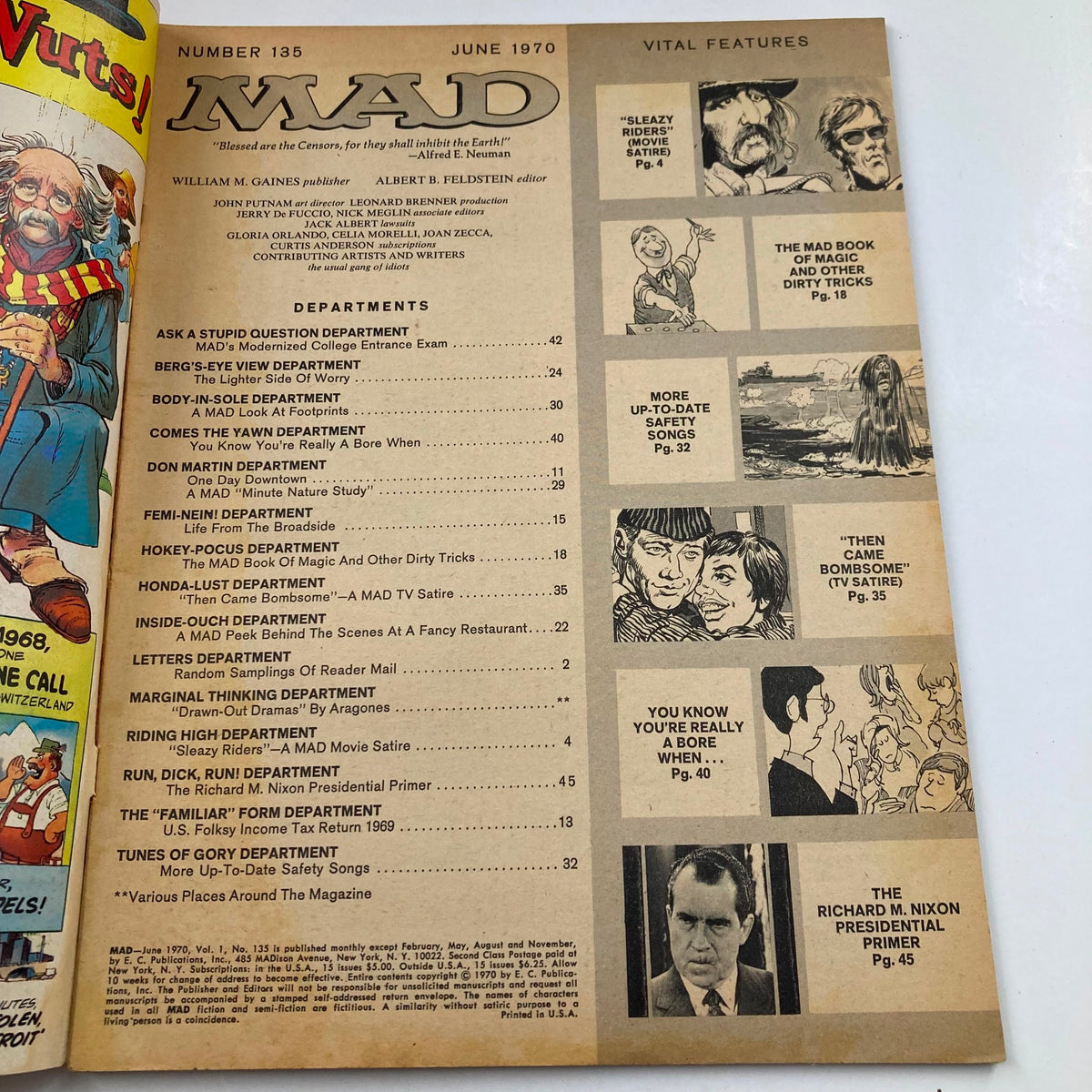
- "Sleazy Riders" cover and parody feature — a satire of Easy Rider (1969) published approximately one year after the film's release, engaging with one of the most culturally significant American films of the counterculture era at the precise moment of its maximum public recognition, within the specific historical context of post-Kent State America.
- Additional parody and satire content consistent with Mad's June 1970 format — the pop culture parodies, advertising satires, political cartoons, and social commentary features that constituted the magazine's editorial offering in the final year of one of its most culturally productive decades.
- Counterculture-era cultural commentary — Mad's specific satirical engagement with the late-sixties and early-seventies cultural landscape, providing primary evidence of how the magazine's comedic sensibility was processing the decade's social and political upheaval for its young, culturally engaged readership.
- Note: Specific article titles, contributing artists, and additional parody subjects beyond those indicated in the listing have not been confirmed from available sources. The highlights above reflect what is documented in the listing and Mad's well-established editorial format for this period.
Condition & Rarity
A Fine/6.0 grade, no-label copy of Mad No. 135 from June 1970 represents a solid and collector-grade example of this historically significant issue. Fine condition within the standardized comic and magazine grading scale indicates a copy with minor wear consistent with age — minor corner stress, slight staple rust, or minor surface wear typical of the grade — but without the more significant defects (creases, tears, soiling) that would reduce the grade below Fine. This is a meaningful and honest designation that collector-graded examples carry with the specific attributes visible in the photographs. The no-label condition is a genuine positive, preserving the "Sleazy Riders" cover art fully intact. The protective plastic sleeve is the correct conservation measure for a publication of this age and paper stock, stabilizing further deterioration without altering the original item.
Looking for More Issues Like This?
A Fine/6.0 no-label copy of Mad No. 135 with the "Sleazy Riders" Easy Rider parody — published in the month following Kent State, engaging with the counterculture's most celebrated film at the peak of its cultural resonance — is the kind of historically layered satirical primary source that serious collectors of both Mad specifically and sixties-seventies American popular culture broadly seek out. If this particular issue is no longer available, the full Mad magazine collection at OriginalMagazines.com is the most comprehensive source for exploring other issues across the publication's extraordinary half-century run. For collectors building a broader archive of the 1970 cultural and political moment, the complete 1970 magazine collection brings together titles from one of the most consequential years in twentieth-century American history.