


Description
Collector's Note – Why This Issue Matters
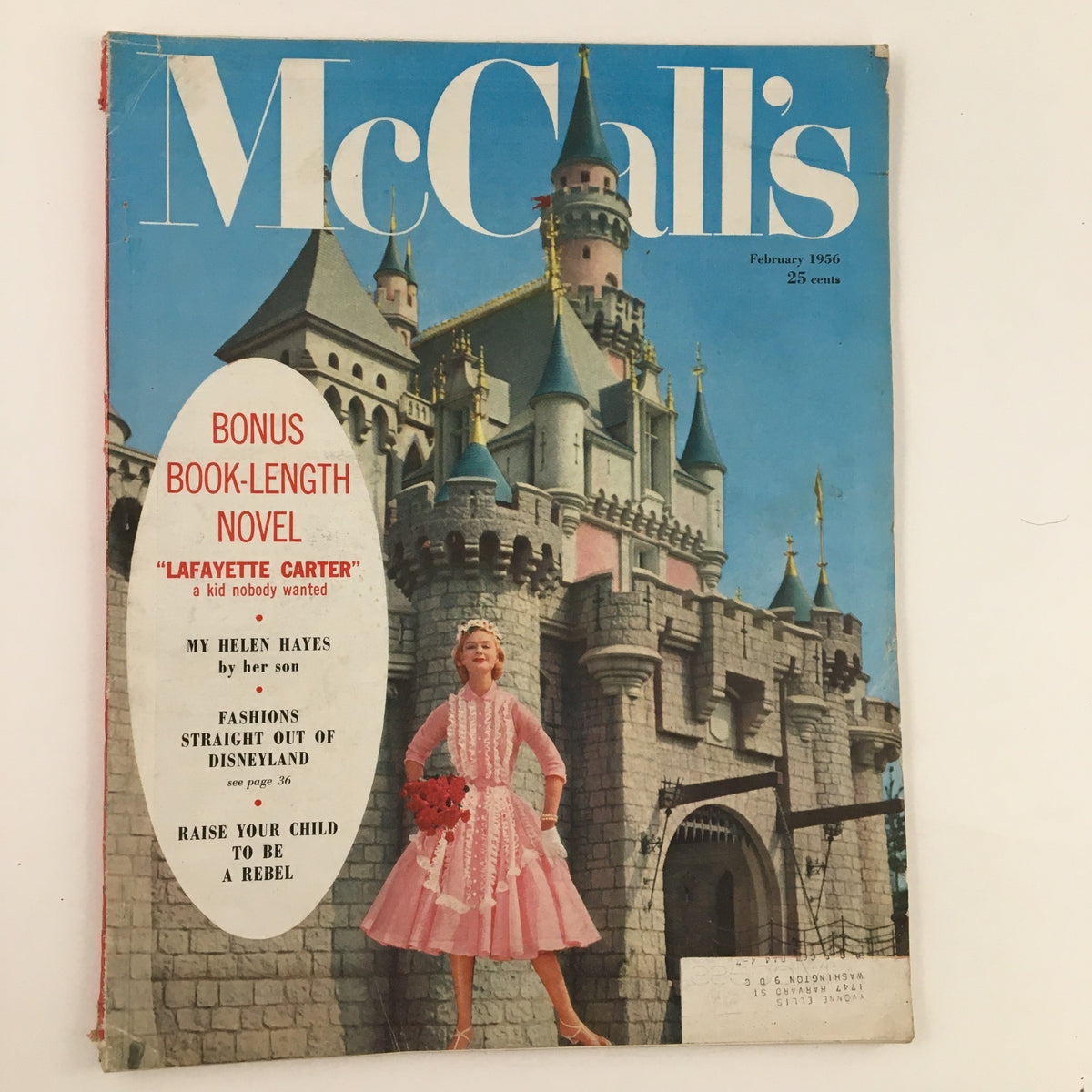
The February 1956 issue of McCall's Magazine is a primary document of American women's publishing at a specific and historically interesting moment of cultural tension — the mid-1950s, when the dominant domestic ideology of the Eisenhower era was being simultaneously promoted and quietly challenged in the pages of the same publications that appeared to celebrate it most enthusiastically. The "Raise Your Child To Be A Rebel" article by Robert Lindner is the most historically interesting piece in this issue's documented table of contents, and its presence in a February 1956 McCall's requires careful contextual understanding. Robert Lindner was the author of Rebel Without a Cause (1944) — the psychological case study whose title Stanley Kubrick's film, and later James Dean's iconic 1955 film of the same name, had made famous — and a 1956 McCall's feature by Lindner arguing for the value of raising independent, questioning children represents a specific and subtle challenge to the conformist domestic ideology that the magazine's advertising and aspirational content otherwise tended to reinforce. A major women's service magazine publishing Lindner's argument for cultivated childhood rebellion in February 1956 is a primary document of the specific cultural negotiation of the mid-1950s — the period between the conformism of early Cold War culture and the explicit challenges of the late 1950s and 1960s — and individual issues that contain this kind of editorially complex content are among the more historically interesting in any women's magazine archive. Collectors building a focused archive of McCall's across its most historically significant decades will find the McCall's magazine collection the most comprehensive resource for the publication's coverage of American women's life and culture.
The "Meet My Helen Hayes" article — narrated by James MacArthur, Hayes's adopted son, as told to Sidney Fields — provides the issue's most directly celebrity-focused content and documents one of the most respected figures in American theatrical history from the intimate perspective of a family member. Helen Hayes, known as the "First Lady of the American Theater," was in 1956 at a specific and interesting career phase: she had largely stepped back from Broadway (where she had triumphed in plays like Victoria Regina and Mary of Scotland), had won an Academy Award for The Sin of Madeleine Claudet (1931), and was maintaining her cultural prominence through television work and her public role as one of America's most admired theatrical figures. An article narrated by her son in a major women's magazine is a specific form of domestic celebrity journalism — placing Hayes within the framework of motherhood and family rather than purely theatrical achievement — that reflects both the magazine's editorial values and the specific form of celebrity that was most resonant with its readership. Eleanor Roosevelt's "If You Ask Me" column also appears in this issue's table of contents — a regular McCall's feature in which the former First Lady answered readers' questions with the direct moral intelligence that had made her one of the most respected public figures in America. Collectors focused on the mid-1950s will find that 1956 magazine issues document a year of considerable cultural complexity beneath the Eisenhower era's apparent surface tranquility.
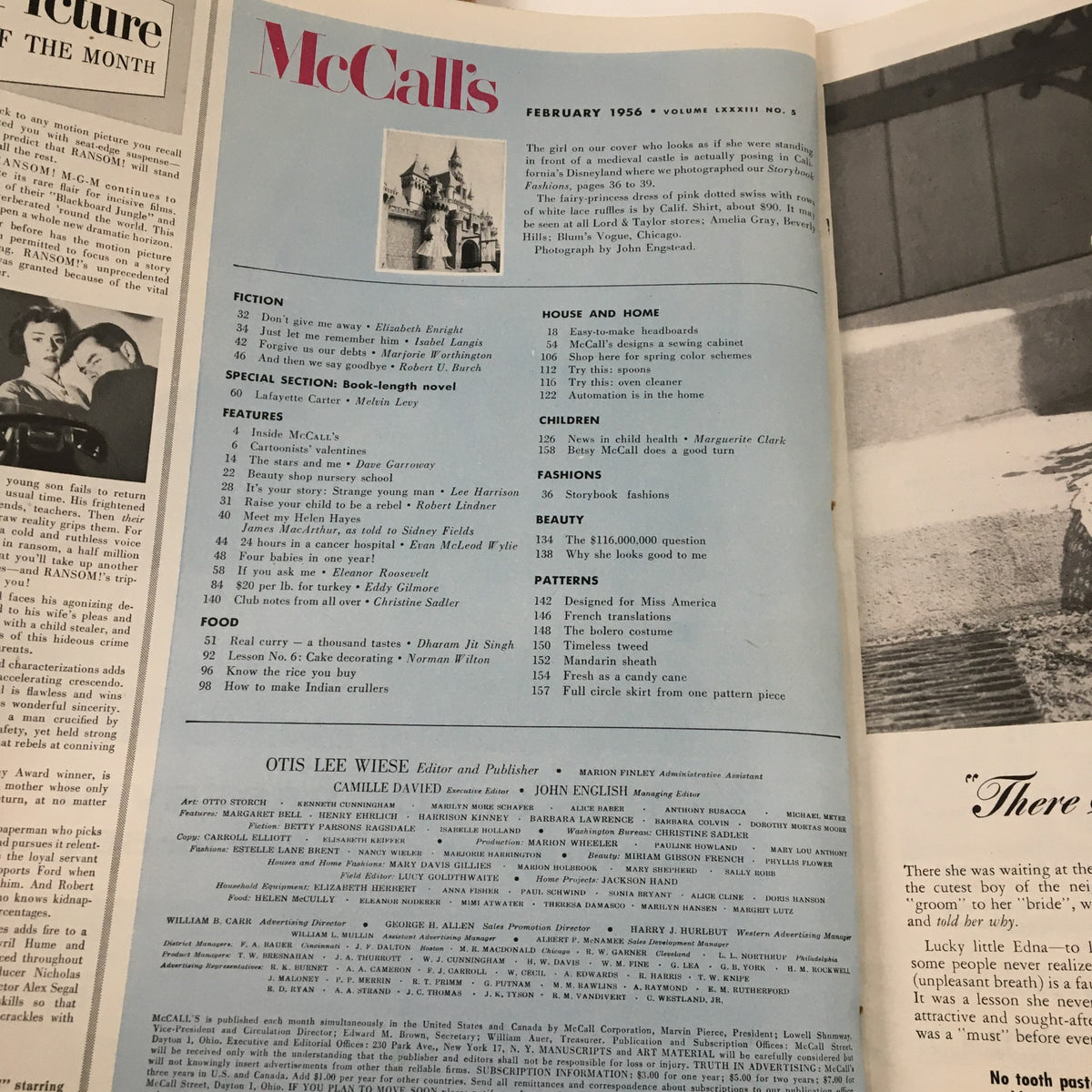
The breadth of the documented table of contents for this issue makes it a particularly rich primary source across multiple fields of historical interest. Dave Garroway's "The Stars and Me" feature documents the co-host of the Today show at the peak of his television prominence. The "24 Hours in a Cancer Hospital" piece by Evan McLeod Wylie represents the kind of serious health journalism that McCall's was incorporating alongside its domestic content in this period. "Four Babies in One Year!" and the "Beauty Shop Nursery School" features reflect the specific postwar demographic and domestic landscape — the baby boom in its most intense phase and the specific social infrastructure being built around it. And the book-length novel serialization of Lafayette Carter by Melvin Levy reflects the ambitious literary content that distinguished the best women's service magazines of this period from purely practical publications.
About the Publication
McCall's Magazine was founded in 1873 and had established itself by the mid-1950s as one of the three major American women's service magazines alongside Ladies' Home Journal and Good Housekeeping, reaching millions of American homes with a combination of popular fiction, fashion content, housekeeping guidance, cultural journalism, and the editorial program that gave it genuine influence over the values and aspirations of its enormous readership. By February 1956, McCall's was in the early years of the Otis Wiese editorship that would transform the publication's editorial ambition and increase its circulation to become the largest magazine in America by the early 1960s — a transformation that involved exactly the kind of serious journalism and editorially ambitious content that the February 1956 issue's table of contents documents in nascent form.
Key Highlights Inside
- "Raise Your Child To Be A Rebel" by Robert Lindner — a February 1956 argument for cultivated childhood independence and questioning by the author of the original Rebel Without a Cause, published in a major women's service magazine at the precise cultural moment when the conformist domestic ideology of the Eisenhower era was being quietly negotiated rather than simply reinforced.
- "Meet My Helen Hayes" narrated by James MacArthur — a domestic celebrity profile of the "First Lady of the American Theater" from the intimate perspective of her adopted son, documenting Hayes within the framework of motherhood and family that was the specific form of celebrity most resonant with McCall's readership.
- Eleanor Roosevelt's "If You Ask Me" column — a regular McCall's feature placing the former First Lady's direct moral intelligence in the domestic advice format, providing one of the publication's most significant recurring editorial connections to public life beyond the home.
- "24 Hours in a Cancer Hospital" by Evan McLeod Wylie — serious health journalism of the kind that McCall's was incorporating alongside its domestic content in this period, documenting the magazine's editorial ambition to address the full range of its readership's concerns including the most serious health questions of the era.
- Dave Garroway's "The Stars and Me" — a celebrity feature by the Today show co-host at the peak of his early television prominence, reflecting the magazine's consistent engagement with the television personalities who were reshaping American domestic media culture in 1956.
- Book-length novel Lafayette Carter by Melvin Levy — a full serialized novel reflecting the ambitious literary content that distinguished McCall's from more purely practical women's service publications and that gave its editorial program a literary dimension beyond fashion, food, and household guidance.
Condition & Rarity
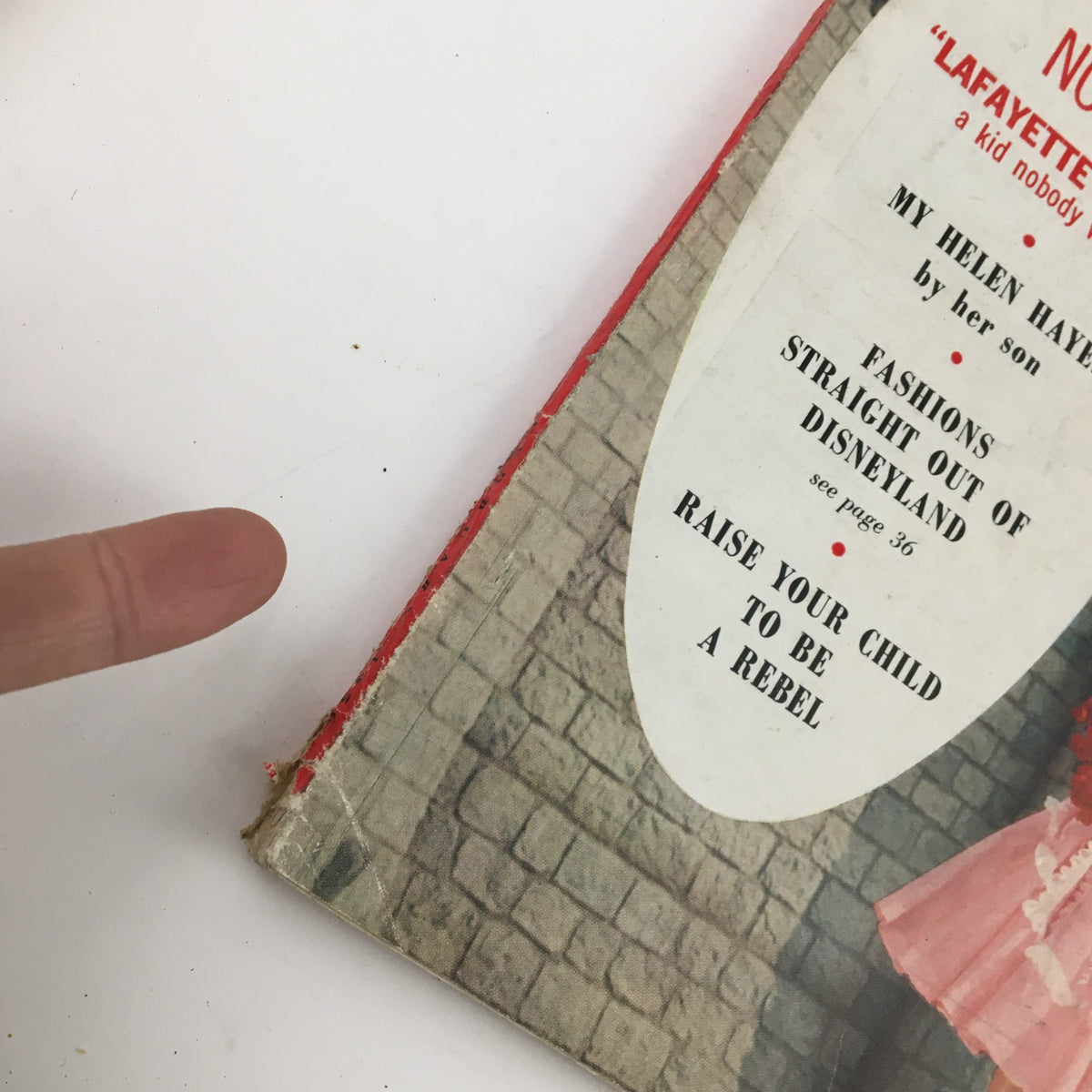
Good condition with minor wear throughout, an address label on the front cover, and binding wear is an honest and appropriate assessment for a McCall's from February 1956 now nearly seventy years old. The address label documents the issue's original subscription delivery — McCall's in 1956 was overwhelmingly subscription-based, and labeled covers are the statistical norm for surviving copies from this period rather than a distinctive attribute. The binding wear is a standard physical record of a magazine that has been stored and occasionally handled across nearly seven decades. Good condition accurately describes a publication that retains its structural integrity, legible cover, and complete interior content despite these expected physical attributes of age. A protective plastic covering indicates ongoing preservation intent appropriate for a copy being maintained as a collectible artifact of mid-1950s American women's magazine culture and the specific editorial program documented in this issue's extraordinary table of contents.
Looking for More Issues Like This?
McCall's issues from February 1956 with documented tables of contents featuring Robert Lindner's rebel child argument, the Helen Hayes family profile, Eleanor Roosevelt's column, and Dave Garroway alongside serious health journalism and a full novel serialization are among the most editorially rich single issues available for collectors working to document the cultural complexity of mid-1950s American women's magazine publishing at its most ambitious. The broader McCall's magazine collection is the most reliable starting point for finding other significant issues from across the publication's long run, including other mid-1950s issues that document the period's specific combination of domestic aspiration and the quiet questioning of conformist norms. Collectors building a focused archive of 1956 as a culturally specific and underappreciated year in American women's cultural history will find the complete 1956 magazine collection a valuable resource for locating other titles and issues that document this particular year's richness from multiple perspectives.