

Description
Collector's Note – Why This Issue Matters
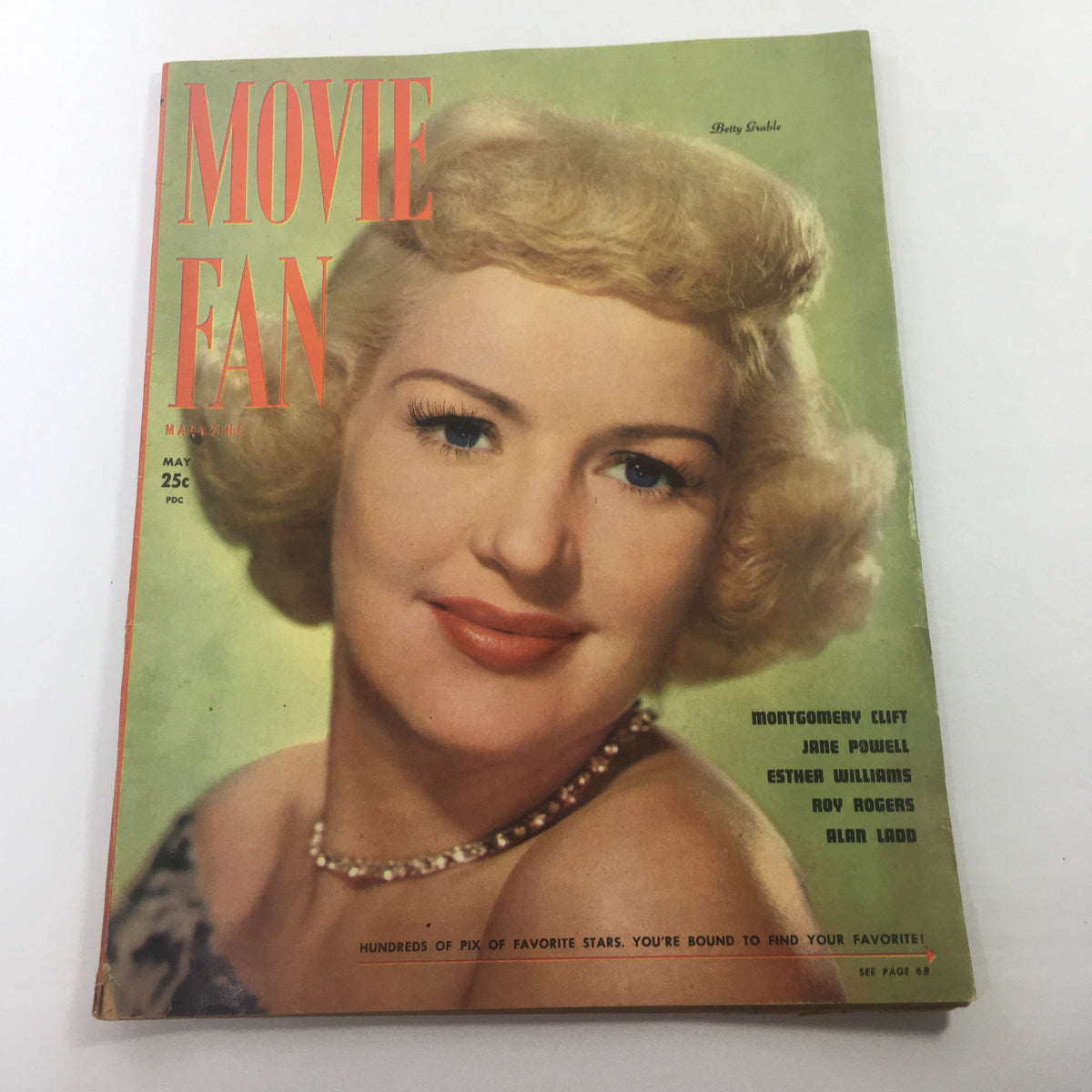
The May 1950 issue of Movie Fan Magazine features a large color portrait of Betty Grable on its cover. Her name appears near the upper portion of the photograph, confirming her as the principal cover subject. Montgomery Clift and Jane Powell are promoted in smaller printed cover lines rather than appearing as additional cover portraits. The cover also names Esther Williams, Roy Rogers, and Alan Ladd among the personalities represented inside. This distinction is important because abbreviated catalog titles can incorrectly suggest that all three leading names share the cover image. The issue was originally priced at twenty-five cents and uses a clean portrait-centered design against a soft green background. Its presentation captures the highly polished visual language through which Hollywood performers were introduced to moviegoing audiences at mid-century.
Grable’s placement at the center of the design reflects her continuing prominence in American screen culture during the early postwar period. Her carefully styled hair, jewelry, makeup, and direct expression create an image based upon familiarity, glamour, and approachable confidence. The additional names connect the issue with several different areas of popular filmmaking and several distinct screen personas. Movie Fan could therefore appeal to readers interested in musicals, dramas, westerns, romantic features, action pictures, and the private lives attributed to performers. Cover lines functioned as promises of access, suggesting that readers would encounter photographs or stories unavailable through an ordinary film advertisement. They should not automatically be treated as verified article titles unless the original contents page confirms their wording. The issue’s importance lies partly in how efficiently one cover assembled a recognizable group of Hollywood personalities for a broad national readership.
The magazine also preserves the relationship among film studios, publicity departments, photographers, editors, and fans during the final decades of the classical Hollywood system. Fan magazines offered the impression that readers could know performers beyond the characters they played on screen. Articles frequently emphasized romance, family life, personality, fashion, homes, careers, friendships, and the emotional pressures of fame. Much of that material was shaped by publicity needs, so modern researchers should distinguish documented biography from studio-approved storytelling and editorial speculation. Photographs remain valuable even when the accompanying narrative was promotional because they reveal clothing, styling, pose, star image, and commercial design. A complete contents record for this May edition has not been verified, and no specific interior article should be reconstructed solely from the names printed on the cover. The issue can be placed within its wider publishing and cultural setting through other magazines published in 1950.
About the Publication
Movie Fan was an American fan magazine devoted to motion pictures and the personalities associated with Hollywood. It belonged to a publishing tradition that began during the early development of the film industry and expanded alongside the growth of movie stardom. By the 1940s and 1950s, Movie Fan was recognized among the established publications serving readers interested in screen celebrities. Fan magazines generally combined star portraits, illustrated personality stories, film publicity, reader-oriented features, and reports about romantic or domestic life. Their primary appeal was the suggestion of personal access to performers who otherwise appeared distant and carefully controlled on the screen. Editors depended heavily upon photographs, biographies, interviews, and publicity information supplied or facilitated by film studios and representatives. This relationship produced attractive visual records but did not guarantee independent or fully accurate reporting. Stories commonly reinforced carefully managed identities such as the wholesome young star, glamorous leading woman, rugged hero, devoted spouse, or misunderstood celebrity. Female readers formed an especially important part of the intended audience, influencing the emphasis on romance, fashion, beauty, marriage, and household life. By 1950, fan magazines were also beginning to respond to changing tastes, postwar prosperity, and growing curiosity about conflict and scandal behind Hollywood’s polished image. Surviving issues now serve as primary sources for the study of celebrity publicity, film fandom, photography, gender expectations, advertising, and popular reading culture.
Key Highlights Inside
- Betty Grable is the verified cover portrait subject for the May 1950 issue. Her color photograph occupies nearly the entire front cover and is accompanied by a small printed identification near her hair. The composition should therefore be cataloged as a Betty Grable cover rather than as a three-person portrait.
- Montgomery Clift and Jane Powell are prominently named on the cover as personalities represented in the magazine. Esther Williams, Roy Rogers, and Alan Ladd are also included in the printed list. The exact forms of their interior appearances remain unconfirmed because a reliable complete table of contents has not been located.
- The lower cover promotes a large collection of photographs featuring popular stars and directs readers to an interior page. This emphasis indicates that celebrity imagery was a major selling point of the edition. The original pages should be inspected to determine whether the photographs form a gallery, individual profiles, publicity portraits, or another editorial arrangement.
- The combination of Grable, Clift, Powell, Williams, Rogers, and Ladd reflects the breadth of Hollywood fame represented by fan magazines in 1950. Rather than limiting attention to one studio, film genre, or type of performer, the publication assembled contrasting personalities within a single issue. Their placement demonstrates how recognizable names could be used to attract readers with different cinematic interests.
- A verified complete contents list for the May 1950 issue is not currently available from the archival records examined. Specific interviews, romances, film discussions, quotations, and biographical claims should therefore not be assigned to the magazine without direct page evidence. A page-by-page inspection remains the most reliable method for documenting its complete editorial contents.
Condition & Rarity
The listing categorizes the magazine as being in good, used condition. No standardized collector grade is provided, so the wording should be understood as a general description rather than a precise numerical assessment. Wear and possible rips are specifically noted around the edges and binding. The description does not establish the exact size, number, or location of every defect, making the accompanying photographs important for evaluation. The cover, spine, corners, staples, and outer page edges should be examined for rubbing, creasing, splitting, paper loss, and weakened attachment. The presence or absence of a mailing or address label is not confirmed in the supplied title or condition notes. A plastic protective covering accompanies the magazine and may help reduce additional exposure to dust, fingerprints, and abrasion. The covering does not verify page completeness, secure binding, or the absence of interior damage. Inspection should check for removed photographs, clipping, writing, staining, moisture exposure, loose leaves, tape, and previous repairs. Paper from 1950 may also display age-related toning, brittleness, or small tears even when the magazine remains readable and presentable. The celebrity cover and named performers create clear collecting interest, but rarity should not be claimed without documented evidence concerning surviving availability.
Looking for More Issues Like This?
Exact Movie Fan issues can require patience to identify when research is centered on a particular star, cover portrait, month, or interior photograph. The May 1950 edition is especially relevant to readers studying Betty Grable and the visual construction of Hollywood celebrity. Its cover lines also connect it with Montgomery Clift, Jane Powell, Esther Williams, Roy Rogers, and Alan Ladd. Other magazines from the same period can help establish how these performers were presented across competing fan publications. Comparisons may reveal repeated publicity photographs, changing cover language, studio campaigns, and differences in the treatment of male and female stars. Because no dedicated Movie Fan collection link was supplied, the most relevant broader resource is the collection of original magazines from 1950. Publications from that year document cinema, fashion, celebrity culture, advertising, music, politics, family life, and postwar consumer aspirations. Closely dated issues are useful even when this exact May edition is not represented because they reconstruct the surrounding Hollywood publicity calendar. Researchers should compare cover promises with original tables of contents whenever possible, since shortened seller titles may blur the difference between cover subjects and interior personalities. The 1950 collection therefore provides a useful foundation for continued study of Movie Fan and American screen culture at mid-century.