




Description
Collector's Note – Why This Issue Matters
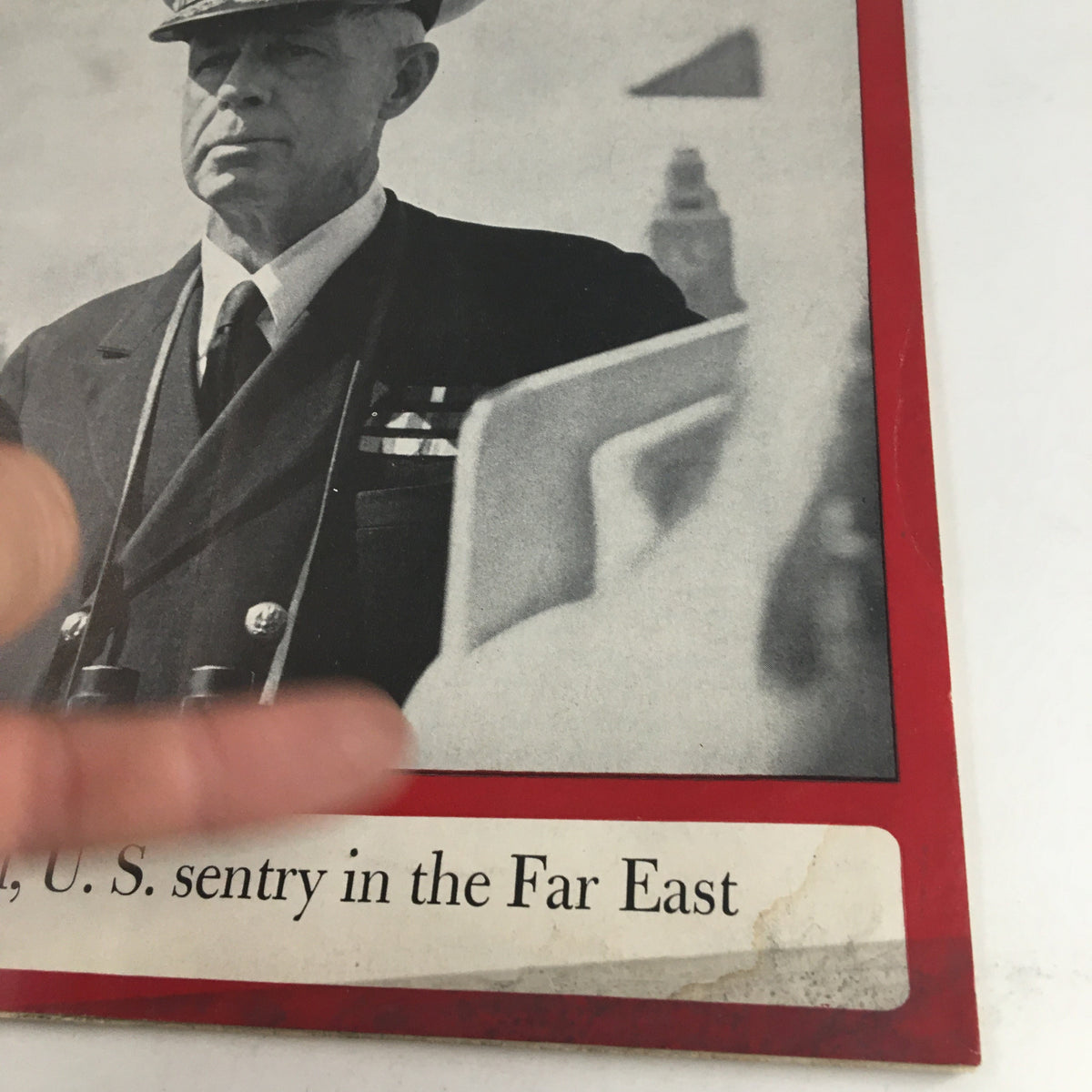
The July 3, 1939 issue of Newsweek Magazine features Admiral Harry E. Yarnell on its cover — and the timing of that editorial choice is worth examining with care. By the summer of 1939, the world was sliding toward catastrophe with a speed that observers at the time could feel but not yet fully measure. Germany had occupied Czechoslovakia in March. Japan had been at war with China since 1937 and was continuing its expansion across the Pacific and East Asia. In Washington, the question of American preparedness — naval preparedness in particular — was one of the most urgent and contested policy debates of the moment. Admiral Yarnell, as Commander in Chief of the United States Asiatic Fleet from 1936 to 1939, was one of the American military's most knowledgeable voices on Japanese naval capabilities and Pacific strategic realities. His presence on the cover of a major American news weekly in early July 1939 was not incidental — it reflected the degree to which the naval situation in the Far East was concentrating the attention of policymakers and informed citizens as war clouds gathered on both sides of the world simultaneously.
Harry E. Yarnell is a figure whose significance to American naval history extends well beyond his Far East command. He is perhaps best remembered today for his role in the 1932 Fleet Problem XIII exercise, in which he commanded a simulated attack on Pearl Harbor using carrier-based aircraft — demonstrating with remarkable prescience nearly a decade before December 7, 1941 that the base was vulnerable to exactly the kind of aerial assault that would eventually destroy it. The Navy's official response to his exercise was to rule the attack technically out of bounds and dismiss its implications, a failure of institutional imagination that history would judge harshly. A Newsweek cover in July 1939, with Yarnell recently returned from his Asiatic Fleet command and the Pacific strategic situation deteriorating visibly, captures him as a figure whose expertise was both urgently relevant and, as events would prove, tragically underutilized. For collectors who follow Newsweek's long history of prewar and wartime coverage, the full scope of the publication's archive is represented in the Newsweek Magazine collection at OriginalMagazines.com.
The July 1939 date places this issue in the final weeks of European peace before Germany's invasion of Poland on September 1, 1939 would trigger the formal outbreak of World War II. For American readers picking up this issue at a newsstand on the Fourth of July weekend of 1939, the world it described — a Far East in turmoil, a Navy admiral whose expertise in Pacific affairs was suddenly more relevant than ever, and a United States still formally committed to neutrality while watching the international order disintegrate — was one of profound and gathering anxiety. Issues from this specific window of mid-1939 are among the most historically charged surviving periodicals in the prewar American press, capturing a world that knew catastrophe was approaching without yet knowing its full dimensions. Collectors focused on the years immediately preceding American entry into World War II will find the complete 1939 magazine archive at OriginalMagazines.com an essential resource for assembling this period's documentary record.
About the Publication
Newsweek Magazine was founded in 1933 and by 1939 had established itself as one of the two dominant American weekly news magazines alongside Time, competing for the educated, news-engaged American audience that sought comprehensive weekly synthesis of national and international events. Its format combined news departments covering domestic and foreign affairs, business, science, and culture with cover features that functioned as the week's most prominent editorial statement about who and what mattered in American public life. By the late 1930s, with Europe and Asia both moving rapidly toward open conflict, Newsweek's international coverage had taken on a weight and urgency that defined the publication's character during this period — issues from 1938 and 1939 in particular are among the most historically significant in the magazine's entire prewar run, documenting the last months of American neutrality through the eyes of an informed readership that understood the world was changing irreversibly.
Key Highlights Inside
- Cover portrait of Admiral Harry E. Yarnell, recently returned from command of the United States Asiatic Fleet and one of the American military's foremost authorities on Pacific naval strategy and Japanese naval capabilities — a figure whose 1932 simulated carrier attack on Pearl Harbor had demonstrated with eerie prescience the vulnerability that would be catastrophically confirmed on December 7, 1941.
- Cover story almost certainly examining Yarnell's assessment of the Far East strategic situation, American naval readiness in the Pacific, and the implications of Japan's ongoing expansion in China and across the region for American interests and policy — precisely the questions that would define American foreign and military policy for the next six years.
- International coverage reflecting the specific and extraordinarily tense news landscape of early July 1939 — with Germany's occupation of Czechoslovakia just months old, the Molotov-Ribbentrop Pact still weeks away, and the European war that would begin in September 1939 approaching with a visibility that informed observers could no longer deny.
- Domestic news and policy coverage consistent with Newsweek's July 4th weekend publishing context — a moment when questions of American preparedness, neutrality, and the nation's relationship to the gathering global conflict were among the most actively debated in Washington and in the American press.
- Period advertising throughout, capturing the consumer culture and commercial landscape of a United States still nominally at peace in the summer of 1939 — a secondary documentary layer that collectors of prewar American periodicals consistently find as historically revealing as the editorial content itself.
- Note: Specific interior article titles, contributing writers, and full feature details beyond the Yarnell cover story are unconfirmed for this issue. The above reflects what can be responsibly attributed based on the cover subject, publication format, date, and Newsweek's well-documented editorial practices of the era.
Condition & Rarity
Surviving copies of this issue are described as carrying no mailing label — a meaningful preservation advantage for a publication now approaching ninety years old. The absence of an address label confirms newsstand origin and preserves the Yarnell cover portrait without the adhesive damage and paper disruption that subscription labels introduce, which is a consistent point of collector preference for Newsweek issues from this era. The overall condition is described as good, with minor wear throughout and some marks on the cover visible in photographs — honest and expected attrition for a prewar periodical of this vintage, indicating structural integrity and readability without overclaiming preservation. The marks noted on the cover are a condition detail that serious collectors will want to evaluate against the photographs before assessing overall grade. The addition of a protective plastic covering reflects deliberate archival care, helping to prevent further deterioration of both the cover and interior pages. When evaluating any surviving copy of this issue, collectors should prioritize the integrity and legibility of the Yarnell cover portrait, the nature and extent of any cover marks or surface damage, the completeness of all interior editorial and advertising pages, and the overall condition of the spine and binding — the combination of factors that determines where a given copy falls within the collectible range for a historically significant prewar Newsweek issue.
Looking for More Issues Like This?
A label-free newsstand copy of a prewar Newsweek featuring Admiral Yarnell — one of the most consequential and historically resonant American naval figures of the period between the wars — is a genuinely uncommon find in the current collector market, and if this one has already moved on, patience is the realistic path forward. The Newsweek Magazine collection at OriginalMagazines.com is the best starting point for continuing the search, with issues from across the publication's long run of news coverage available to browse. For collectors whose focus is the specific and extraordinarily charged historical atmosphere of 1939 — the last full year of peace before the world changed — the 1939 magazines collection brings together material from across the American press during one of the most consequential years of the twentieth century.