
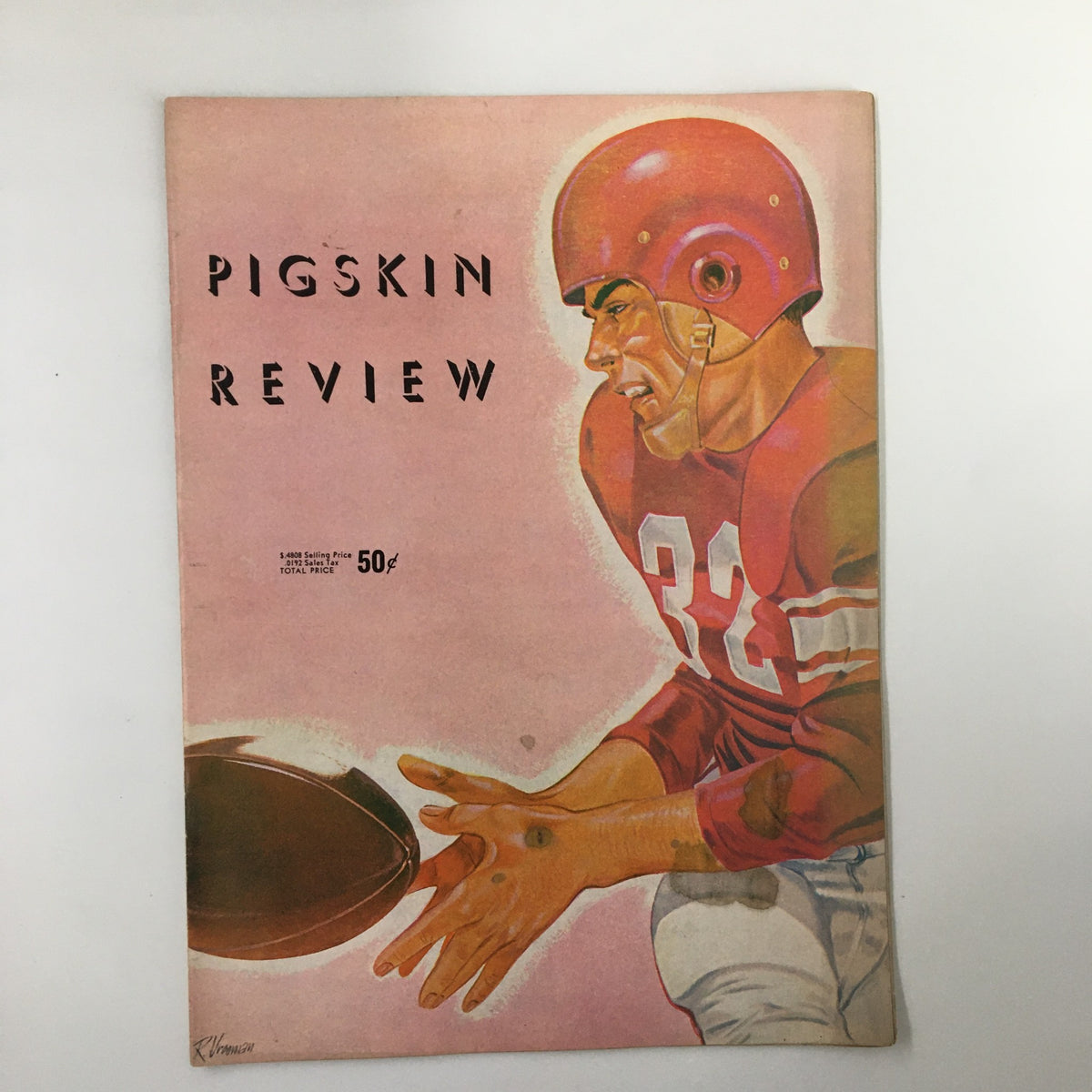






Description
Collector's Note – Why This Issue Matters
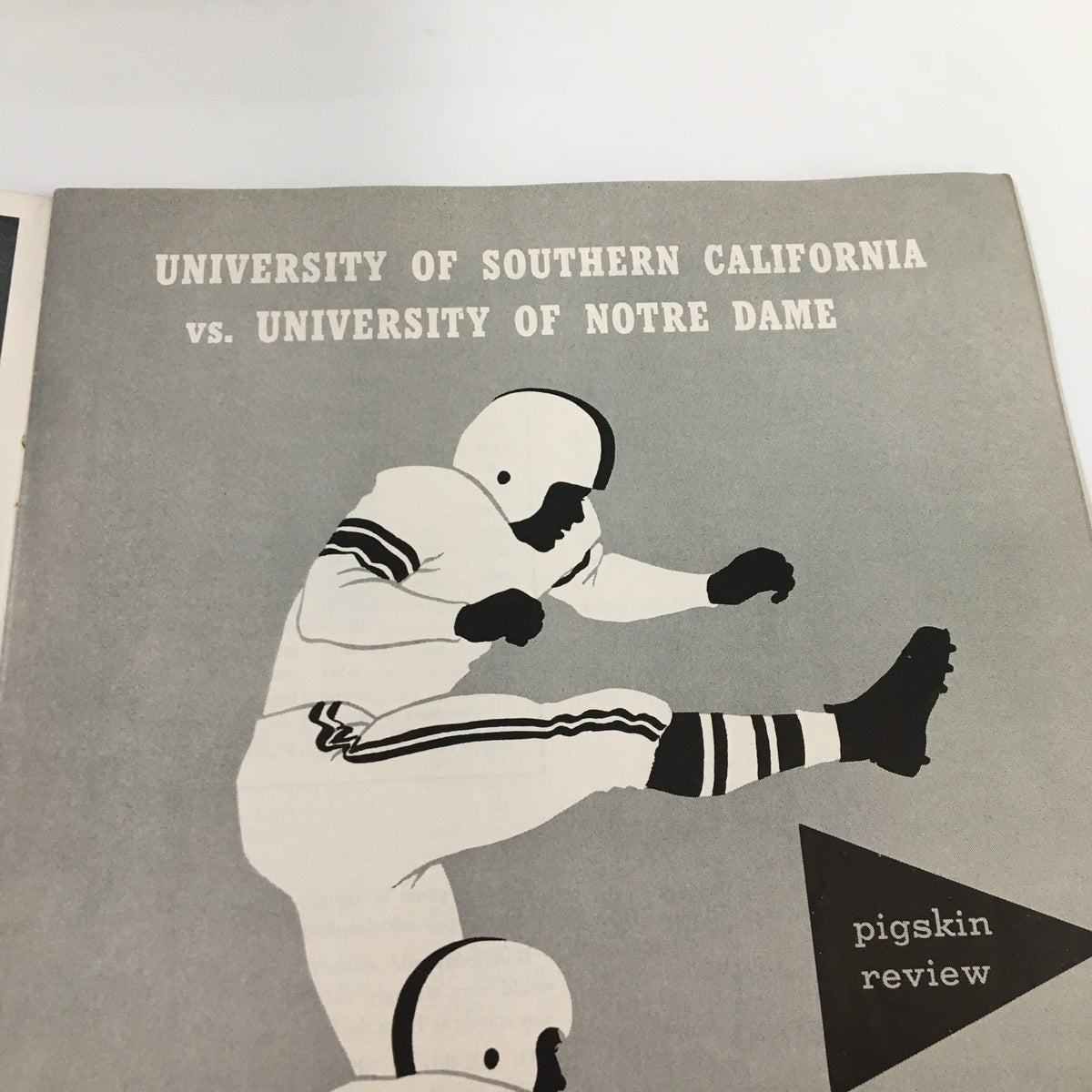
The November 26, 1955 USC vs. Notre Dame Pigskin Review is a primary document of one of the most storied rivalries in the history of American collegiate athletics, captured at a moment of particular significance within that rivalry's long arc. The USC-Notre Dame series, which began in 1926, had by 1955 established itself as one of the premier annual matchups in college football — a game that carried national attention not merely because of the programs' individual prestige, but because of what each represented culturally. Notre Dame, the flagship institution of Catholic education in America and the program whose national following transcended geography in a way that few college athletic programs had ever achieved, brought to every USC matchup the weight of a fan base that stretched from coast to coast and that invested the game with meaning that went well beyond regional rivalry. USC, the dominant program of the Pacific Coast Conference and the representative of California's postwar emergence as a major locus of American popular culture, brought its own institutional prestige and its own claim on national championship aspirations. A game program from November 26, 1955 documents that encounter in the form of a primary institutional artifact — produced for the attending audience, capturing the specific personnel, coaching staffs, statistical context, and game-day atmosphere of a specific moment within the series' long history. For collectors building a comprehensive archive of mid-century college football history and the publications that documented it, the full range of 1955 magazines and publications from this year provides essential primary source context for one of American sport's most consequential periods of development.
The 1955 season is a historically interesting one within the context of both programs' longer competitive histories. College football in the mid-1950s was navigating a significant transition — the sport was establishing its television presence, the conference structures that would define its competitive landscape for decades were consolidating, and the recruiting and scholarship systems that would shape program power for generations were being formalized through the NCAA's evolving regulatory framework. The USC-Notre Dame matchup on November 26, 1955 — late in the regular season, with bowl game implications potentially at stake for either program — would have carried the specific weight of a game whose outcome mattered beyond the immediate win-loss record. The Pigskin Review format, which was the standard game program publication for major college football games in this era, combined the practical information that attending fans needed — starting lineups, depth charts, player biographical sketches — with the editorial content that gave the game its historical framing, connecting the specific 1955 matchup to the longer history of the series and the broader narrative of both programs' traditions. These programs are primary sources for sports historians in a way that newspaper accounts alone cannot replicate, because they document the game from inside its own institutional culture rather than from the perspective of outside journalism.
The specific date — November 26, 1955 — is worth noting for what it means within the college football calendar. Late November games in the mid-1950s were typically the final regular-season contests or close to it, meaning this matchup would have carried the season-ending significance that characterizes the most intensely anticipated games in any rivalry series. The crowd that attended this game and received this program represented the specific cross-section of USC and Notre Dame supporters who had gathered for what both fan bases would have understood as one of the season's most important contests, and the program they held was designed to serve as both a practical game-day guide and a souvenir of the occasion. The marks and wear noted in the condition description are consistent with a program that was handled in game-day conditions — consulted during the contest, folded, carried — rather than one that was preserved immediately as a collectible, giving surviving examples an authenticity of use that purpose-preserved copies cannot claim.
About the Publication
The Pigskin Review was the game-day program publication produced for USC home football games at the Los Angeles Memorial Coliseum during the mid-twentieth century, distributed to attending fans and serving as the standard informational and commemorative publication for each contest. Game programs of this type were the primary printed documentation of individual college football contests in the pre-internet era, combining starting lineups, depth charts, player and coach biographical information, historical context about the opposing program, and editorial content that framed each game within the broader context of the season and the rivalry. Produced by the USC athletic department for each home game, the Pigskin Review was a standard publication format across major college football programs in the 1950s, with print runs calibrated to expected attendance at specific matchups — meaning that high-profile rivalries like USC-Notre Dame would have generated larger print runs than typical conference games, though surviving copies in good condition from any game of this era are still relatively uncommon given the passage of seventy years and the publication's status as a practical use item rather than a deliberately preserved collectible.
Key Highlights Inside
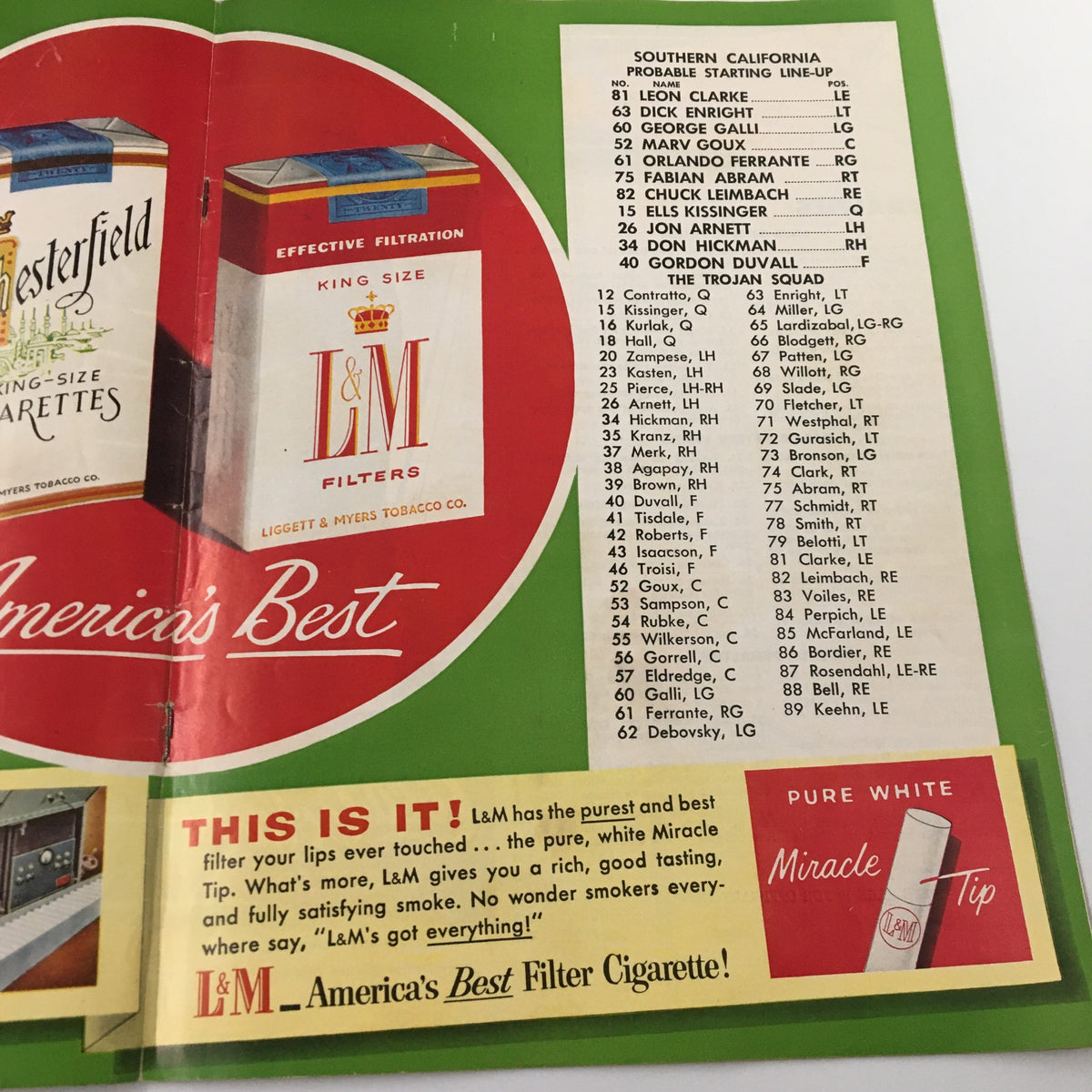
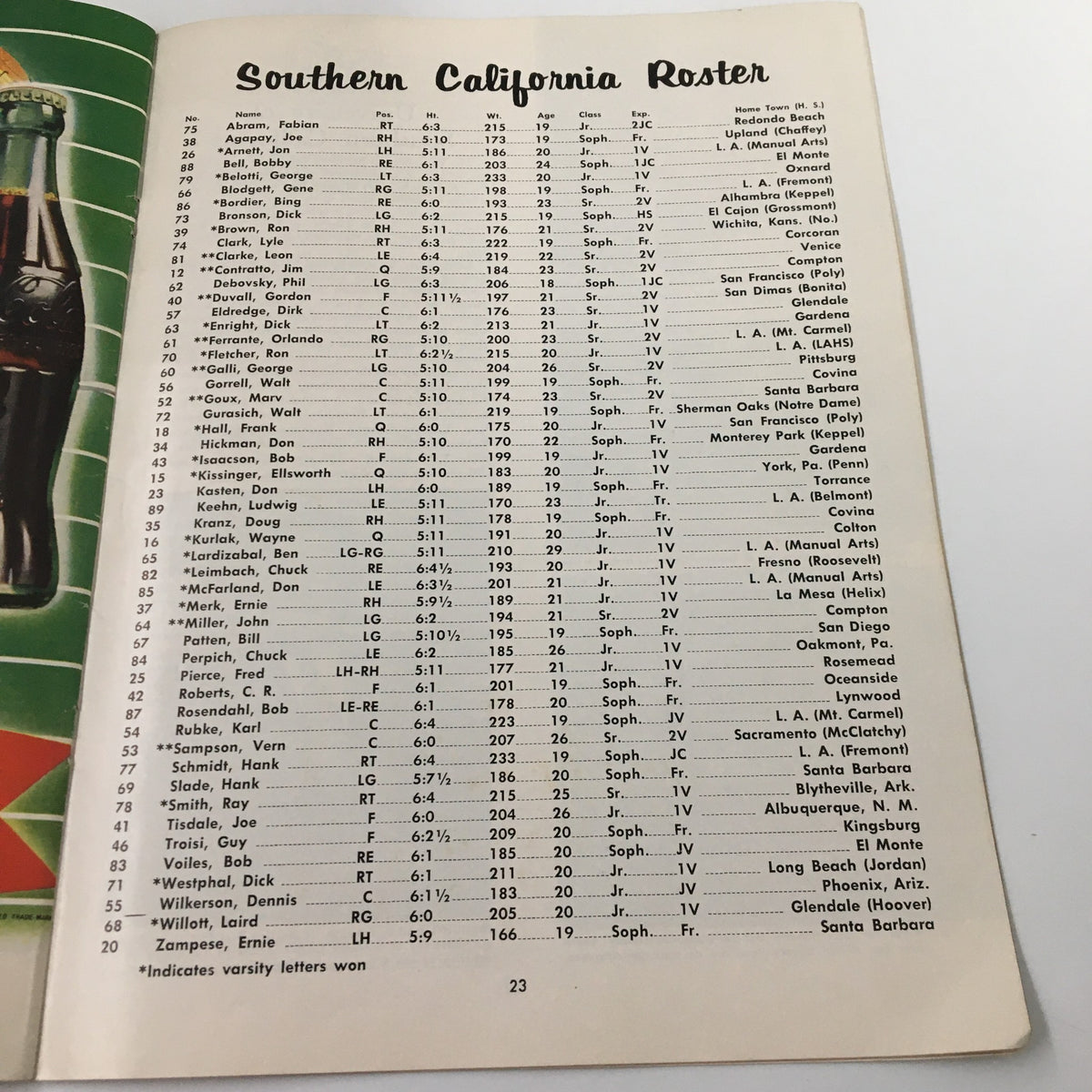
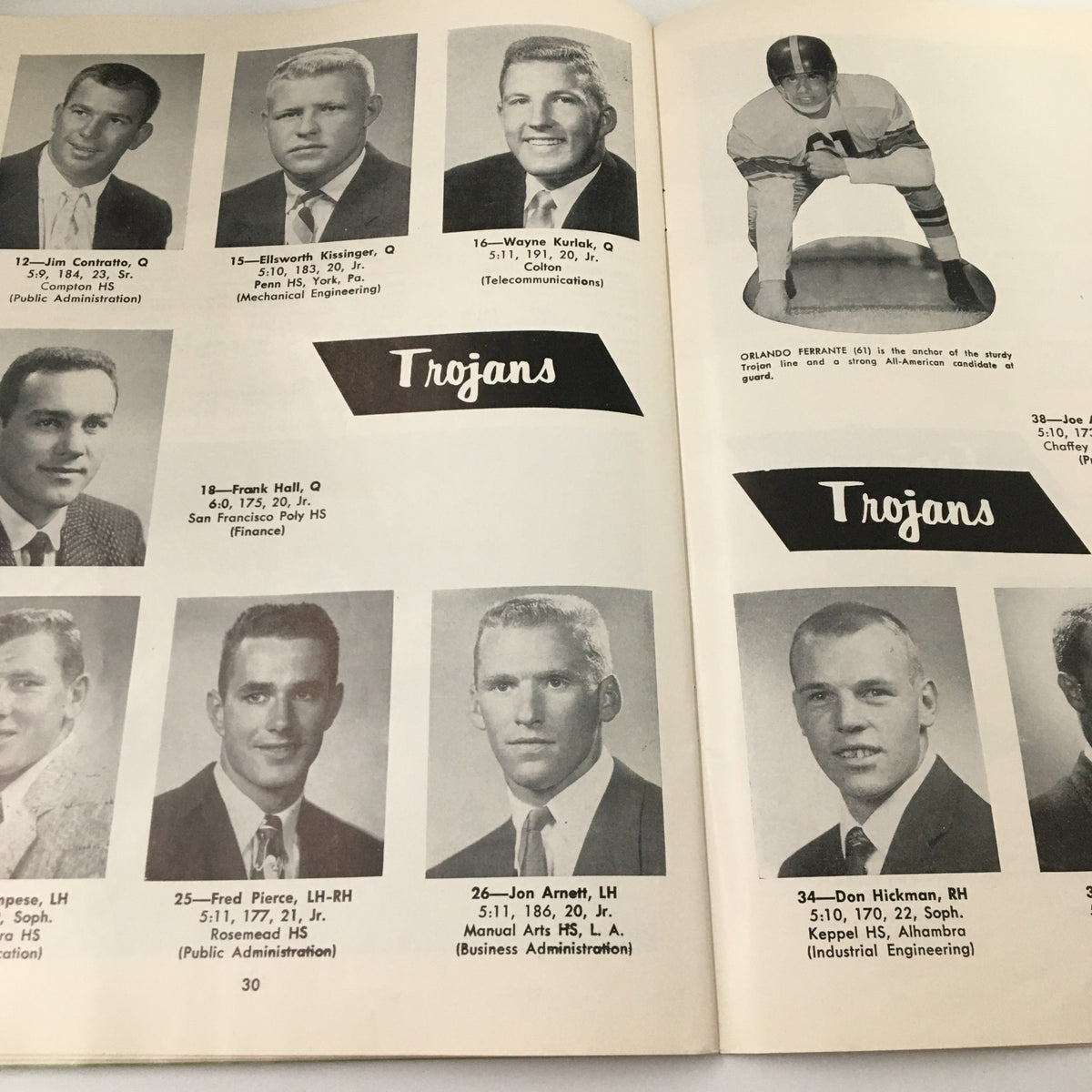
- 1955 USC and Notre Dame starting lineup and depth chart documentation — The game program's core informational content would have included complete rosters for both teams, starting lineup designations, player numbers, positions, heights, weights, and biographical information — primary documentation of the specific personnel who participated in this installment of one of college football's most celebrated annual rivalries. As a roster document for the 1955 versions of both programs, it preserves information about individual players whose careers are tracked by college football historians researching this era.
- Mid-season 1955 college football context captured — A late November 1955 program would have included the season-to-date records and statistics for both programs, providing a snapshot of where each team stood in its conference and national rankings at the time of this specific matchup — information that primary sources from within the season preserve with a contemporaneous specificity that retrospective accounts inevitably flatten.
- USC-Notre Dame series historical framing — Game programs for major rivalry matchups typically included editorial content placing the current year's game within the historical context of the series, documenting previous results, memorable moments, and the accumulated institutional meaning of the rivalry. This historical content, written from within the 1955 moment rather than retrospectively, is primary documentation of how the rivalry was understood and narrated by its participants at that specific point in its history.
- Coaching staff and program institutional documentation — Both programs' coaching staffs in 1955 represent specific moments in their respective institutional histories, and the biographical and contextual information provided in a game program about the coaches directing each team documents the specific leadership that shaped these programs during the mid-decade period when college football's modern structure was being established.
- Note: Specific game results, statistical details, advertising content, and the full editorial contents of this program have not been independently verified beyond the listing description. The highlights above reflect what is documentable from the listing, the well-established history of the USC-Notre Dame rivalry, and the standard format of major college football game programs from this era.
Condition & Rarity
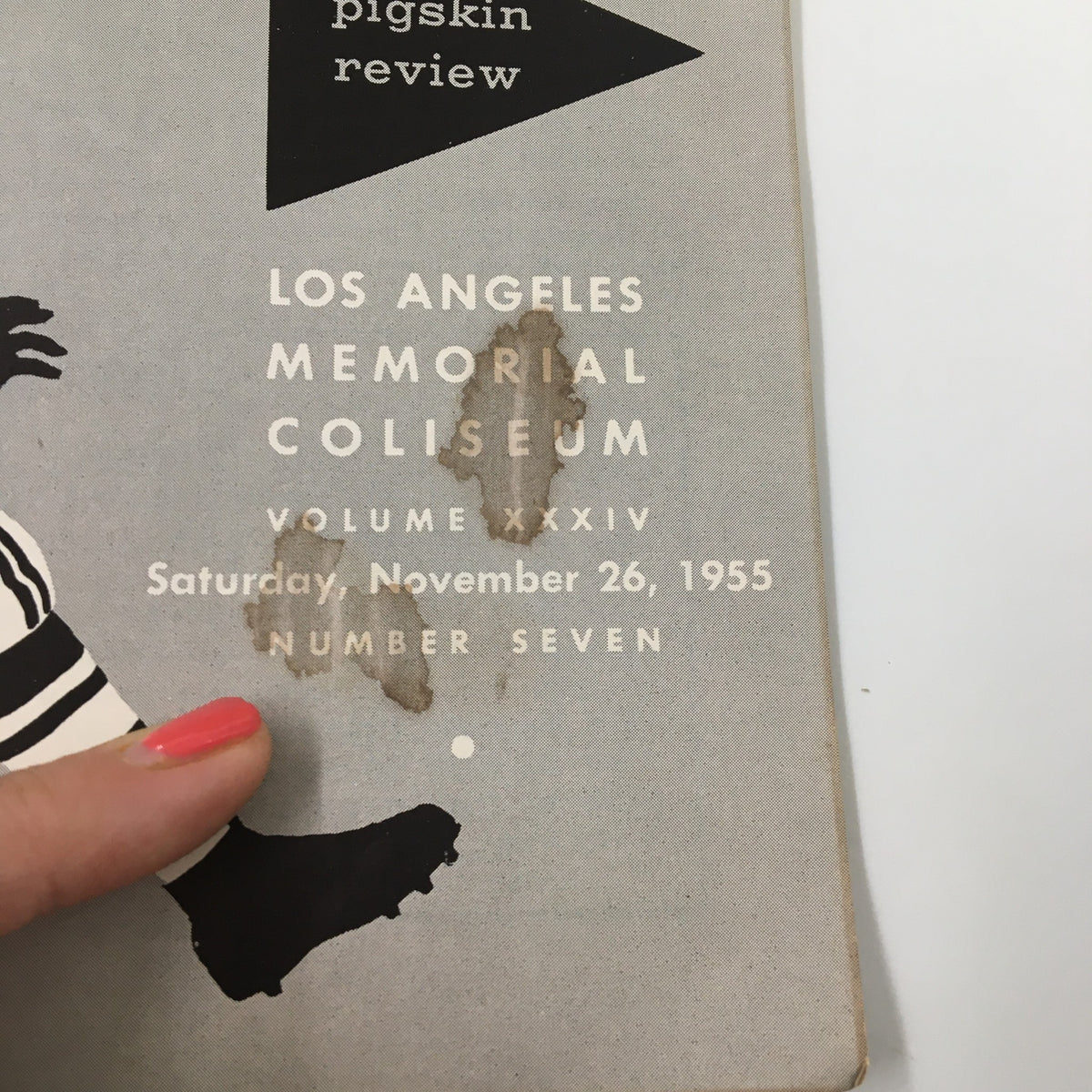
This program is described as being in good condition with minor wear and some visible marks consistent with its age, protected by a plastic covering — a condition profile that represents a legitimate and well-maintained survivor of a publication that was produced for active game-day use rather than archival preservation. The marks noted in the listing are honest and expected condition attributes for a program that was distributed and handled at a live sporting event in 1955 and has survived in some form of storage for the following seven decades. Game programs of this type were typically printed on a lighter, less durable stock than commercial magazines, stapled rather than bound, and handled under the specific conditions of outdoor stadium attendance — consulted during a game, folded for pocket storage, subjected to the weather and crowd conditions of a late-November football contest. Minor marks and wear under these circumstances are authentic traces of the program's original use context rather than condition defects in the conventional collecting sense. The plastic protective covering indicates that the program has been placed in intentional preservation care at some point in its history, which correlates with better overall physical stability than unprotected examples stored under comparable conditions over the same seventy-year period. Collectors evaluating surviving copies of this program should assess the cover and spine integrity, the completeness of interior pages including the roster and lineup sections that represent the primary research and documentary content, and the legibility of any printing that has been subjected to the fading that stapled programs of this era are susceptible to along fold lines and at page edges.
Looking for More Issues Like This?
USC-Notre Dame game programs from the 1950s are actively pursued by college football historians, program collectors building complete series archives, and sports memorabilia enthusiasts who recognize these mid-century game-day publications as irreplaceable primary documents of one of American sport's greatest rivalries at the height of college football's golden age. If this November 1955 program is no longer available, the 1955 magazines collection at OriginalMagazines.com brings together a wide range of primary source material from that landmark year in American sports and cultural history, collectively documenting the full sweep of mid-century American athletic competition and popular culture at one of its most distinctive and richly documented moments.