





Description
Collector's Note – Why This Issue Matters
The October 16, 1926 official program for the Yale versus Dartmouth football game is a primary document of college football during one of the sport's most formative and culturally significant decades. The 1920s were the era when American college football transformed from a regional sporting pastime into a genuine national obsession — the decade of Red Grange, of packed stadiums built to hold tens of thousands, of sportswriters like Grantham Rice elevating athletes into mythological figures. Yale and Dartmouth were both among the most prominent programs in the country during this period, representing the Ivy League tradition at its most competitive and its most culturally prestigious. A game between these two programs in the heart of the 1926 season was a serious football occasion, and the official program printed for it is a document of that occasion at a specific and irreplaceable moment.
Yale football in 1926 was still operating within the shadow of its extraordinary historical legacy — the Bulldogs had been one of the dominant programs in American football since the sport's earliest organized years, and Yale Bowl, opened in 1914, remained one of the largest stadiums in the country. Dartmouth, meanwhile, was in the midst of building the competitive identity that would make it a genuine Ivy contender throughout the late 1920s and into the 1930s. An October 1926 matchup between these programs would have drawn a substantial crowd and generated real regional attention in the northeast football community. For collectors building focused archives around publications from 1926, this program is a tangible artifact of the decade when college football's cultural authority was being established.
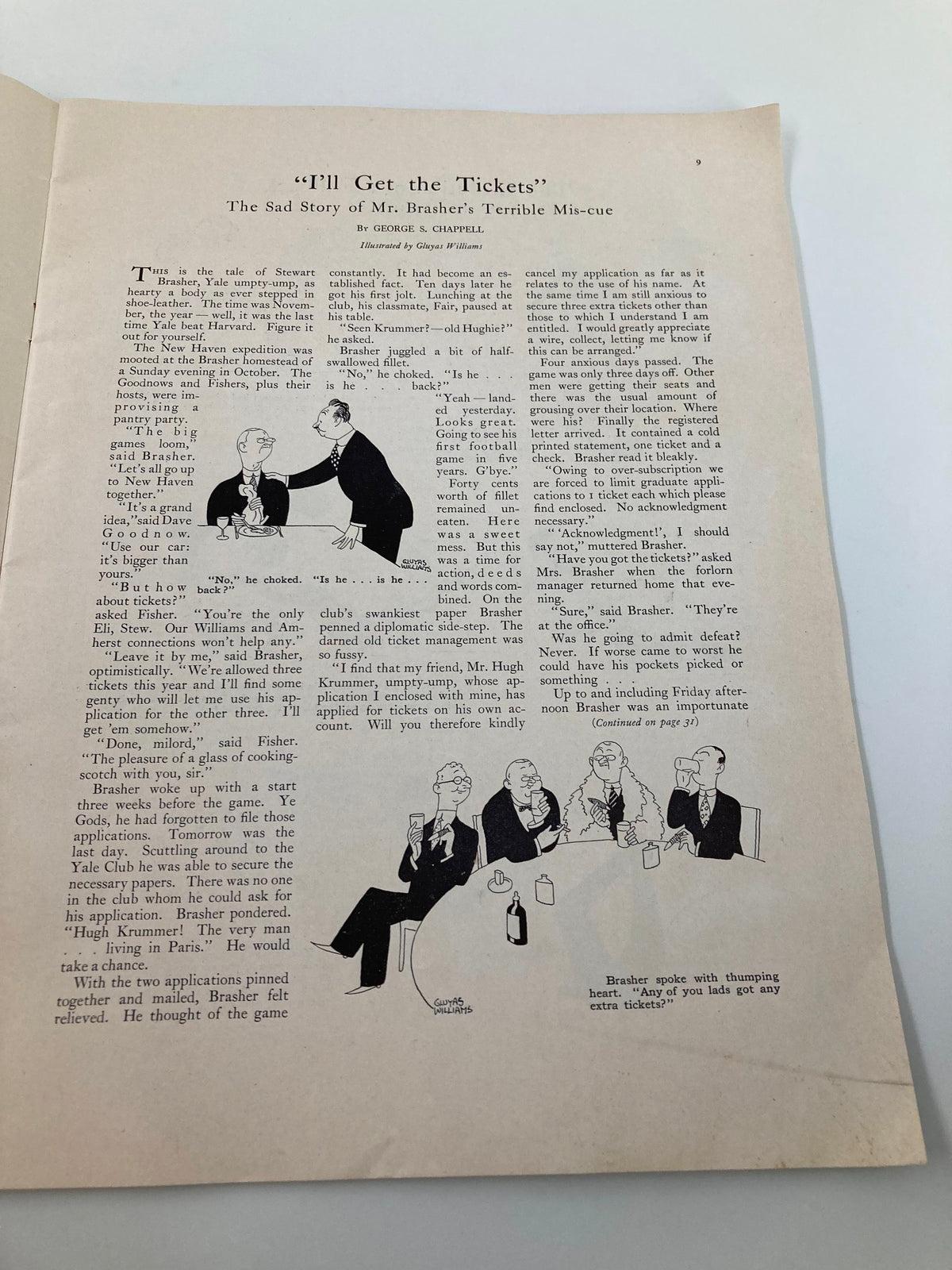
Official game programs from the 1920s are among the most historically atmospheric of all sports collectibles. They typically contained player rosters, coaching staff listings, advertisements from local and regional businesses, statistical records from the current season, and editorial content that reflected the specific cultural attitudes of the era toward college athletics, sportsmanship, and the role of the university in American life. The advertising alone constitutes a cross-section of 1926 commercial culture — products, prices, and marketing language that no other primary source from this period preserves in quite the same concentrated form. The specificity of date, teams, and occasion makes this program an irreplaceable artifact rather than a generic piece of sports memorabilia.
About the Publication
Official college football programs were published by host institutions for individual home games throughout the season, typically running between sixteen and forty pages depending on the prominence of the matchup and the resources of the athletic department. By the mid-1920s, programs had developed a standard editorial format that combined game-day rosters and line-ups with feature articles, statistical summaries, advertising, and promotional content for the athletic program and the university. They were produced for single-game distribution and were not intended for preservation, which makes surviving copies from this era — particularly those in coherent condition — meaningfully uncommon in the collector market. Yale home game programs from the 1920s were produced with the production values appropriate to one of the country's most prominent athletic programs and one of the largest stadiums of the era.
Key Highlights Inside
- Official program for the Yale vs. Dartmouth football game of October 16, 1926 — a primary document of Ivy League football competition during the decade when college football achieved its first peak of national cultural prominence.
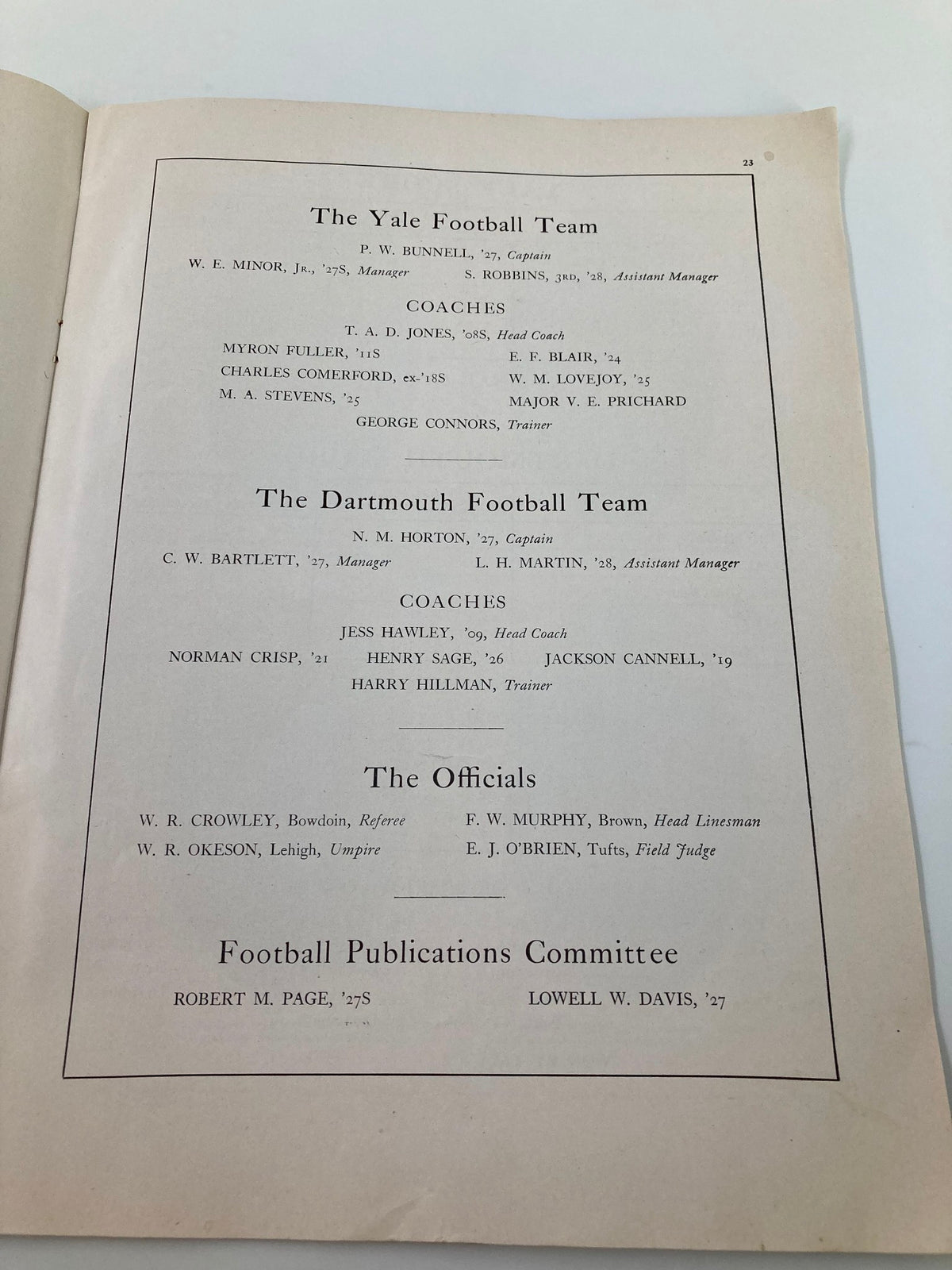
- Player rosters and lineup information for both Yale and Dartmouth as they appeared on this specific date in the 1926 season — a contemporaneous record of the personnel of both programs that no subsequent source fully replicates.
- Advertising content from 1926 reflecting the commercial culture of the period — regional businesses, products, and marketing language that constitute a secondary documentary layer within the primary sports artifact.
- Specific editorial features, statistical content, and additional program materials beyond the roster information are unconfirmed from the listing; refer to the program directly for complete contents.
Condition & Rarity
The listing grades this program as good condition with minor wear and confirms protective plastic sleeving. Good condition with minor wear is a realistic and honest grade for a nearly hundred-year-old single-game program printed on standard commercial paper stock and designed for one-time use rather than preservation. The paper quality in game programs of this era was typically newsprint or lightweight coated stock — materials with inherent acidity that age less gracefully than the heavier stocks used in bound periodicals. Minor wear on a 1926 program implies that the covers have retained their integrity and the interior pages remain legible and structurally sound, which represents genuinely successful long-term preservation for an item of this age and type. The primary condition factors to evaluate in any surviving copy of this program are cover surface integrity, the completeness of all pages, the degree of paper toning and brittleness, and the state of the binding or stapling that holds the pages together. The protective plastic sleeving reflects appropriate current storage practice.
Looking for More Issues Like This?
Official college football programs from the 1920s in good condition are genuinely uncommon finds — their single-use design, their newsprint paper stock, and nearly a century of attrition have thinned the surviving pool considerably, and Ivy League programs from this era of peak cultural prestige are particularly sought by collectors working in both sports memorabilia and American social history. If this Yale vs. Dartmouth 1926 program is no longer available, the 1926 publications archive at OriginalMagazines.com covers the full year across multiple titles and formats for collectors building a focused Jazz Age American culture library.