

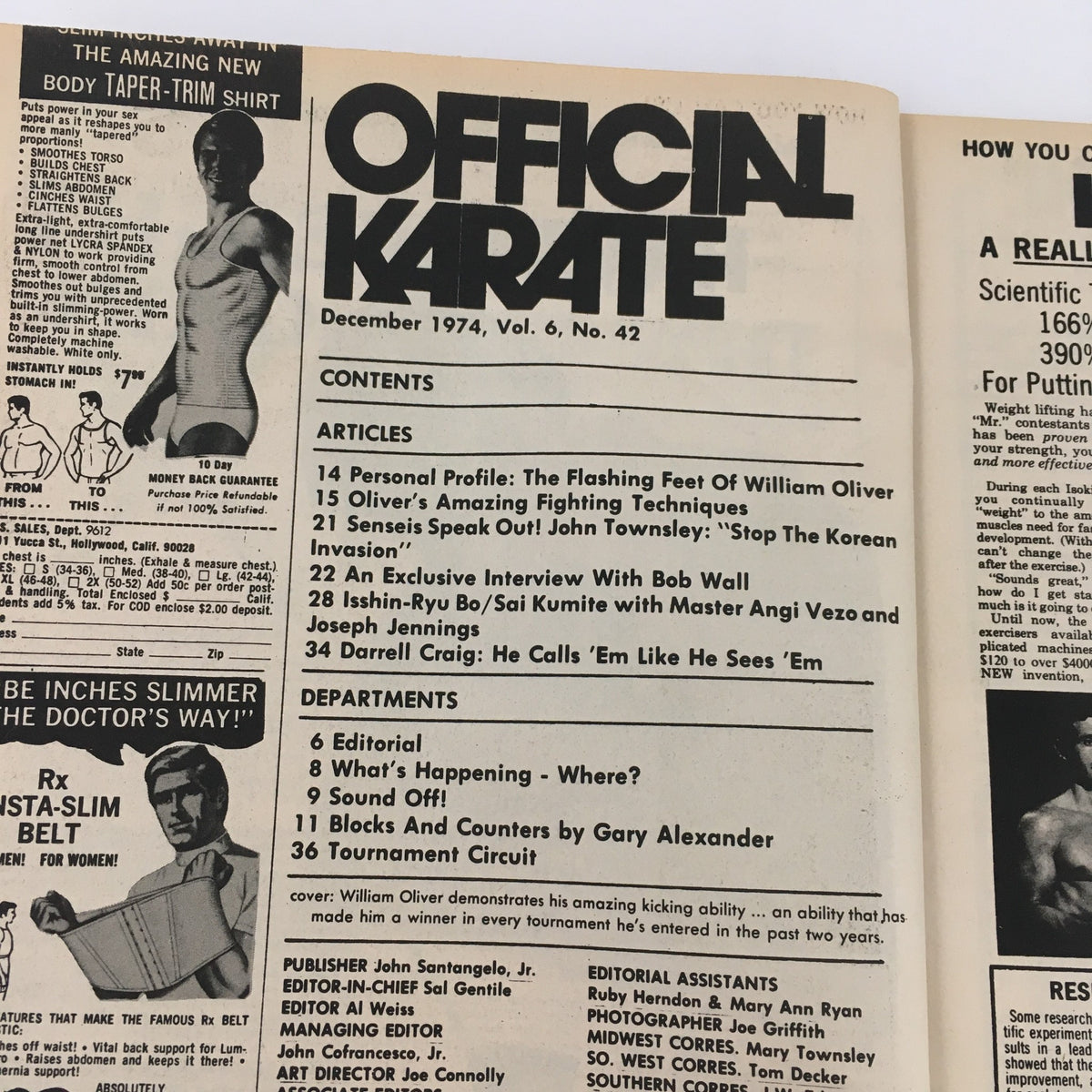


Description
Collector's Note – Why This Issue Matters
The December 1974 issue of Official Karate magazine belongs to a moment when martial arts had clearly moved beyond a specialist subculture and into a much broader American audience. By late 1974, karate schools, tournaments, demonstrations, and martial-arts publications were reaching readers far outside the small circles that had sustained them in earlier years. That shift gives this issue lasting documentary value. It is not simply a period magazine tied to one month on the calendar; it is part of the printed record of how karate was being presented, taught, and celebrated during a formative stage of its rise in the United States.
That wider context matters when looking at a title like Official Karate. Magazines of this type helped define the visual and editorial language of American martial arts culture in the 1970s. Covers, profiles, instructional features, and competition-oriented content all worked together to build a public image of karate as both disciplined practice and modern spectacle. For collectors, these issues preserve the tone of the era in a way later retrospectives cannot. They show what readers were actually seeing at the time, what names were being elevated, and how the culture understood itself while it was still taking shape.
This particular issue stands out because it features William Oliver, giving the magazine a clear point of identification beyond its date and issue number. A named feature like that is often what turns a general-interest martial arts issue into a more focused research piece for collectors. It ties the magazine to a specific figure within the karate world and makes it more useful to readers tracing the careers, reputations, and media presence of martial artists who were active during the decade. For anyone exploring 1974 magazines as cultural artifacts, this issue reflects both the magazine boom of the period and the expanding place of martial arts within that landscape.
About the Publication
Official Karate was a U.S. martial arts magazine created for readers who wanted regular coverage of karate personalities, training culture, competition scenes, and the broader world developing around martial arts in print. Its audience likely included students, instructors, tournament followers, and enthusiasts who were seeking a publication dedicated to the discipline rather than occasional newspaper or general-interest coverage. In that sense, it served both as a source of information and as a community-building publication. During the 1970s, magazines like this helped connect a fast-growing readership to the leading figures, ideas, and events shaping the martial arts scene. The format suggested by the listing—feature coverage, instructional material, and photography—fits the editorial style collectors associate with specialty martial arts magazines of the era.
Key Highlights Inside
- December 1974 issue identified as Volume 6, No. 42, placing it firmly within the magazine’s established mid-1970s run.
- William Oliver is the named feature associated with this issue, making him the clearest documented subject tied to this particular number.
- The listing describes the issue as containing articles, instructional pieces, and photographs, which aligns with the typical editorial mix expected from a period martial arts publication.
- As a magazine published during karate’s major growth phase in the United States, the issue likely reflects the language, presentation, and aspirations of the martial arts community in late 1974.
- The issue is useful not only as a subject-specific collectible but also as a reference point for how specialty magazines presented martial arts to readers during the decade.
- Interior details beyond the William Oliver feature are not fully confirmed from the available listing, so article-level contents should be verified from a table of contents or interior pages before being cited in detail.
Condition & Rarity
The listing describes a surviving example in good vintage condition, with minor wear typical of an older magazine, including small rips, edge wear, and occasional creases. In collector terms, that suggests a complete and presentable copy that shows normal handling rather than severe structural damage. For 1970s martial arts magazines, this is an important distinction. These publications were often actively read, carried, stacked, and stored without archival care, so moderate wear is common and should be expected in the market. What matters most is whether the issue remains complete, visually identifiable, and stable enough for long-term preservation.
The mention of a protective plastic covering points to modern storage rather than an original issue trait, but it does reflect the type of preservation step collectors generally prefer. When evaluating any surviving copy of this issue, serious buyers and archivally minded collectors usually pay close attention to cover gloss, spine integrity, corner wear, page completeness, and any signs of moisture exposure, writing, or detachment. Because specialty martial arts magazines were not always saved in the same numbers as major mainstream titles, clean examples can be harder to locate than the original print culture might suggest. Newsstand-era periodicals from this category are often valued less for formal scarcity claims and more for the practical reality that many were used heavily and discarded, leaving fewer well-preserved survivors decades later.
Looking for More Issues Like This?
For readers researching this issue as part of a larger martial arts archive, the best next step is usually to look across the broader Official Karate collection. Seeing adjacent issues helps place December 1974 in context and makes it easier to track how the magazine presented major personalities, themes, and design choices across its run. That broader view is often where the real collector insight begins.
It is also worth exploring the wider field of 1974 magazines, since this issue belongs to a year that captured major changes across print culture, sports media, and niche enthusiast publishing. Martial arts titles from that period sit alongside music, film, news, and sports magazines that were all responding to a rapidly changing American culture. For collectors, that makes this issue especially interesting not only within karate history, but within the larger magazine history of the mid-1970s.