

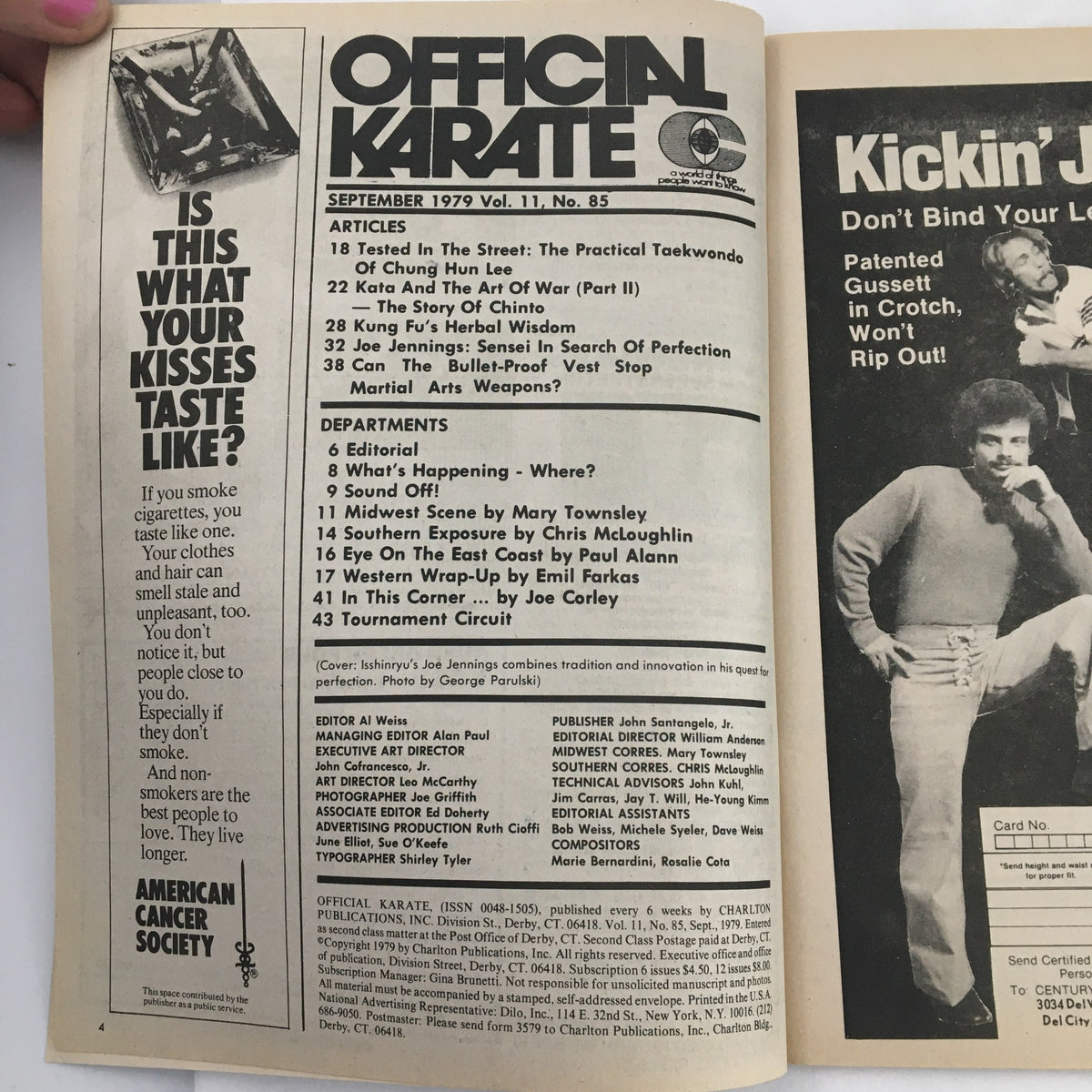


Description
Collector's Note – Why This Issue Matters
Official Karate dated September 1979 belongs to a period when martial arts magazines were helping define how karate was understood by American readers. By the late 1970s, martial arts had moved well beyond niche dojos and tournament circles and had become part of a broader popular culture shaped by schools, exhibitions, instructional publishing, and film. An issue centered on Isshinryu practitioner Joe Jennings reflects that moment clearly: it points to the importance of style-based identity, recognized instructors, and regional lineages at a time when readers often followed martial arts through magazines as much as through formal training.
That 1979 date matters. It places the issue in the decade when karate publishing in the United States was becoming more specialized, more visual, and more closely tied to the personalities who represented individual systems. For collectors researching late-1970s martial arts print culture, this issue fits naturally within a broader run of Official Karate magazines and among other magazines from 1979 that document the era's expanding enthusiasm for traditional styles, technique-driven instruction, and martial arts journalism. Even when interior contents are only partially documented, the cover identification, volume numbering, and featured name make the issue useful as a reference point for both publication history and Isshinryu-related collecting.
Joe Jennings' appearance is also significant because martial arts periodicals of this era often served as a record of who was being recognized within specific systems, not just who had mainstream fame. That gives the issue a different kind of value from celebrity-driven titles. It preserves a snapshot of how karate communities presented authority, lineage, and technical credibility in print during a formative period for American martial arts readership.
About the Publication
Official Karate was a specialty martial arts magazine aimed at readers interested in karate technique, training culture, practitioner profiles, and developments within the wider fighting arts community. Publications in this category typically combined instructional material, photographs, feature coverage, and reporting on notable martial artists, creating a format that appealed to both active students and devoted followers of the discipline. In the late 1970s, magazines like this were an important part of how martial arts knowledge circulated in the United States, especially for readers who wanted regular access to style-based coverage outside the dojo.
Key Highlights Inside
- September 1979 issue of Official Karate, identified as Volume 11, Number 85.
- Feature emphasis on Isshinryu's Joe Jennings, making the issue especially relevant to collectors tracking practitioners associated with that style.
- The original listing describes the issue as highlighting martial arts techniques, period photography, and insights into notable martial artists.
- The publication date places it within the late-1970s rise of martial arts journalism in the United States.
- As a documented newsstand issue, it also reflects how specialty karate magazines were marketed to readers during the era.
Condition & Rarity
The listing describes surviving examples of this issue as Very Good/Excellent, with only minor wear, and notes a newsstand origin without a mailing label along with a plastic protective covering. For collectors of late-1970s martial arts magazines, those details matter because condition is usually judged by cover freshness, edge and corner wear, spine stability, page completeness, and overall visual presentation. A newsstand copy without a label is often preferred for display because the cover image and typography remain unobstructed, while protective storage can help reduce further handling wear over time. In evaluating any surviving copy of this issue, collectors would typically look for clean cover color, intact binding, flat pages, and only light age-related wear consistent with a specialty periodical that was originally meant to be read rather than archived.
Looking for More Issues Like This?
Issues like this can be difficult to place in context unless they are viewed alongside related material from the same title and year. The broader Official Karate collection is the best place to continue that research, especially for readers interested in how the magazine covered different practitioners and styles over time. It also helps to compare it with other magazines from 1979, since that wider publishing landscape shows just how quickly martial arts culture was expanding in print during the period.