


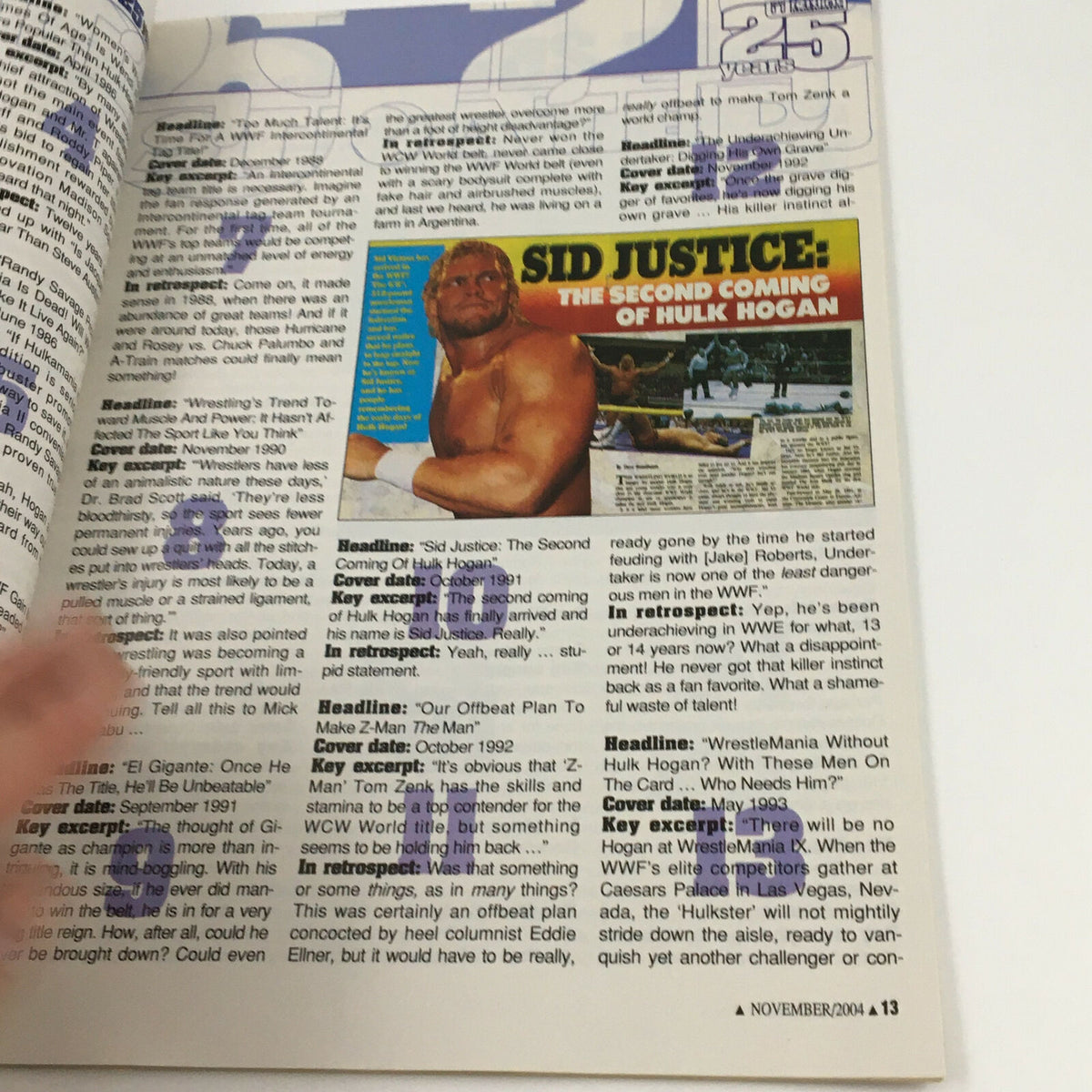


Description
Collector's Note – Why This Issue Matters
The November 2004 issue of Pro Wrestling Illustrated arrives at a fascinating point in professional wrestling history, when the industry was firmly in its post-Attitude Era phase and actively redefining its identity for a new generation of fans. At the center of this issue is Hulk Hogan, one of the most recognizable and influential figures the sport has ever produced. By 2004, Hogan’s legacy was already firmly established—spanning the explosive popularity of 1980s wrestling, the reinvention of his persona in the 1990s, and his continued cultural relevance into the early 2000s. His presence on the cover of this issue reflects not just nostalgia, but his enduring role as a touchstone for wrestling’s broader history.
This period saw professional wrestling balancing its past and future, with long-time icons like Hogan continuing to shape fan interest while newer stars defined the evolving landscape. Publications such as Pro Wrestling Illustrated played an important role in documenting that transition, offering rankings, analysis, and editorial perspectives that helped fans contextualize both legacy performers and emerging talent. Within the scope of Hulk Hogan magazine appearances across decades of wrestling history and the broader archive of magazines from 2004 capturing early-2000s pop culture, this issue stands as a clear representation of how wrestling honored its past while continuing to evolve.
About the Publication
Founded in 1979, Pro Wrestling Illustrated became one of the most widely read and respected wrestling magazines in North America, known for its kayfabe-style reporting, annual awards, and influential rankings such as the PWI 500. Its editorial format blended storyline-driven coverage with real-world recognition, creating a unique hybrid that appealed to both casual fans and dedicated followers of the sport. By 2004, the magazine remained a central voice in wrestling media, chronicling major personalities, industry shifts, and fan-favorite moments during a period of transition for professional wrestling.
Key Highlights Inside
- Cover feature spotlighting Hulk Hogan, reflecting his continued cultural and historical significance in professional wrestling
- Editorial perspective capturing the state of wrestling in the early 2000s following the peak of the Attitude Era
- Coverage consistent with Pro Wrestling Illustrated’s established format, including rankings, features, and personality-driven storytelling
- Representation of wrestling’s evolving landscape during a period balancing legacy stars and newer talent
Condition & Rarity
Copies of this issue are typically evaluated based on overall wear, structural integrity, and preservation quality. A magazine described in good condition with minor wear suggests light handling over time, with intact pages and a presentable cover—attributes that remain important for collectors of modern-era wrestling publications. The use of a protective plastic sleeve indicates an effort to preserve the magazine from environmental exposure, helping maintain its long-term condition. Unlike earlier decades where newsstand versus subscription distinctions can affect value, early-2000s issues are generally assessed more on condition and subject relevance, particularly when featuring a major figure such as Hulk Hogan.
Looking for More Issues Like This?
Hulk Hogan cover features continue to hold strong interest among collectors, especially from periods that reflect his long-standing influence across multiple eras of wrestling. For those exploring similar material, the Hulk Hogan magazine collection offers a broader view of his appearances over time, while the Pro Wrestling Illustrated back issue archive provides deeper coverage of the sport’s evolving storylines and personalities. For additional context on the era itself, magazines from 2004 help place this issue within the wider cultural landscape of the early 2000s.