


Description
Collector's Note – Why This Issue Matters
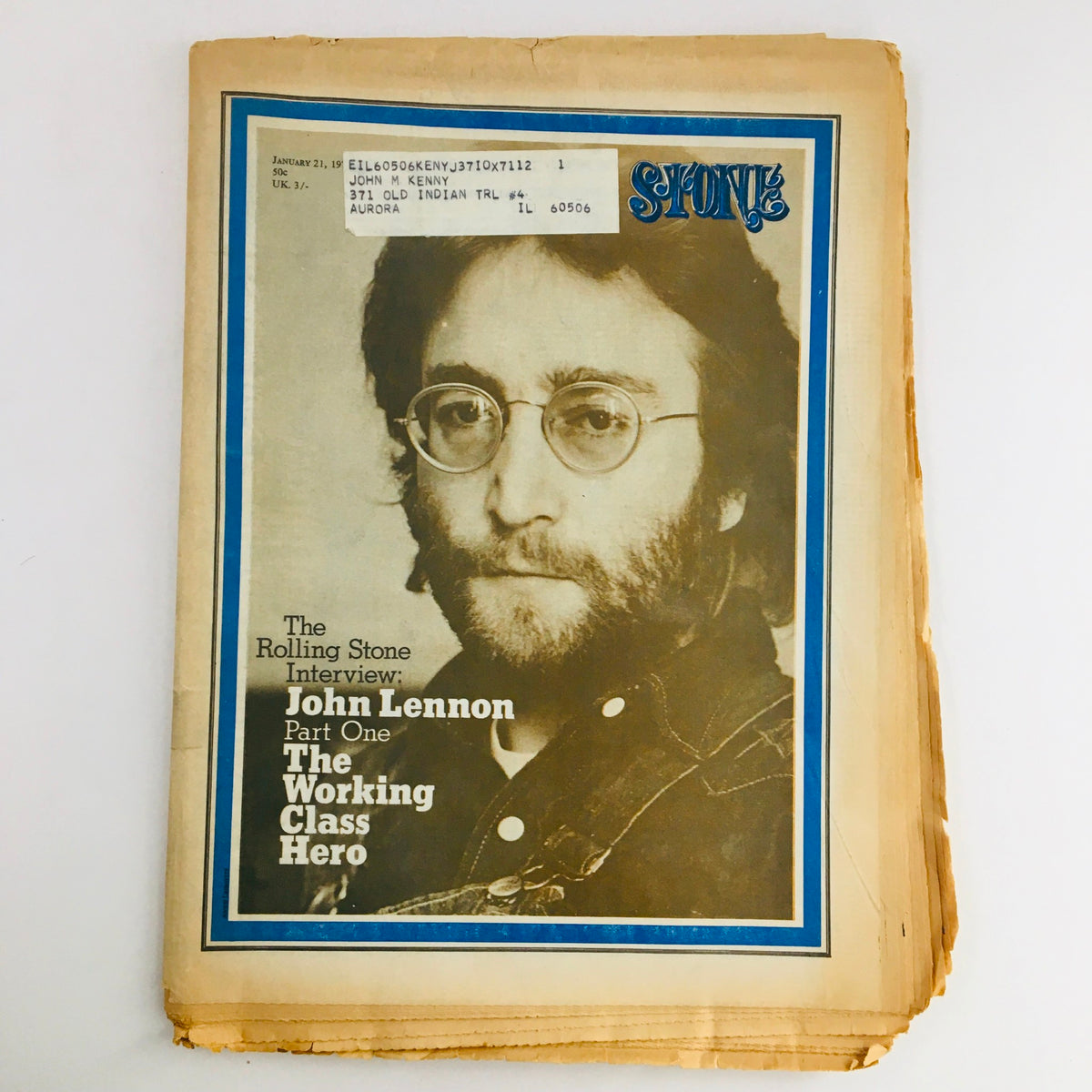
The January 21, 1971 issue of Rolling Stone is one of the most consequential single issues in the magazine's history, and one of the most important documents of John Lennon's post-Beatles identity. The cover story — presented here as Part I, with Part II following in the next issue — was the first installment of what became known as the Lennon Remembers interview, conducted by editor and founder Jann Wenner over two days in December 1970. The timing was extraordinary. The Beatles had formally dissolved just months earlier, and Lennon had released John Lennon/Plastic Ono Band in December 1970 — the stark, primal-therapy-influenced album that represented his most unguarded artistic statement to date. The interview matched the album in its emotional rawness. Lennon spoke with a candor about the Beatles, about Paul McCartney, about the mythology of the 1960s, and about his own psychology that no major rock figure had approached in a mainstream publication before. Collectors who pursue John Lennon magazine coverage from the early solo years consistently identify this two-part Rolling Stone interview as the essential print document of that transitional moment.
The title "The Working Class Hero" — drawn from the lead track of Plastic Ono Band — frames the interview within Lennon's own self-positioning at this precise career juncture. He was actively dismantling the Beatle myth while simultaneously constructing a new public identity rooted in political radicalism, personal vulnerability, and working-class Liverpool origins. The interview's publication in Rolling Stone gave it the largest possible audience within the rock press, and its impact was immediate and lasting: the transcript was subsequently published as a standalone book, and its contents have been cited, analyzed, and debated by Beatles scholars and rock historians for more than five decades. This is not peripheral Lennon ephemera. It is a primary source document of the first order, and the original magazine printing carries a weight that later reproductions cannot replicate. For anyone assembling a serious archive of vintage Rolling Stone issues, this is among a handful of issues that function as genuine landmarks rather than simply strong examples of the run.
The broader cultural context of January 1971 amplifies the issue's significance further. The immediate post-Beatles period was a moment of profound disorientation for a generation that had organized much of its cultural identity around the band. Lennon's willingness to speak publicly and unsparingly about the dissolution — about the business conflicts, the personal fractures, the disillusionment with the 1960s utopian project — gave readers a framework for processing that loss. The issue arrived as part of a larger early-1971 media moment, alongside Lennon's ongoing work on what would become Imagine, and it captures him at perhaps the most intellectually and emotionally exposed point of his public life. The 1971 magazine archive places this issue within the full landscape of that pivotal year across multiple publications and titles.
About the Publication
Rolling Stone was founded in San Francisco in November 1967 by Jann Wenner, originally as a biweekly publication covering rock music and the counterculture with a seriousness of purpose that distinguished it from the teen fan press on one side and the mainstream entertainment press on the other. By 1971 it had established itself as the definitive journal of record for rock music and its surrounding culture, with a readership that understood it as both a news source and a cultural authority. Its format combined long-form journalism and in-depth interviews — a format Wenner actively championed — with music reviews, political commentary, and photography. The early 1970s represent the publication's first mature period, when writers including Greil Marcus, Lester Bangs, and Hunter S. Thompson were producing work that set the standard for rock criticism and new journalism simultaneously. The Lennon Remembers interview is among the defining editorial achievements of that era.
Key Highlights Inside
- Part I of the Lennon Remembers interview — Conducted by Jann Wenner in December 1970, this is the first half of what became one of the most cited and analyzed interviews in rock history, in which Lennon spoke with unprecedented candor about the Beatles' dissolution, his relationships with his bandmates, and his disillusionment with the mythology of the 1960s.
- Lennon's framing as "The Working Class Hero" — The title drawn from his Plastic Ono Band album positions the interview within his active project of self-reinvention and myth-deconstruction in the immediate post-Beatles period.
- Primary documentation of the post-Beatles transition — Published just months after the band's formal dissolution and simultaneous with the release of John Lennon/Plastic Ono Band, this issue exists at the precise hinge point between the Beatles era and Lennon's solo identity.
- John Lennon cover portrait — The cover image from this period of Lennon's life — stripped of the Beatle context, presenting him as a solo artist and public intellectual — is itself a document of the visual rebranding underway in early 1971.
Condition & Rarity
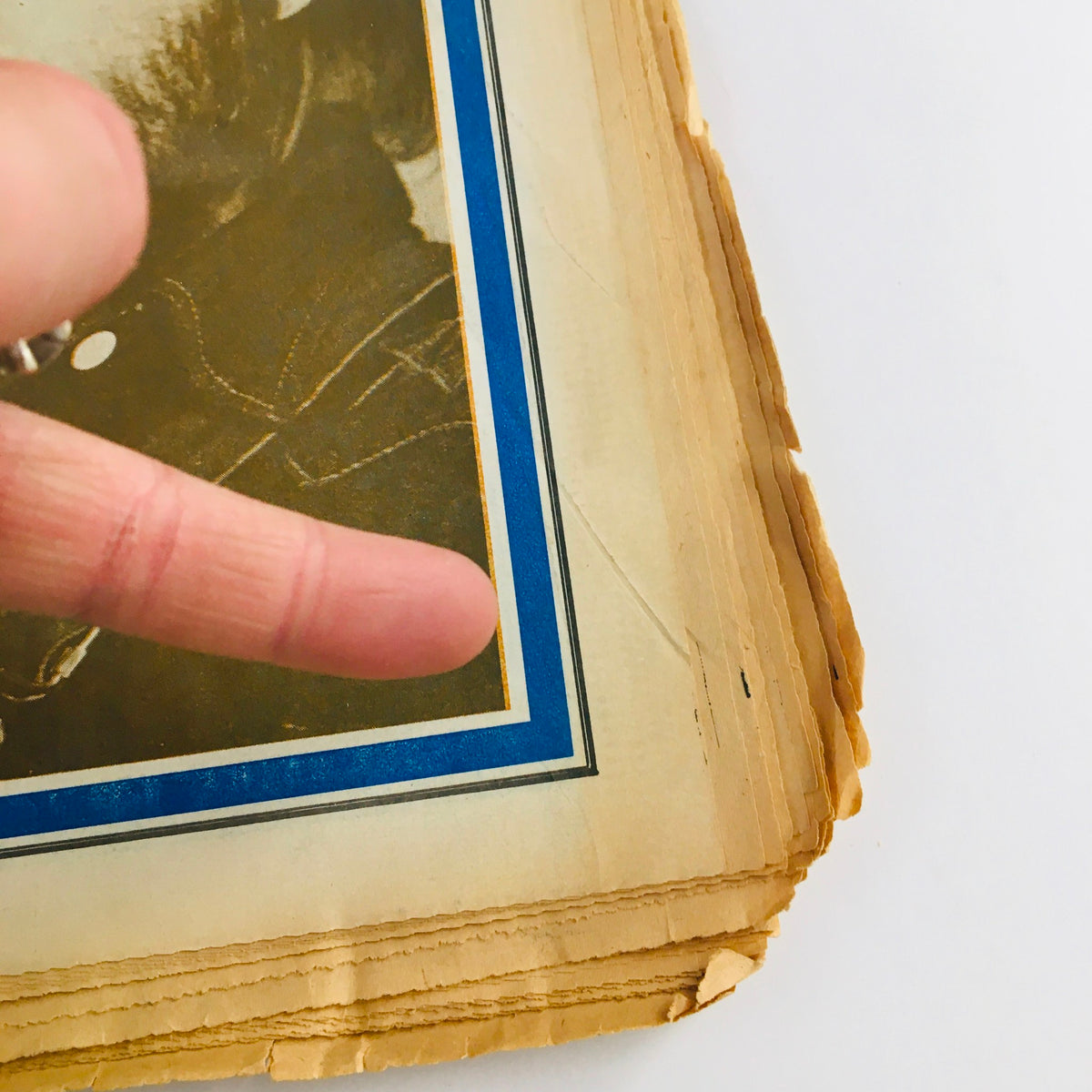
Surviving copies of this issue in good condition with light wear represent a solid collector grade for a fifty-plus-year-old newsprint-format publication that was not designed for archival preservation. Rolling Stone in 1971 was printed on standard newsprint stock with a coated cover, a combination that ages predictably — cover toning, spine stress, and edge wear are expected characteristics rather than defects in copies of this age. The presence of an original subscription address label on the front cover is a condition attribute worth noting: it confirms the issue's circulation history and adds a layer of provenance, though label adhesive can affect the cover surface over time. Good condition implies structurally intact binding, fully legible interior pages, and a cover image that remains presentable for display. The protective plastic sleeve represents correct current storage practice. For this specific issue, given the significance of the interior content, page integrity throughout the Lennon interview section is the condition variable that matters most to research-oriented collectors.
Looking for More Issues Like This?
The Lennon Remembers two-parter is one of the most actively sought sequences in the entire Rolling Stone run, and finding both parts in comparable condition takes real patience. If this issue has already moved on, the full Rolling Stone archive at OriginalMagazines.com is the best place to track what's currently available across the publication's run — including the Part II follow-up issue. Collectors focused specifically on Lennon's post-Beatles print presence will find the John Lennon magazine collection worth exploring alongside it, and the broader 1971 magazine archive covers the full range of titles documenting that pivotal year in rock history.