
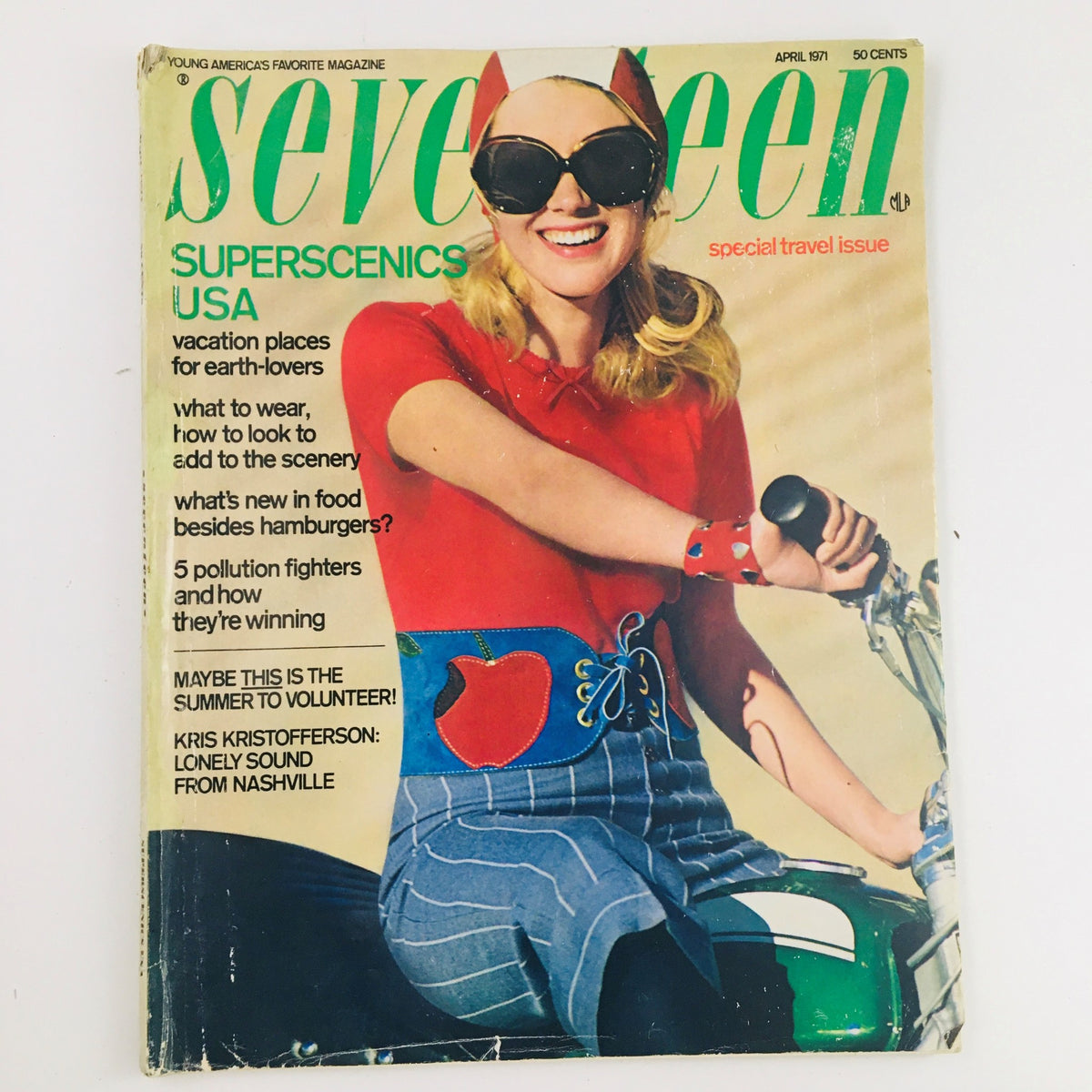


Description
Collector's Note – Why This Issue Matters
This April 1971 issue of Seventeen, themed "Lonely Sound" and built around Kris Kristofferson, lands in an almost impossibly precise window of his career. Just one month earlier, in March 1971, Janis Joplin's posthumously released recording of "Me and Bobby McGee," the song Kristofferson had written, hit number one on the Billboard Hot 100, becoming only the second posthumously released single in American chart history to reach that position. Kristofferson himself had only heard Joplin's version for the first time the day after her death in October 1970, and by the time this magazine reached newsstands, that recording had transformed him almost overnight from a struggling Nashville songwriter, one who had famously worked as a janitor at Columbia Records' Nashville studio just a few years earlier, into one of the most in-demand names in American music. A Seventeen magazine cover feature on Kristofferson dated this exact month captures him at the precise moment that transformation was becoming undeniable to the wider public, rather than in any kind of retrospective account.
The "Lonely Sound" framing of this issue also resonates directly with both the man and the moment. Kristofferson's own debut album, simply titled Kristofferson, had built its identity around themes of loneliness, love, and longing, and the success of "Me and Bobby McGee" specifically carried genuine personal weight for him given his relationship with Joplin before her death. That same year, the commercial momentum from Joplin's hit would help push sales of his follow-up album, The Silver Tongued Devil and I, to eventual gold certification, while a separate 1971 release, Border Land, would reach number six on Billboard's country albums chart. By the end of 1971, as one retrospective account put it, Kristofferson had gone from virtual obscurity to genuine songwriting stardom, a trajectory this April issue captures right at its inflection point.
For collectors of Kris Kristofferson memorabilia and early-1970s outlaw country ephemera specifically, this issue's dateline places it squarely within the single most consequential month of his entire career shift from Nashville songwriter to recognized public figure. A 1971 magazine from this exact window is a genuinely well-timed artifact, documenting Kristofferson's emergence as it was actively happening in real time.
About the Publication
Seventeen magazine, first published in 1944, was one of the earliest and most influential American teen magazines, built around fashion, beauty, lifestyle content, and celebrity coverage aimed at a teenage female readership. By the early 1970s, the magazine had a long-established history of pairing its core fashion and lifestyle content with music and entertainment coverage reflecting whichever artists were capturing youth attention at a given moment, a format that made room for an artist like Kristofferson alongside the magazine's more typical teen-pop fare. The inclusion of a country and folk-rooted songwriter like Kristofferson on a Seventeen cover reflects the genuinely broad cultural reach his sudden, "Me and Bobby McGee"-driven fame had achieved by spring 1971, extending well beyond the traditional country music audience into mainstream youth culture more broadly. Specific editorial details unique to this particular issue beyond its Kristofferson feature are not independently confirmed here, but the magazine's general format and audience during this period are well documented.
Key Highlights Inside
- Cover feature on Kris Kristofferson, published one month after Janis Joplin's posthumous recording of his song "Me and Bobby McGee" reached number one on the Billboard Hot 100 in March 1971, an event that transformed Kristofferson from a struggling Nashville songwriter into a nationally recognized name almost overnight.
- "Lonely Sound" theme, resonating directly with the thematic content of Kristofferson's debut album and the genuinely personal weight the success of "Me and Bobby McGee" carried for him, given his prior relationship with Joplin before her October 1970 death.
- Arrives during the same year Kristofferson's album The Silver Tongued Devil and I would go on to achieve gold certification, riding the commercial momentum generated by Joplin's hit recording of his earlier song.
- Beyond the general framing of the Kristofferson feature and its "Lonely Sound" theme, the specific article content, interview material, and full scope of interior content for this particular issue are not confirmed here. Collectors interested in the complete contents should plan to verify them directly against the physical issue.
Condition & Rarity
Issues of this type are generally evaluated by collectors against a few key benchmarks: whether the copy is a newsstand edition or a subscription copy, whether a mailing label is present, and the overall condition of the cover, spine, and interior pages. A newsstand edition without a label is typically considered more desirable than a labeled subscription copy, since the unmarked cover preserves the original photography and design exactly as it appeared on the rack. A grade of "good" with minor wear reflects a presentable copy consistent with the magazine's age, since teen magazines from the early 1970s were printed on relatively inexpensive paper stock not intended for long-term archival preservation. The minor rip on the back of the magazine noted in this listing is a common condition issue for periodicals of this vintage, and collectors generally weigh it against the overall strength of the cover image and completeness of the interior pages. Protective plastic sleeving is a common and recommended storage method for vintage periodicals like this one, helping to guard against further handling wear and additional tearing without altering the item itself. Collectors evaluating any surviving copy of this issue should examine the extent of the noted rip closely, along with the overall integrity of the spine and binding, since these are the factors most likely to affect both display quality and long-term value.
Looking for More Issues Like This?
An April 1971 Seventeen capturing Kris Kristofferson in the exact month after "Me and Bobby McGee" hit number one is a genuinely well-documented piece of early-1970s music history. If you're chasing more from this pivotal moment in Kristofferson's career, our Seventeen magazine collection is a great place to keep browsing, and our broader 1971 magazines collection offers a wider look at everything else that hit newsstands that year. Either is a strong starting point whether your focus is on Kristofferson's breakthrough specifically, on early-1970s outlaw country culture more broadly, or simply on 1971 as a pivotal year in American music.