


Description
Collector's Note – Why This Issue Matters
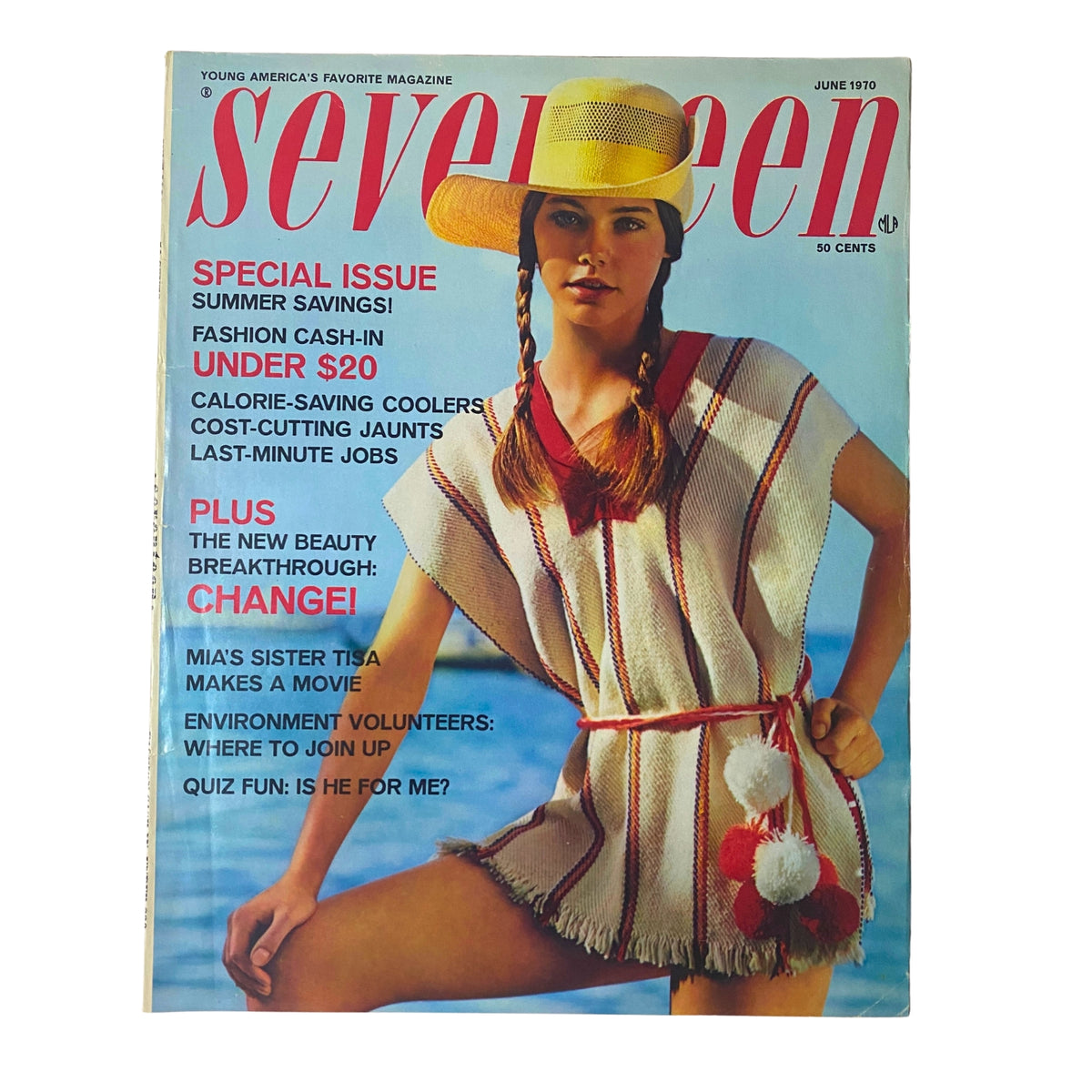
The June 1970 issue of Seventeen magazine — a special "Summer Savings" edition focused on fashion under $20 — is a primary document of American teen culture at one of the most historically charged and culturally significant moments of the postwar era. June 1970 arrived just one month after the Kent State shootings of May 4, in the immediate aftermath of the American invasion of Cambodia and the nationwide student strikes that followed, at a moment when the political consciousness of American youth was at its most acute and most visible. A teen fashion magazine's "Summer Savings" special issue published in this environment is itself a historically revealing artifact: it documents the mainstream commercial teen media's navigation between the aspirational, practical consumer content that formed its editorial core and the extraordinary political and social context its readership was living inside. The "Under $20" framing of the fashion content carries specific period meaning — by June 1970, the post-sixties consumer culture was already producing the budget-consciousness and value-seeking that would intensify through the decade's economic difficulties, and affordable fashion for teenagers was a genuine editorial priority rather than merely a marketing angle. The full arc of the magazine's editorial engagement with American teen culture across this pivotal decade is traceable through the Seventeen magazine collection.
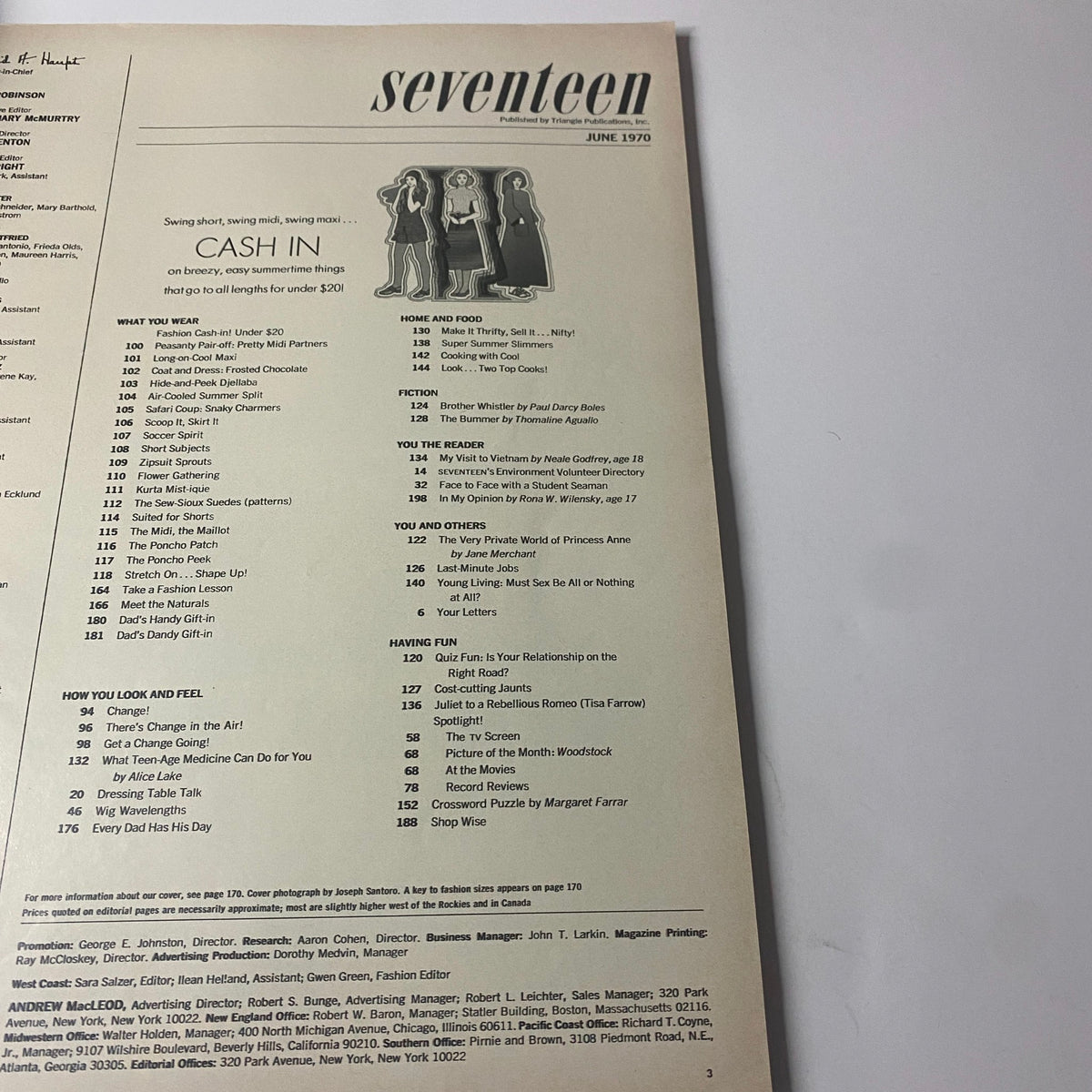
The specific content of this issue rewards attention from multiple research directions simultaneously. Neal Goldberg's "My Visit to Vietnam" — written by an eighteen-year-old — is an extraordinary primary source document: a first-person teen perspective on the war that was the defining political crisis of this readership's generation, published in a mainstream fashion magazine in June 1970. This is precisely the kind of content that distinguished Seventeen at its most editorially ambitious from purely commercial teen publications — the editorial judgment that its readers needed and deserved this kind of direct engagement with the political reality of their lives alongside the fashion content. The "Environment Volunteer Directory" similarly documents an early and historically specific moment in environmental consciousness becoming a mainstream teen concern, before the environmental movement had achieved the institutional development it would have by the end of the decade. Margaret Farrar's crossword — she was the legendary first crossword editor of The New York Times and one of the most significant figures in American puzzle history — adds a specific note of journalistic pedigree to an issue that is already more substantive than its "Summer Savings" cover framing suggests. The broader context of this pivotal year is documented across the 1970 magazine collection.
The fashion content itself is a primary document of early-seventies teen fashion at a specific transitional moment. The simultaneous presence of mini, midi, and maxi styles in a single issue — the "Summer Sisters: Midi Partners" alongside "Short Short Strip Charmers" — captures the specific aesthetic plurality of 1970 fashion, when the midi length debate was one of the most actively discussed fashion controversies in the American press and the simultaneous co-existence of dramatically different hemlines was producing exactly the kind of editorial hedge that this issue's fashion spread represents. The crochet and natural fiber content reflects the early-seventies' movement toward craft, texture, and naturalistic materials that would define the decade's fashion aesthetic, captured here at its earliest and most genuinely exploratory stage.
About the Publication
Seventeen magazine was founded in 1944 by Helen Valentine and published by Triangle Publications, as the listing notes, as the first major American magazine specifically targeted at teenage girls. It established itself over the following decades as the authoritative voice of American teen feminine culture, combining fashion, beauty, fiction, and practical lifestyle content with an editorial ambition that consistently exceeded purely commercial teen publications. By June 1970 it had been publishing for twenty-six years and had developed a specific editorial identity that balanced aspirational fashion and beauty content with genuine engagement with the social, political, and personal concerns of American teenage women — concerns that in June 1970 were more acute and more politically charged than at any point in the magazine's history. Its fiction tradition was particularly distinguished, publishing early or significant work from major American writers across its history.
Key Highlights Inside
- "Fashion Cash-in: Under $20" summer fashion spread — a primary document of early-seventies teen fashion at its most plurality-embracing, capturing mini, midi, and maxi lengths coexisting in a single issue at the precise moment of the hemline debate that was one of 1970's most discussed fashion controversies, alongside crochet and natural fiber content that documents the emerging naturalistic aesthetic of the decade.
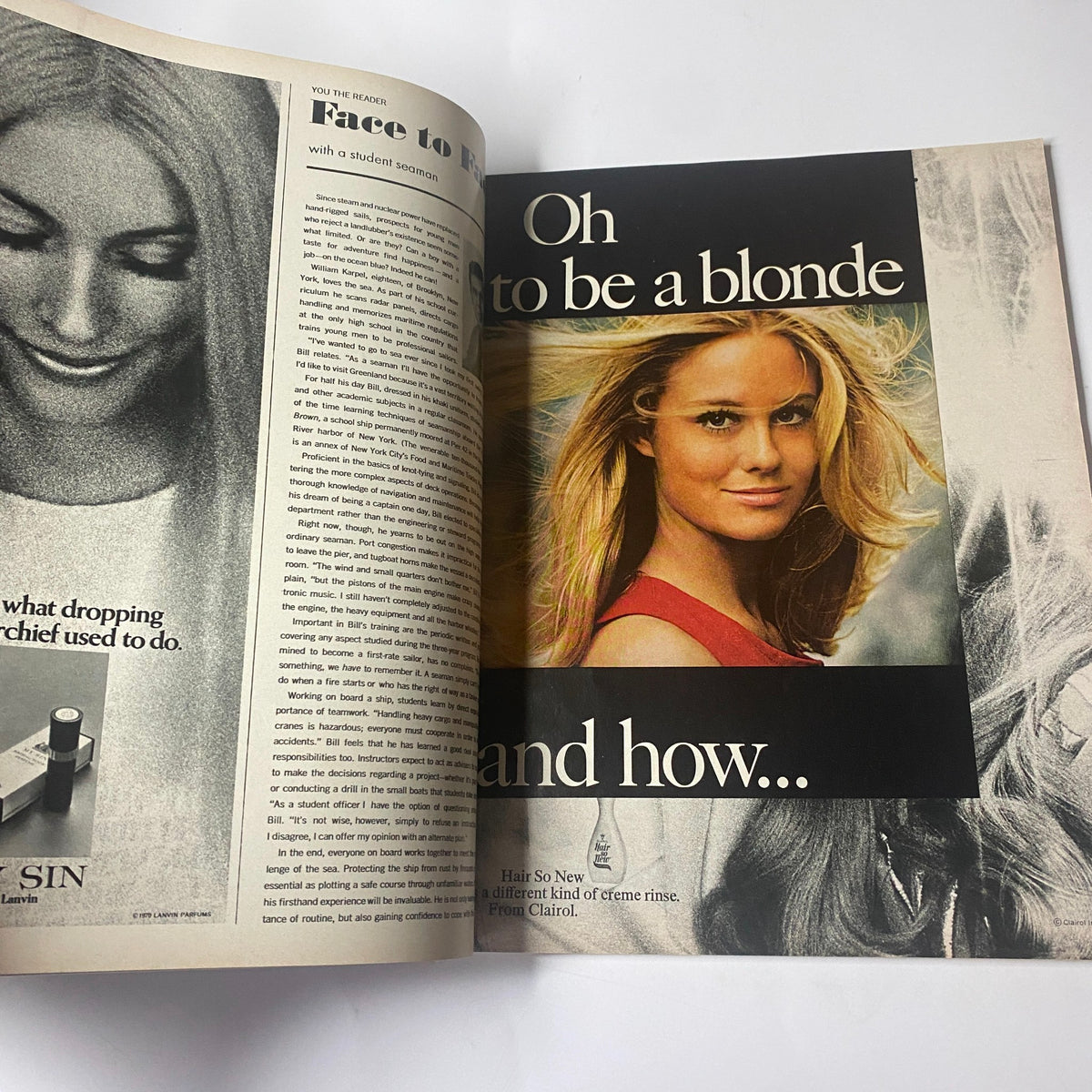
- "My Visit to Vietnam" by Neal Goldberg, age 18 — a first-person teen perspective on the defining political crisis of the readership's generation, published one month after Kent State in a mainstream fashion magazine, constituting a primary document of how Seventeen's editorial ambition extended to genuine political engagement alongside its consumer content.
- "Environment Volunteer Directory" — an early document of environmental consciousness becoming a mainstream teen concern, capturing a specific moment in the environmental movement's development before it had achieved the institutional and commercial form it would take by the decade's end.
- Fiction by Paul Darcy Boles ("Brother Whistler") and Thomaline Aguallo ("The Drummer") — short fiction representing Seventeen's sustained literary tradition, alongside "In My Opinion" by Nora W. Wrinensky, providing the range of voice and perspective that distinguished the magazine's editorial ambition from purely fashion-focused competitors.
- Crossword by Margaret Farrar — a contribution from the legendary first crossword editor of The New York Times and one of the most significant figures in American puzzle history, adding a specific note of journalistic and cultural pedigree to the issue's broader content.
- Tisa Farrow feature and Woodstock reflections in "On the Month" — pop culture content documenting the specific celebrity and cultural landscape of early-1970 American teen life, with the Woodstock reference capturing the ongoing cultural processing of the August 1969 event that remained a defining reference point for American youth culture well into 1970.
Condition & Rarity
Surviving copies of the June 1970 Seventeen special issue in very good condition represent a meaningful find for collectors of American teen culture history, early-seventies fashion documentation, and Vietnam-era youth media. Very good condition with only minor edge wear is the upper tier of what typically survives for a teen magazine from over fifty years ago without archival preservation — these publications were handled heavily by their original readers and rarely received the same care that more formally prestigious titles received. The no-label condition confirms newsstand origin, meaning the cover survives without subscriber label obscuration. The protective plastic sleeve is the correct conservation measure for a magazine of this paper stock and age, stabilizing further deterioration without altering the original item. The specific combination of substantive political content, early environmental documentation, and the detailed fashion spread makes this issue more valuable to researchers across multiple fields than its consumer magazine format alone would suggest.
Looking for More Issues Like This?
A no-label very good condition copy of Seventeen's June 1970 Summer Savings special issue — with the Vietnam first-person essay, environmental directory, Margaret Farrar crossword, and hemline-plurality fashion spread all intact — is a more historically layered primary source document than its cover framing suggests, and it rewards attention from collectors working across teen culture, fashion history, and Vietnam-era American social history simultaneously. If this particular issue is no longer available, the full Seventeen magazine collection at OriginalMagazines.com is the most comprehensive source for exploring other issues across the publication's long and editorially ambitious run. For collectors building a broader archive of this pivotal year in American youth culture, the complete 1970 magazine collection brings together titles from one of the most consequential years in twentieth-century American history.