


Description
Collector's Note – Why This Issue Matters
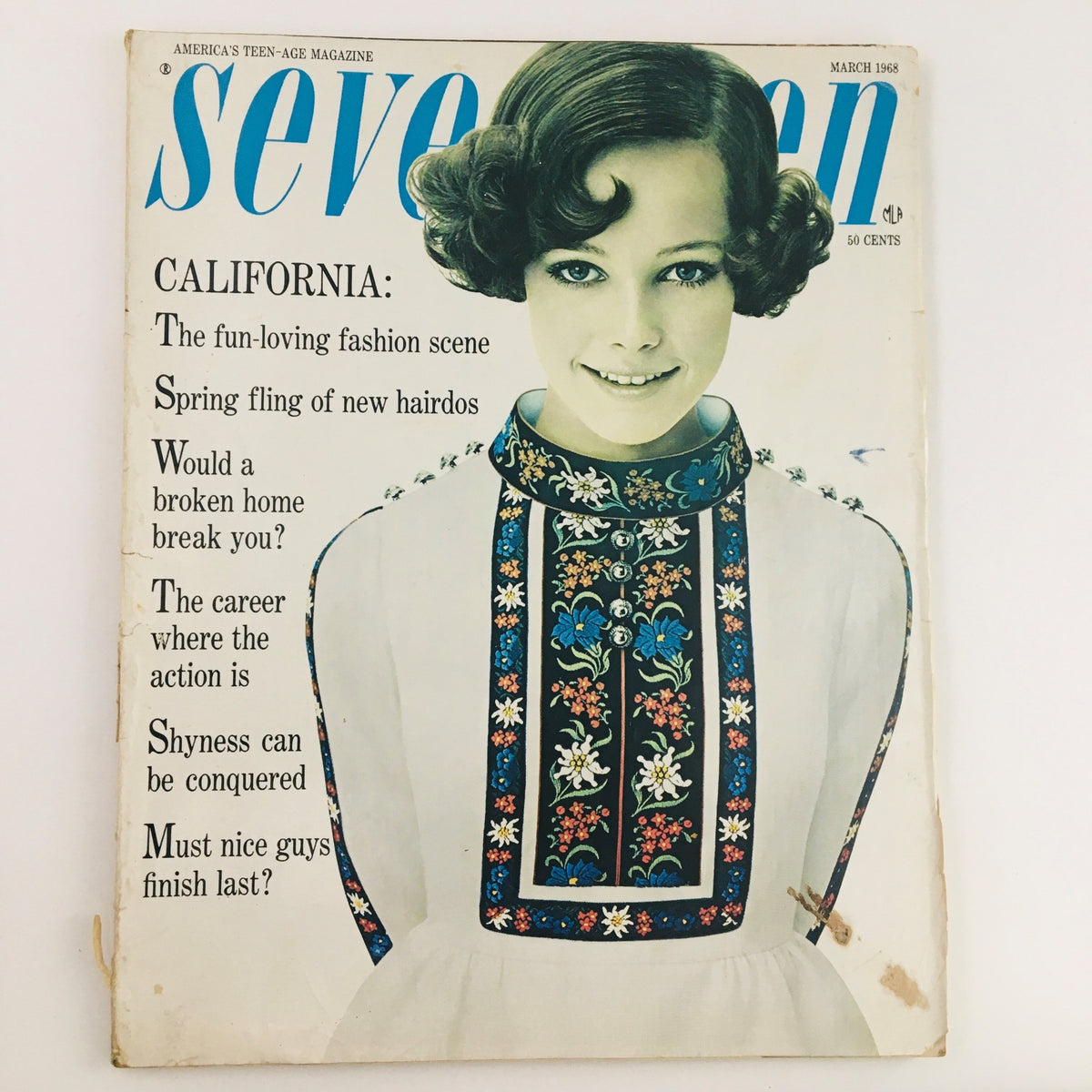
The March 1968 issue of Seventeen Magazine with its confirmed "Spring Fling of New Hairdos" feature is a primary document of American teen fashion culture at one of the most aesthetically charged and most culturally turbulent moments of the entire decade — the spring of 1968, a year that would encompass the assassinations of Martin Luther King Jr. and Robert F. Kennedy, the Chicago Democratic Convention's violent confrontations, and the full emergence of the counterculture as a mainstream cultural force. A spring fashion issue of Seventeen from March 1968 was being produced and read against this specific backdrop, and the hairdo content that gives this issue its primary identity is itself historically specific in ways that fashion historians will recognize immediately. The spring of 1968 was occurring at the precise moment when the hairstyle — specifically the shift from the structured, set, and spray-fixed styles of the early 1960s toward the straighter, more natural, more ethnically expressive hair cultures that the late-1960s counterculture and civil rights movement were simultaneously legitimizing — was one of the most culturally loaded and most aesthetically contested dimensions of young women's self-presentation. A "Spring Fling of New Hairdos" feature in a March 1968 Seventeen is primary documentation of how the mainstream teen fashion press was navigating that specific moment of transition — which styles it was presenting as the new and desirable, how it was framing the relationship between fashion-forward hairstyling and the broader cultural changes that were transforming what "new" meant for young American women in 1968. For collectors building a serious archive of Seventeen's publishing history, the Seventeen magazine collection at OriginalMagazines.com provides essential depth across the publication's full run, with the late-1960s spring issues representing a particularly historically resonant tier within that body of material.
The March timing of this hairdo feature adds a secondary historical dimension that fashion historians focused on seasonal beauty culture will find significant. March 1968 represented the spring season's opening editorial moment — the issue that set the tone for the seasonal aesthetic transition that would define what teen girls were aspiring toward in the coming months. The specific hairstyles featured in a March 1968 Seventeen were therefore the publication's editorial statement about what the spring-summer 1968 teen beauty vocabulary would look like, and that statement was being made in a specific cultural context where hair had acquired a political and generational charge — from the Black Power movement's embrace of the Afro as an assertion of cultural identity to the hippie counterculture's long, natural styles as a rejection of conformist grooming norms — that gave any mainstream beauty publication's hairdo coverage a specific ideological dimension whether it acknowledged that dimension or not. The no-label newsstand condition preserves the full visual integrity of the March 1968 cover design without subscription label disruption, which is a meaningful positive for an issue whose cover photography — almost certainly featuring the hairdos announced in the issue title — is itself primary visual documentation of the spring 1968 teen beauty ideal as Seventeen was constructing and presenting it. The full range of 1968 magazines and publications from this year documents American culture at one of its most turbulent and most historically consequential moments, and this Seventeen issue sits within that body of material as a primary document of how mainstream teen fashion journalism was engaging with the aesthetic changes of that extraordinary year.
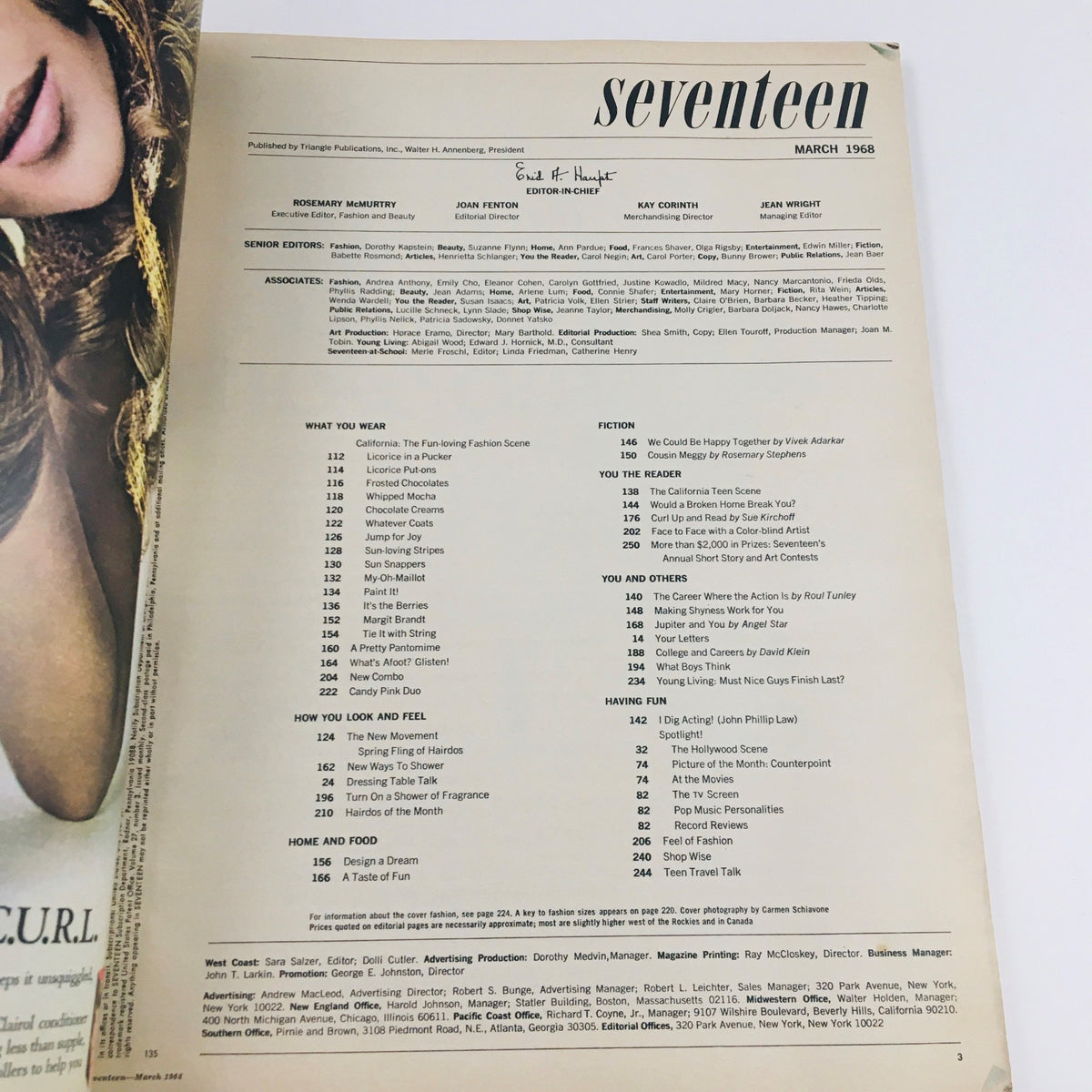
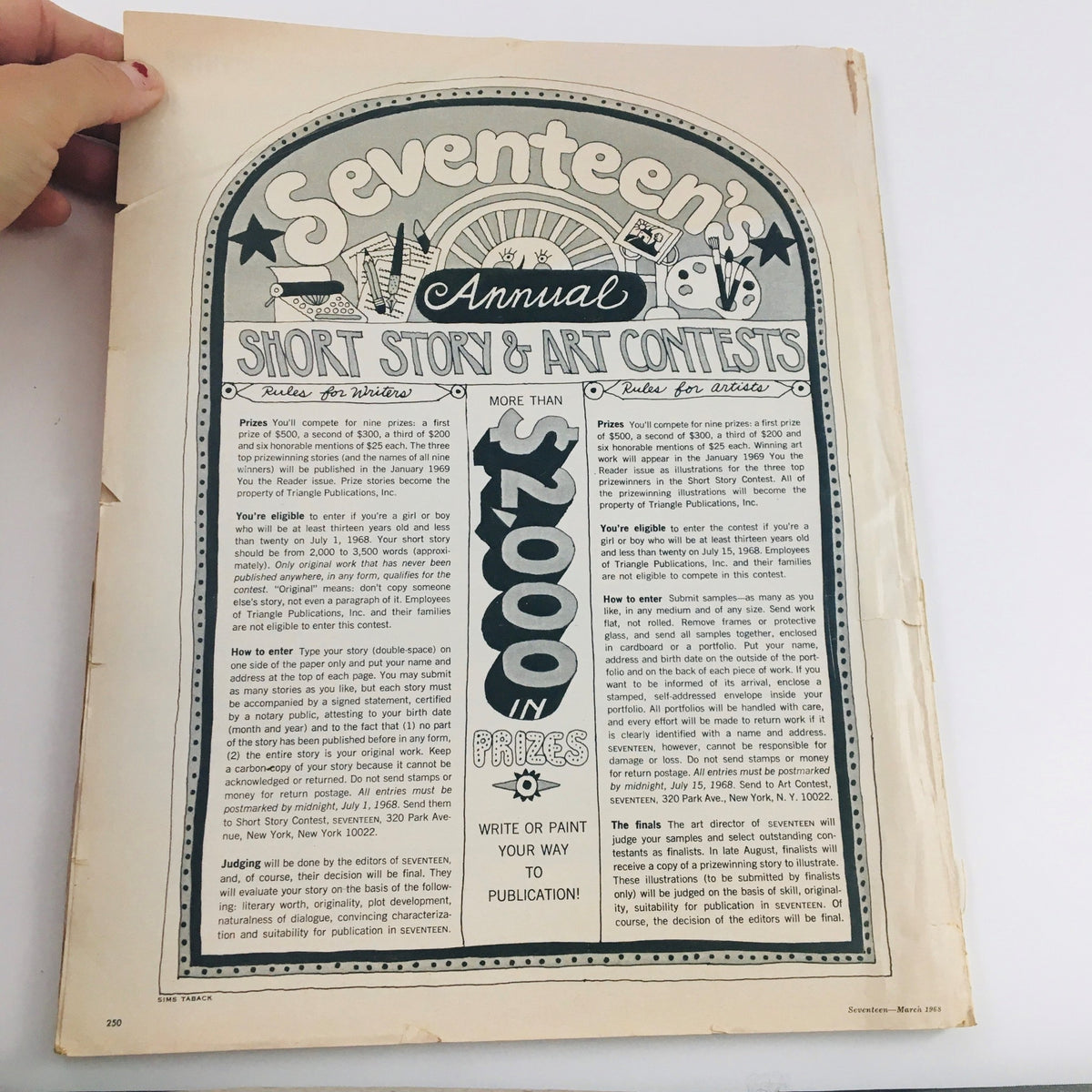
The condition note of pages going up to page 250 — with pages missing in the back — is worth engaging with directly for collectors who approach this issue as a primary fashion research source. In a March 1968 Seventeen, the primary spring fashion content including the headline "Spring Fling of New Hairdos" feature would have been concentrated in the front and middle sections of the magazine rather than in the back pages where smaller advertisements and secondary editorial content typically appeared. The fashion photography, the hairstyling features, and the primary spring fashion editorial content that give this specific issue its primary research value were almost certainly within the pages that survive to page 250, making the missing back pages a less consequential limitation for the specific research purposes most likely to motivate acquisition of this particular issue.
About the Publication
Seventeen Magazine was founded in 1944 and had established itself by the late 1960s as the most widely read and most editorially authoritative fashion and lifestyle magazine for American teenage girls, its editorial mix of fashion, beauty, fiction, and cultural content defining the aspirations and aesthetic values of its specific readership demographic across multiple generations. By March 1968, the publication was navigating the specific challenge of serving a readership whose world was being transformed by forces — the civil rights movement, the counterculture, second-wave feminism's earliest stirrings — that were reshaping what teenage girl fashion, beauty, and aspiration meant. Its spring fashion issues were its most commercially and editorially significant seasonal publications, and the hairdo special featured in this March 1968 edition reflects the publication's specific engagement with one of the late-1960s teen beauty culture's most contested and most culturally charged categories.
Key Highlights Inside
- "Spring Fling of New Hairdos" — 1968 teen beauty transition documented at its mainstream commercial moment — The confirmed hairdo feature preserves primary Seventeen editorial documentation of the spring 1968 teen hairstyle vocabulary at the specific moment when hair was acquiring cultural and generational significance beyond its purely aesthetic function, capturing how the mainstream teen fashion press was framing the transition from early-1960s structured styles toward the late-1960s natural and expressive alternatives that were simultaneously being driven by multiple cultural forces.
- No-label newsstand edition — full March 1968 Seventeen cover preserved — The confirmed no-label newsstand origin preserves the full visual integrity of the March 1968 cover design and hairdo photography without subscription label disruption, representing a meaningful positive for a publication whose cover imagery is itself primary visual documentation of the specific teen beauty ideal being presented as the spring 1968 aspirational standard.
- Spring 1968 teen fashion editorial content — late-1960s transition documented — The March 1968 Seventeen editorial content would have documented the full range of spring 1968 teen fashion aspirations — clothing, accessories, beauty — in the specific late-1960s aesthetic transition context when the mod era was giving way to the counterculture-influenced sensibilities that would define the decade's final years.
- Content intact through page 250 — primary fashion documentation accessible — The confirmed page range through page 250 preserves the primary fashion and beauty editorial content that constitutes the issue's primary research value, as the headline hairdo feature and spring fashion photography would have been concentrated in the front and middle sections that survive.
- Note: Specific hairdo style names, photographer credits, model identification, and the complete editorial contents of this issue beyond the confirmed hairdo feature and general spring fashion context have not been independently verified beyond the listing description. Collectors should note that pages beyond page 250 are missing from the back of this issue.
Condition & Rarity
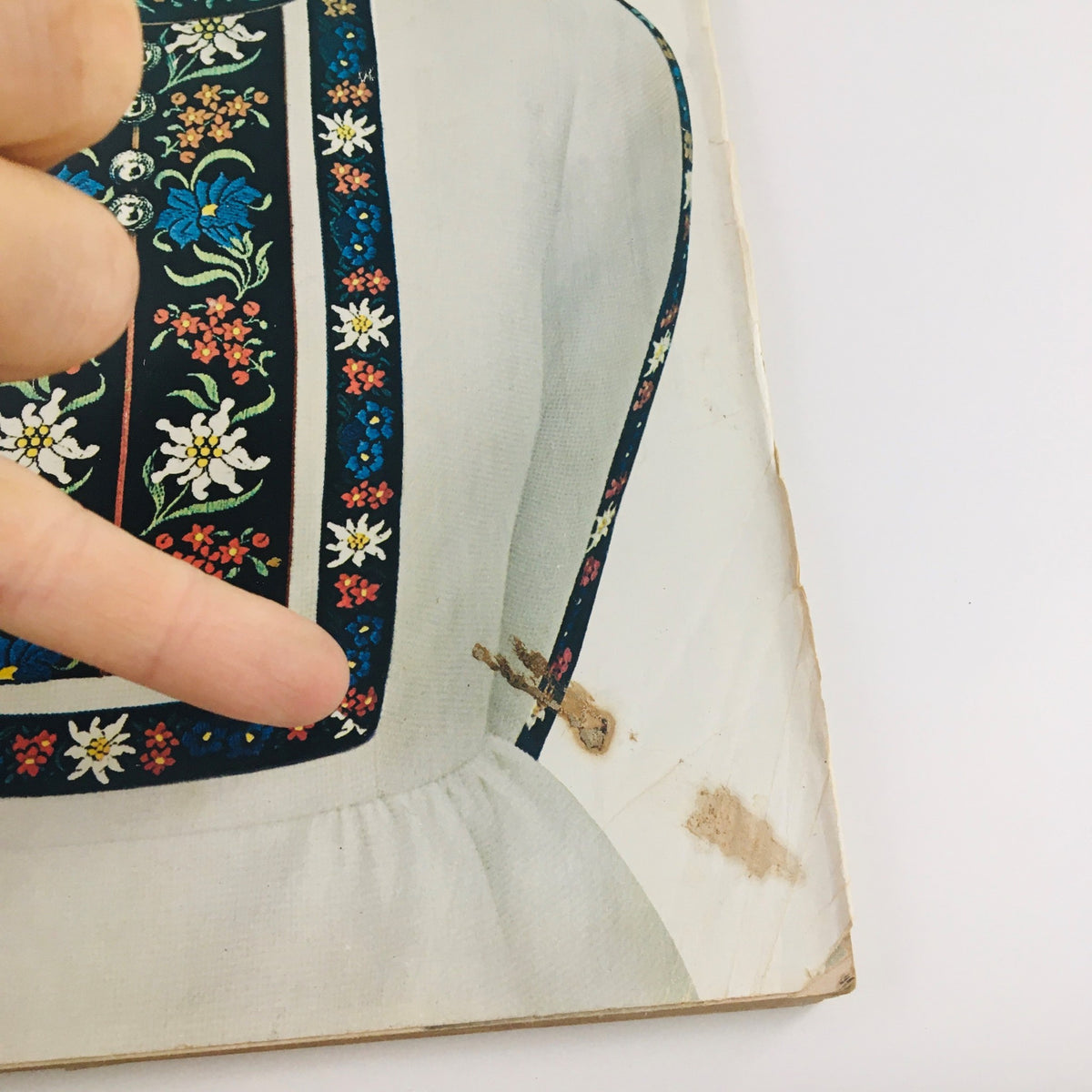
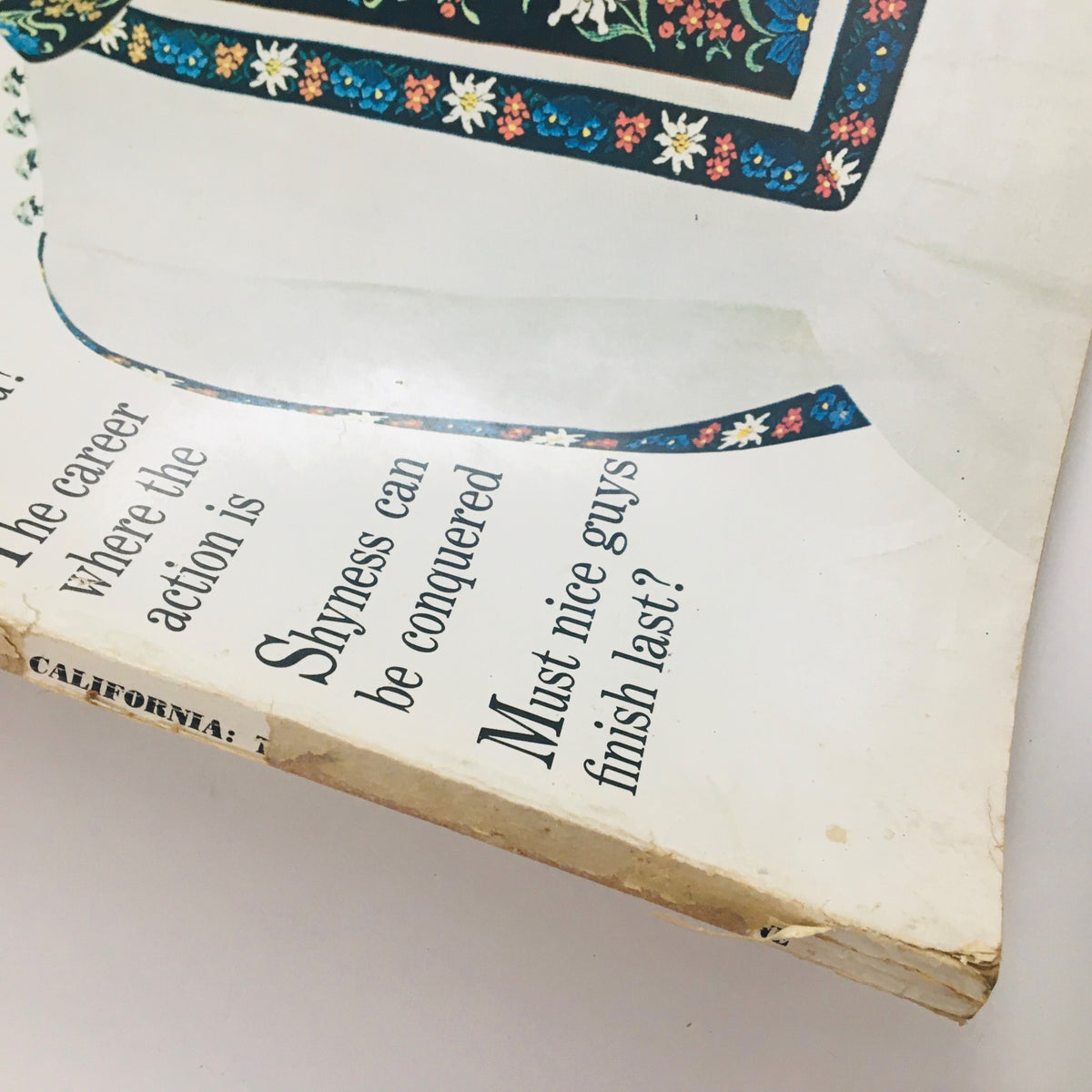
This issue is described as being in acceptable condition with minor wear throughout, marks, binding wear, pages missing in the back (content confirmed through page 250), no label, and a plastic protective covering — a condition profile that requires honest assessment relative to the collector's specific research purposes. The missing back pages are the most significant content limitation and should be weighed against the fact that the primary spring fashion and hairdo content that gives this specific issue its research identity was almost certainly within the surviving page range. The acceptable-overall, no-label, newsstand status preserves the full cover presentation. The marks and binding wear are consistent with a publication of this age and original use context. The plastic protective covering indicates deliberate preservation care. Seventeen spring fashion issues from 1968 in no-label newsstand condition are less commonly encountered than subscription-labeled examples from the same distribution era, and the specific hairdo feature content that makes this March 1968 edition historically distinctive gives it a research identity within the Seventeen archive that routine issues of the period do not possess with equal specificity.
Looking for More Issues Like This?
Seventeen spring fashion issues from the late 1960s — particularly no-label newsstand examples featuring the specific beauty and hairstyle transition content that makes March 1968 one of the most culturally resonant moments in the publication's mid-century run — are actively sought by teen fashion historians, late-1960s beauty culture researchers, and serious Seventeen archive collectors. If this March 1968 issue is no longer available, the Seventeen magazine collection at OriginalMagazines.com is the most comprehensive resource for exploring what else has surfaced from this important publication's full run. For collectors building a broader documentary record of American teen culture and popular life during one of the most historically turbulent years of the twentieth century, the 1968 magazines collection brings together a wide range of primary source material from that extraordinary year.