
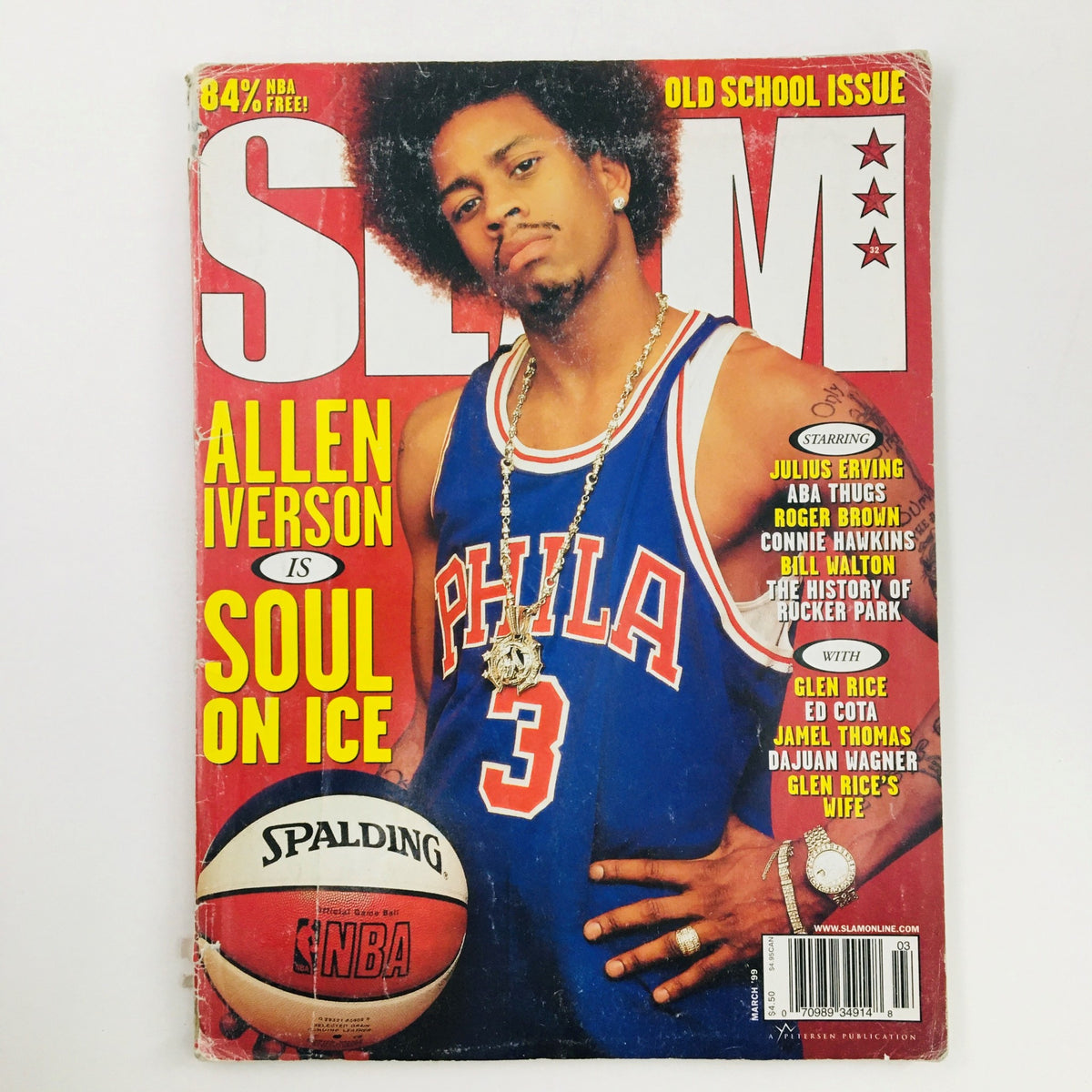

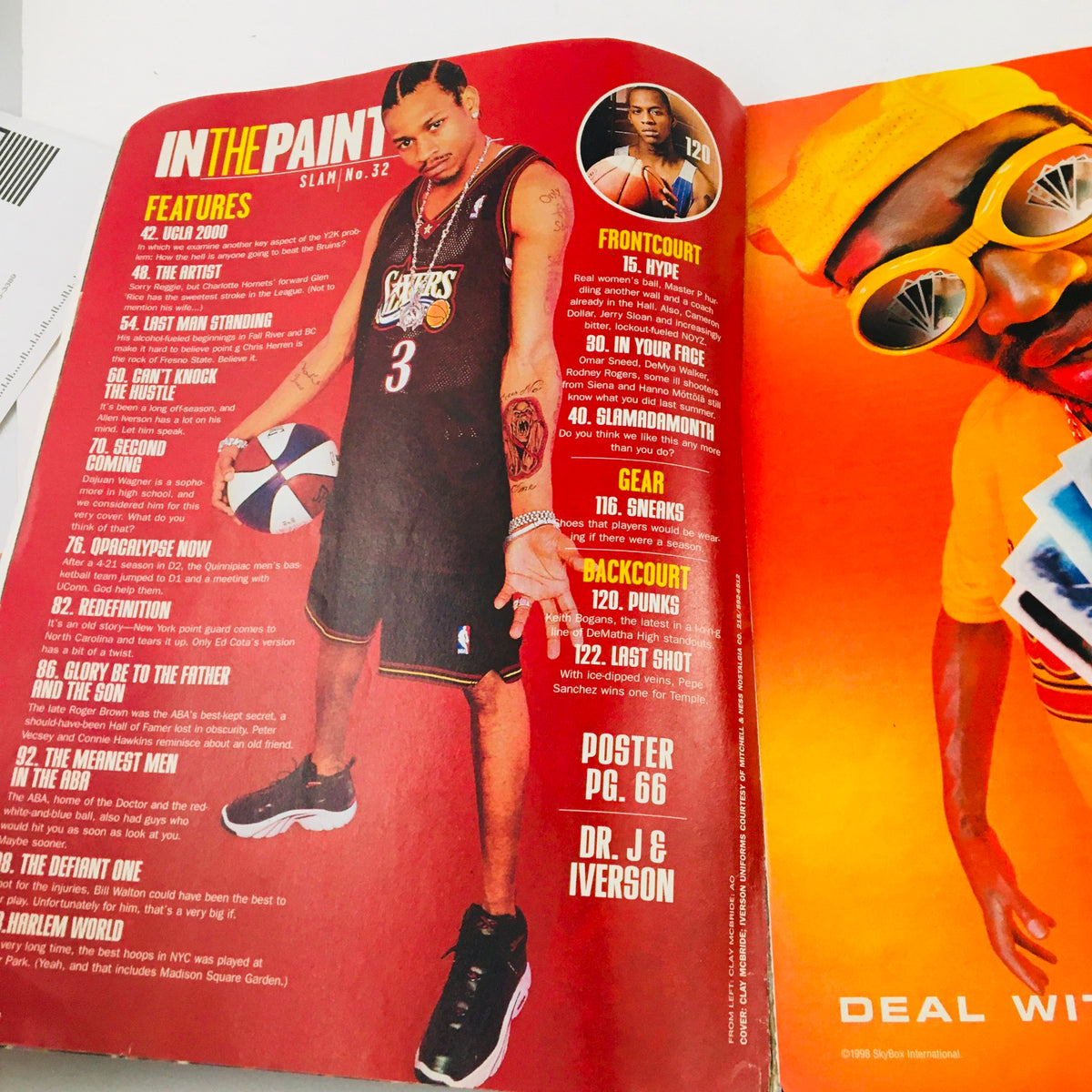


Description
Collector's Note – Why This Issue Matters
March 1999 arrived in the middle of one of the most turbulent stretches in NBA history. The 1998–99 season had been gutted by a labor lockout — the longest work stoppage in league history at that point — reducing the schedule to just 50 games and displacing the season's start all the way to February. The basketball world was still processing the departure of Michael Jordan, the breakup of the Chicago Bulls dynasty, and a genuine uncertainty about who and what would define the next era of the sport. Into that vacuum stepped Allen Iverson, already established as the most electrifying and polarizing player in the league. His presence in a March 1999 Slam issue is not incidental — he was the central figure in the argument about what the NBA was becoming, and Slam was the publication most committed to covering that argument honestly. Collectors building a serious archive of vintage Slam Magazine issues will recognize this date as sitting at the precise fault line between the Jordan era and everything that followed.
Julius Erving's inclusion alongside Iverson creates an editorial pairing with real historical resonance. Dr. J had defined a previous generation's vision of basketball as art — his ABA years in particular representing a style of play that was, for a time, considered too flamboyant for mainstream acceptance before it transformed the sport entirely. The listing's reference to an "ABA Thugs" feature suggests the issue engaged directly with that history, examining how the ABA's outlaw reputation and its player culture had been retrospectively reappraised. That conversation had obvious contemporary relevance in 1999, when Iverson's style, background, and public persona were generating the same kind of establishment discomfort that ABA players had once provoked. The thematic thread connecting Erving's era to Iverson's was not accidental — it was exactly the kind of cultural sports journalism that made Slam essential reading. For collectors interested in magazines from 1999, this issue represents the publication operating at the height of its cultural authority.
Allen Iverson in 1999 was 23 years old, entering his fourth NBA season, and already the subject of more cultural commentary than almost any athlete of his generation. His influence on basketball aesthetics, fashion, and the broader relationship between hip-hop culture and professional sports was becoming impossible to ignore. A newsstand Slam featuring Iverson from this specific lockout-shortened season is a document from the center of that cultural moment — not a retrospective, not a tribute, but a live dispatch from the middle of the storm.
About the Publication
Slam Magazine, launched in 1994, carved out a distinct identity in sports media by covering basketball through the lens of hip-hop culture, street ball, and urban authenticity at a time when mainstream sports publications were still maintaining a careful distance from those influences. Its editorial voice was direct, opinionated, and unafraid of the cultural and political dimensions of the sport — qualities that earned it a fiercely loyal readership among serious basketball fans and players alike. By the late 1990s it had become the most culturally significant basketball publication in the United States, and its covers from this era are among the most collected in sports magazine history. The magazine's willingness to feature players like Iverson on its own terms, rather than through the sanitizing lens of mainstream sports media, made it both a reflection of and a genuine participant in the cultural shifts reshaping professional basketball.
Key Highlights Inside
- Allen Iverson feature: Coverage of Iverson during the lockout-shortened 1998–99 season, a period that crystallized his status as the defining player of the post-Jordan NBA transition.
- Julius Erving and ABA Thugs feature: A retrospective examination of ABA player culture and its legacy — a subject with pointed contemporary relevance given the ongoing debate about style, authenticity, and respectability in late-1990s professional basketball.
- Newsstand edition: Confirmed as a no-label newsstand copy, meaning the cover is fully intact without subscriber label obstruction — significant for collectors prioritizing cover presentation.
- No poster included: The listing specifically notes this issue does not include its original poster insert, which is a standard disclosure for Slam issues of this era and relevant to condition grading.
- Note on additional interior content: Further specific features, columns, and editorial details beyond the confirmed named subjects have not been independently verified from the available listing. Full interior details should be confirmed through direct examination of the issue.
Condition & Rarity
The listing grades this issue Good with minor wear throughout and notes some wear on the binding — an honest and typical condition disclosure for a newsstand copy of a heavily read basketball monthly that is now a quarter century old. The absence of an address label is a positive attribute in collector terms, leaving the cover artwork fully intact and unobscured, which is the preferred state for display grading. The protective plastic covering indicates deliberate preservation at some point in the magazine's history. The explicitly noted absence of the original poster insert is an important transparency: Slam issues from this era routinely included removable poster inserts, and their presence or absence is a standard grading consideration — a complete copy retains the poster, and this one does not. Binding wear on a 1999 Slam is common given the publication's relatively lightweight spine construction and its tendency to be read actively rather than filed away. Collectors evaluating surviving copies of this issue should assess spine integrity, cover gloss retention, and interior page toning as the primary condition indicators.
Looking for More Issues Like This?
Newsstand copies of late-1990s Slam featuring Iverson are genuinely sought after, and an issue that pairs him with a Julius Erving retrospective is a particularly compelling find for collectors of basketball cultural history. The full Slam Magazine archive is the strongest starting point for related issues from this era, and the 1999 magazines collection is worth exploring for anyone documenting that pivotal transitional year in professional basketball.