


Description
Collector's Note – Why This Issue Matters
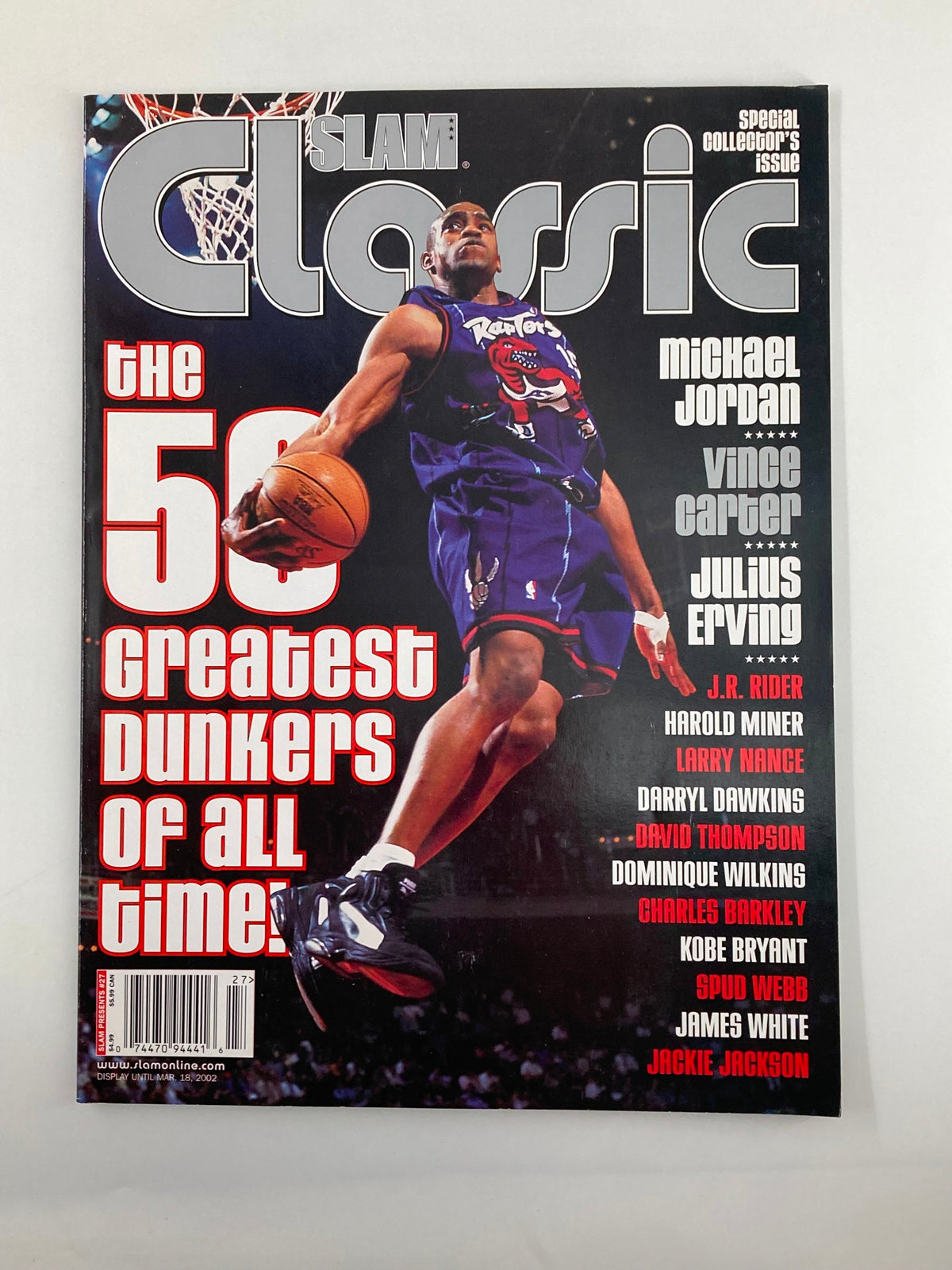
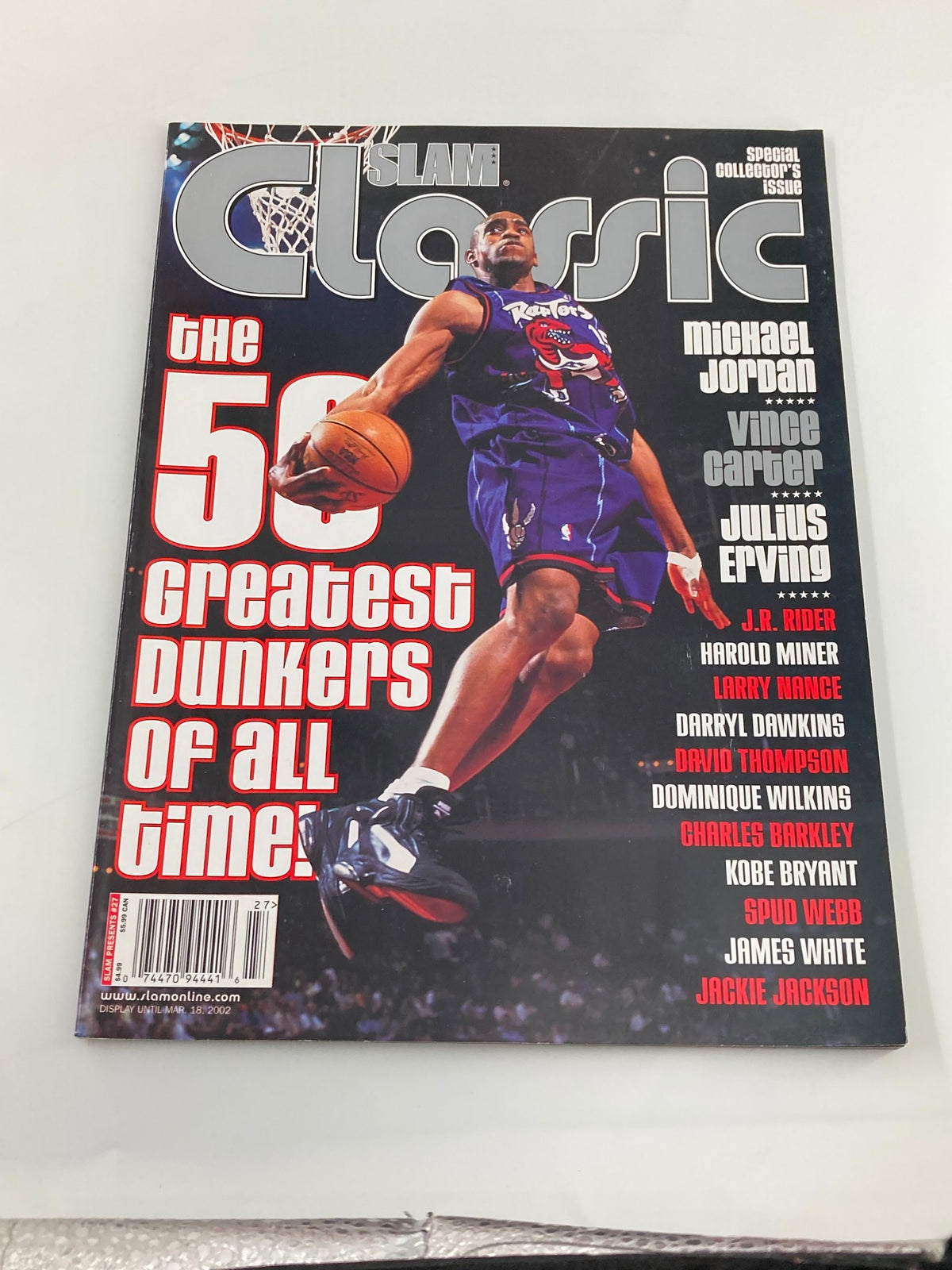
Slam Presents Classic Magazine #27, published in 2002, arrived at a moment when Vince Carter's status in the basketball world was at its most complex and contested. The years immediately surrounding 2002 represented the pivot point in Carter's Toronto tenure — a period during which he remained one of the most breathtaking athletes the game had ever produced while simultaneously navigating the mounting frustrations of playing for a rebuilding franchise in a market the American sports media consistently undervalued. His 2000 Olympic dunk over 7'2" Frédéric Weis had already passed into legend, his 2000 Slam Dunk Contest performance was universally regarded as the greatest in the competition's history, and his capacity for aerial improvisation had earned him the nickname "Half Man, Half Amazing" that Slam magazine had done as much as any publication to cement in the collective basketball consciousness. A Classic issue devoted to Carter in 2002 was not nostalgia — it was an attempt to document a player whose highlight reel was already historic even as his career continued. Collectors building an archive of magazines from 2002 will find this issue a precise document of how the basketball world understood Carter at that charged and transitional moment.
The Slam Presents Classic series occupied a specific and important niche in the basketball publishing landscape of the early 2000s. Where the regular monthly Slam covered the current season's news and personalities with the urgent energy of a street-level dispatch, the Classic series stepped back to deliver deeper, more considered examinations of players and moments whose significance had already been established — a format that gave individual issues a reference quality that the monthly could not sustain. Issue #27's focus on Carter and the Toronto Raptors documents a franchise that had in a remarkably short time gone from expansion afterthought to legitimate playoff contender, almost entirely on the strength of one player's extraordinary gifts. For collectors researching the history of Slam magazine and its role in shaping basketball culture during this era, the Classic series represents some of the publication's most durable and editorially substantial work. The note that this issue does not include a poster is a meaningful condition detail — Slam and its spinoffs regularly included pullout posters that are among the first elements to be removed from circulating copies, making intact no-poster copies a candid representation of the magazine as it survived rather than as it was originally configured.
The early 2000s NBA that this issue documents was a league in genuine transition. The Jordan era had definitively ended, and the question of who would define the next chapter of the game's global expansion was genuinely open. Carter was among the most compelling candidates — a player whose combination of athleticism, skill, and charisma made him the most watchable player in the league on his best nights, and whose Toronto market limitations meant that his national profile in the United States was built almost entirely through highlight packages and moments like the Olympics rather than through the sustained playoff exposure that would have cemented a different kind of legacy. Slam, which had always been the publication most attuned to the aesthetic dimensions of basketball — the style, the artistry, the cultural meaning of how the game was played — understood Carter's significance in those terms better than any other mainstream basketball publication, and the Classic series gave that understanding a format worthy of the subject.
About the Publication
Slam magazine, founded in 1994, established itself rapidly as the most culturally attuned and editorially distinctive basketball publication in the United States — a monthly that covered the NBA and its players not merely as athletes but as cultural figures whose influence on music, fashion, language, and urban identity extended far beyond the court. Its editorial voice was direct, passionate, and unapologetically aligned with the hip-hop generation that had grown up watching basketball become one of the defining cultural forces of the late twentieth century, and its photography and design aesthetic reflected that alignment with a visual boldness that set it apart from the more conventional sports magazine field. The Slam Presents Classic series was a spinoff format that allowed the publication to produce longer, more thematically focused examinations of specific players and eras, with higher production values and a reference quality that made individual issues collectible in a way that regular monthlies typically were not. By 2002, Slam had been the definitive voice of basketball culture for nearly a decade, and its Classic series was the vehicle through which it enshrined the players and moments its editorial team regarded as most significant in the game's evolving history.
Key Highlights Inside
- Vince Carter cover and featured content — an extended examination of one of the most athletically gifted and culturally significant players of the early 2000s NBA, documented by the publication that understood his significance in basketball culture terms more deeply than any other mainstream outlet.
- Toronto Raptors coverage reflecting the franchise's remarkable trajectory from expansion team to playoff contender, a story almost entirely driven by Carter's arrival and the gravitational effect his presence had on the organization's profile, fanbase, and competitive identity.
- Photography consistent with Slam's elevated visual standard for its Classic series — action and portrait imagery that treated basketball as an aesthetic subject worthy of serious photographic attention, a hallmark of both the regular publication and its spinoff formats.
- Editorial content documenting Carter's place in the broader NBA landscape of 2002, including the post-Jordan transition era in which his candidacy as the game's next transcendent star was actively debated and his Olympic and Slam Dunk Contest achievements had already secured him a place in basketball highlight history.
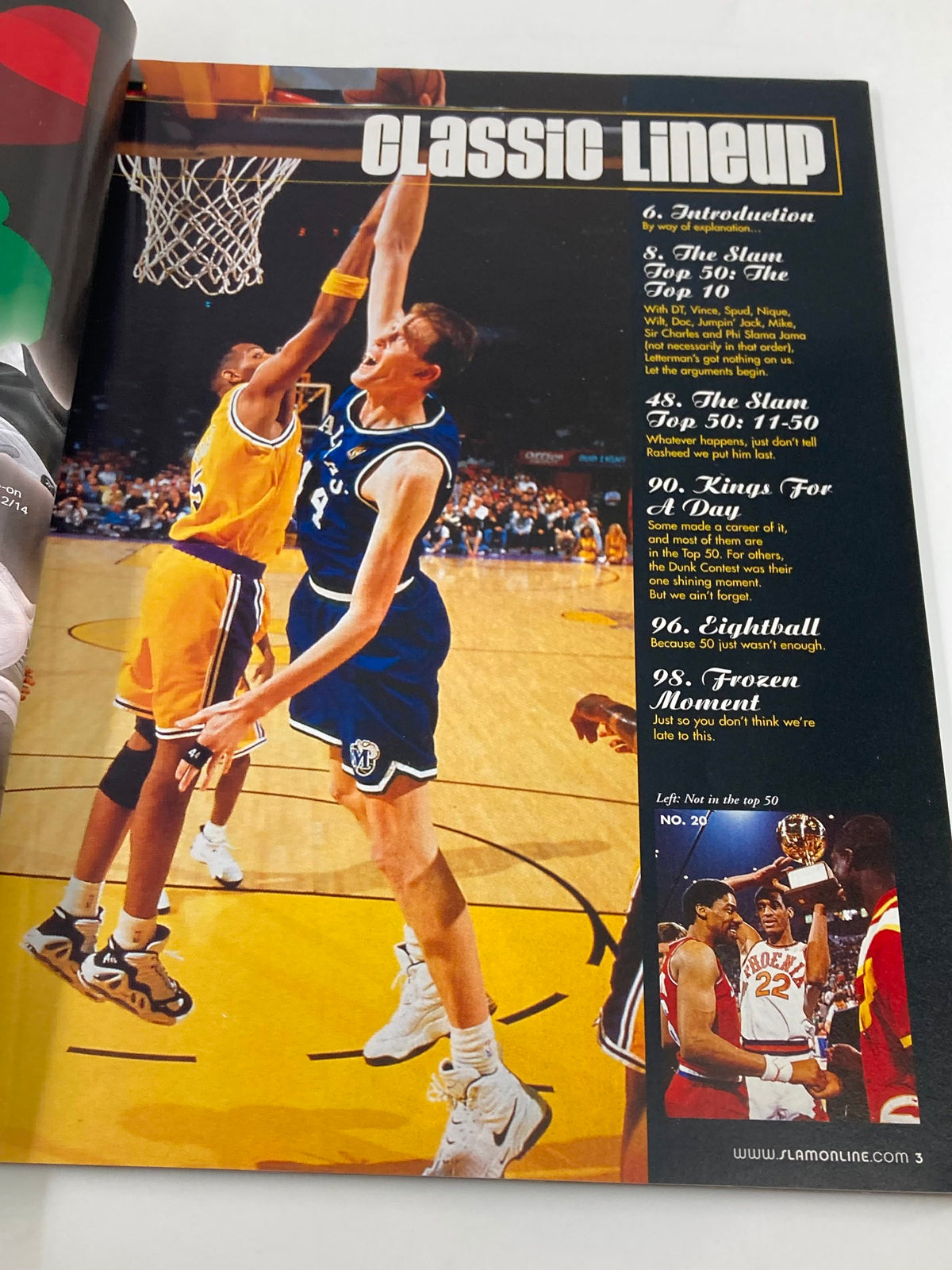
- Note: Specific article titles, additional featured subjects, and complete table of contents details beyond the named cover subject have not been independently confirmed for this issue. The highlights above are drawn from the cover subject, publication format, date, and Slam's well-documented editorial approach to its Classic series during this period. This issue does not contain a poster, as noted in the listing.
Condition & Rarity
This issue is a no-label copy, meaning it was not delivered through postal subscription and carries none of the address markings that compromise the cover art and collector value of subscriber copies — a meaningful distinction for an issue whose Vince Carter cover image is central to its visual and market appeal. The condition is rated very good, with only minor age-appropriate wear noted, placing it toward the stronger end of the condition spectrum for a magazine now more than twenty years old. Very good condition on a Slam Classic issue indicates that the cover retains its color saturation and visual integrity, the interior pages remain bright and structurally sound, and the binding holds the issue together without significant stress or separation. The absence of a poster is explicitly noted in the listing and represents the issue's most significant departure from its original as-published configuration — collectors should weigh this against display and completeness priorities when evaluating the issue's place in a collection. A protective plastic sleeve has been applied, providing an ongoing barrier against dust, handling wear, and environmental deterioration. When assessing any surviving copy of this issue, collectors should prioritize cover condition, interior page brightness, and spine integrity as primary criteria, understanding that minor edge wear is an accepted characteristic of an unrestored copy of this age and format.
Looking for More Issues Like This?
Slam Classic issues featuring major early-2000s NBA stars in very good no-label condition are consistently sought by both basketball collectors and fans of the era's distinctive hip-hop inflected sports culture, and a Vince Carter issue from 2002 draws particular interest given his enduring status as one of the most athletically spectacular players in the game's history. If this particular issue is currently unavailable, the Slam magazine collection at OriginalMagazines.com is the most direct resource for collectors tracing the publication's coverage of basketball culture across its influential run. The broader 2002 magazine archive is equally worth browsing for anyone building a multi-publication record of that transitional moment in NBA history.