
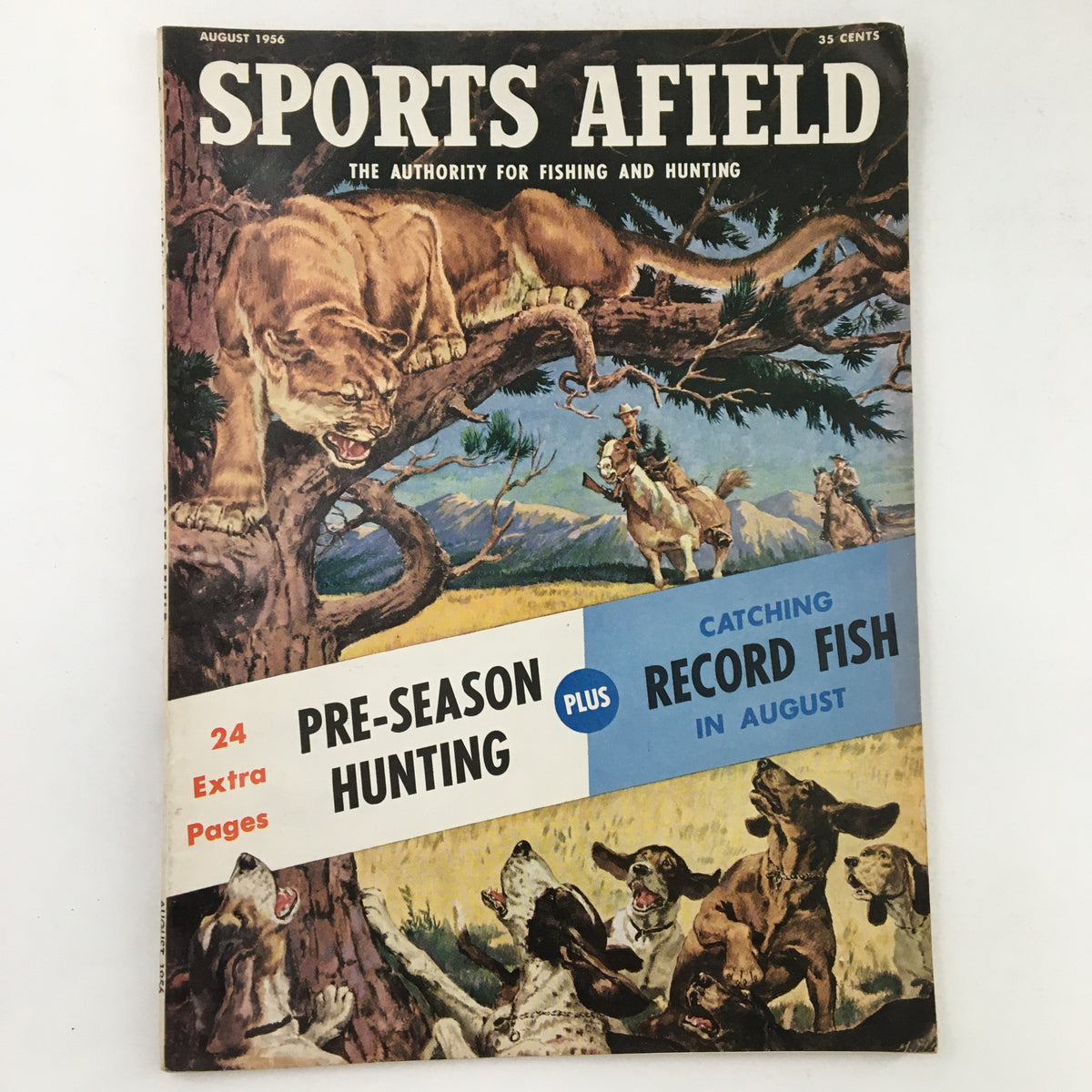


Description
Collector's Note – Why This Issue Matters
Sports Afield magazine’s August 1956 issue belongs to a period when outdoor recreation was deeply woven into American popular culture. The listing identifies this as a pre-season hunting issue, which makes the August date especially meaningful. Late summer was the moment when many hunters began preparing gear, planning trips, studying habitat, and thinking ahead to autumn seasons. In a magazine like Sports Afield, that seasonal timing was central to the editorial rhythm. The issue also references record fish, placing hunting and fishing side by side as major outdoor pursuits of the era. For collectors studying original magazines from 1956, this issue reflects how mid-century publications documented leisure, skill, conservation awareness, and sporting identity. It is a period artifact of the outdoor life as it was understood before digital media reshaped how sportsmen learned, planned, and shared knowledge.
The mid-1950s were an important time for American outdoor magazines because they served both as entertainment and as practical guides. Readers turned to titles like Sports Afield for seasonal instruction, field-tested advice, sporting stories, and reports from the wider world of hunting and angling. The listing’s reference to pre-season hunting strategies suggests an issue designed around preparation rather than only storytelling. That distinction matters to collectors because preparation issues often reveal the practical mindset of the sporting audience. They show what hunters were expected to know, what techniques were being emphasized, and how outdoor magazines framed responsible readiness. The mention of record fish catches adds another layer, connecting the issue to angling achievement and the measurement of sporting excellence. Together, those themes make the August 1956 issue a useful reference point for anyone researching mid-century outdoor recreation.
What gives this issue collector interest is not only its subject matter, but also the way the subject matter sits inside the culture of 1956. Hunting and fishing magazines of the period reflected a world of regional knowledge, printed maps, tackle expertise, firearms familiarity, and seasonal anticipation. They were read by people who often treated the outdoors as both recreation and tradition. A pre-season issue preserved that annual moment of expectation before the fall hunt began. A record-fish feature, as described in the listing, also points to the competitive and documentary side of angling culture. For historians of American leisure, the issue helps show how outdoor skill was taught, celebrated, and remembered through print. For magazine collectors, it stands as a dated snapshot of sporting culture in the Eisenhower-era United States.
About the Publication
Sports Afield was one of America’s long-running outdoor sporting magazines, known for coverage of hunting, fishing, firearms, fieldcraft, travel, and conservation-minded outdoor recreation. Its readership included hunters, anglers, campers, and sportsmen who valued practical instruction as much as adventure writing. By the 1950s, the magazine occupied an important place in the outdoor periodical market. It served readers who wanted seasonal guidance, equipment knowledge, destination ideas, and accounts of sporting experience. The editorial format typically combined advice-oriented features with narrative outdoor writing and subject matter tied to the hunting and fishing calendar. That seasonal structure is important when evaluating an August issue, because late summer naturally pointed readers toward pre-season hunting preparation. The magazine also reflected the mid-century print culture that connected outdoor communities across regions. Before online forums, video channels, and digital gear reviews, magazines like Sports Afield helped shape shared standards of sporting knowledge. As a collectible title, it appeals to readers interested in outdoor history, angling culture, hunting heritage, and the evolution of American recreational publishing.
Key Highlights Inside
- The issue is dated August 1956, placing it in the late-summer pre-season window for many hunters. That timing is important because outdoor magazines often organized content around the practical needs of the sporting calendar. For collectors, the date helps explain why hunting preparation would be a central theme.
- The listing identifies the issue as a pre-season hunting number. That suggests content focused on readiness, planning, and strategy rather than only post-season accounts or general outdoor storytelling. No specific individual article titles or authors are confirmed from the provided listing.
- The listing also references record fish. Record-fish coverage is significant because it reflects the achievement-oriented side of mid-century angling culture. It connects the issue not only to hunting readers, but also to collectors interested in fishing history and sporting records.
- The issue offers a documented look at hunting and fishing culture during the 1950s. That era was shaped by print-based expertise, regional sporting traditions, and a strong relationship between outdoor recreation and seasonal planning. The magazine preserves that world in the format readers of the period actually used.
- The listing notes that the magazine is a newsstand print with no label. For collectors, that detail matters because newsstand examples often retain a cleaner cover appearance than mailed subscription copies with address labels. A no-label cover can be especially desirable when assessing visual presentation.
- The condition is described as good with minor wear typical for its age. That places the issue within the normal expectations for a vintage periodical from 1956. It also indicates that any evaluation should consider age-related handling while avoiding assumptions about pristine preservation.
Condition & Rarity
Collector evaluation of an August 1956 Sports Afield issue should begin with the condition details confirmed in the listing. The magazine is described as being in good condition with minor wear typical for its age. For a mid-century outdoor periodical, that wording suggests ordinary handling rather than severe deterioration. Hunting and fishing magazines were often read actively, stored in cabins, workshops, garages, tackle rooms, or hunting camps, and handled in practical environments. Because of that history, clean surviving examples can be more difficult to locate than the original print run alone might suggest. The listing also identifies the issue as a newsstand print with no label. A no-label example is meaningful because mailing labels can interrupt cover artwork, title treatment, and overall display appeal. The plastic protective covering noted in the listing is relevant as a preservation detail, helping reduce additional handling wear during storage. Still, a protective cover does not by itself confirm complete interior pages, firm binding, or the absence of small tears, toning, or brittleness. Serious collectors should consider page integrity, cover attachment, spine condition, paper quality, and any signs of moisture or mustiness when evaluating any surviving example of this issue.
Looking for More Issues Like This?
The August 1956 Sports Afield pre-season hunting and record-fish issue is the kind of outdoor magazine that can be challenging to replace once it leaves the market. Its appeal crosses several collecting interests, including hunting history, fishing culture, mid-century recreation, and vintage sporting publications. When the exact issue is difficult to locate, the surrounding year can provide valuable context. Collectors can browse other magazines from 1956 to see how outdoor life, sports, travel, business, entertainment, and American culture were being documented at the same time. That broader view is often useful because magazines from the same year reflect the shared language, design, advertising, and assumptions of their era. A collector interested in this issue may also find value in comparing it with other 1956 titles that covered leisure, adventure, or postwar American identity. The goal is not only to find a matching date, but to understand the world around the issue. For outdoor-magazine collectors, that context can make a single issue more meaningful. It places the August 1956 Sports Afield within the larger printed record of mid-century American life.