
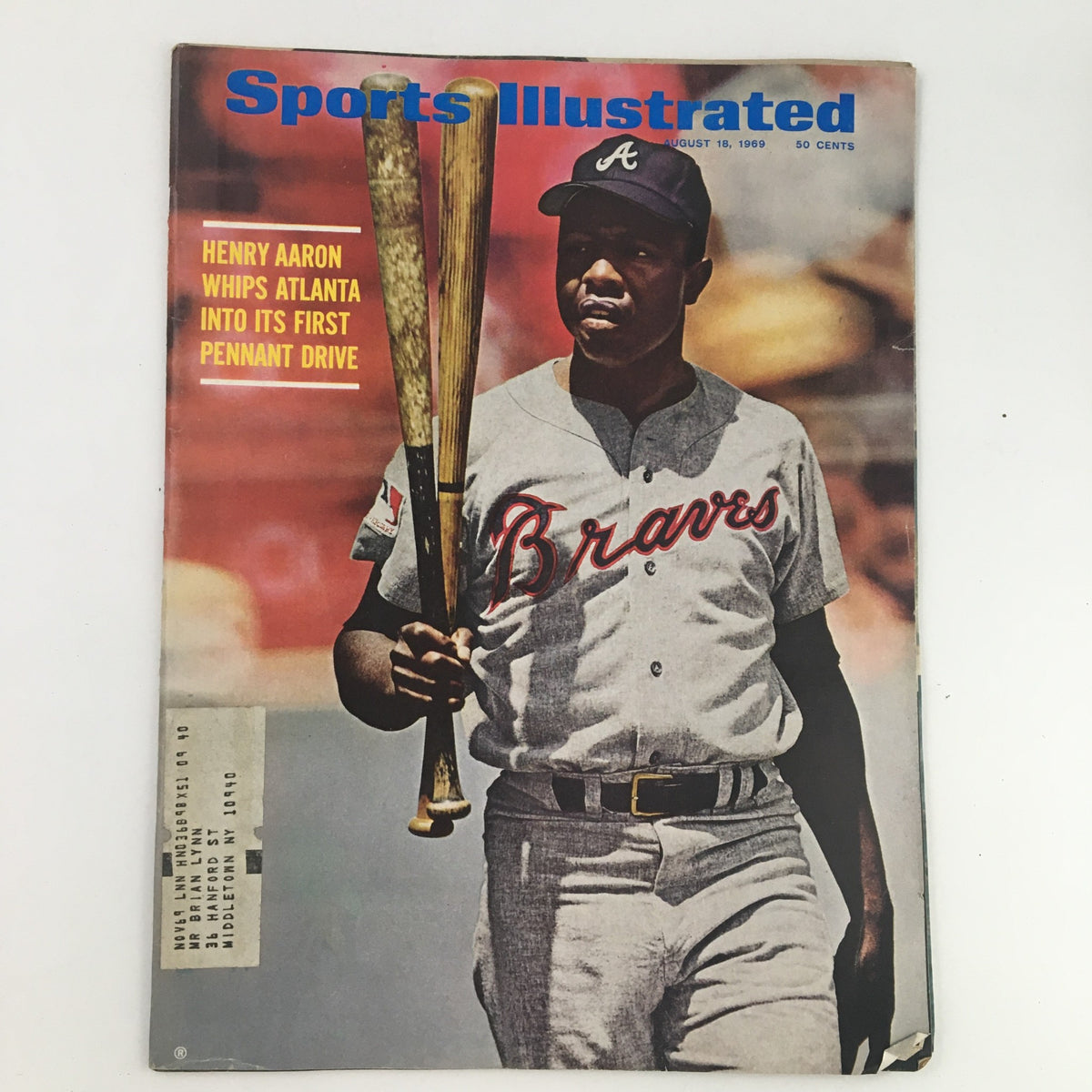


Description
Collector's Note – Why This Issue Matters
The August 18, 1969 issue of Sports Illustrated magazine is anchored by one of baseball’s most enduring figures: Henry “Hank” Aaron. The listing identifies Aaron on the cover in connection with Atlanta, placing the issue within the period when Aaron was already established as one of Major League Baseball’s defining stars. In 1969, Aaron was not yet the all-time home run king he would become in 1974, but he was already a central figure in the sport’s modern history, admired for his consistency, power, discipline, and quiet authority. That makes the issue especially useful as a contemporary document of Aaron’s reputation before later milestone narratives came to dominate how his career is remembered.
The title phrase “Henry Aaron Whips Atlanta” points to the magazine’s framing of Aaron’s importance to the Atlanta Braves and to professional baseball at the close of the 1960s. That was a significant period for the Braves franchise, which had relocated from Milwaukee to Atlanta only a few years earlier, making Aaron’s presence central to the team’s identity in its new Southern market. For collectors, a Sports Illustrated cover featuring Aaron from this era carries weight because it documents him before the peak historical moment of breaking Babe Ruth’s home run record, while his greatness was still unfolding in real time. The issue also sits within a period when Atlanta’s major-league sports identity was still relatively young, giving Aaron’s cover appearance added regional and historical importance.
Within the broader landscape of 1969 magazines, this issue belongs to a year remembered for dramatic cultural and athletic change. American sports media was increasingly treating athletes as national figures whose meaning extended beyond the playing field, and Aaron’s career would come to symbolize excellence, endurance, and dignity under public pressure. A dated issue like this preserves the way a major sports publication presented Aaron during the late 1960s, before later retrospectives reshaped the public memory of his career. It also offers a period-specific view of baseball at a moment when the sport was balancing tradition, expansion-era change, and the growing power of national sports journalism.
About the Publication
Sports Illustrated was one of the most influential American sports magazines of the twentieth century, known for its weekly coverage of professional, collegiate, and international athletics. Its audience included serious sports fans, casual readers, collectors, and followers of American popular culture who looked to the magazine for reporting, photography, profiles, commentary, and memorable covers. By 1969, Sports Illustrated had become a major force in shaping how athletes and events were remembered, often combining strong visual presentation with long-form sports journalism. For collectors, individual issues are valuable not only for the named athletes on the cover, but also for the way each issue captures the language, design, advertisements, and priorities of sports media at a specific point in time. The magazine’s weekly format made it particularly responsive to current athletic performance, allowing major players such as Aaron to be presented in the immediacy of their careers rather than only through later historical summaries.
Key Highlights Inside
- August 18, 1969 issue of Sports Illustrated, as identified in the listing, representing a dated sports-media artifact from the late 1960s.
- Cover features Henry Aaron, one of the most important baseball players of the twentieth century and a defining figure in Atlanta Braves history.
- Listing title references “Henry Aaron Whips Atlanta,” connecting the issue to Aaron’s role with the Atlanta Braves during an important period in the franchise’s early Atlanta years.
- Represents Major League Baseball coverage from the late 1960s, before Aaron’s 1974 breaking of Babe Ruth’s career home run record transformed his public legacy even further.
- Includes an address label on the front, a collector-relevant detail for evaluating cover presentation, originality, and subscription-era circulation history.
- Specific interior article titles, writers, photographs, and page-by-page contents are not confirmed from the listing, so no additional inside features are assumed here.
Condition & Rarity
The listing describes the magazine as being in good overall condition, with minor wear typical for its age, an address label on the front, and a plastic covering used for protection. For collectors of vintage Sports Illustrated issues, condition is usually evaluated through the cover surface, spine wear, corner sharpness, page completeness, mailing-label presence, creasing, tears, and overall handling. An address label is common on subscription copies and can affect display preference, especially when the cover athlete is the primary collecting focus, but it also reflects the magazine’s original circulation history. Minor wear is expected for a weekly sports magazine from 1969, since these issues were generally read, stacked, mailed, and handled rather than preserved as archival objects from the start. A protective plastic covering is a modern preservation aid rather than an original feature, but it helps reduce further surface wear, corner rubbing, and exposure during storage. When comparing surviving examples, collectors often distinguish between complete readable copies, cleaner display copies, and higher-grade archival examples with sharper corners, stronger spines, and less cover interruption.
Looking for More Issues Like This?
Henry Aaron Sports Illustrated covers from the late 1960s are meaningful finds because they document Aaron’s career while it was still being actively reported, not merely commemorated after the fact. Readers interested in similar baseball and sports-history issues may want to browse the broader Sports Illustrated magazine collection for other dated examples from the magazine’s long run. That broader context can help collectors compare Aaron’s coverage with other athletes, teams, and sporting moments that defined the same era.
Collectors studying the wider sports and cultural landscape of the period may also find the 1969 magazines collection useful for comparing this issue with other publications from the same year. Looking across 1969 issues can help place Aaron’s cover appearance within the larger print culture of late-1960s America, from professional sports to entertainment, politics, advertising, and design.