







Description
Collector's Note – Why This Issue Matters
The Spring and Summer 1931 Montgomery Ward and Co. Catalogue No. 114, distributed through the Portland regional office, is a primary document of American consumer life at the absolute nadir of the Great Depression. The spring of 1931 arrived in the second full year of the economic catastrophe that had begun with the stock market crash of October 1929. Unemployment was climbing toward its eventual peak of twenty-five percent. Farm prices had collapsed. Banks were failing across the country. And yet Montgomery Ward continued to publish its seasonal catalog, because the catalog was not a luxury — it was infrastructure. For millions of rural and small-town American families, particularly in the Pacific Northwest and Mountain West regions served by the Portland distribution center, the Ward's catalog was the primary means of accessing clothing, tools, household goods, and farm equipment at affordable prices. A 1931 Spring and Summer catalog reached households in the precise season when Depression-era families were making their most constrained purchasing decisions, and its pages reflect the product lines, prices, and consumer priorities of an America learning to survive on dramatically reduced means. The full range of 1931 publications provides essential context for understanding the world this catalog inhabited — one of the most economically devastating years in American history.
The regional designation — Portland — is a meaningful collector's detail that distinguishes this catalog from Ward's nationally distributed editions. Montgomery Ward operated a network of regional distribution centers, each of which could issue catalogs with regionally specific product selections, pricing adjustments, and merchandise relevant to local agricultural and consumer conditions. A Portland-issued catalogue reflects the particular consumer priorities of the Pacific Northwest in 1931: the region's agricultural economy, its particular climate requirements for clothing and equipment, and the distribution logistics of serving a geographically expansive and often rural customer base west of the Rockies. Catalogue No. 114 in the Ward's sequential numbering system also provides researchers with a precise reference point for cross-dating against other Ward's publications and records from this period. These specific details — the regional office, the catalogue number, the season, and the year — give this artifact a documentary precision that general retail ephemera from the Depression era rarely possesses, making it an unusually specific primary source for historians of American retail, regional commerce, and Depression-era consumer culture.
Montgomery Ward's Spring and Summer 1931 catalog arrived at a moment when the company's mail-order business was under extraordinary pressure — not just from the Depression's effect on consumer spending, but from the long-term competitive challenge of Sears, Roebuck and the growing threat of chain retail stores. Ward's response was to maintain the breadth and quality of its catalog offering while adapting to the economic realities of its customer base, and the 1931 Spring and Summer edition documents that effort directly. For collectors of American retail history and Depression-era ephemera, this catalog represents one of the most historically loaded single artifacts the Ward's archive produced.
About the Publication
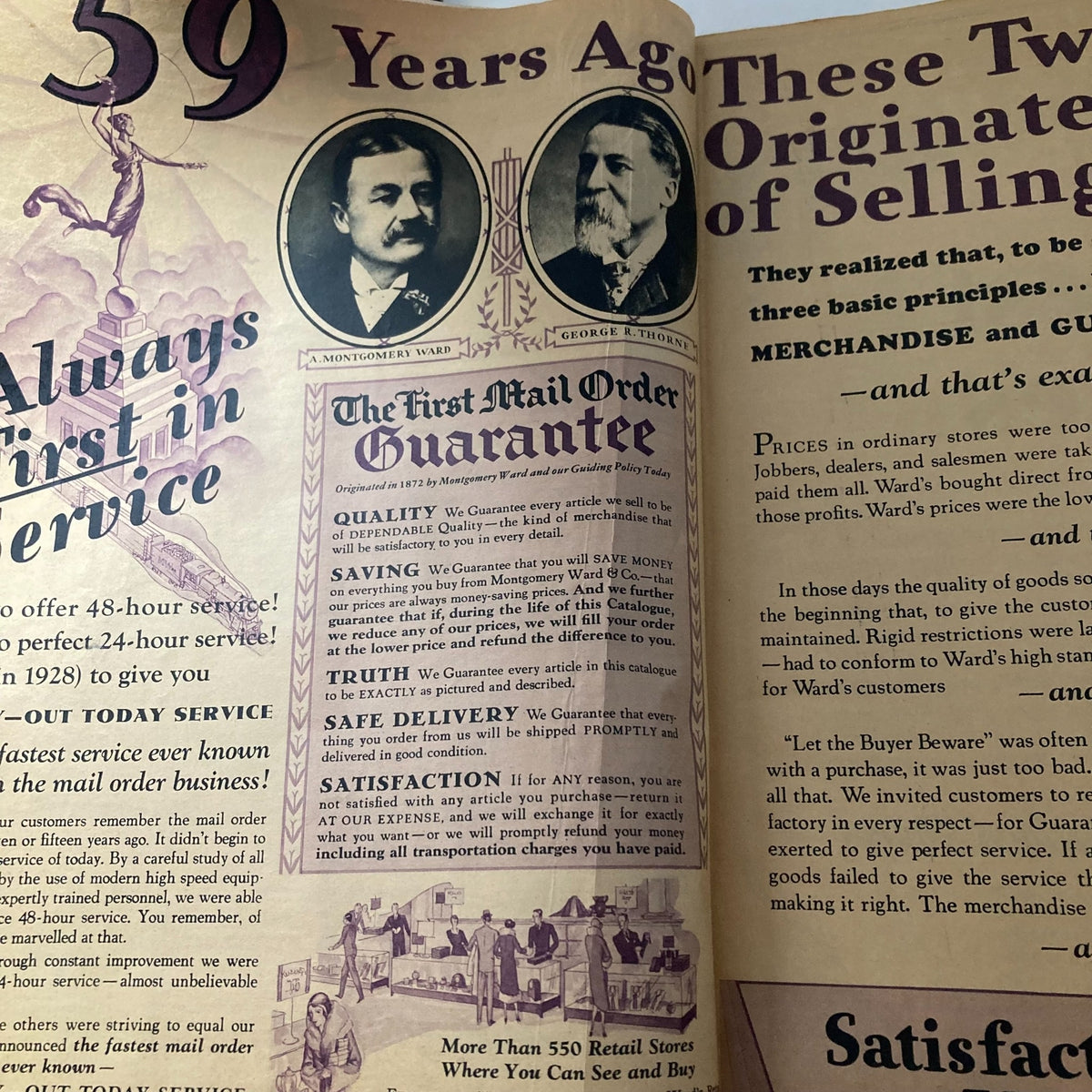
Montgomery Ward and Co., founded in Chicago in 1872 by Aaron Montgomery Ward as the first American mail-order company, issued seasonal general merchandise catalogs biannually through the twentieth century, competing directly with Sears, Roebuck and Co. for the American rural and small-town consumer market. Ward's operated regional distribution centers — including Portland — that allowed for regionally tailored catalog editions reflecting local merchandise priorities and distribution logistics. At its Depression-era peak the Ward's catalog covered clothing, household goods, farm equipment, tools, furniture, and a comprehensive range of everyday consumer products, functioning as the primary retail interface for millions of American families without access to urban department stores. The catalog series represents one of the most important archives of American consumer and retail history across the late nineteenth and twentieth centuries.
Key Highlights Inside
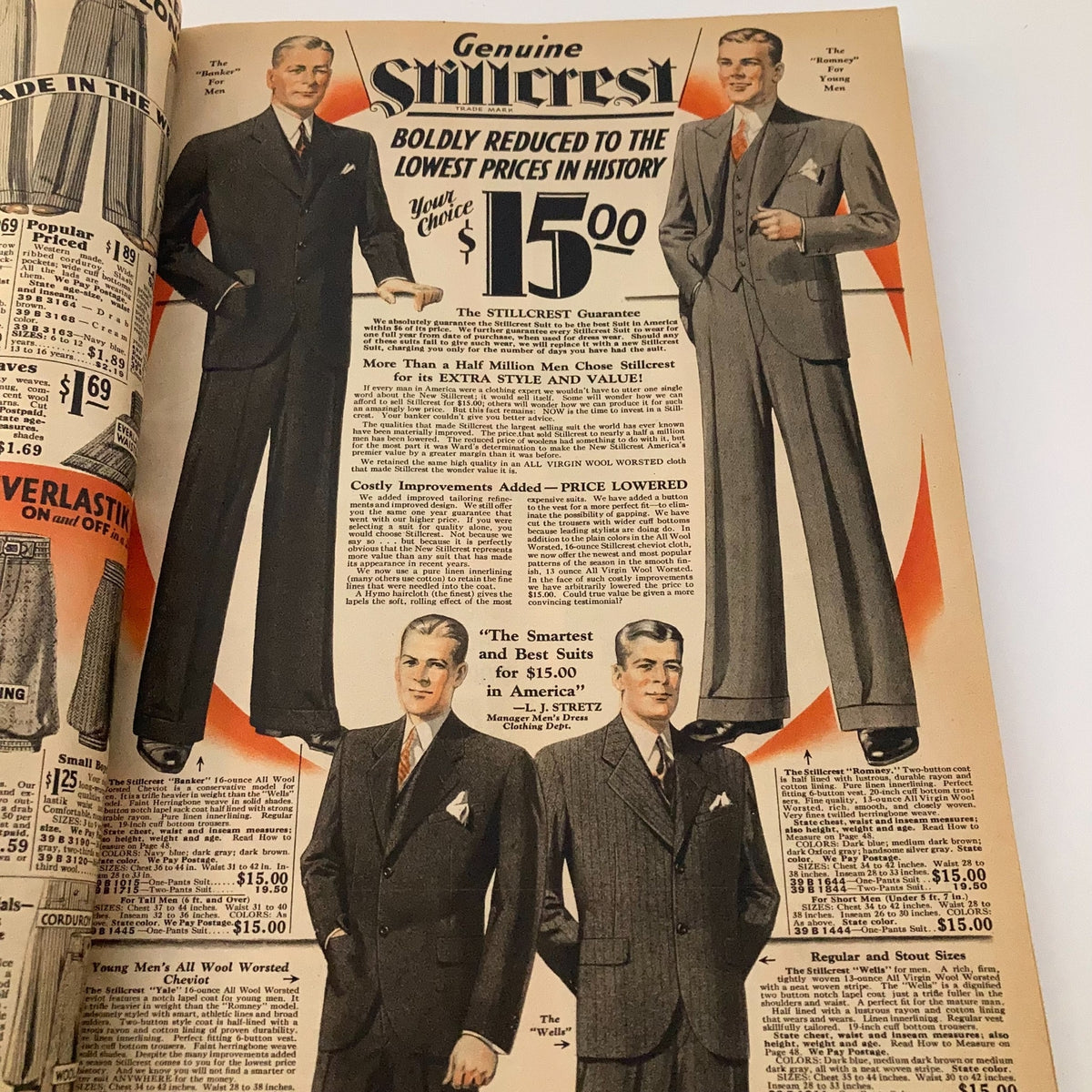
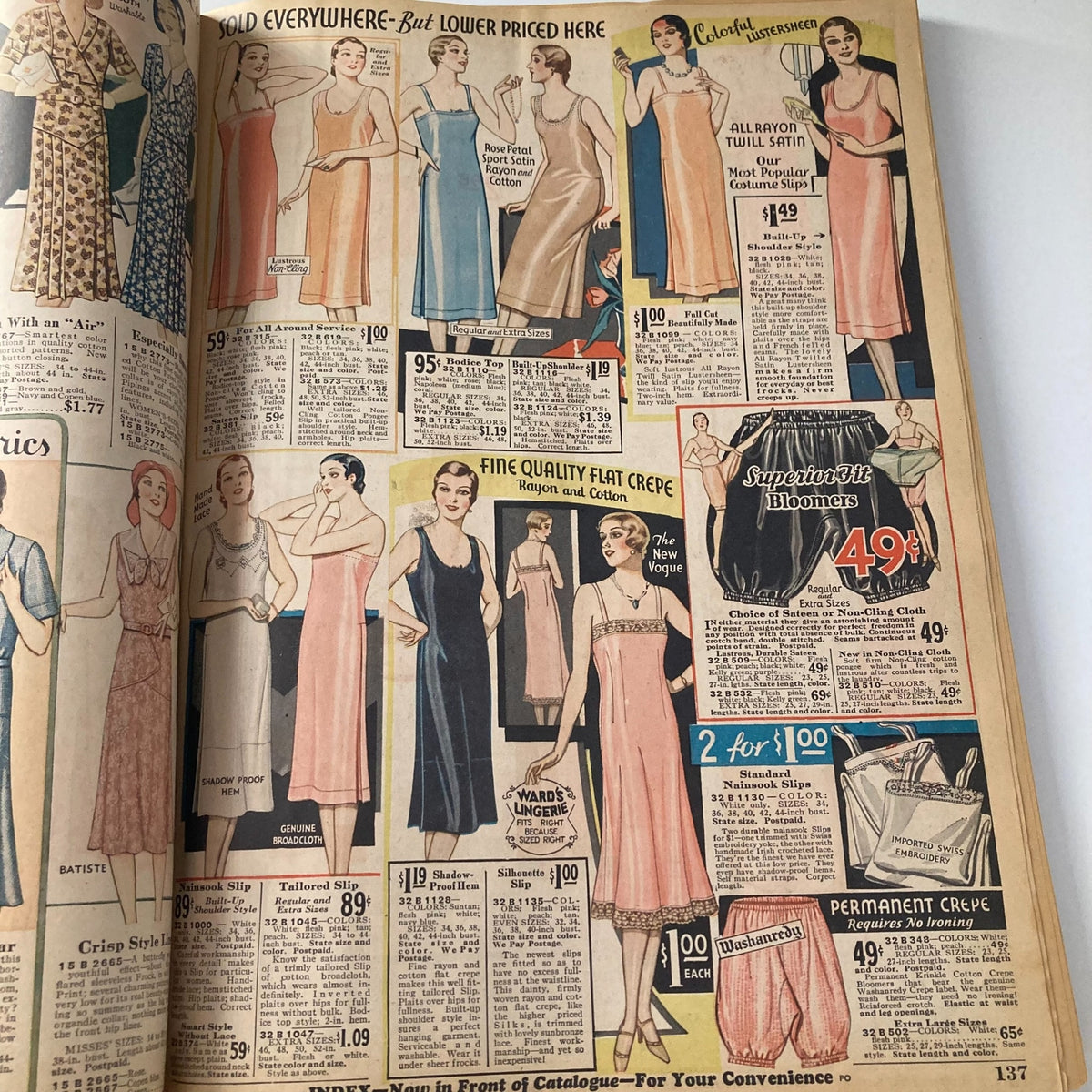
- Spring and summer clothing for men, women, and children reflecting the fashion priorities and economic constraints of Depression-era American families in 1931 — practical, durable, and priced for a consumer base operating under dramatically reduced purchasing power.
- Regional merchandise selection tailored for the Pacific Northwest market served by the Portland distribution center, potentially including regionally specific agricultural equipment, climate-appropriate clothing, and products relevant to the region's particular consumer conditions.
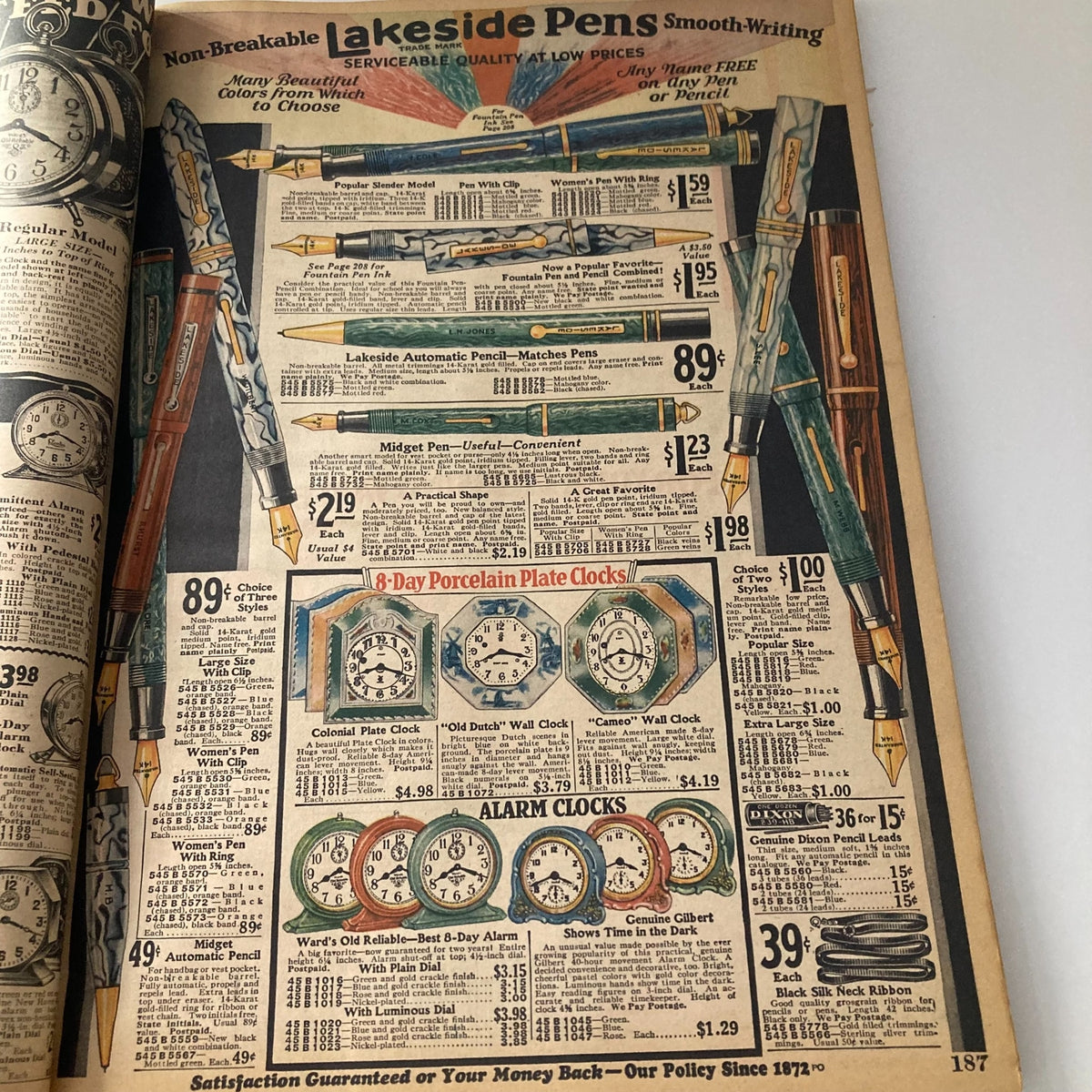
- Pricing documentation representing one of the most valuable aspects of any Depression-era retail catalog — the specific prices of everyday goods in the spring of 1931 are primary economic data for historians of the Depression and American consumer history.
- Farm and household equipment reflecting the state of American agricultural and domestic technology in 1931, distributed to a customer base whose farming livelihoods were under severe stress from the combined effects of the Depression and, in many Western regions, early drought conditions.
- Note: Specific category details, page counts, and confirmed interior content beyond what is documented in the listing have not been independently verified. The listing provides no condition description beyond the instruction to check the pictures; collectors should rely on the listing photographs for condition assessment. The above reflects what is verifiable from the catalog's title, regional designation, catalogue number, and well-documented knowledge of Ward's publishing practices and the Depression-era context.
Condition & Rarity
A Montgomery Ward Spring and Summer catalog from 1931 surviving in any collectible state is a genuinely uncommon find. These were working retail documents produced on uncoated paper stock with soft binding, designed for seasonal household use and not preservation — and nearly a century of potential exposure to humidity, temperature variation, and handling has taken a predictable toll on most surviving examples. The listing does not provide a specific condition grade, directing buyers to examine the listing photographs for condition assessment, which is the appropriate approach for an artifact of this age and format. When evaluating any surviving copy of this catalog, the primary condition factors are binding integrity — whether the spine has cracked or pages have separated from the binding — cover legibility and brightness, page completeness, and the absence of significant moisture damage, heavy soiling, or brittle page edges. The Portland regional designation and the specific Catalogue No. 114 identification add research value independent of physical condition, making this a meaningful artifact even at lower condition grades. A plastic protective sleeve limits ongoing oxidation and surface wear, which matters considerably for paper this age.
Looking for More Issues Like This?
Depression-era Montgomery Ward regional catalogs are among the rarest and most historically significant entries in the American retail ephemera collector market, and a Portland-issued Spring and Summer edition from 1931 is a document that serious collectors of Americana and Depression history will pursue when it surfaces. For collectors building around the extraordinary economic and social landscape of the early 1930s, the 1931 magazine collection at OriginalMagazines.com brings together a range of period publications that document one of the most consequential and difficult years in American history — essential context for understanding the world this catalog was produced in and the consumers it served.