

Description
Collector's Note – Why This Issue Matters
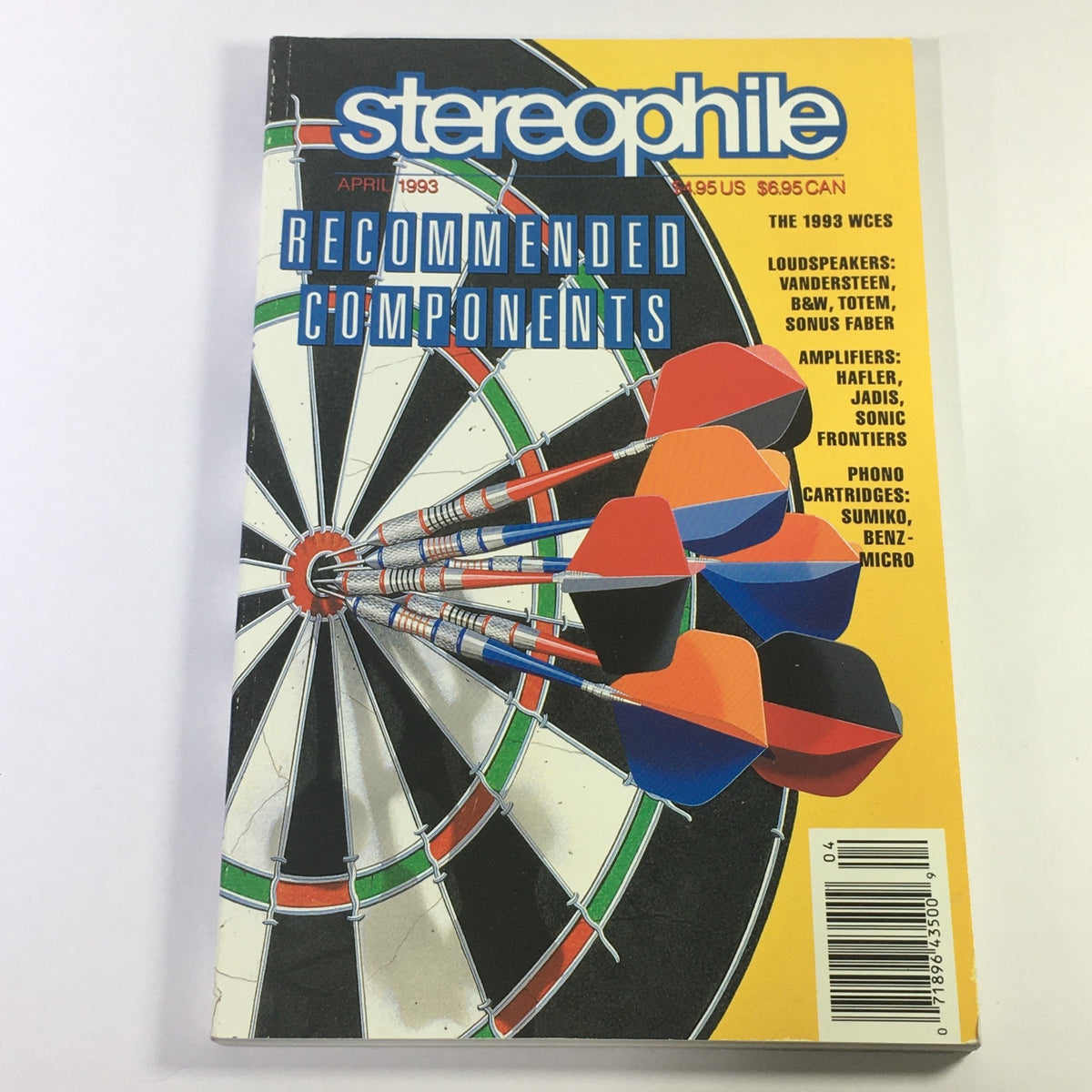
The April 1993 issue of Stereophile captures a formative period in high-end audio, when the foundations of modern audiophile listening were being actively shaped by both engineering innovation and a renewed focus on musical realism. Central to this issue is coverage of Vandersteen loudspeakers, a brand closely associated with time- and phase-coherent design principles that gained increasing recognition during the late 1980s and early 1990s. Richard Vandersteen’s approach emphasized accurate waveform reproduction and natural tonal balance, aligning with a broader movement within the audiophile community that prioritized authenticity over purely analytical sound.
Alongside this, the inclusion of Sonic Frontiers amplification reflects the era’s growing interest in high-quality tube and hybrid electronics, particularly as listeners sought alternatives to the solid-state dominance of previous decades. The early 1990s marked a period of rediscovery for vacuum tube technology, not as a relic of the past, but as a viable and often preferred pathway to achieving warmth and musicality in playback systems. Coverage of these components within a single issue highlights how audiophiles were increasingly combining design philosophies—precision engineering with subjective listening preferences—to refine their systems.
For collectors and researchers, this issue offers a valuable snapshot of a transitional moment in audio history, when both loudspeaker design and amplification strategies were evolving in meaningful ways. Within the broader context of Stereophile magazine back issues documenting high-end audio development and magazines from 1993 reflecting early-1990s technological shifts, it stands as a representative document of how the audiophile community approached sound reproduction at a time of significant change.
About the Publication
Founded in 1962, Stereophile has long been regarded as one of the leading publications in high-end audio journalism, known for its detailed reviews, technical measurements, and thoughtful editorial perspective. Its readership has traditionally included dedicated audiophiles, engineers, and enthusiasts seeking a deeper understanding of both the measurable and experiential aspects of sound reproduction. By the early 1990s, the magazine had firmly established its identity as a trusted authority, blending objective testing with subjective listening evaluations to provide a comprehensive view of audio performance and system design.
Key Highlights Inside
- Feature coverage of Vandersteen loudspeakers, reflecting their influence on time- and phase-coherent speaker design
- Discussion of Sonic Frontiers amplification, representing the era’s renewed interest in tube-based audio components
- Editorial focus capturing the state of high-end audio in the early 1990s
- In-depth review style characteristic of Stereophile, combining technical insight with listening impressions
Condition & Rarity
Copies of this issue are generally evaluated based on structural integrity, surface condition, and overall preservation. An example described as being in excellent condition with smooth edges and minimal wear suggests careful handling, with clean pages and a well-maintained cover—key attributes for collectors of vintage audiophile publications. The presence of a protective plastic covering indicates an effort to preserve the magazine from environmental exposure such as moisture or handling wear. An address label on the front identifies the issue as a subscriber copy, which is typical for magazines of this era and does not significantly affect its desirability as a reference piece. For early-1990s issues, condition quality and the significance of the featured equipment often play a larger role in collector interest than scarcity alone.
Looking for More Issues Like This?
Issues from this period continue to draw interest from collectors focused on the evolution of high-end audio and the technologies that defined it. For those exploring similar material, the Stereophile magazine collection provides a broader view of decades of audiophile coverage, while magazines from 1993 offer additional context for the innovations and listening trends of the early 1990s. Together, they help build a more complete picture of the era this issue represents.