


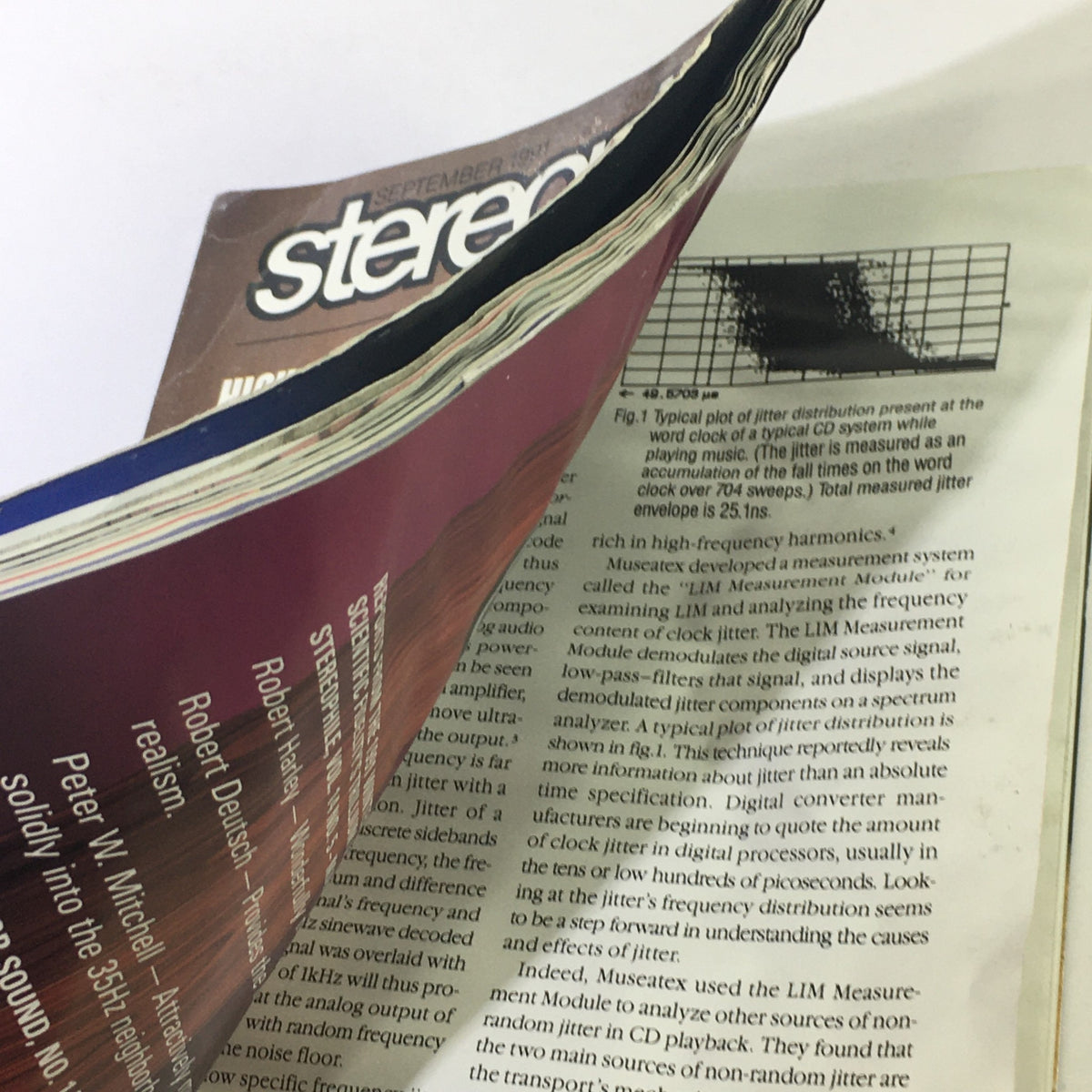


Description
Collector's Note – Why This Issue Matters
Stereophile from September 1991 sits in a revealing moment in hi-fi history: the period when high-end audio had fully matured into a serious enthusiast culture, yet still retained the argumentative, experimental energy that defined the late analog and early digital eras. A cover reference to the Mark Levinson No. 23.5 amplifier immediately places this issue in the world of statement-grade American audio engineering, where amplifier design, build quality, and listening impressions were treated not as lifestyle decoration but as subjects worthy of sustained technical and musical scrutiny. For collectors who follow the history of reference audio components, issues like this help document how certain products entered the canon and how they were discussed at the time, not simply how they are remembered later. Readers exploring the broader Stereophile magazine collection will recognize this period as one of the title’s strongest runs for serious component coverage.
The Bob Stuart reference adds another layer of historical interest. Stuart belongs to a generation of audio thinkers closely associated with the evolving conversation around digital sound, recording, and playback quality, making his presence in a 1991 issue especially resonant. That date matters. By the early 1990s, compact disc had already reshaped mainstream listening, but debate over digital’s strengths, weaknesses, and future direction was still very much alive among audiophiles. In that sense, this issue does more than spotlight a few notable names; it captures a transitional phase in which designers, writers, and listeners were still defining what “high fidelity” should mean for the modern era. Within the wider context of magazines from 1991, it stands as a useful artifact of a year when audio culture was balancing legacy analog values with rapidly developing digital ambitions.
It also reflects how seriously enthusiasts once treated the printed audio press. Before online forums, video reviewers, and instant product chatter, magazines like Stereophile shaped reputations over months and years, not hours. A single issue could influence how readers understood a component, a designer, or even an entire approach to system building. That makes a date-specific issue like September 1991 valuable not just as reading material, but as a record of how expert opinion and collector memory were formed in real time.
About the Publication
Stereophile was one of the defining American magazines for audiophiles, aimed at readers who cared deeply about sound reproduction, component design, and critical listening. Its editorial identity combined equipment reviews, opinionated commentary, technical discussion, and music coverage, giving it a distinctive place within the high-fidelity press. By the early 1990s, the magazine spoke to a committed audience of hobbyists, collectors, and serious listeners who followed not just brands and products, but the larger philosophy of reproduced sound. It was not a casual consumer electronics magazine in the usual sense; its appeal rested on depth, specificity, and a willingness to treat reproduced music as both an engineering problem and an aesthetic pursuit. That editorial seriousness is a large part of why back issues remain useful to collectors and researchers today.
Key Highlights Inside
- Coverage tied to the Mark Levinson No. 23.5 amplifier, a notable point of interest for collectors of high-end solid-state audio equipment.
- An article or feature associated with Bob Stuart, whose name carries weight in discussions of digital audio and sound reproduction.
- A period snapshot of early-1990s audiophile thinking, when debates around reference sound and emerging digital standards remained highly active.
- Typical of Stereophile, the issue is positioned around review-driven, analysis-heavy editorial content for serious hi-fi readers.
- The issue is especially useful for collectors who study how major audio brands and engineering figures were framed at the time, before later reputations became fixed.
- Even without a confirmed full table of contents, the cover references alone place this number squarely within the magazine’s core strengths: equipment evaluation, technical interpretation, and informed listening culture.
Condition & Rarity
In collector terms, surviving examples of this issue are evaluated less like decorative ephemera and more like working reference material: completeness, cover quality, page integrity, mailing status, and moisture exposure all matter. The description here points to a good used example with minor edge wear, some water damage to interior pages, minor rips, and an address label on the front. For magazine collectors, the label places it in the subscriber-copy category rather than clean newsstand condition, which can affect desirability for display-focused buyers, while water exposure is usually the most important structural issue to examine because it can lead to waviness, staining, or page adhesion over time. Protective plastic storage is a positive preservation note, especially for glossy paper stock from this era, which is prone to edge wear and handling marks. In the market for specialty enthusiast magazines, condition often matters most when the issue features major equipment, influential writers, or historically important technology debates. For that reason, even imperfect surviving copies can still hold research and collector interest, especially when the issue documents a meaningful moment in high-end audio history.
Looking for More Issues Like This?
September 1991 can be a rewarding issue to research because it connects directly to a formative period in high-end audio journalism. For readers interested in adjacent issues, reviews, and era-specific coverage, the broader Stereophile collection is the most natural place to continue. It also helps to browse the wider run of 1991 magazines, which places this issue in the larger publishing landscape of the year and often surfaces parallel titles from the same cultural moment.
Collectors who follow audio history by component era will often find that one issue leads naturally to another: a review, a designer name, or a technical debate can open up an entire run worth studying. Browsing by title is useful for tracing the editorial evolution of Stereophile, while browsing by year helps place this issue alongside other publications responding to the same early-1990s shifts in technology and taste. That broader context is often where the real collector value begins.