
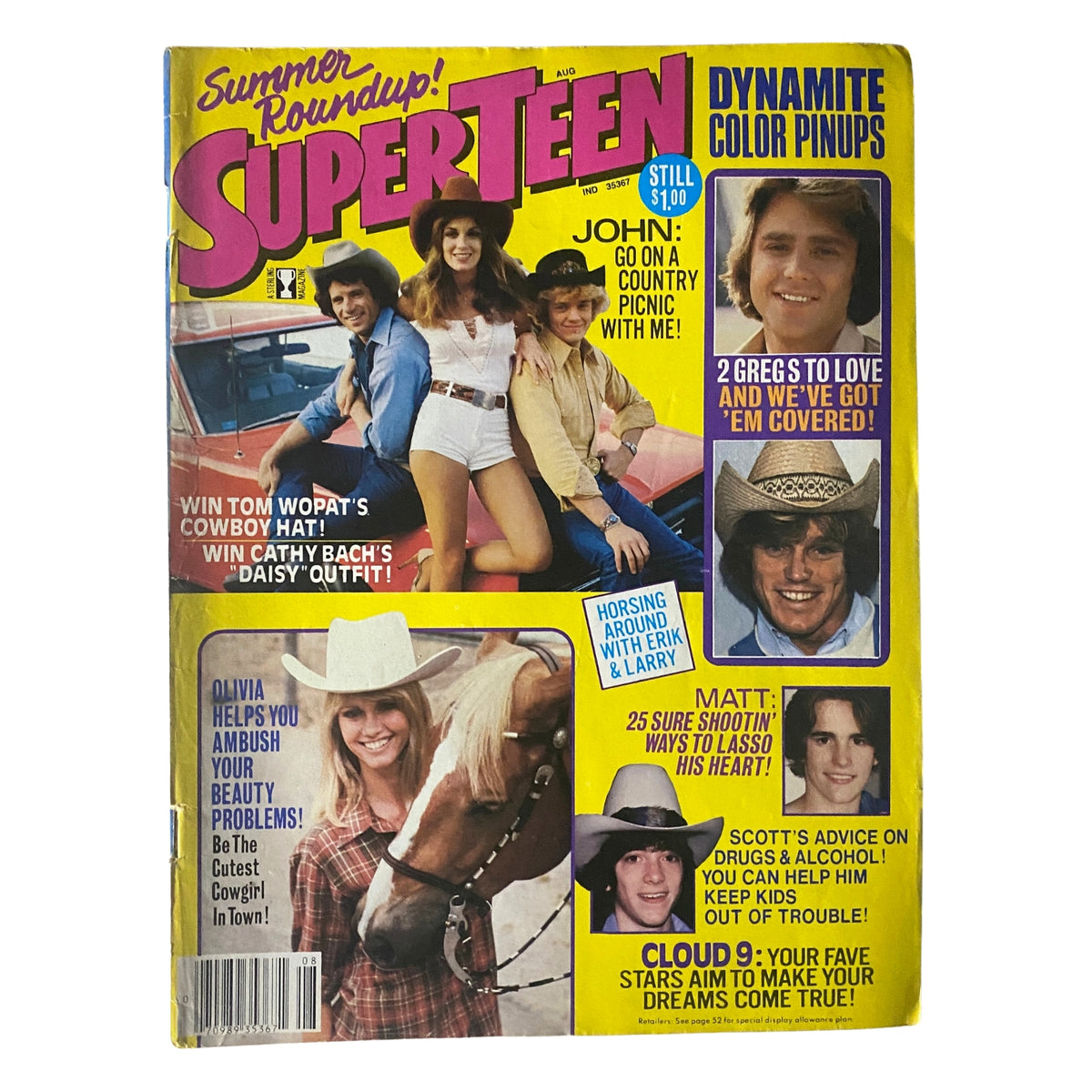


Description
Collector's Note – Why This Issue Matters
This August 1981 issue of SuperTeen arrives at the absolute peak of The Dukes of Hazzard's popularity, with the show's third season, which ran from September 1980 to April 1981, posting the highest ratings of its entire seven-season run on CBS. John Schneider and Catherine Bach, who played Bo Duke and Daisy Duke respectively, were at the height of their teen-idol fame at this moment, having become two of the most recognizable young stars on American television alongside co-star Tom Wopat, who played Luke Duke. This timing matters because the cast's popularity would soon face a significant disruption: by the spring of 1982, Schneider and Wopat would walk out over a contract dispute regarding merchandising royalties, temporarily leaving the show during its fifth season before returning in early 1983. This August 1981 issue therefore captures the cast during the final stretch of relative calm before that very public industry conflict, at a moment when their popularity and the show's cultural reach were both at their strongest. For teen magazine collectors specifically, that timing places this issue squarely within the narrow window of Dukes of Hazzard's peak mainstream dominance.
The issue's additional mention of actors including Matt Dillon situates it firmly within the broader landscape of early-1980s teen idol culture, a media ecosystem built around exactly this kind of magazine, which combined pinups, interviews, and lifestyle content to satisfy young readers' interest in rising young stars. Dillon, who had broken out in Over the Edge in 1979 and My Bodyguard in 1980, was himself emerging as a significant teen idol in his own right during this period, ahead of the more substantial film roles that would follow in Tex and The Outsiders the following two years. Teen magazines like SuperTeen played an important role in this ecosystem, often introducing readers to up-and-coming young actors before their breakout roles fully materialized, making these publications valuable historical records of how teen stardom was built and marketed during the era. The combination of an established television phenomenon in Schneider and Bach alongside an emerging film talent in Dillon reflects the kind of broad-spectrum teen idol coverage that defined magazines in this category.
For collectors, this issue offers a meaningful snapshot of teen idol culture at a specific and consequential moment, the peak popularity of The Dukes of Hazzard's original cast just before the contract dispute that would briefly fracture it. That timing, combined with the issue's broader roster of early-1980s young stars, gives this issue particular value within the wider landscape of SuperTeen magazine collecting and early-1980s teen idol memorabilia more generally.
About the Publication
SuperTeen was a teen idol-focused magazine of the late 1970s and 1980s built around the format common to publications in this category: full-color pinup photography, interviews with young film and television stars, beauty and lifestyle advice, and reader contests designed to engage a young, predominantly female readership. Magazines like SuperTeen served as an important media bridge between Hollywood's young stars and their teenage fanbase, often providing more personal, fan-oriented coverage than mainstream entertainment publications offered at the time. Its editorial format typically combined several star-focused features per issue with shorter beauty and advice content, allowing the magazine to cover multiple rising and established young celebrities within a single issue rather than focusing on just one cover personality. This format made SuperTeen and similar titles an important historical record of which young performers were considered significant teen idols at any given moment, since inclusion in these magazines reflected real-time popularity rather than retrospective historical judgment. Teen idol magazines of this era played a meaningful role in shaping celebrity culture for young audiences, helping establish lasting connections between teen readers and the young stars whose careers they followed closely.
Key Highlights Inside
- Cover feature on John Schneider and Catherine Bach, stars of The Dukes of Hazzard during the show's highest-rated season. Schneider and Bach, alongside co-star Tom Wopat, were among the most popular young television stars in the country at this moment. This issue captures them just before the 1982 contract dispute that would temporarily take Schneider and Wopat off the series.
- Additional content featuring actor Tom Wopat, Schneider and Bach's Dukes of Hazzard co-star. Wopat played Luke Duke and was an equally central figure in the show's ensemble appeal during this period. His inclusion reflects the magazine's typical approach of covering an ensemble cast rather than a single star when a show was this popular.
- Feature content on actor Matt Dillon, an emerging teen idol of the period. Dillon had broken out in Over the Edge in 1979 and My Bodyguard in 1980, ahead of more substantial film roles in Tex and The Outsiders the following two years. His inclusion reflects SuperTeen's role in covering rising stars alongside already-established names.
- Full-color pinup photography of featured stars, a hallmark format of teen idol magazines during this period. Pinup content was a central draw for readers of magazines like SuperTeen, often serving as the primary visual appeal of any given issue. This kind of content remains a key reason collectors seek out complete, well-preserved copies of teen idol magazines from this era.
- Exclusive interviews, beauty advice, and reader contests rounding out the issue's content. This combination of personal-interest journalism and practical lifestyle content was typical of teen idol magazines aimed at young readers during this period. Contests in particular were a common engagement tool used to build ongoing reader loyalty issue to issue.
Condition & Rarity
Surviving copies of this issue are generally evaluated using the same standards collectors apply across vintage teen idol and pinup-format magazines: cover and spine integrity, completeness of interior pages, and the presence of pinup inserts, which were often removed by original readers for display purposes. A copy described as being in good condition, with all pages intact aside from a few possibly missing pinups, reflects a fairly common state for surviving copies of this magazine category, since pinup removal was an extremely common practice among the magazine's original teenage readership. A plastic protective sleeve is a standard and effective safeguard for issues of this vintage, helping prevent further handling wear, UV exposure, and humidity damage, though it has no bearing on the underlying completeness of the magazine's original pinup content. As with most teen idol magazines from this era, copies with all original pinups still intact are generally considered more desirable to collectors than copies with pinups removed, given how frequently that content was separated from the magazine shortly after purchase. Given this issue's connection to the peak popularity period of The Dukes of Hazzard's original cast, collectors focused on that specific show or its stars may place particular value on this issue regardless of minor pinup loss. Pages free of significant brittleness, tearing, or moisture damage remain the broader benchmark for a well-preserved copy of any teen idol magazine from this period.
Looking for More Issues Like This?
A SuperTeen issue capturing John Schneider, Catherine Bach, and Tom Wopat at the absolute peak of The Dukes of Hazzard's popularity, just before the cast's well-documented 1982 contract dispute, is a meaningful find for collectors of early-1980s teen idol memorabilia. If this particular issue isn't available, it's worth browsing the broader SuperTeen magazine collection for other issues spanning this title's run covering the era's most popular young stars. Collectors focused on the year itself may also want to look through the full range of 1981 magazines for other issues from that pivotal year in teen entertainment culture. Each of these collections offers a different way into the period, whether the interest lies in this specific title's teen idol coverage or the broader cultural snapshot of a single year in American youth media. A single year's worth of magazines often tells a fuller story than any one issue alone, particularly for a year that captured several major teen idols near the height of their fame simultaneously. Browsing by publication can also help collectors trace how teen idol coverage shifted as new stars rose alongside established favorites like the Dukes of Hazzard cast. Whichever angle appeals most, these collections are a useful starting point for going deeper into this energetic period of teen entertainment history.