
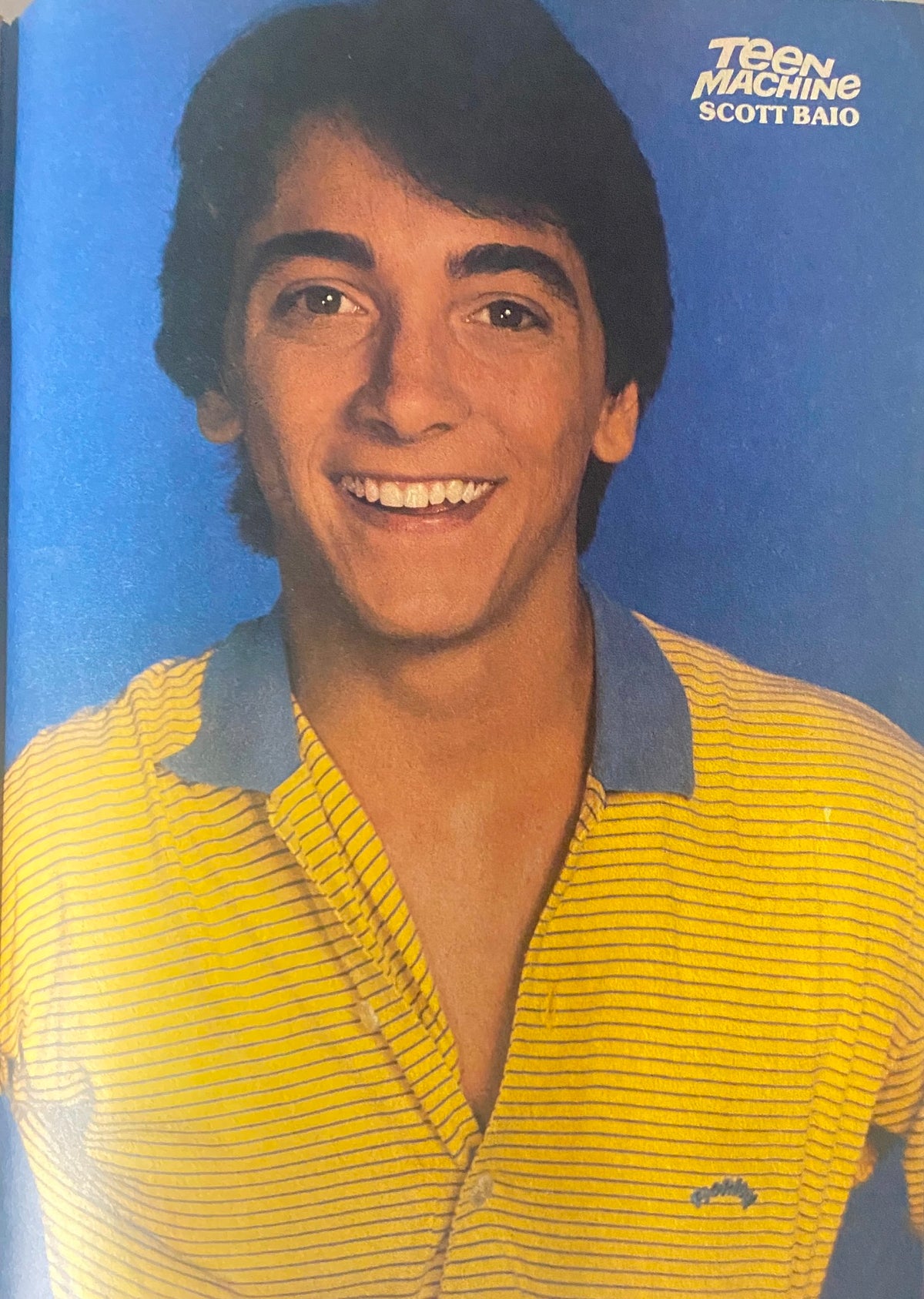
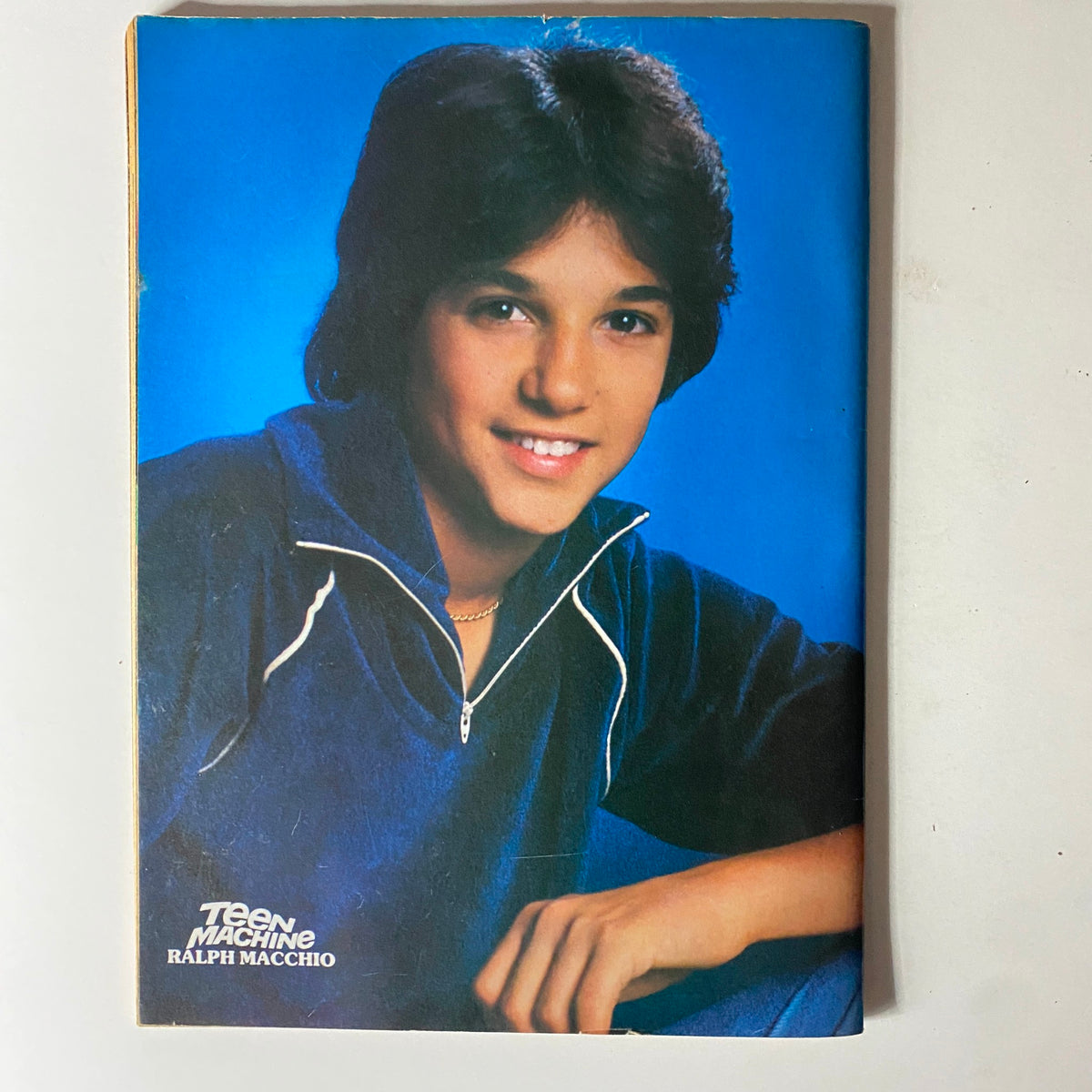


Description
Collector's Note – Why This Issue Matters
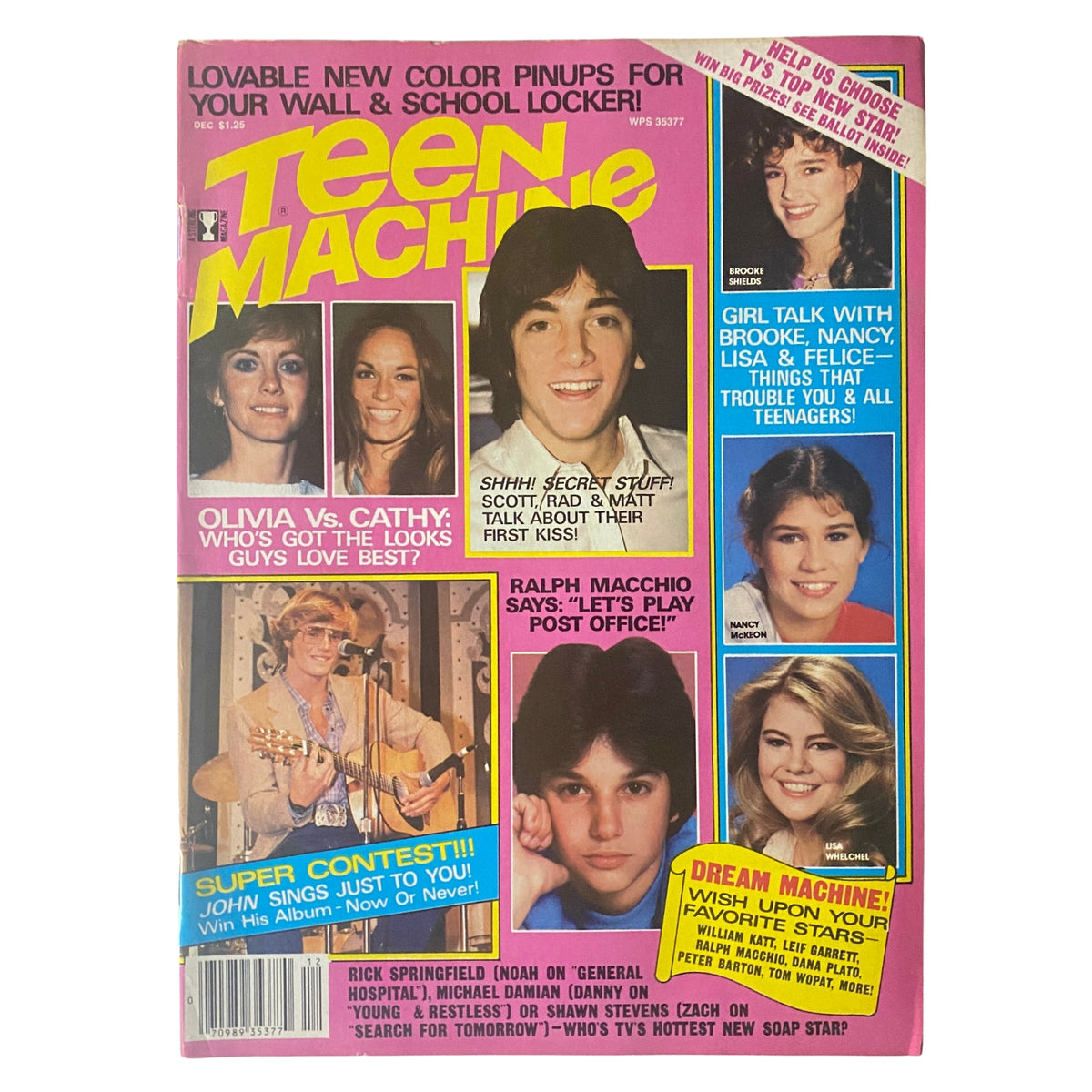
December 1981 sits squarely at the peak of one of the most commercially and culturally distinct phenomena in twentieth-century American entertainment publishing: the teen idol magazine. The early 1980s represented a genuine golden age for the genre, driven by a generation of young television and film stars whose faces filled the screens of America's living rooms every week and whose personal lives — real, imagined, or carefully managed by publicists — sustained an entire ecosystem of monthly publications aimed at adolescent readers. Teen Machine was one of the most content-rich titles in that ecosystem, and this particular December issue captures the roster of early-eighties idol culture at a moment of remarkable density. Scott Baio, riding the enormous popularity of his role as Chachi Arcola on Happy Days and its spinoff Joanie Loves Chachi, shared the cover with Ralph Macchio, who at this point in late 1981 was building his profile through television work that would culminate just a few years later in his career-defining role in The Karate Kid. For collectors researching teen and entertainment magazines from 1981, this issue functions as a remarkable census of the era's most bankable young faces — a single monthly edition that managed to feature, in pinup or editorial form, a significant portion of the personalities who defined adolescent pop culture at the turn of the decade.
The breadth of names represented inside this issue is genuinely striking even by the standards of the genre's most ambitious entries. Beyond the cover stars, the pinup roster alone includes John Schneider and Tom Wopat of The Dukes of Hazzard — a show at the absolute height of its cultural saturation in 1981 — alongside Brooke Shields, who had become one of the most discussed young celebrities in America following her roles in Pretty Baby and Blue Lagoon and her Calvin Klein advertising campaign. Olivia Newton-John was still riding the enormous commercial wave of Grease and her 1981 album Physical. Andy Gibb, Mark Harmon, Greg Evigan, and Peter Barton round out an editorial lineup that reads like a comprehensive directory of where young Hollywood's attention was focused that winter. The McNichol siblings — Kristy and Jimmy — appear multiple times across different features, reflecting their dual status as among the most popular teen presences on American television at the time. Miss Piggy's inclusion as a personality feature is its own kind of cultural document, capturing the moment when the Muppets had crossed fully from children's entertainment into mainstream celebrity culture. The sheer accumulation of names across this single issue makes it an unusually complete artifact of its moment.
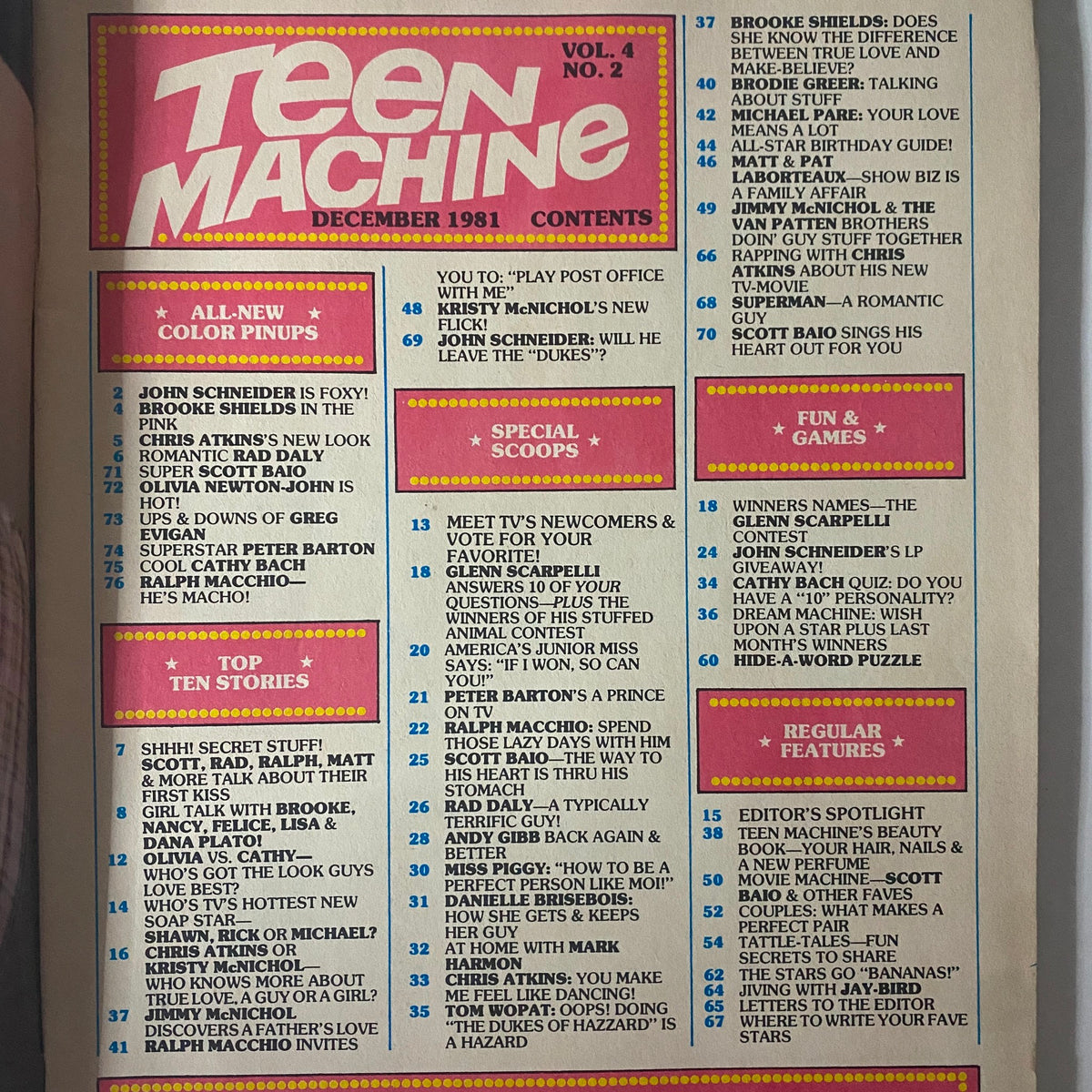
What distinguishes this issue beyond its celebrity roster is the specificity of its content as documented in the listing. The full table of contents has survived with this copy, and it reveals exactly how Teen Machine constructed its editorial product: a carefully calibrated mix of pinups, personality quizzes, first-person feature framings, interactive elements, and recurring departments that gave readers a sense of ongoing relationship with both the magazine and the celebrities it covered. The "first kiss stories" feature, the head-to-head personality comparisons, the "write to your favorite stars" directory — these were not incidental filler but the deliberate architecture of a publication that understood its audience's desires with precision. Collectively they document not just who was famous in December 1981 but how fame was packaged, sold, and consumed by young American readers at a very specific cultural moment.
About the Publication
Teen Machine was an American teen entertainment magazine published during the late 1970s and through the 1980s, aimed primarily at adolescent readers — predominantly girls — with a strong interest in television, film, and music celebrities. It occupied the same competitive space as titles like Tiger Beat, Teen Beat, and 16 Magazine, differentiating itself through high production values, an unusually generous pinup count per issue, and a format that balanced visual content with personality-driven editorial features including interviews, quizzes, and interactive reader participation elements. Teen Machine's editorial approach leaned heavily into the parasocial relationship between its readership and the celebrities it covered, presenting stars through a framework of romantic accessibility — the recurring suggestion that a given idol was knowable, reachable, and potentially interested in the reader personally. This was standard genre practice, but Teen Machine executed it with particular consistency and commercial success through the peak years of early-eighties teen idol culture. By December 1981 the magazine was operating in one of the most target-rich environments in the genre's history, with network television producing an unusually large cohort of young, photogenic stars whose simultaneous prominence created ideal conditions for exactly the kind of densely populated issue this edition represents.
Key Highlights Inside
- Cover featuring Scott Baio and Ralph Macchio, two of the most prominent young male television stars of the period — Baio at the peak of his Happy Days and Joanie Loves Chachi fame, Macchio building the profile that would shortly make him a major film star. The cover image alone makes this a foundational issue for collectors focused on either performer's career documentation.
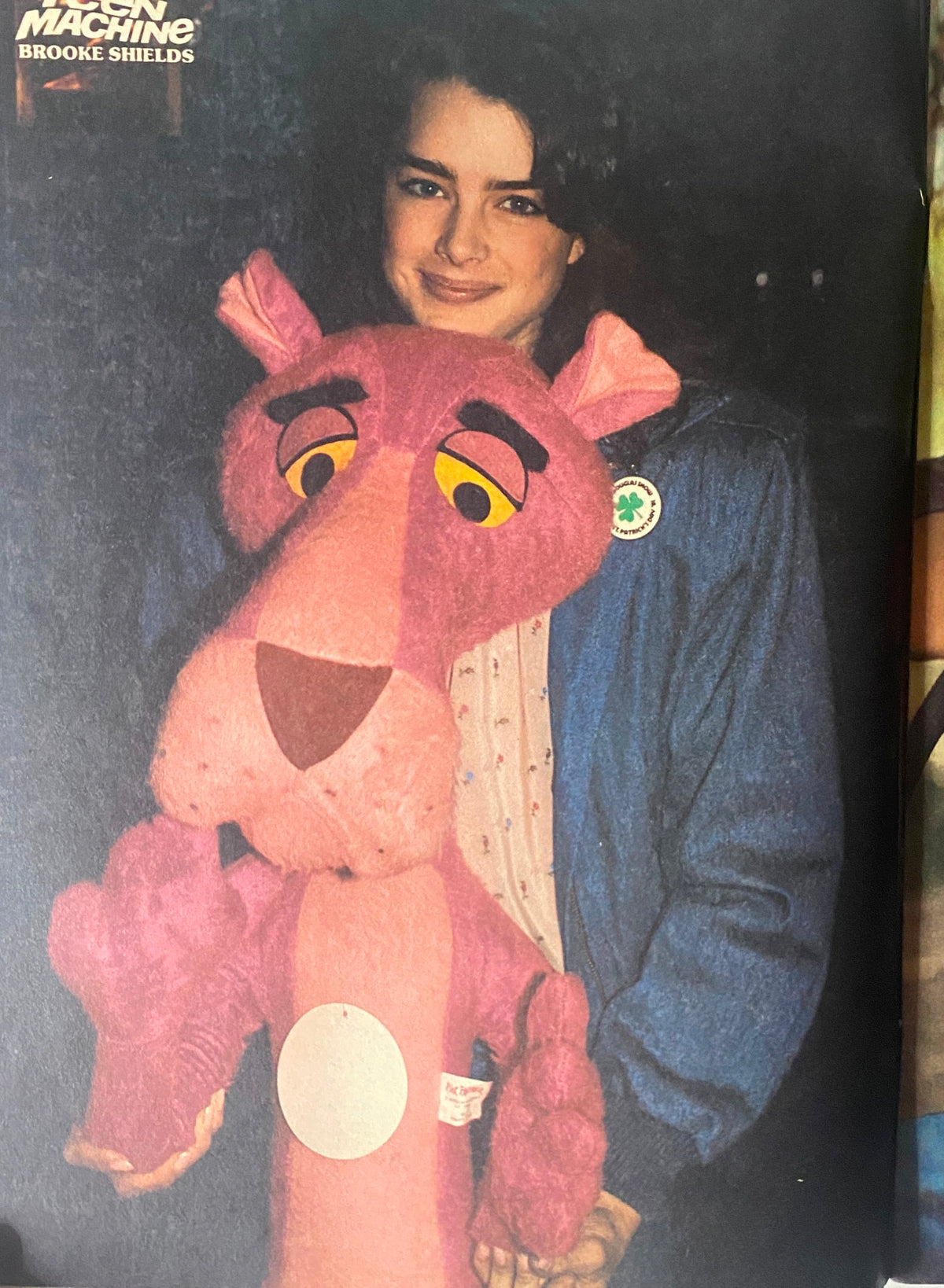
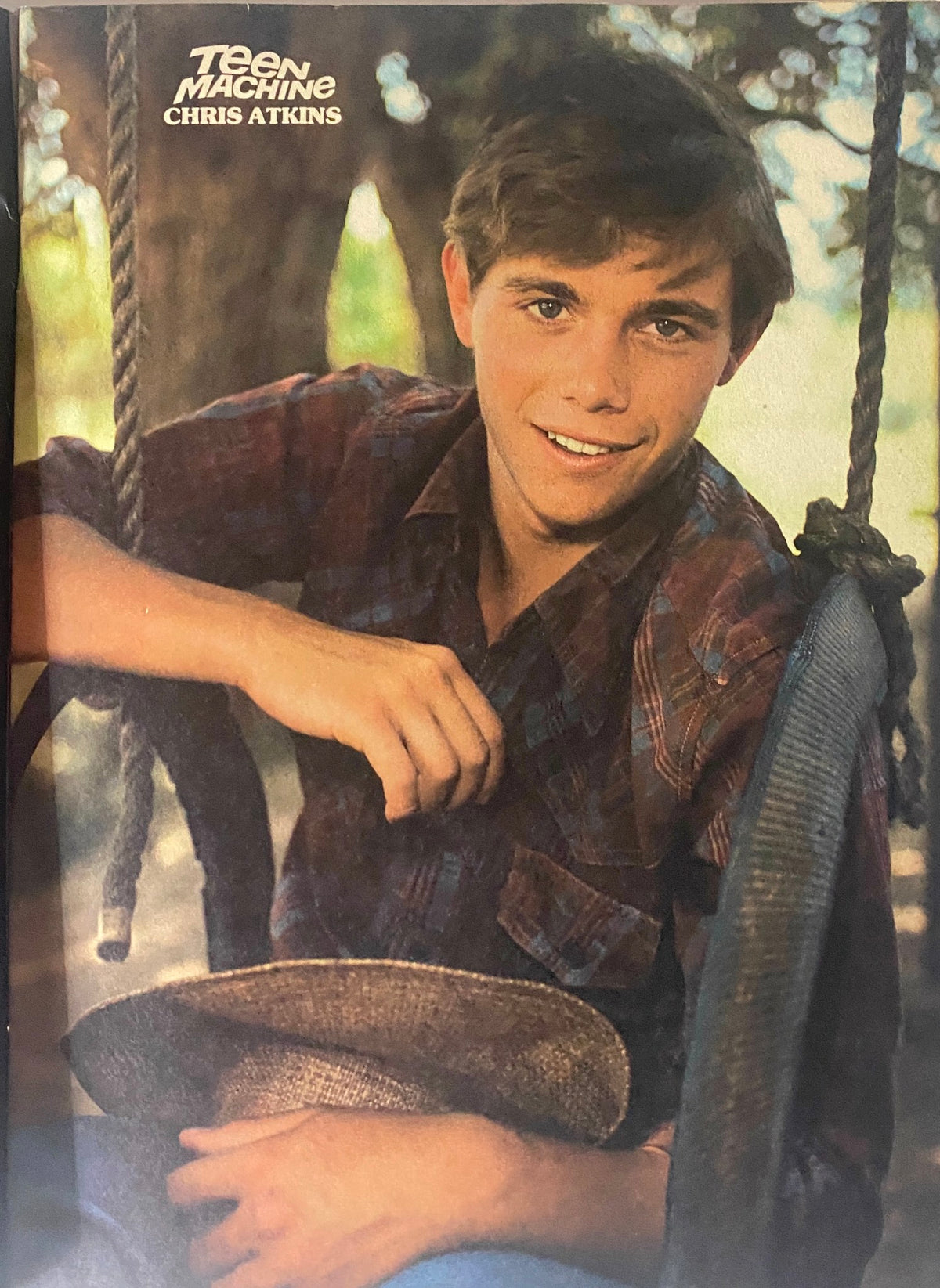
- Ten full-color pinups featuring John Schneider, Brooke Shields, Chris Atkins, Rad Daly, Scott Baio, Olivia Newton-John, Greg Evigan, Peter Barton, Cathy Bach, and Ralph Macchio — an exceptional roster that spans television, film, and music and represents an unusually complete cross-section of early-eighties teen idol culture in a single issue.
- A "first kiss stories" feature with Scott Baio, Rad Daly, Ralph Macchio, Matt Laborteaux and others — a genre staple of the era that functioned as intimate personality content and represents the kind of primary source material that makes teen magazines from this period valuable to cultural historians studying celebrity construction and adolescent media.
- Exclusive interviews documented in the listing with Peter Barton, Andy Gibb, and Mark Harmon, alongside personality features on Tom Wopat, Chris Atkins, Danielle Brisebois, and Glenn Scarpelli — a secondary roster that substantially deepens the issue's value as a document of the full breadth of early-eighties television and entertainment culture.
- Dukes of Hazzard content across multiple features — John Schneider pinup, Tom Wopat on-set feature, and the recurring question of whether Schneider would leave the show — reflecting the series' enormous cultural footprint in 1981 and making this issue a notable artifact for Dukes collectors specifically.
- Regular departments including Teen Machine's Beauty Book, Movie Machine, a Hide-a-Word puzzle, Dream Machine wish list, couples feature, and the star address directory — the full recurring architecture of a genre publication at the height of its commercial development, preserved in documented detail by the surviving table of contents.
Condition & Rarity
Teen idol magazines of the early 1980s present one of the more challenging condition scenarios in the vintage periodical collector market. Published on relatively thin paper stock with interior pages that included pull-out pinups by design, surviving copies frequently show evidence of reader interaction — removed pinups being the single most common condition defect, followed by spine stress from repeated opening, and edge wear from casual rather than archival handling. The listing specifically notes that original pinups and interactive features remain intact in this copy, which places it in a meaningfully smaller subset of survivors than the total number of copies originally printed. A December 1981 issue that has retained all its pinups for over four decades has either been exceptionally well stored or passed into a collection early enough in its life to avoid the kind of active use that claimed most of its print-run contemporaries. The absence of a mailing label preserves the full visual integrity of the cover — a meaningful distinction for a publication whose cover design was its primary retail selling point on the newsstand, and a condition attribute that collectors of teen magazines from this era actively seek out. Very Good condition with minor edge wear is an honest and respectable grade for a magazine of this type and age; it indicates a copy that reads completely, displays cleanly, and retains all its original content without the structural damage that would push it into lower condition territory. The plastic protective sleeve indicates deliberate preservation at some point in the copy's history, which is consistent with the overall condition profile described.
Looking for More Issues Like This?
A fully intact Teen Machine from December 1981 with confirmed pinup completeness and a clean newsstand cover is exactly the kind of issue that serious collectors of early-eighties teen idol culture rarely encounter twice in the same season. If this particular issue is no longer available, the 1981 magazine collection at OriginalMagazines.com brings together surviving issues from across the year's major publications and offers the best available starting point for locating other titles and dates that document the same era, the same stars, and the same remarkable moment in American teen entertainment culture.