



Description
Collector's Note – Why This Issue Matters
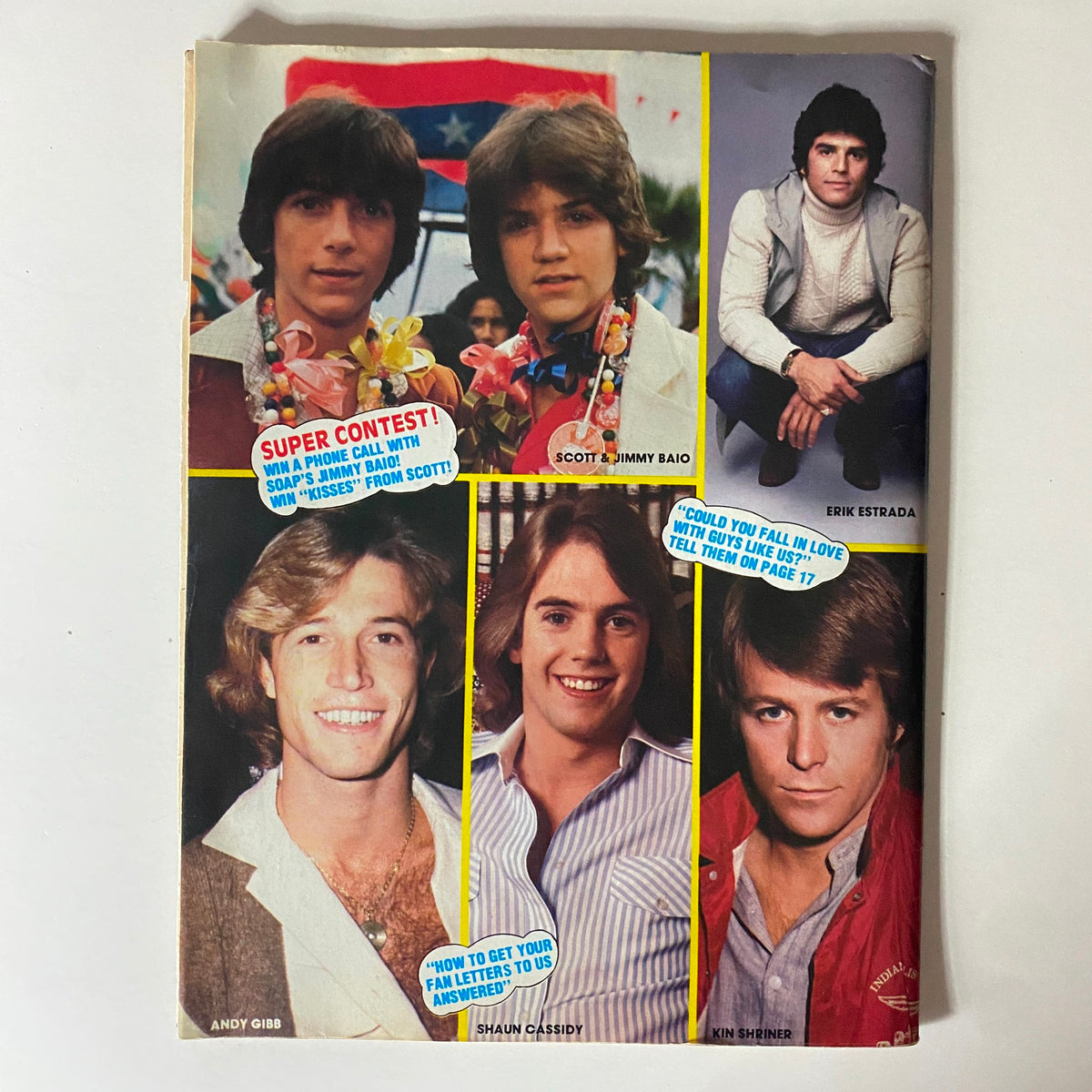
The September 1980 issue of Teen Machine magazine featuring Matt Dillon and Erik Estrada on the cover is a primary document of a very specific and now widely nostalgized moment in American popular culture — the late-seventies and early-eighties teen idol phenomenon that produced a distinctive media ecosystem of fan magazines, pinup culture, and the specific kind of celebrity-teen relationship that television and film of the era cultivated with unusual deliberateness. Matt Dillon in September 1980 was at the very beginning of a career that would make him one of the decade's defining film actors — his work in Over the Edge (1979) had already attracted critical attention, and he was about to film Little Darlings and begin the S.E. Hinton adaptations that would define his early career. Erik Estrada's CHiPs had been one of the most popular television programs in America since 1977, and his crossover from mainstream television star to teen idol had made him one of the most prominent faces in the fan magazine market of the period. Together on a September 1980 cover, they represent the specific cross-pollination of film newcomer and established television star that teen magazines like Teen Machine were expert at packaging for their readership. The broader context of the early-eighties popular culture moment is documented across the 1980 magazine collection, which brings together titles from the year that marked the opening of a decade whose teen culture would prove as distinctive and commercially consequential as any in the postwar era.
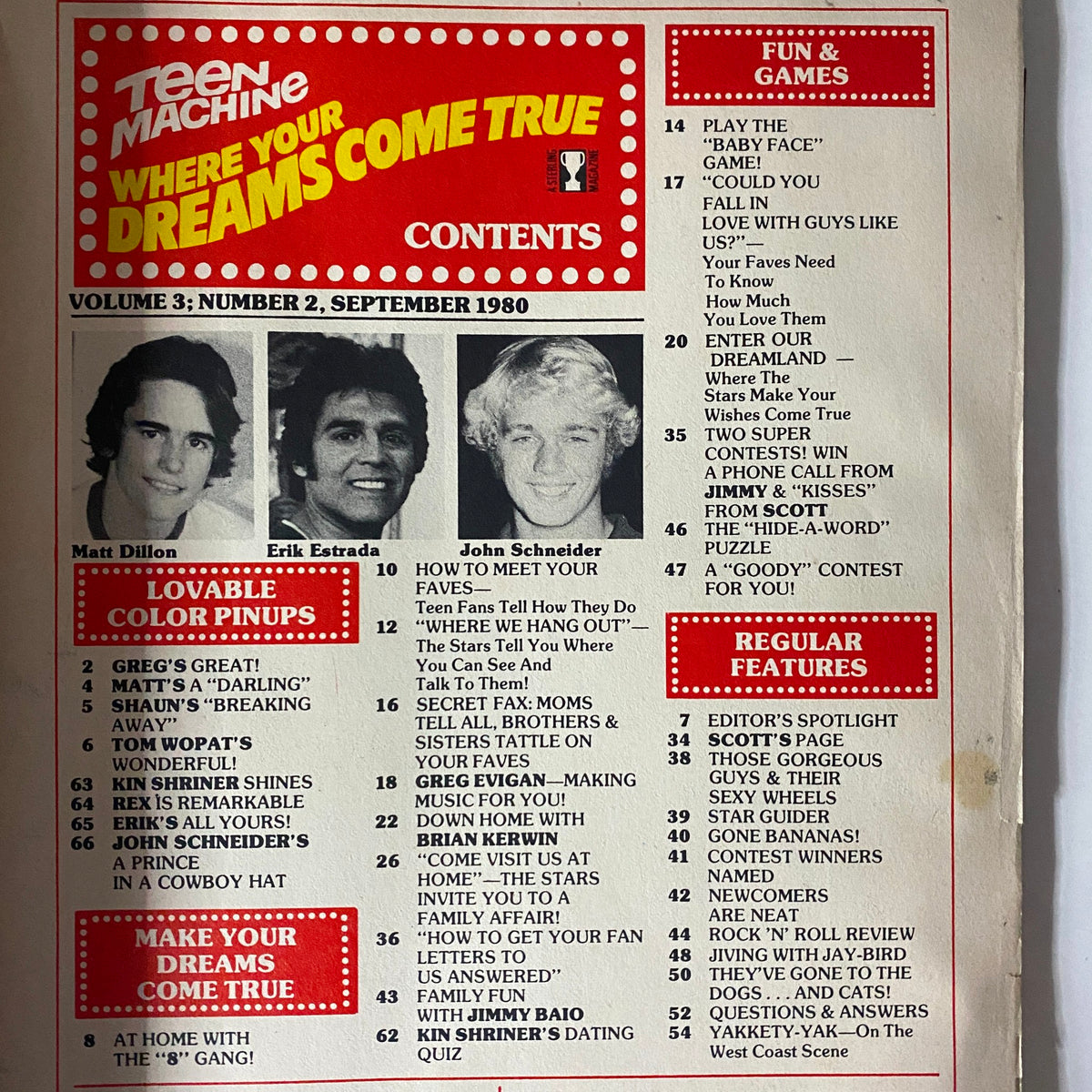
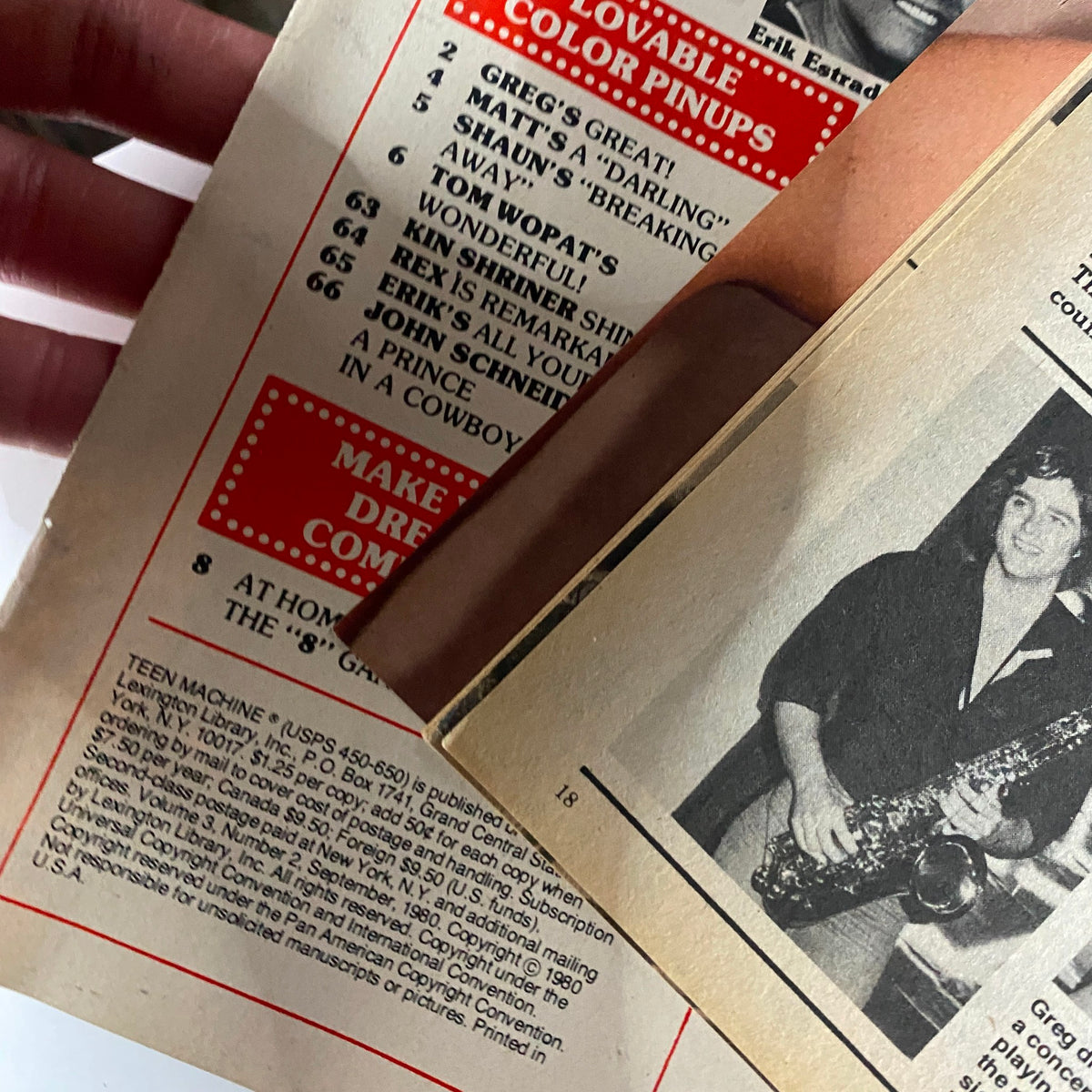
The table of contents for this issue is itself a primary document of the teen magazine format at its most fully developed. The structure — color pinups of Greg Evigan, Matt Dillon, Shaun Cassidy, Tom Wopat, Kin Shriner, Rex Smith, Erik Estrada, and John Schneider; celebrity features on the Eight is Enough cast, Brian Kerwin, and Jimmy and Scott Baio; interactive games, contests, and fan engagement features — reflects a formula that had been refined across the late seventies by multiple competing titles and that was in 1980 operating at its most commercially sophisticated. The specific names in this issue are a precise cross-section of the teen idol landscape of September 1980: Greg Evigan from B.J. and the Bear, Tom Wopat from The Dukes of Hazzard, John Schneider from the same show, Kin Shriner from General Hospital, Rex Smith who had just starred in Sooner or Later, and both Jimmy and Scott Baio from Happy Days and its spin-offs. That specific cast of names captures the exact television and young-entertainment landscape of September 1980 with documentary precision that no other source provides quite as directly. The "Star Guider" celebrity addresses page is itself a historically specific artifact — the era before social media when fan magazines provided the primary infrastructure for fan-celebrity correspondence.
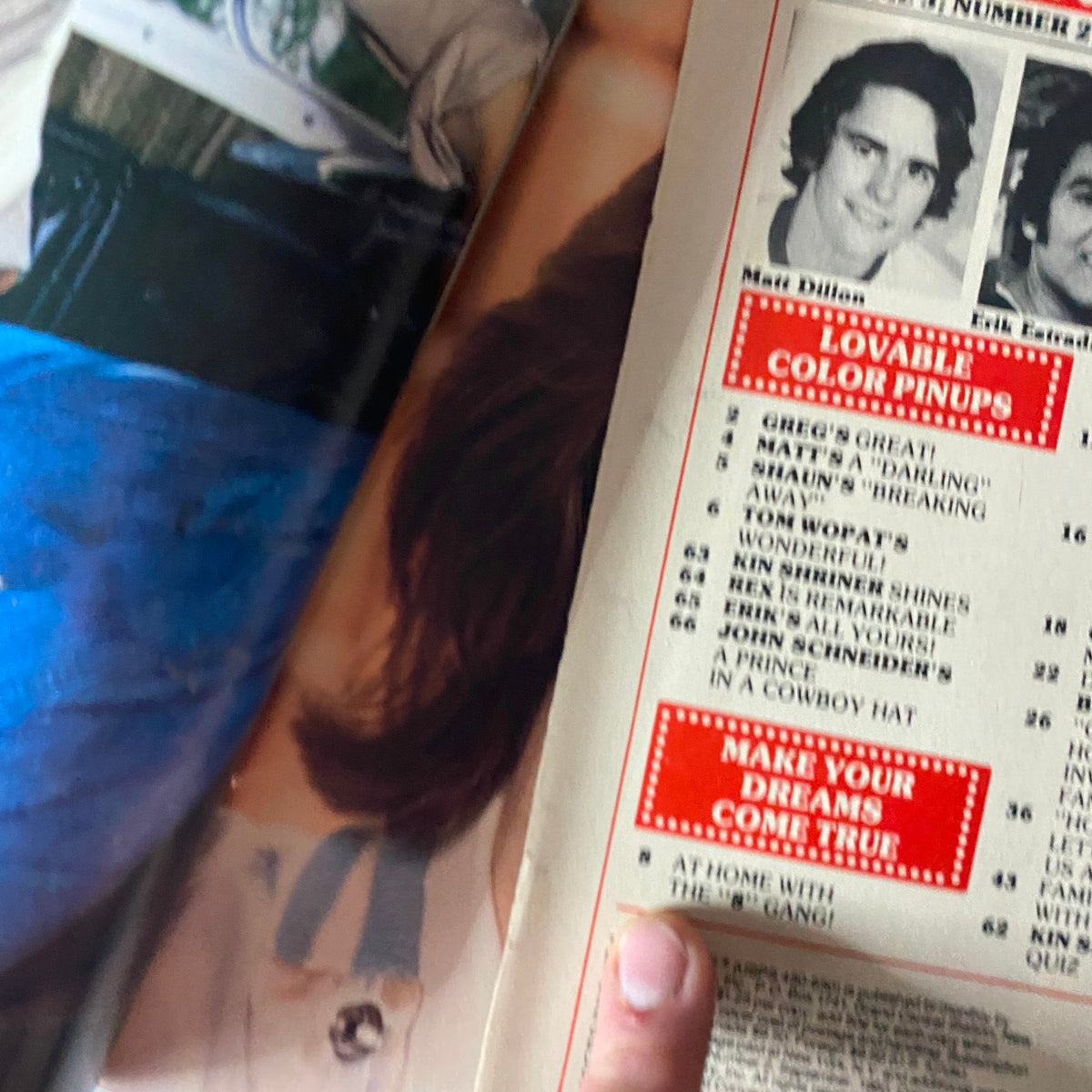
The condition note that two pinups are missing — Erik Estrada's and John Schneider's — is a meaningful detail for serious collectors that affects how this issue is evaluated. For a fan magazine in which the pinups are primary content rather than peripheral additions, missing pages alter the completeness of the artifact in ways that differentiate it from issues with intact pinup sections. The included loose pinup and the remaining intact color pages represent the majority of the pinup content, but collectors building completionist archives or researching the visual record of specific celebrities will want to account for the two missing pages when assessing the issue's research and display value.
About the Publication
Teen Machine was one of a cluster of teen fan magazines that dominated a specific segment of the American magazine market from the mid-seventies through the mid-eighties, competing with titles like Tiger Beat, 16, and Teen Beat for the readership of young American women aged roughly ten to eighteen who were the primary consumers of the teen idol culture that television and film were producing with industrial efficiency during this period. Its editorial formula — color pinups, celebrity profiles, fan interaction features, contests, and gossip columns — was shared across the category but executed with the specific casting decisions and editorial voice that distinguished each title's particular relationships with its celebrity subjects and its readers. By September 1980 it had developed the confident, fully realized version of that formula that characterized the genre's peak commercial period, and its readership understood exactly what they were getting and valued it accordingly.
Key Highlights Inside
- Matt Dillon and Erik Estrada cover — a precise document of the September 1980 teen idol landscape, pairing an emerging film actor at the very beginning of a significant career with the most prominent television-to-teen-idol crossover of the late-seventies era.
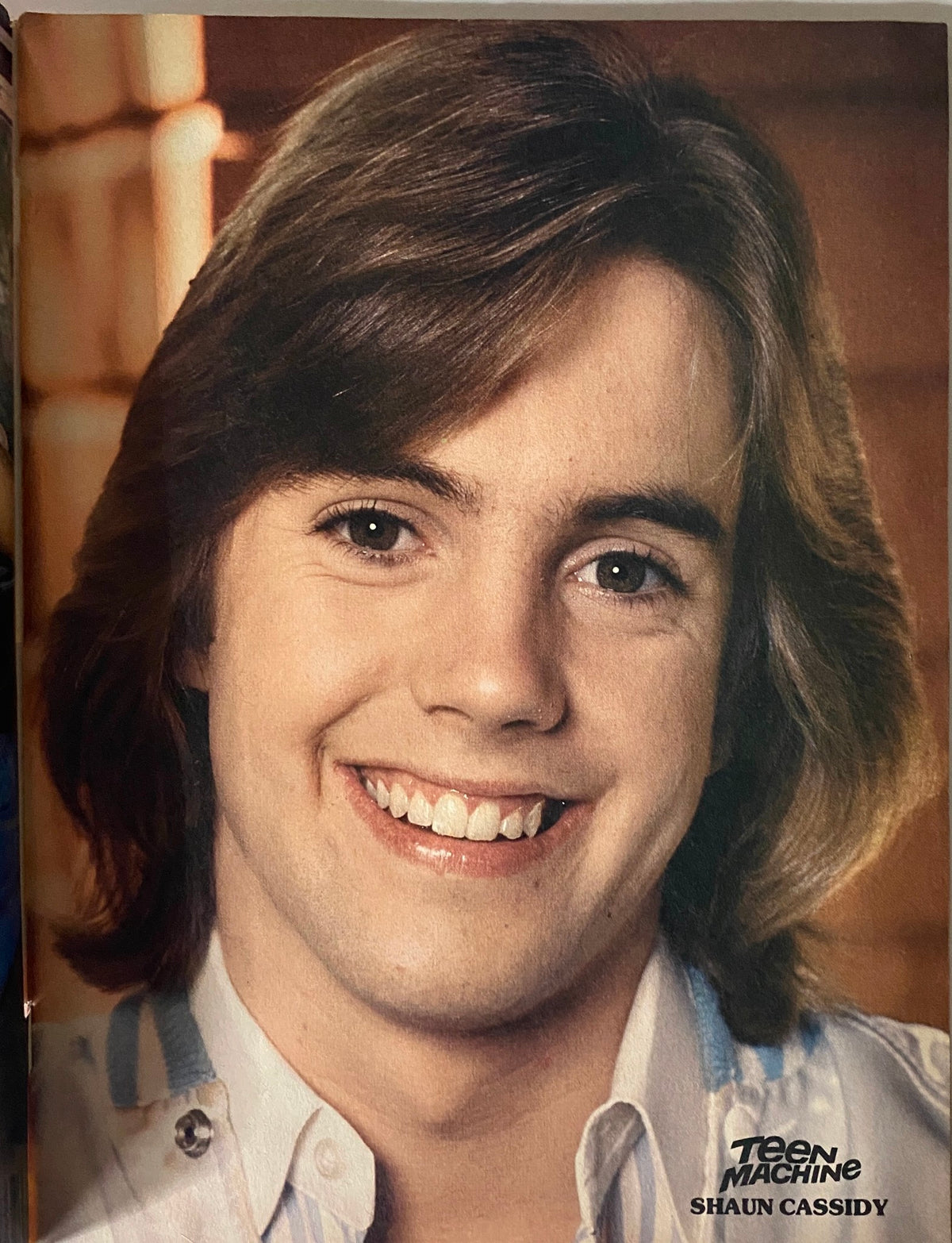
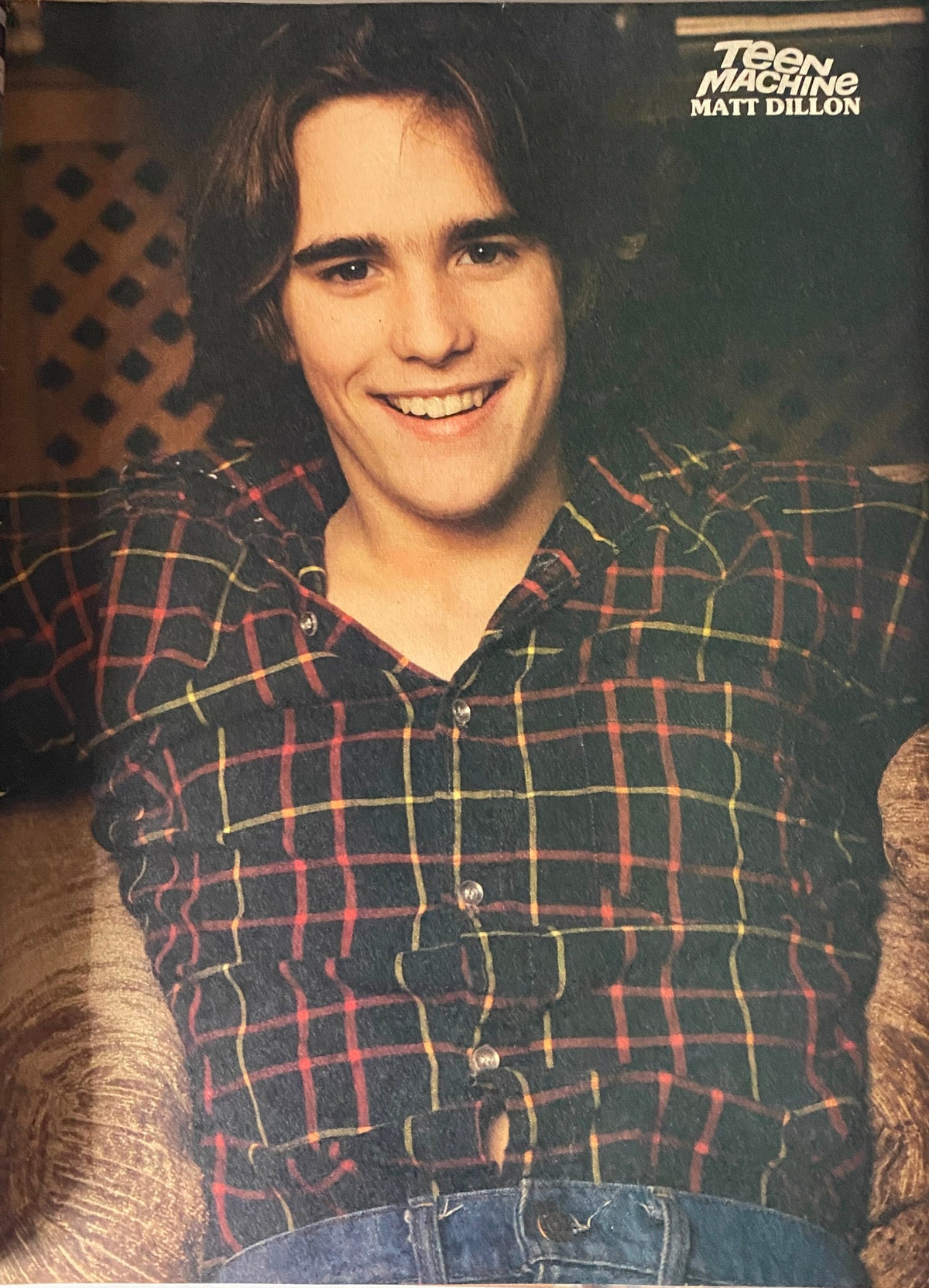
- Color pinups of Greg Evigan, Matt Dillon, Shaun Cassidy, Tom Wopat, Kin Shriner, and Rex Smith (with Erik Estrada and John Schneider pinups missing) — a cross-section of the television and entertainment celebrities dominating the teen fan magazine market in the fall of 1980, providing a precise visual record of who the teen idol ecosystem was centered on at this specific moment.
- "At Home with the 'Eight is Enough' Cast" — a behind-the-scenes feature on one of the most popular family television programs of the late seventies, whose ensemble cast was a reliable source of teen idol material across multiple publications during this period.
- Scott Baio's Personal Page and Jimmy Baio family feature — two separate features on the Baio cousins who were among the most consistently prominent figures in the teen fan magazine market of the late seventies and early eighties, their Happy Days universe providing reliable content across the category.
- Greg Evigan, Brian Kerwin, and Kin Shriner features alongside the interactive games and contests — the full complement of celebrity content and fan engagement features that constituted the teen magazine format at its most developed, including the "Star Guider" celebrity addresses page that served as the era's primary infrastructure for fan-celebrity correspondence.
Condition & Rarity
Surviving copies of the September 1980 Teen Machine in good condition are meaningful finds in the vintage teen fan magazine collector market, and this issue's specific condition profile requires honest assessment. Good condition with minor wear is the expected baseline for an original, unrestored fan magazine that has passed through four and a half decades without preservation care — these publications were handled heavily by their original readers and were rarely archived with the same care that more formally prestigious titles received. The two missing pinups — Erik Estrada's and John Schneider's — are a condition detail that differentiates this issue from complete surviving copies and affects its value for collectors specifically interested in those subjects' visual archives. The loose included pinup is an additional detail that collectors should assess in context of the provided photographs. The no-label condition confirms newsstand origin, meaning the cover image of Dillon and Estrada survives without subscriber label obscuration. The protective plastic sleeve is the appropriate conservation measure for a publication of this paper stock and age.
Looking for More Issues Like This?
A September 1980 Teen Machine with Matt Dillon and Erik Estrada on the cover is a specific and evocative primary document of early-eighties teen idol culture that rewards the search — issues from this peak period of the fan magazine genre surface less frequently in collectible condition than their original print runs might suggest. If this particular issue is no longer available, the complete 1980 magazine collection at OriginalMagazines.com brings together titles from across the cultural and entertainment publishing landscape of a year that marked the opening of one of American popular culture's most distinctive and commercially consequential decades.