

Description
Collector's Note – Why This Issue Matters
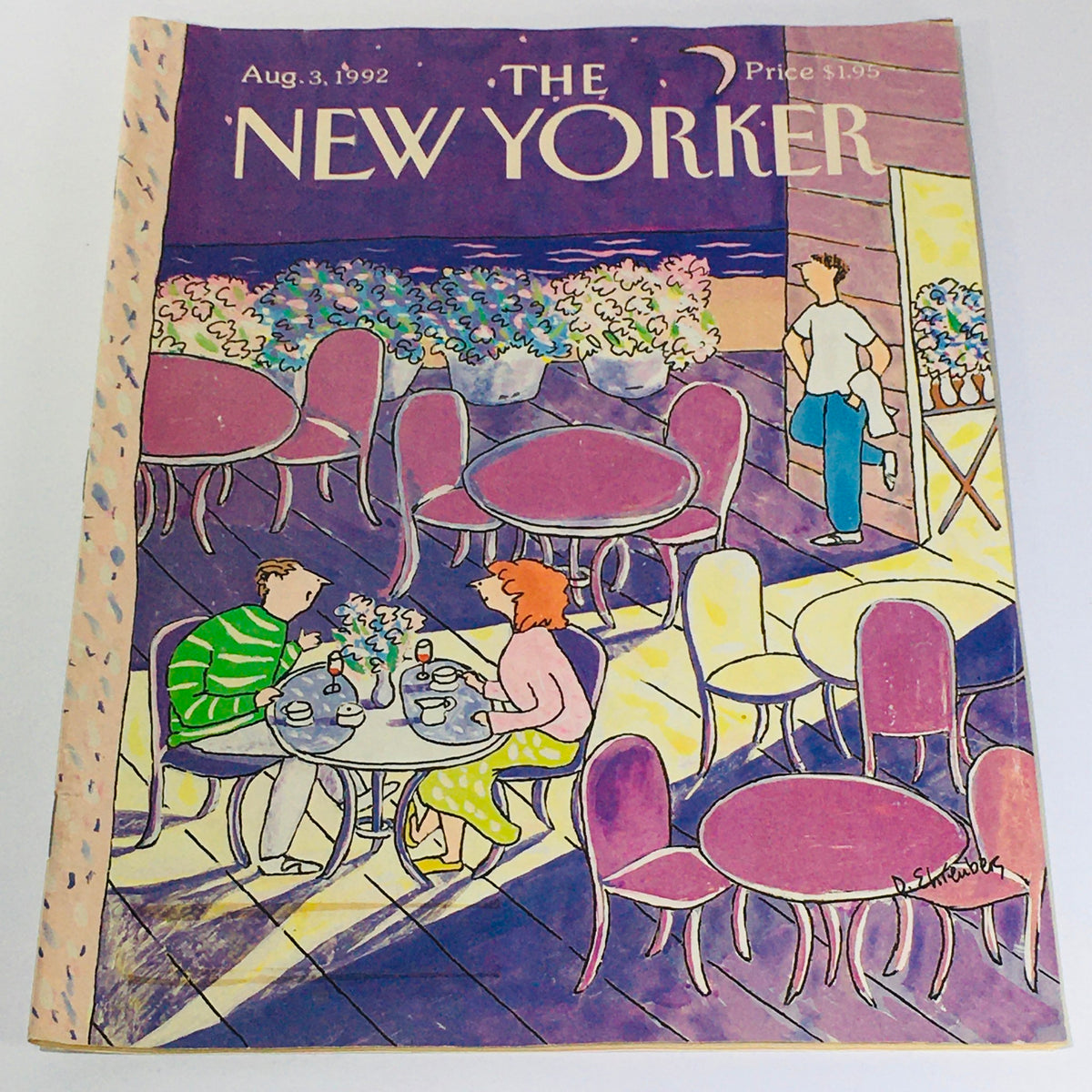
The August 3, 1992 issue of The New Yorker magazine belongs to the early-1990s period of a publication long known for literary journalism, fiction, criticism, cartoons, and carefully composed cover art. The listing identifies the issue as a full magazine with a theme cover by Devera Ehrenberg, giving it a clear place within The New Yorker’s artist-driven cover tradition. For collectors, that cover credit matters because dated New Yorker issues are often researched not only by publication date, but by the illustrator whose work defines the issue’s first impression. Ehrenberg’s name helps distinguish this issue within the long run of weekly covers, where artist attribution is often central to cataloging and collecting.
The date, August 3, 1992, places the issue within a year when American magazines were still central to how readers encountered cultural commentary, literary work, humor, politics, and the arts in curated weekly form. The listing describes the issue as a snapshot of the early-1990s cultural zeitgeist and as a reflection of The New Yorker’s style and themes during that period. Specific article titles, authors, and interior contents are not confirmed, so the issue is best understood through its verified details: date, publication, full-magazine format, Devera Ehrenberg cover credit, no address label, and stated condition. That keeps the issue grounded as a reliable collector reference rather than turning it into an invented table of contents.
Within the broader field of 1992 magazines, this issue is useful as a complete period object rather than a detached cover or single clipping. A full magazine preserves the relationship between cover art, articles, cartoons, advertisements, reviews, typography, and editorial pacing as readers encountered them at the time. The absence of an address label is especially relevant for The New Yorker, where the cover image is a major part of the magazine’s collectible identity and clean presentation helps preserve the intended artwork. As a complete early-1990s New Yorker issue, it also allows collectors to study how the magazine’s older literary traditions continued within a changing media landscape.
About the Publication
The New Yorker is a major American magazine founded in 1925 and known for literary journalism, criticism, fiction, poetry, cartoons, humor writing, satire, cultural commentary, and distinctive illustrated covers. Its readership has historically included people interested in serious writing, metropolitan culture, politics, the arts, and refined observational humor. By 1992, the magazine’s weekly format was well established, combining long-form reporting and essays with fiction, reviews, cartoons, short humor, and artist-led cover design. For collectors, complete New Yorker issues are valuable because they preserve the magazine as a whole cultural object, including the advertisements, page design, editorial sequence, and small period details that are lost when only a cover or individual article survives. The publication’s continuity across decades also makes individual dated issues useful for comparing changes in illustration, editorial tone, and American cultural taste. Each issue functions as a compact record of the magazine’s weekly judgment: what it chose to publish, how it presented itself visually, and how it balanced tradition with contemporary observation.
Key Highlights Inside
- August 3, 1992 full issue of The New Yorker, as identified in the listing, preserving the magazine as a complete weekly publication from the early 1990s.
- Theme cover credited in the listing to Devera Ehrenberg, connecting the issue to The New Yorker’s collectible cover-art tradition and giving collectors a clear artist attribution.
- Described in the listing as offering a glimpse into the style and themes of The New Yorker during the early 1990s, consistent with the magazine’s role as a weekly cultural and literary record.
- No address label, a collector-relevant detail that supports a cleaner front-cover presentation and allows the Devera Ehrenberg artwork to remain visually uninterrupted.
- Used and in good condition, with light wear typical for its age and possible edge wear and/or rips, all important factors when comparing surviving examples.
- Specific article titles, authors, cartoonists, page numbers, and full interior contents are not confirmed from the listing, so no additional inside features are assumed here.
Condition & Rarity
The listing describes the issue as used and in good condition, with light wear typical for its age, no address label, possible edge wear and/or rips, and no plastic protective covering. In collector terms, the no-label cover is a meaningful presentation advantage because The New Yorker’s cover art is central to the issue’s appeal, especially when the artist is identified. Light wear and edge flaws are common on weekly magazines from the early 1990s, particularly examples that were read, shelved, or stored without archival protection. The absence of a plastic covering means surviving examples should be inspected for exposed corner wear, cover rubbing, edge tears, spine stress, and page condition. When evaluating this issue, collectors would typically look for completeness, stable binding, clean interior pages, and whether the Devera Ehrenberg cover remains visually strong despite ordinary handling wear. Because it is identified as a full magazine, interior integrity matters as well; complete pages, readable text, and intact cartoons or advertisements help preserve the issue’s value as a full-period document rather than merely a cover-art collectible.
Looking for More Issues Like This?
Exact-date New Yorker issues from 1992 can be difficult to match by cover artist, condition, and label status, especially when collectors are seeking complete magazines rather than isolated covers. Readers interested in related examples may want to browse the broader The New Yorker magazine collection for other weekly issues, illustrated covers, literary artifacts, and artist-driven themes. Comparing multiple issues can help collectors trace how the magazine’s cover art, cartoons, and editorial voice shifted across the early 1990s.
For collectors studying the wider magazine landscape of the same year, the 1992 magazines collection offers a useful way to compare this issue with other publications from the early 1990s. Looking across 1992 helps place this August issue within a broader print culture shaped by literary journalism, cartoons, design, advertising, politics, and cultural commentary. It also provides context for how different magazines captured the same cultural moment through their own visual styles, editorial priorities, and assumptions about readers.