




Description
Collector's Note – Why This Issue Matters
April 10, 1943 sits squarely in the middle of the Second World War's most demanding phase for the American home front. The United States had been fully at war for sixteen months. Rationing was in force. Young men were shipping out in enormous numbers. And The New Yorker, which had committed itself to serious war correspondence more deeply than almost any other American magazine, was simultaneously running dispatches from the front and maintaining the editorial wit and visual sophistication that defined its identity. A spring 1943 issue was, in that sense, a study in tonal balance — the magazine at its most purposeful.
The cover by Mary Petty gives this particular issue a specific and lasting identity. Petty contributed to The New Yorker from the early 1930s through the 1960s, producing both covers and the interior cartoons featuring her signature creation: the fussy, ancient, magnificently oblivious Peabody household. Her artistic territory was the rituals and self-regard of the American upper class, rendered with a precision that was simultaneously affectionate and devastating. A Petty cover from the wartime years carries additional resonance — her world of butlers, grand staircases, and elaborate social ceremony existing in pointed contrast to the austerity the war demanded of nearly everyone else. For collectors assembling a focused run of vintage New Yorker issues, Petty covers are among the most artistically distinctive the magazine produced across four decades.
The spring of 1943 was also a moment of genuine consequence in the war's trajectory. The North African campaign was approaching its conclusion. The Pacific theater was grinding forward at enormous cost. At home, the Office of War Information was actively shaping public messaging, and the press — including the serious weeklies — was navigating the line between honest reporting and wartime morale. An issue from this pivotal year of 1943 captures that negotiation in real time, in the voices and images of people living through it without knowing how it would end.
About the Publication
The New Yorker was founded by Harold Ross in 1925 and had, by the early 1940s, evolved into something more than the urbane humor magazine of its origins. The war transformed it. Correspondents including A.J. Liebling, Mollie Panter-Downes, and Janet Flanner were filing dispatches from Europe that set a new standard for American war journalism, while the home-front issues continued publishing fiction, poetry, criticism, and the single-panel cartoons that remained the magazine's most widely recognized format. Each cover remained a commissioned original artwork — never a photograph — and the roster of cover artists active in the 1940s, Mary Petty among them, represents one of the most concentrated collections of mid-century American illustration talent assembled by any publication. The magazine's audience was educated, urban, and literary, and the editorial standard under Ross remained exacting through the entirety of the war years.
Key Highlights Inside
- Original Mary Petty cover — A commissioned illustration in Petty's unmistakable style, placing this issue within one of the most sought-after visual lineages in the magazine's history.
- Complete issue — All pages intact across what was a substantial weekly package: fiction, reported pieces, criticism, cartoons, and period advertising.
- Wartime editorial context — Spring 1943 issues of The New Yorker reflect the magazine at peak wartime engagement, with an editorial mix that balanced front-line correspondence, home-front reporting, and the cultural commentary the publication never abandoned.
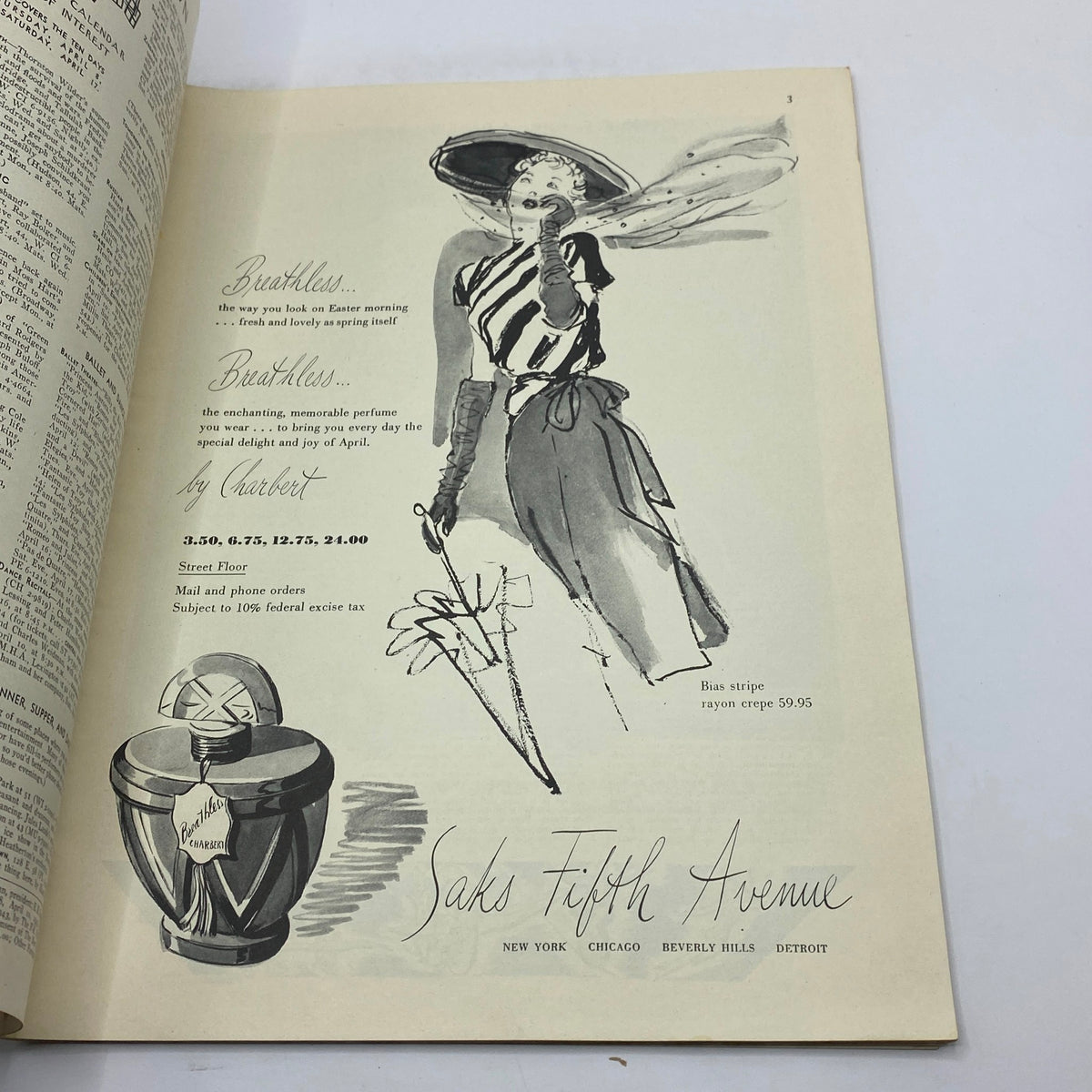
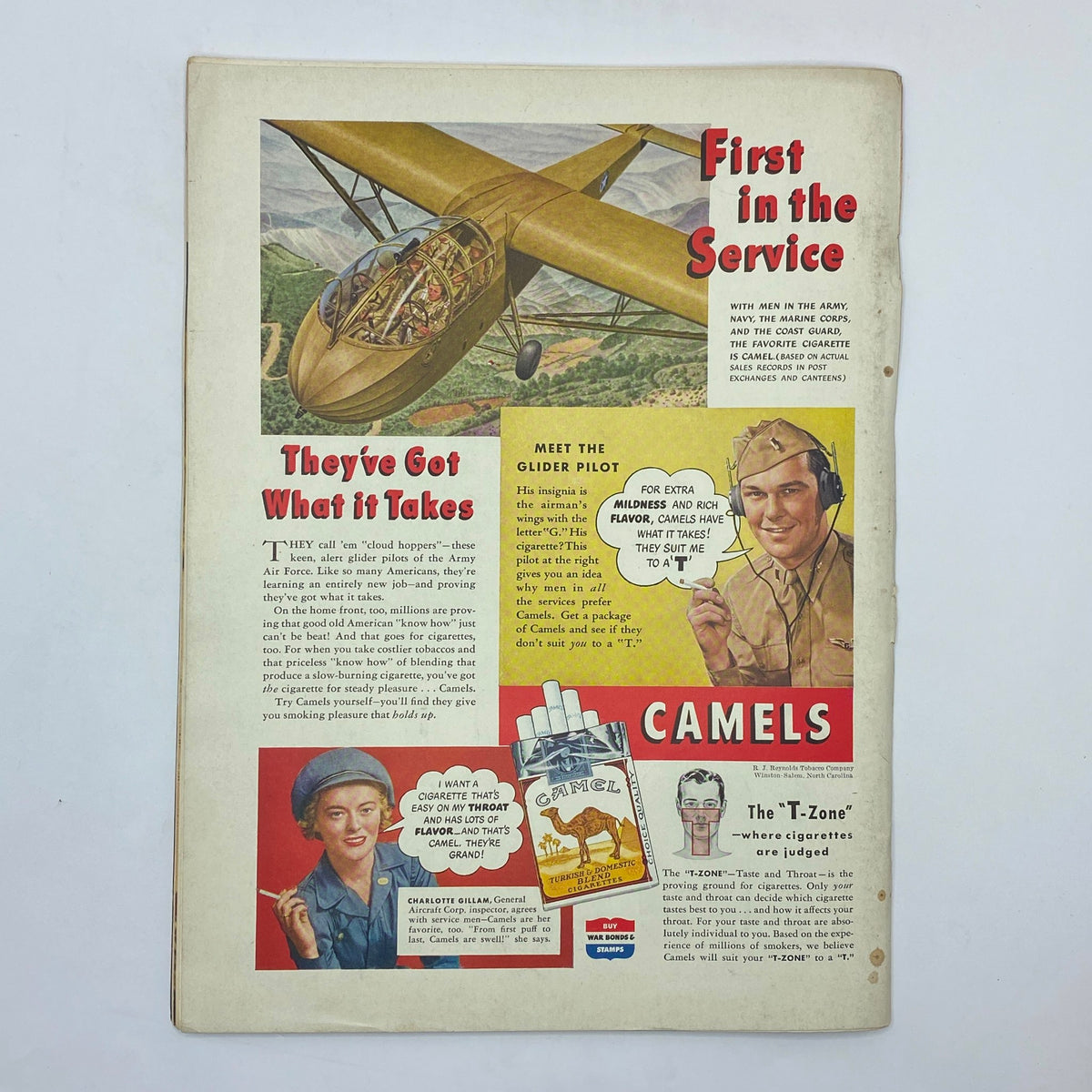
- Period advertising — Wartime New Yorker advertising is a primary document of the consumer economy under constraint — war bonds, modified luxury goods, and brands recalibrating their messaging for an audience acutely aware of sacrifice and shortage.
- Interior cartoons — Specific cartoon credits for this issue are unconfirmed in available records, but the standard 1943 format included a robust complement of single-panel work; Petty herself contributed interior cartoons regularly during this period alongside her cover appearances.
Condition & Rarity
A surviving copy of this issue grading Very Good for its age presents well by any reasonable standard for an eighty-plus-year-old weekly periodical. The New Yorker was printed on lightweight coated stock not designed for long-term preservation, and most copies spent their early lives being read, shared, and shelved in ordinary household conditions. Minor edge wear at this grade is expected and does not compromise the reading or display value of the issue. The more meaningful condition variables for serious collectors are cover integrity — particularly the fidelity of the Petty illustration's color registration and line work — and interior completeness. New Yorker issues of this era were frequently culled for cartoons or clippings, making a fully intact copy, with no excised pages or clipped panels, meaningfully more desirable than a superficially clean but incomplete example. Spine stress and toning consistent with wartime-era paper stock are standard and do not diminish historical or artistic value.
Looking for More Issues Like This?
Mary Petty covers appear across several decades of The New Yorker's run, but finding a specific wartime issue in Very Good condition takes patience — these don't surface often. The New Yorker collection at OriginalMagazines.com is one of the most extensive available, with issues spanning the full arc of the magazine's history and a strong representation of the 1940s in particular. Collectors focused on the wartime years specifically will also find it worth exploring the 1943 magazine collection, which draws together major titles from across that year and offers a broader view of American print culture at one of its most consequential moments.