




Description
Collector's Note – Why This Issue Matters
April 14, 1936 places this issue of The New Yorker at a moment of considerable historical tension and cultural vitality. Spring 1936 was unfolding against a backdrop of gathering international crisis — Hitler had remilitarized the Rhineland just five weeks earlier on March 7, exposing the hollowness of the Versailles settlement and signaling with unmistakable clarity the direction in which Europe was moving. In the United States, Franklin Roosevelt was in the final year of his first term, the New Deal's second legislative wave had reshaped the domestic political landscape, and the presidential election of November 1936 was already the dominant subject of political conversation. New York in mid-April was fully into its spring season — the cultural calendar active, the city's intellectual and social life in motion — and The New Yorker was tracking all of it with its characteristic precision and wit. For collectors building a documentary archive through original magazines from 1936, a mid-April issue carries the full atmospheric weight of a year that was simultaneously culturally rich and historically ominous in equal measure.
The cover by Harry Brown gives this issue a specific place within the magazine's mid-1930s visual history. Brown contributed illustrations and cover art to The New Yorker during this period, working in the tradition of humorous, observational illustration that the magazine's art department — shaped by founding art editor Rea Irvin — had established as its defining visual mode. The listing's description of Brown's work as intricate and humorous, bringing everyday scenes to life with a lighthearted touch, is consistent with the broader aesthetic of the contributing artists whose cover work defined the magazine's look across the interwar decades. A Brown cover from April 1936 is a relatively uncommon artifact of that tradition, representing the work of a contributing artist whose output was valued by the magazine but whose name is less widely recognized today than those of the publication's most celebrated illustrators. For collectors tracing the complete visual history of the publication through original New Yorker issues, covers by artists of this kind — skilled, characteristic of the era, but outside the canonical inner circle — often represent the most interesting and least competed-for material in the archive.
It is also worth noting the specific position of mid-April within the magazine's annual editorial rhythm. A mid-spring issue in 1936 would have arrived as New York's cultural season was at its most active — theater, galleries, and the social calendar all running simultaneously — and as the political year was shifting into high gear ahead of the autumn election. The combination of cultural abundance and political intensity that characterized New York in the spring of 1936 gives any surviving issue from this period a layered quality that rewards close attention.
About the Publication
Founded in February 1925 by Harold Ross, The New Yorker was by April 1936 the most editorially rigorous and culturally influential weekly magazine in America. Its readership was urban, educated, and expected both the wit and the intellectual seriousness that Ross enforced with unusual editorial discipline. The magazine's format was mature and consistent: "Talk of the Town" commentary opened each issue, followed by reported features, fiction, poetry, and critical reviews across theater, books, art, and film, all interwoven with cartoons and spot illustrations that had become as central to the magazine's identity as any of its prose. Covers were individually commissioned works of illustration, produced by a rotating roster of contributing artists whose collective interwar output constitutes one of the most significant bodies of American periodical art from the twentieth century.
Key Highlights Inside
- Harry Brown cover illustration: The cover is the most historically documentable feature of this issue — original artwork by a contributing illustrator known for intricate and humorous depictions of everyday scenes, working in the visual tradition that defined The New Yorker's mid-1930s aesthetic.
- Post-Rhineland remilitarization: Published five weeks after Hitler's remilitarization of the Rhineland — the event that effectively ended the Versailles settlement — this issue appeared at a moment when the international situation was darkening in ways that attentive readers and editorial staff were fully registering.
- Roosevelt election year: Spring 1936 was the opening of a presidential election year in which Roosevelt would win one of the most decisive landslides in American history — a political atmosphere that pervaded the magazine's commentary and cultural observation throughout this period.
- New York spring cultural season: Mid-April issues characteristically documented the peak of New York's spring theater, gallery, and social calendar — a rhythm the magazine tracked with consistent editorial attention and genuine enthusiasm.
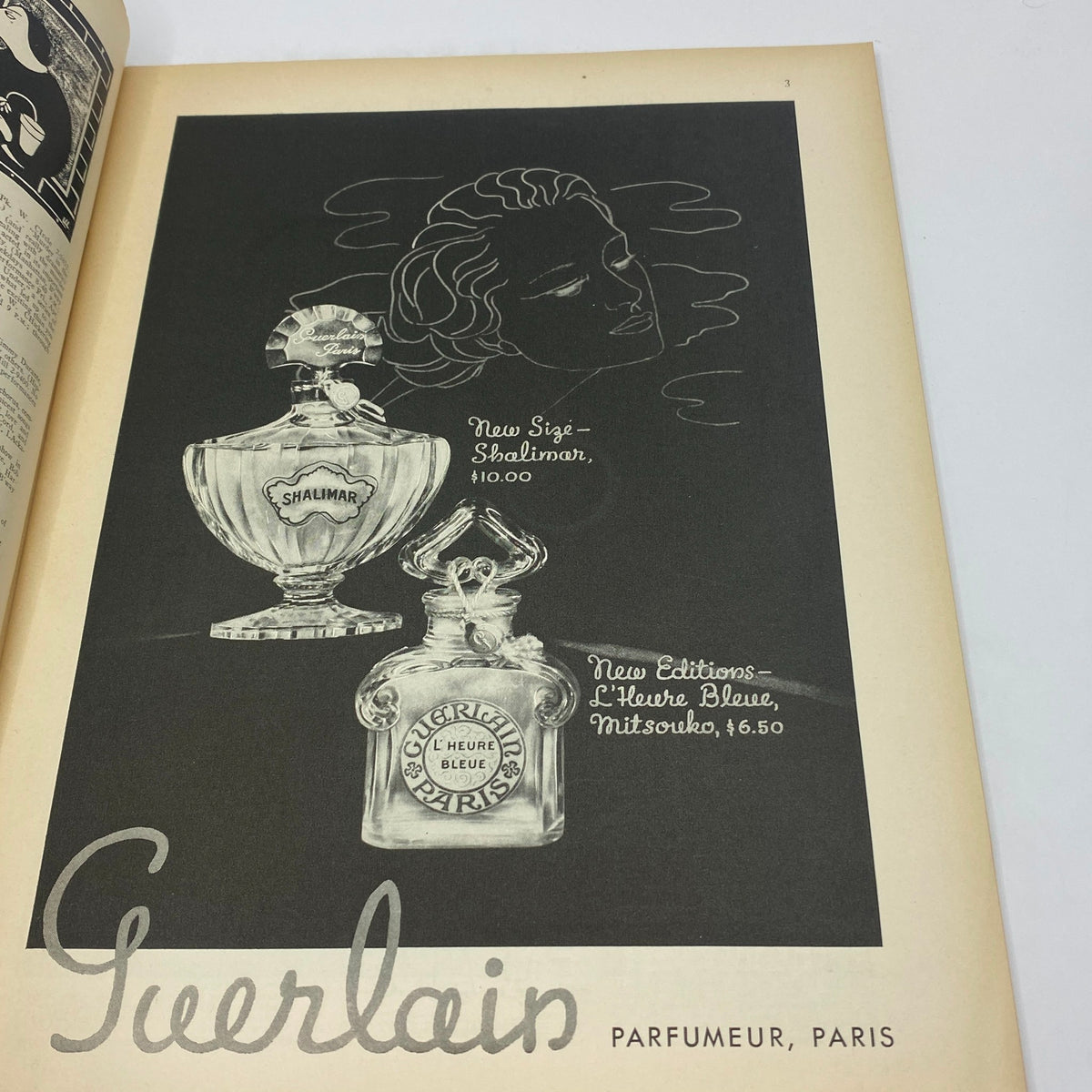
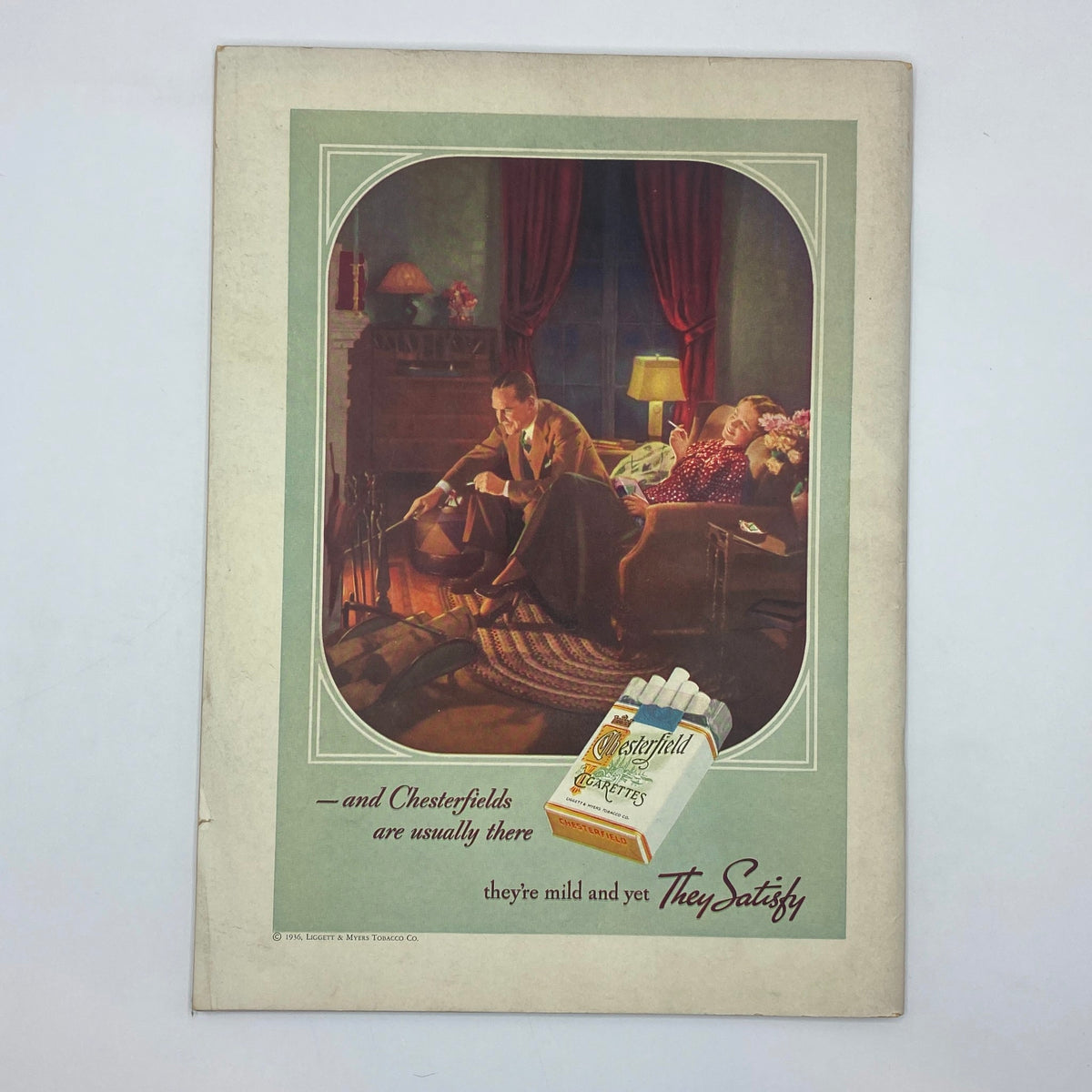
- Period cartoons and advertising: Issues from the mid-1930s are consistently sought by collectors and cultural historians for the cartoons, spot illustrations, and advertising that together provide a granular record of social life, consumer culture, and everyday observation in Depression-era New York.
Note: Specific article titles, bylines, and interior content for this exact issue have not been independently confirmed beyond what appears in the listing. The highlights above reflect only what is verifiable from the cover credit, publication date, and the magazine's well-documented editorial format during this period.
Condition & Rarity
A surviving copy of a weekly newsstand magazine from April 1936 presenting in very good condition — with minor edge wear as the only noted imperfection and overall integrity described as intact — is a strong preservation result for a publication now approaching ninety years old. The New Yorker was printed on acidic wood-pulp paper stock standard for weekly periodicals of the era, a material inherently prone to toning, brittleness, and structural degradation over time. Edge wear of the kind described is entirely consistent with honest age and careful storage rather than mishandling. When evaluating any surviving copy of this issue, the meaningful criteria are the integrity and color fidelity of Brown's cover art, the completeness of all interior pages, the absence of subscription label adhesive residue or moisture damage, and the structural soundness of the spine. A copy meeting the standard described — visually strong at nearly nine decades of age, with wear confined to the margins and overall integrity intact — represents the preservation grade that serious collectors of interwar periodicals actively pursue.
Looking for More Issues Like This?
Harry Brown covers from the mid-1930s are among the less commonly encountered in the New Yorker collector market, and this specific April 1936 date — arriving at such a charged political and international moment — is not one that surfaces frequently. If it is no longer available, the extensive original New Yorker collection at OriginalMagazines.com is one of the deepest archives of the magazine accessible to collectors, with issues spanning many decades of the publication's history. For those drawn to the particular atmosphere of the mid-Depression and pre-war years, the full 1936 magazine collection rewards careful exploration — it is a year whose historical complexity and cultural richness show up clearly in every issue that has made it to the present day.