




Description
Collector's Note – Why This Issue Matters
April 23, 1938 places this issue of The New Yorker at a moment of profound unease in the Western world. Europe was accelerating toward catastrophe — Hitler had annexed Austria just six weeks earlier in the Anschluss of March 12, and the international response had been largely paralyzed. In the United States, the debate between interventionism and isolation was sharpening, and New York's large Jewish and European émigré communities were following developments abroad with a fear that the mainstream American press was only beginning to reflect. The New Yorker of spring 1938 was a publication whose editorial intelligence was operating in full awareness of these pressures, even as it maintained the surface register of sophisticated urban observation that defined its voice. For collectors building a serious archive through original magazines from 1938, issues from this particular spring carry a historical charge that is inseparable from what was happening in Europe at the moment they were printed.
The cover by Christina Malman gives this issue a distinct place in the magazine's visual history. Malman was one of the relatively few women contributing cover art to The New Yorker during the 1930s and 1940s, and her work is recognizable for the quality the listing describes accurately — a minimalist sensibility and expressive simplicity that set her apart from the more densely illustrative approach of some of her contemporaries. She contributed covers to the magazine across roughly two decades, and her output from the late 1930s in particular reflects an artist working confidently within the magazine's visual framework while bringing her own restrained aesthetic to it. An original Malman cover from April 1938 is a relatively uncommon artifact of that career, and for collectors tracing the full visual history of the magazine through original New Yorker issues, her covers represent an important and sometimes overlooked chapter in the magazine's artistic lineage.
There is also a seasonal dimension worth noting. A late April issue in 1938 would have arrived at the beginning of New York's spring cultural season — theater, gallery openings, the social calendar reanimating after winter — and The New Yorker's editorial content characteristically tracked those rhythms with care. The interplay between the city's cultivated social life and the gathering darkness of international events gives issues from this specific spring a texture that is difficult to find in any other period of the magazine's history. It is a document of a world still trying, with diminishing conviction, to proceed normally.
About the Publication
Founded in February 1925 by Harold Ross, The New Yorker was by 1938 one of the most editorially distinguished weekly publications in the English-speaking world. Its audience was urban, educated, and engaged with both the cultural life of New York and the broader currents of American and international affairs. The magazine's format was well established by this point: "Talk of the Town" commentary opened each issue, followed by reported features, fiction, poetry, and critical reviews across theater, books, art, and film, all interwoven with cartoons and spot illustrations that had become a defining element of the magazine's identity. Covers were commissioned from a rotating roster of contributing artists, each bringing an individual sensibility to a format that demanded both visual sophistication and the capacity to capture something true about a particular moment.
Key Highlights Inside
- Christina Malman cover illustration: The cover is the most historically documentable feature of this issue — original artwork by one of the relatively few women contributing cover art to The New Yorker during this period, known for a minimalist illustrative style that distinguished her work from her contemporaries.
- Post-Anschluss editorial atmosphere: Published six weeks after Hitler's annexation of Austria, this issue appeared at a moment when the European crisis was impossible to ignore, and the magazine's commentary and criticism would have been operating in full awareness of the international situation.
- Spring 1938 New York cultural season: Late April issues characteristically documented the reopening of New York's cultural calendar, with theater reviews, art criticism, and social observation reflecting the city's spring rhythm.
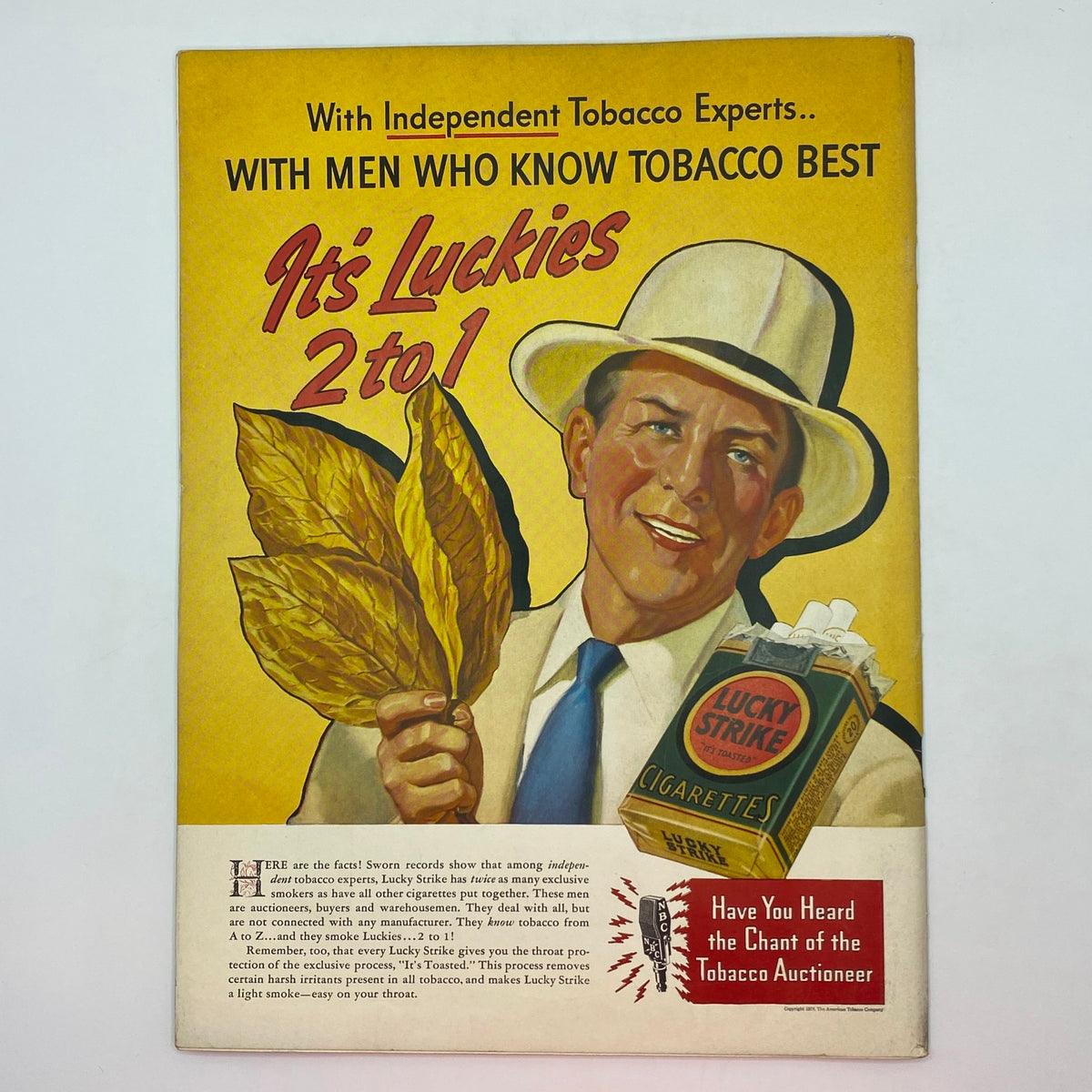
- Period cartoons and advertising: Issues from the late 1930s are valued by collectors and researchers for the cartoons, spot illustrations, and period advertising that together document the social texture of pre-war New York in granular detail.
Note: Specific article titles, bylines, and interior content for this exact issue have not been independently confirmed beyond what appears in the listing. The highlights above reflect only what is verifiable from the cover credit, publication date, and the magazine's well-documented editorial format during this period.
Condition & Rarity
A surviving copy of a weekly newsstand magazine from April 1938 presenting in very good condition — with minor edge wear as the only noted imperfection — is a sound preservation outcome for a publication now nearly ninety years old. The New Yorker was printed on acidic wood-pulp paper stock that was never intended for long-term storage, and the passage of nearly nine decades introduces predictable risks: toning, brittleness, and structural fatigue at the spine and edges. Edge wear of the kind described is consistent with honest age and does not indicate mishandling. When assessing any surviving copy of this issue, the meaningful criteria are the vibrancy and integrity of Malman's cover art, the completeness of all interior pages, the absence of subscription label residue or moisture damage, and whether the spine remains sound enough to allow the issue to be examined without further stress. A copy meeting the standard described here — visually strong at its age, with wear confined to the margins — is precisely what the collector market for pre-war periodicals considers a desirable survivor.
Looking for More Issues Like This?
Christina Malman covers are among the less commonly encountered in the pre-war New Yorker market, and this specific April 1938 date is the kind of issue that rewards patient searching. If it is no longer available, the deep original New Yorker collection at OriginalMagazines.com spans many decades of the magazine's history and is one of the most extensive archives accessible to serious collectors. For those drawn to the particular atmosphere of the late 1930s, the full 1938 magazine collection is worth exploring carefully — it is a year whose historical gravity is present on every page of every issue that has survived it.