



Description
Collector's Note – Why This Issue Matters
This complete August 15, 1942 issue of The New Yorker features a cover by Perry Barlow, an illustrator known for his whimsical, character-driven depictions of New York City life across the 1930s and into the 1940s. Barlow's style consistently captured small, observational moments of urban social life with a gentle sense of humor, contributing to The New Yorker's broader visual tradition of treating everyday city scenes as a rich source of comedic and cultural commentary. By August 1942, Barlow had been contributing to the magazine's cover art for well over a decade, placing this particular issue within a mature and well-established phase of his working relationship with the publication.
This issue's publication date situates it firmly within America's active participation in the Second World War, arriving roughly eight months after the attack on Pearl Harbor had brought the United States fully into the global conflict. The summer of 1942 represented a period of significant wartime mobilization across American society, with rationing, military deployment, and a broader cultural shift toward wartime priorities reshaping daily life throughout the country, including in New York City itself. The New Yorker's continued weekly publication throughout this period, maintaining its characteristic blend of urbane humor and serious literary content even as the nation's attention turned toward the war effort, reflects the magazine's resilience and its readership's continued appetite for the kind of sophisticated cultural commentary the publication had offered since its 1925 founding.
This issue's status as a complete magazine, rather than a cover-only example, means it preserves the full breadth of The New Yorker's wartime-era editorial content alongside Barlow's cover art, including the magazine's characteristic "Talk of the Town" front-of-book section, fiction, criticism, and cartoons. Issues from this specific period often reflected, directly or indirectly, the broader wartime atmosphere shaping American cultural life, making a complete copy from August 1942 a potentially rich primary source for understanding how a sophisticated, New York-focused publication navigated its editorial identity during a period of significant national upheaval.
For collectors of early-1940s American magazine history, this issue offers a well-preserved artifact connecting Barlow's distinctive cover work to a specific, dated moment within both The New Yorker's broader publishing history and the larger context of wartime America. It sits within the context of 1942 magazines and the long editorial run of The New Yorker itself, situating this issue within both a precise calendar moment and a historically significant period of American life. Its completeness as a full issue, combined with its credited Barlow cover, gives it genuine standalone interest for collectors focused on either this era of the magazine's history or on wartime American periodical culture more broadly.
About the Publication
The New Yorker was founded in 1925 by Harold Ross and Jane Grant, conceived from the outset as a sophisticated weekly aimed at an urbane, literate readership rather than a mass-market audience. Its editorial format combined long-form journalism, fiction, poetry, and criticism with a distinctive visual identity built around original cover illustration and single-panel cartoons, a structure firmly established well before this August 1942 issue, roughly seventeen years into the magazine's publishing history. Unlike most general-interest magazines of its era, The New Yorker rarely used cover photography or cover text, relying instead on commissioned artwork from a roster of distinctive illustrators, including Perry Barlow, whose whimsical depictions of New York City life had become a familiar presence on the magazine's covers by the early 1940s. By 1942, the magazine had built a well-established reputation for combining wit, sophistication, and literary ambition, even as the broader American cultural landscape shifted significantly following the country's entry into the Second World War. Editorially, each issue followed a consistent rhythm of opening "Talk of the Town" pieces, feature journalism or fiction, criticism, and cartoons interspersed throughout, a structure that remained stable even amid the considerable social changes brought on by wartime conditions. This August 15, 1942 issue would have followed that same established format, combining Barlow's cover illustration with the magazine's characteristic blend of urbane commentary and serious literary content during a genuinely pivotal period in American history.
Key Highlights Inside
- A full cover illustration credited to Perry Barlow, an illustrator known for his whimsical, character-driven depictions of New York City life spanning the 1930s and 1940s. His distinctive style consistently captured small, observational social moments with gentle humor. This cover reflects his well-established presence on The New Yorker's roster of cover artists by the early 1940s.
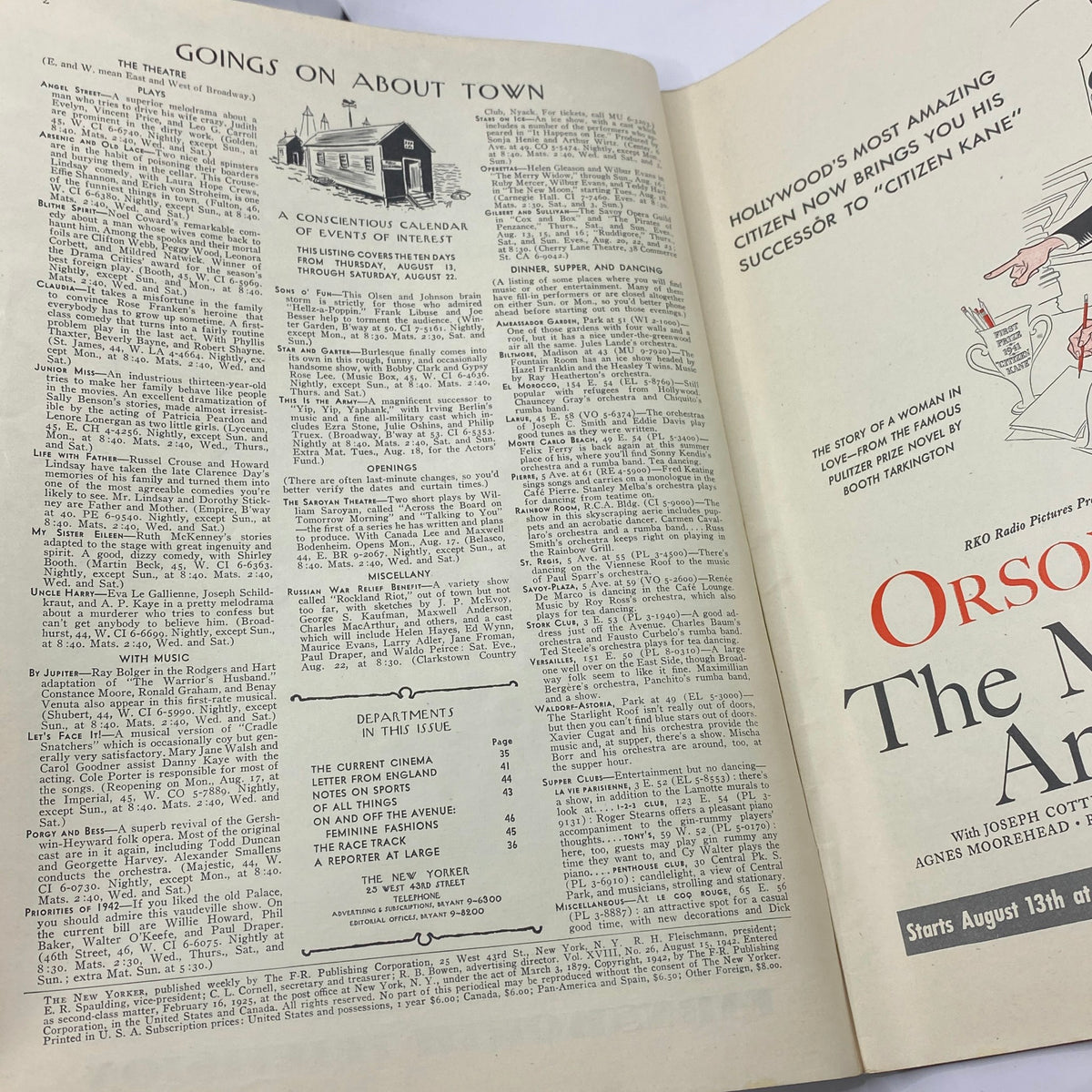
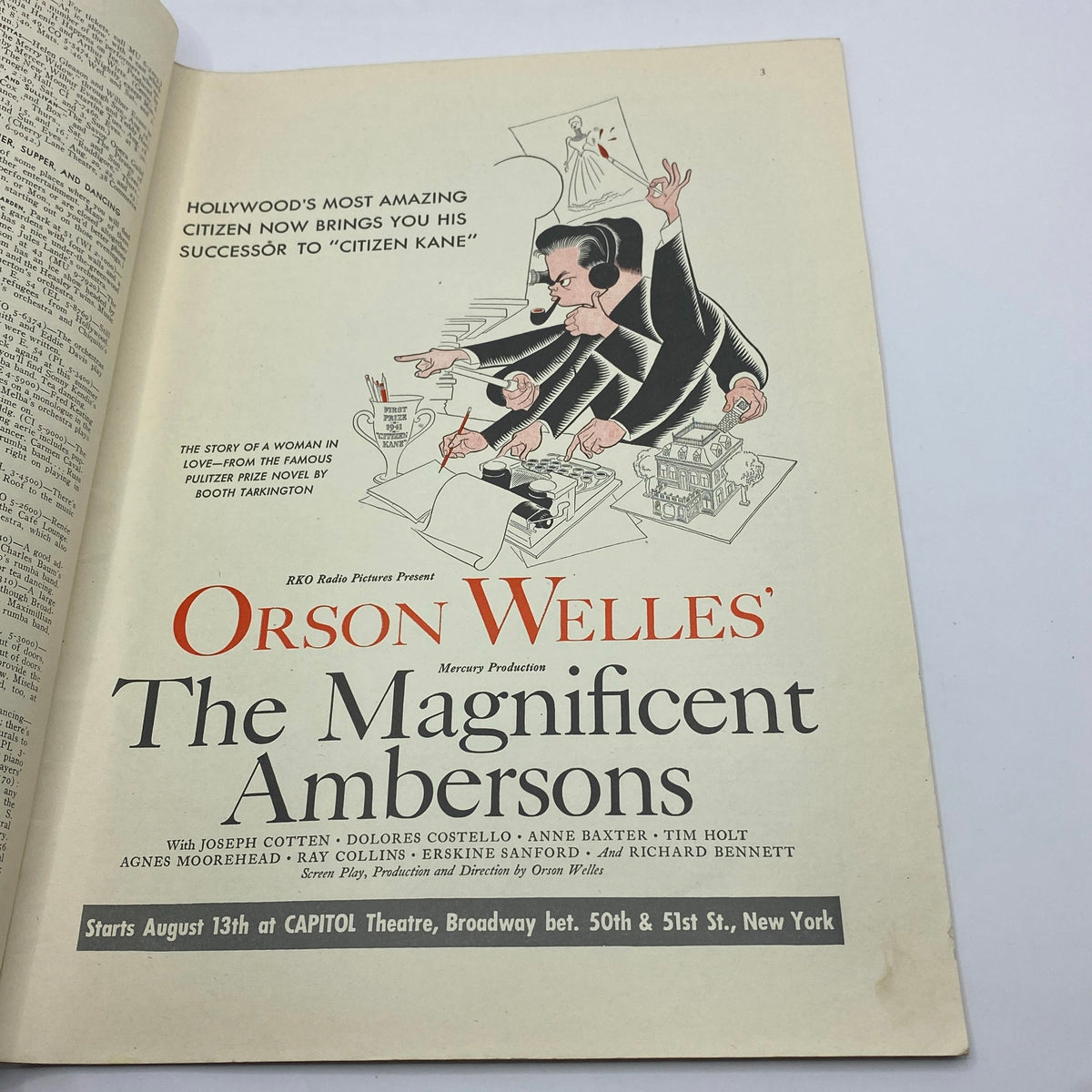
- Complete magazine content, including the full range of editorial material typical of The New Yorker's early-1940s wartime-era format, such as front-of-book "Talk of the Town" pieces, fiction, criticism, and cartoons. This completeness distinguishes the issue from cover-only examples, preserving the magazine's full editorial structure from this period. Specific named articles, authors, or cartoonists featured in this particular issue are not detailed in available listing information.
- Publication roughly eight months after the attack on Pearl Harbor, situating this issue firmly within America's active participation in the Second World War. This timing places the magazine's continued weekly publication within a period of significant national wartime mobilization. The issue's specific editorial engagement, if any, with contemporary wartime events is not detailed in available listing information.
- Placement roughly seventeen years into The New Yorker's continuous weekly run, reflecting the magazine's well-established editorial voice and visual identity by this point in its history. This issue captures the publication maintaining its characteristic sophistication even amid considerable wartime social change. Its dating offers collectors a precise chronological reference point within the magazine's broader early-1940s publishing history.
Condition & Rarity
Condition for a complete magazine of this age, now over eight decades old, is generally assessed through binding integrity, page completeness, cover and interior paper condition, and the overall legibility of printed text and illustration. A copy described as very good condition, especially considering its age, with minor wear on the edges typical for vintage publications, reflects a notably strong outcome for a periodical surviving from the early 1940s, given that paper stock from this period was not designed with long-term archival stability in mind. Binding integrity is a particularly important factor for a complete magazine of this vintage, since a fully intact issue, with all interior pages present and securely bound, carries considerably more reference and display value than a partial or loose-paged example. Cover condition also matters significantly for an issue valued in part for its credited Perry Barlow illustration, with strong color retention and minimal creasing or soiling preserving the visual impact of the original artwork. Periodicals from the wartime early-1940s period faced additional preservation challenges related to paper rationing and shifting domestic production conditions, making well-preserved surviving examples from this specific window a notable category within early-1940s American magazine collecting. Collectors evaluating any surviving copy of this issue should weigh overall structural completeness, binding security, and cover clarity as the primary indicators of long-term collectible and reference value, referring closely to available photographs for a precise assessment of the specific item's condition.
Looking for More Issues Like This?
A complete New Yorker issue from August 1942, featuring a distinctive cover artist like Perry Barlow and dated to a significant period of American involvement in the Second World War, represents a genuinely notable category of early-1940s magazine collecting. If this exact issue isn't what you're looking for, the broader New Yorker collection spans material from across the magazine's long publishing history, offering a wider range of issues, cover artists, and editorial eras for collectors interested in the title's overall legacy. For those more focused on this specific year, the full range of 1942 magazines brings together material from across that year, spanning multiple publications beyond The New Yorker alone, including other periodicals documenting wartime American life. Browsing the New Yorker collection can be especially useful for collectors building a set around specific cover artists like Barlow or specific decades of the magazine's editorial history. Browsing by year, on the other hand, suits collectors more interested in capturing a broader cultural and wartime snapshot of 1942 across different types of periodicals. Either approach offers a practical way to continue exploring material connected to this issue's particular combination of era and editorial identity. Both collections represent solid starting points for finding comparable issues from this period in The New Yorker's publishing history.