




Description
Collector's Note – Why This Issue Matters
August 6, 1938 arrived at a peculiar and anxious moment in American life. Europe was moving steadily toward war — the Anschluss had occurred just five months earlier, and the Munich Crisis was weeks away — yet American domestic culture carried on with a surface brightness that makes artifacts from this precise window genuinely fascinating to study. The New Yorker in the summer of 1938 was at the height of its first great era, its editorial voice fully formed under Harold Ross, its roster of contributors among the most distinguished in American letters. An issue from this date is not merely old. It is a document of a civilization poised on the edge of something it could not yet fully name.
The cover artist for this issue, Charles E. Martin, is one of the more quietly celebrated figures in The New Yorker's visual history. Martin contributed to the magazine for an extraordinary span — his association with the publication stretched across several decades, and his covers are recognizable for their clean draughtsmanship, their gentle irony, and their precise observation of urban and suburban American manners. A summer 1938 Martin cover would characteristically reflect the seasonal leisure culture of the period: beach scenes, city heat, the small comedies of middle-class life. His work belongs to a tradition of sophisticated American illustration that The New Yorker cultivated more deliberately than any other publication of the era. Collectors assembling a focused archive of New Yorker cover art from the pre-war decades will find Martin's contributions among the most aesthetically consistent and historically grounded in the magazine's output.
The late 1930s represent a specific and increasingly studied stratum in American periodical history. Surviving complete issues from 1938 American magazines occupy a documentary position that grows more significant as the distance from that period increases — they are primary sources for scholars of Depression-era culture, pre-war American journalism, and the golden age of magazine illustration. For a collector, an intact August 1938 issue of The New Yorker with a named cover artist is a verifiable artifact of that stratum, not a generic vintage magazine.
About the Publication
The New Yorker was founded in 1925 by Harold Ross with the explicit ambition of producing a magazine for a cosmopolitan, literate urban readership — one that would take humor, fiction, poetry, and criticism seriously as art forms rather than as commercial filler. By 1938, the magazine had fully realized that ambition. Its editorial standards were among the most exacting in American publishing, its fiction and essay sections had attracted writers of enduring reputation, and its visual identity — built around painted covers and single-panel cartoons treated as fine art — was unlike anything else on the American newsstand. The magazine's audience was educated and predominantly northeastern, but its cultural influence reached well beyond geography.
Key Highlights Inside
- Charles E. Martin cover art: The painted cover is the primary visual artifact of this issue — a documented work by a named contributor whose career at the magazine spanned decades and whose pre-war output is the subject of collector and scholarly interest.
- Summer 1938 editorial context: Issues from this date would have been assembled against the backdrop of mounting European tensions and a domestic economy still navigating the tail end of the Depression — context that inflects even the magazine's lighter content with historical weight.
- Fiction and criticism: The New Yorker's literary sections in 1938 operated at the height of the magazine's first great editorial era. Specific bylines for this issue are unconfirmed, but the standard of the period is exceptionally well documented.
- Interior cartoons: The magazine's cartoon roster in the late 1930s included some of the most significant single-panel cartoonists working in American print. Interior cartoon content from this period carries independent collectible value.
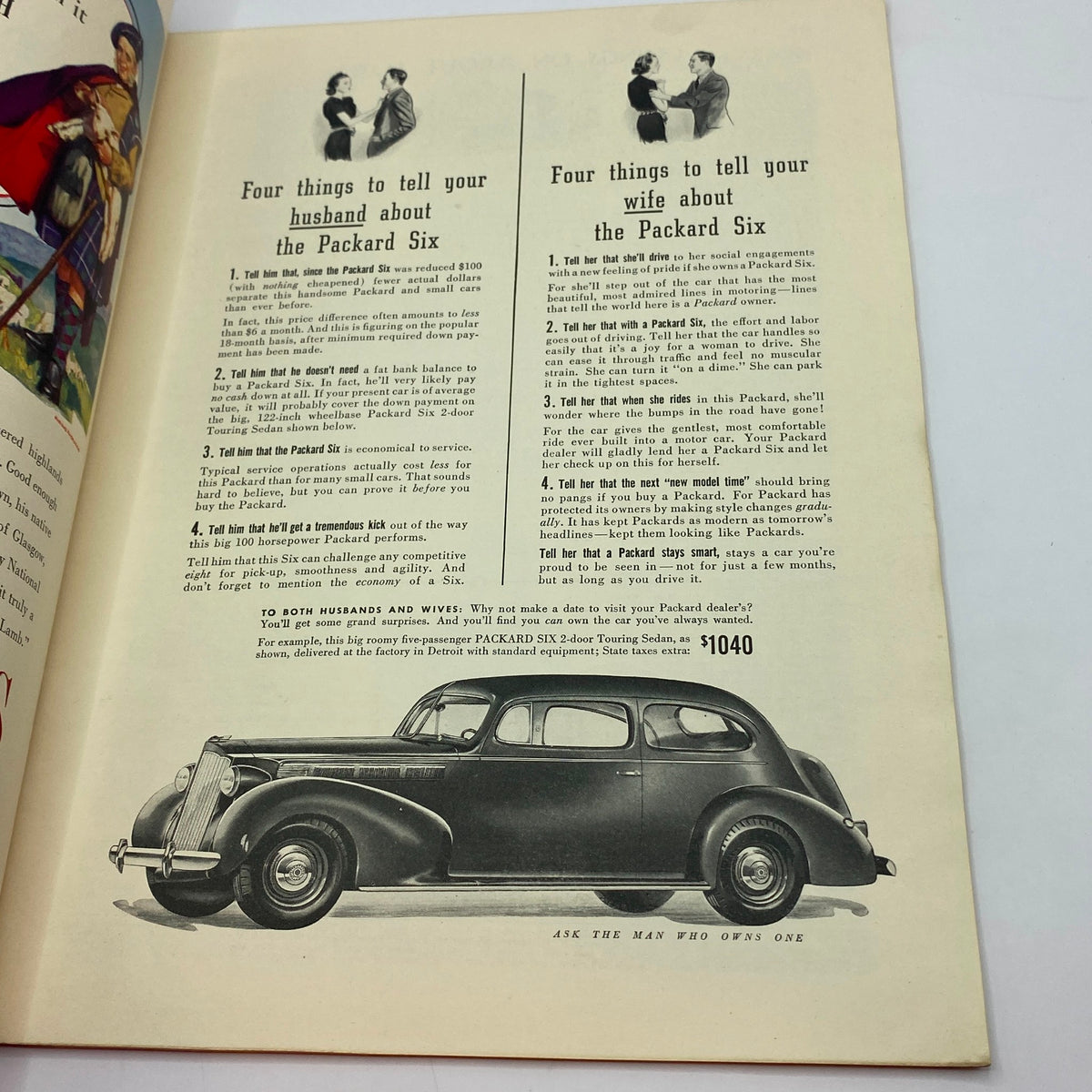
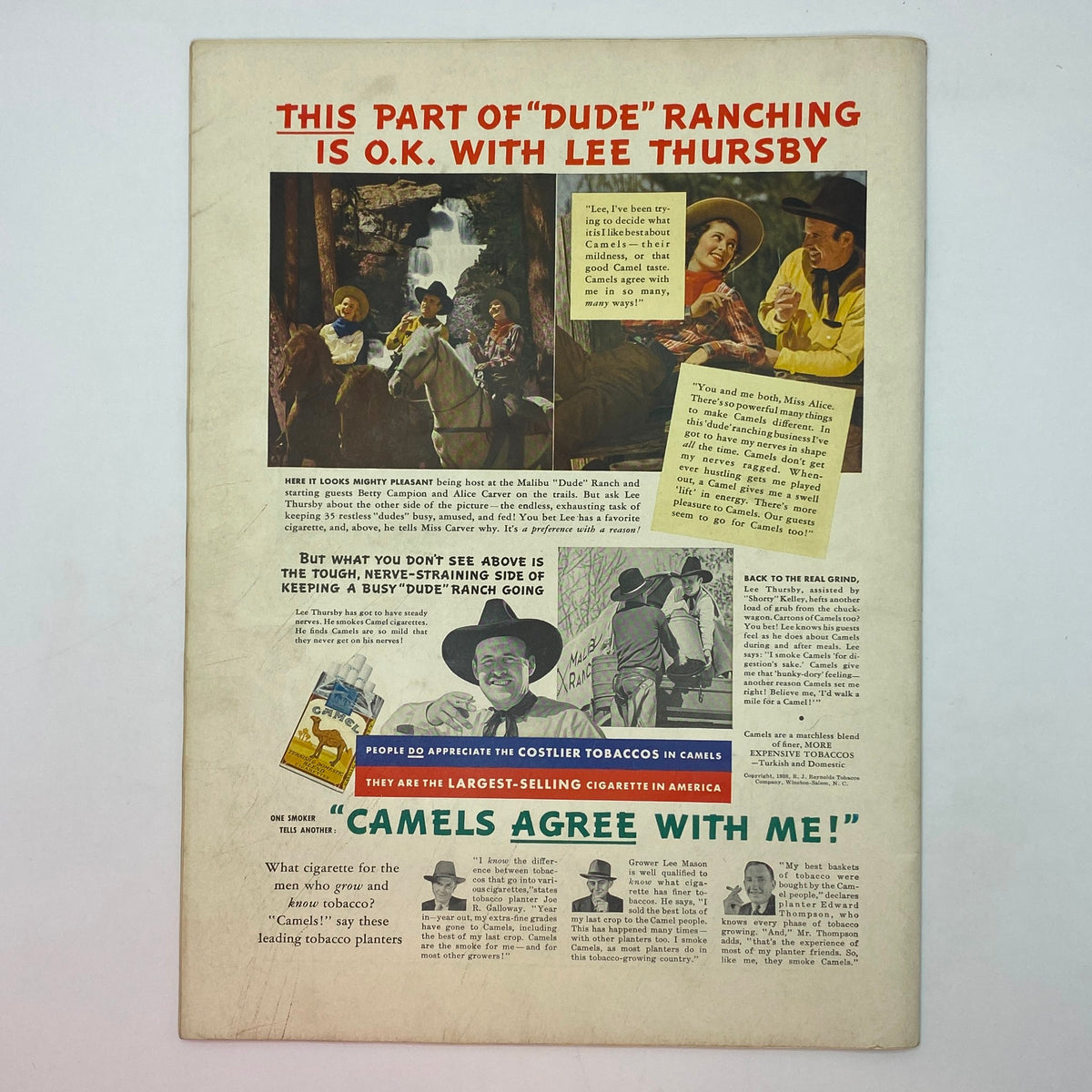
- Period advertising: Advertising directed at The New Yorker's affluent urban readership in 1938 is itself a subject of cultural and design-historical study, and complete issues preserve that record intact in a way that partial or damaged copies cannot.
Condition & Rarity
A Very Good grade on a magazine from 1938 requires some context to appreciate fully. Eighty-five-plus years present a specific set of preservation challenges for newsprint and coated-stock periodicals: acid-induced toning and brittleness, moisture and humidity damage, spine splitting from repeated reading, and adhesion damage from subscription labels or library ownership stamps are all standard degradation patterns for issues of this age. An issue grading Very Good with only minor edge wear — complete, with no noted structural failures — represents a survival outcome that is objectively uncommon. The New Yorker's cover stock has historically been more durable than cheaper newsprint competitors, which tends to preserve color and cover integrity in surviving copies, but interior pages from this era are still vulnerable to the slow processes of paper aging. When assessing any surviving copy of this issue, the key collector priorities are cover color fidelity, the absence of label or stamp adhesion affecting the Martin artwork, spine integrity, and the completeness of interior pagination.
Looking for More Issues Like This?
Pre-war issues of The New Yorker with named cover artists are among the more sought-after targets in American periodical collecting, and a specific date like August 6, 1938 rarely surfaces twice in short order. If this issue is no longer available, the broader New Yorker archive at OriginalMagazines.com spans an exceptional range of decades and cover artists and is worth exploring carefully. For collectors whose focus is the late 1930s more broadly, the 1938 magazine collection offers a wide cross-section of American print culture from this precise and historically charged year.