




Description
Collector's Note – Why This Issue Matters
The February 13, 1932 issue of The New Yorker arrives from one of the most consequential periods in the magazine's early history — and one of the most turbulent in American life. The United States was deep in the Great Depression by early 1932; unemployment had climbed past twenty percent, the Hoover administration was under siege, and the presidential election that would bring Franklin Roosevelt to power was still nine months away. The New Yorker navigated this moment in a characteristically oblique way, maintaining its sophisticated urban voice and its commitment to wit and aesthetic refinement even as the world outside its pages was in genuine crisis. Issues from 1932 document that tension with unusual clarity — the magazine's insistence on elegance and irony reads differently against the backdrop of breadlines and bank failures, and that friction gives the editorial content of this period a retrospective depth that later, more prosperous issues simply do not carry. Collectors who specialize in the magazine's Depression-era output will find the New Yorker magazine archive at OriginalMagazines.com an essential resource for this stratum of the publication's history.
The cover is the work of S. Liam Dunne, an artist who contributed to The New Yorker during the late 1920s and early 1930s and whose work exemplifies the visual sensibility the magazine was cultivating under art editor Rea Irvin — sophisticated, lightly whimsical, and unmistakably cosmopolitan. The February 13 date places this issue one day before Valentine's Day, a calendrical detail that New Yorker cover artists of the period frequently worked with, and Dunne's known approach to illustration — elegant figure work with a modernist graphic sensibility — would have been well suited to a seasonally inflected cover concept. Early 1930s New Yorker covers are collected both as standalone works of American graphic art and as components of complete issues, and Dunne's contributions to the magazine represent a specific and underappreciated chapter in the publication's visual history. For collectors interested in the full cultural output of this year, the 1932 magazine archive at OriginalMagazines.com offers a wider view of American print culture during one of the most historically charged years of the twentieth century.
By February 1932, The New Yorker was seven years old and fully established as the defining voice of educated urban America. Harold Ross had spent those years assembling a contributor base that reads today like a roll call of American literary modernism, and the editorial format — Talk of the Town, fiction, criticism, poetry, cartoons, and the distinctive long-profile form that the magazine was actively inventing — was by 1932 largely set. A complete issue from this year captures that mature early voice at full expression, before the war years would reshape the magazine's relationship to the world it was covering.
About the Publication
The New Yorker was founded in New York City in February 1925 by editor Harold Ross, with financial backing from Raoul Fleischmann. By 1932 it had completed its founding phase and established itself as the primary weekly journal of American cultural and literary life, with a format that combined short humor, fiction, poetry, criticism, and long-form journalism aimed at an educated, urban readership. Its cover art — each issue featuring a unique commissioned illustration — had become one of the magazine's most recognized and discussed features, with a rotating roster of artists whose work collectively defined a distinctly American strain of modernist graphic design. The magazine was published weekly throughout the year, and issues from the early 1930s represent a particularly rich period in its editorial and visual history.
Key Highlights Inside
- Cover art by S. Liam Dunne, published on February 13 — one day before Valentine's Day — consistent with The New Yorker's established practice of commissioning seasonally resonant cover illustrations from its stable of contributing artists.
- Editorial content representative of The New Yorker's 1932 format under Harold Ross, which by this point included the fully developed versions of Talk of the Town, fiction, criticism, and the long-profile journalism the magazine was pioneering.
- Cartoons and interior illustrations by the broader contributor roster of the period, whose work in these early-1930s issues represents some of the most significant American graphic humor of the twentieth century.
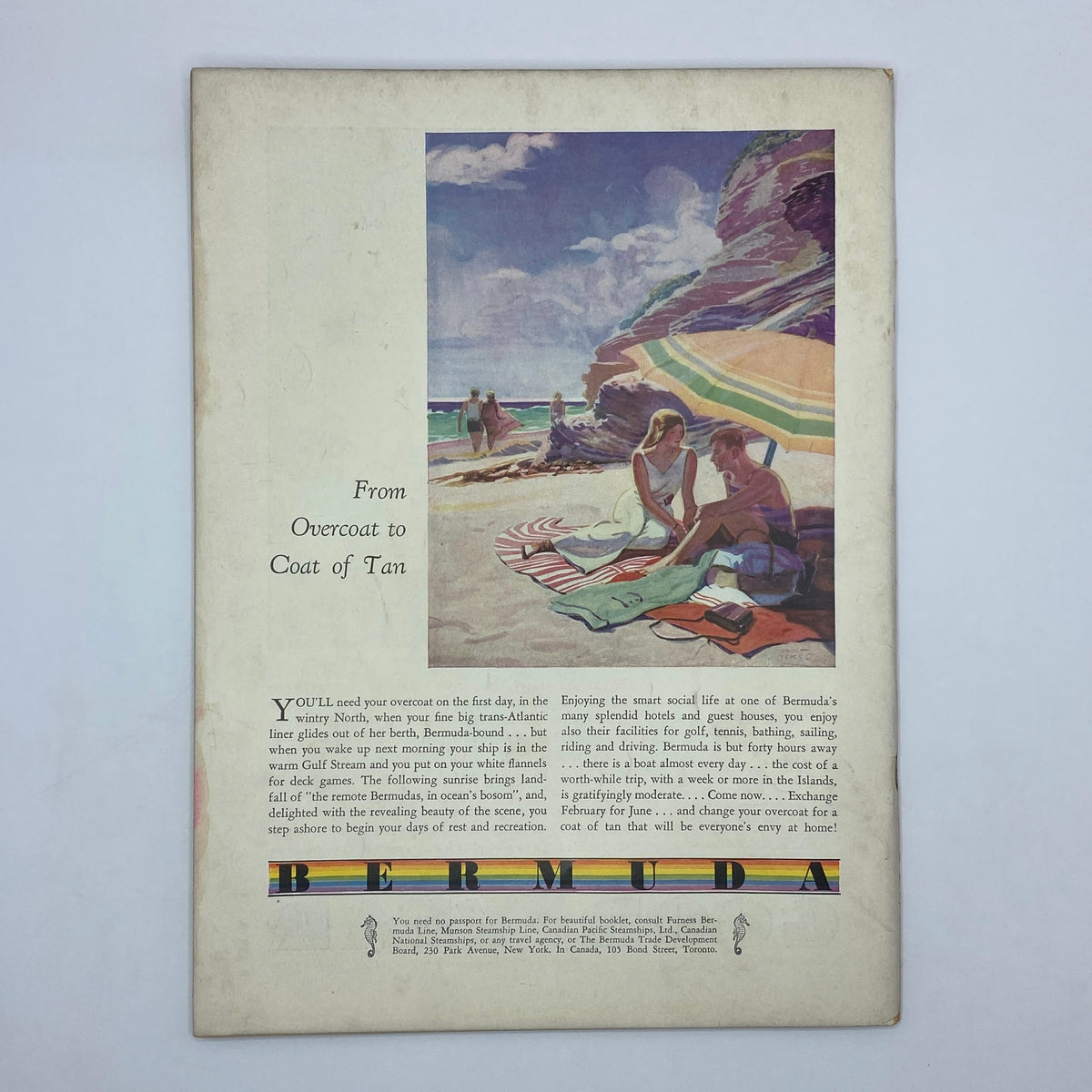
- Period advertising pages reflecting the commercial culture of Depression-era New York — a primary-source document of considerable interest to historians of American consumer culture and the luxury economy's response to economic contraction.
- Note: Specific article titles, fiction contributors, and additional interior features beyond what is documented above are not confirmed in available listing details. The above reflects what is verifiable from the cover, publication date, and the well-documented editorial format of this period.
Condition & Rarity
A New Yorker from February 1932 presenting in very good condition — with only minor edge wear noted — is an exceptional survivor by any reasonable standard. The magazine's paper stock from this period is heavier than newsprint but has now endured more than nine decades of potential exposure to light, humidity, handling, and storage variables. Very good condition for an issue of this age implies intact covers with retained color and surface quality, a complete and undetached interior page block, and a spine that has not been compromised by rolling or moisture. Minor edge wear is the expected and accepted signature of genuine age on an unrestored copy, and its presence alongside an otherwise well-preserved issue is precisely what collectors mean when they describe a magazine as honestly graded. Complete, unrestored New Yorker issues from the early 1930s are among the more historically significant survivors in the magazine collector market — the print runs of the era were modest, institutional archiving of periodicals was inconsistent, and ninety-plus years of attrition have substantially reduced the surviving population of any given issue from this window.
Looking for More Issues Like This?
Early 1930s New Yorker issues in very good condition are patient-hunter territory — they appear infrequently and tend to find homes quickly when they do. The New Yorker archive at OriginalMagazines.com is the deepest available source for the magazine across its full publishing history, and it's the right place to search for other issues from Ross's Depression-era editorship. Collectors drawn to the broader cultural and historical richness of 1932 specifically will also find the 1932 magazine archive worth exploring for primary sources across multiple titles from one of the most consequential years in modern American history.