




Description
Collector's Note – Why This Issue Matters
The February 27, 1943 issue of The New Yorker, featuring a cover by Constantin Alajalov, is a primary document of one of the most distinctive and technically accomplished visual artists who contributed to the magazine's cover program across the mid-twentieth century. Alajalov was a Russian-born illustrator who had emigrated to the United States and established himself as one of the most in-demand cover artists working in American periodical publishing — his covers appeared not only in The New Yorker but also in The Saturday Evening Post, where his work reached an even larger audience. His visual style was genuinely distinctive: brightly colored, densely populated with figures, kinetically energetic in its composition, and marked by a particular gift for capturing the social comedy of American urban and suburban life in a single image that communicated immediately and rewarded sustained attention. His New Yorker covers occupy a specific position in the magazine's visual history — they are among the most colorfully vibrant and compositionally ambitious in the publication's archive, reflecting an artist trained in a European tradition of decorative illustration who had fully absorbed the American commercial and editorial context of the 1940s. Collectors building a focused archive of wartime New Yorker cover art will find the New Yorker magazine collection the most comprehensive resource for identifying Alajalov covers and other significant issues from across the publication's most visually distinguished decades.
February 27, 1943 places this issue at a historically important and emotionally charged moment of World War II. The Battle of Stalingrad had concluded just three weeks earlier, on February 2, 1943, with a catastrophic German defeat that marked the turning point of the Eastern Front and the beginning of the long Soviet counteroffensive. American forces were fighting in North Africa. American civilian life in late February 1943 was defined by the specific texture of a second wartime winter: rationing, war work, military service, and the particular emotional landscape of a nation whose understanding of the war's eventual outcome was shifting — not certain, but beginning to feel possible in ways it had not in the previous year. A late February issue of The New Yorker in this context would have carried the magazine's characteristic combination of wit and serious engagement with the world that its readers were actually living in. Whatever subject Alajalov chose for this cover — and his work was typically social and domestic in its subject matter rather than directly political — it would have been filtered through the specific atmosphere of late February 1943 and received by readers who were simultaneously navigating the ongoing demands of wartime life. Collectors focused on the wartime period will find that 1943 magazine issues represent some of the most historically significant primary documents in the American periodical archive.
Alajalov's dual presence in both The New Yorker and The Saturday Evening Post is worth noting as context for his specific position in the history of American magazine illustration. These two publications represented quite different editorial audiences and visual traditions — The New Yorker's urbane sophistication and The Saturday Evening Post's broader mainstream Americana — and an artist who produced significant work for both was navigating the full spectrum of mid-century American commercial illustration. His New Yorker covers from the wartime years are therefore documents of a figure who understood how to translate a European visual sensibility into American commercial contexts with complete success, and they represent a chapter of his career that is specifically associated with the magazine's wartime identity. Complete 1943 New Yorker issues with Alajalov covers preserve that specific association in its full editorial context, including the journalism, fiction, and cartoons that surrounded his cover art on this specific February date.
About the Publication
The New Yorker was founded in 1925 by Harold Ross and had established itself by 1943 as one of the most culturally significant weekly magazines in the world, combining long-form journalism, fiction, poetry, criticism, and the distinctive visual identity — cartoons, covers, and illustrations — that had made it immediately recognizable to its educated, urban readership and that had given it a particular place in American cultural life for nearly two decades. During the World War II years under Harold Ross's editorship, the magazine produced some of the most enduring American journalism of the century while maintaining the wit, sophistication, and commitment to quality that had defined it from its founding. Constantin Alajalov's contributions to the cover program during the wartime period were part of the visual diversity that gave The New Yorker's cover archive its range — where some artists brought sophisticated urban edge or psychological depth, Alajalov brought colorful compositional energy and a gift for social observation that made his covers among the most visually immediate in the magazine's wartime output.
Key Highlights Inside
- Cover painting by Constantin Alajalov — a primary artifact of this Russian-born illustrator's distinctive wartime New Yorker cover work, representing an artist whose dual presence in both The New Yorker and The Saturday Evening Post positioned him among the most commercially and editorially successful illustrators working in American periodical publishing during the 1940s.
- February 27, 1943 publication date — three weeks after the German defeat at Stalingrad marked the turning point of the Eastern Front, during a late-winter period of the war when the emotional and material demands of the home front were fully established and the war's eventual trajectory was beginning to seem less uncertain than it had in the previous year.
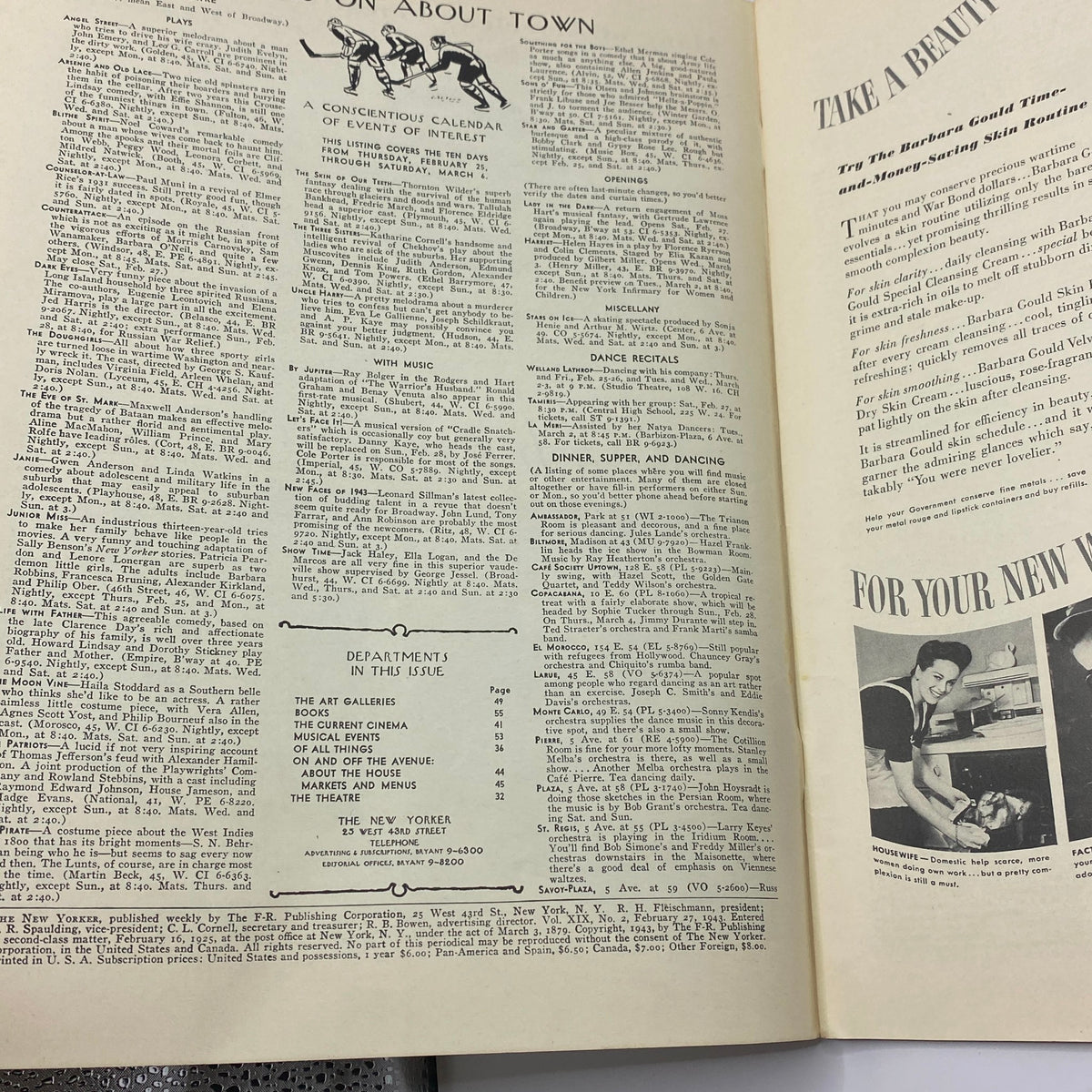
- Complete magazine format — preserving the full editorial program of this specific issue, including whatever journalism, fiction, poetry, criticism, and cartoons The New Yorker assembled for the week of February 27, 1943, providing a complete primary document of the magazine's wartime editorial voice on this specific late-winter date.
- Wartime home-front documentation — capturing the specific atmosphere of American civilian life in late February 1943, during the second winter of the war's full American engagement, when the texture of rationing, war work, and domestic life under wartime conditions was fully established as the daily reality for the magazine's readership.
- Note: Specific interior article titles, fiction contributors, poetry, criticism, and additional editorial content from this issue are unconfirmed beyond what is indicated by the cover artist, date, and complete magazine format. The above reflects what is verifiable from these attributes and the thoroughly documented history of Constantin Alajalov's career and the wartime editorial context of late February 1943.
Condition & Rarity
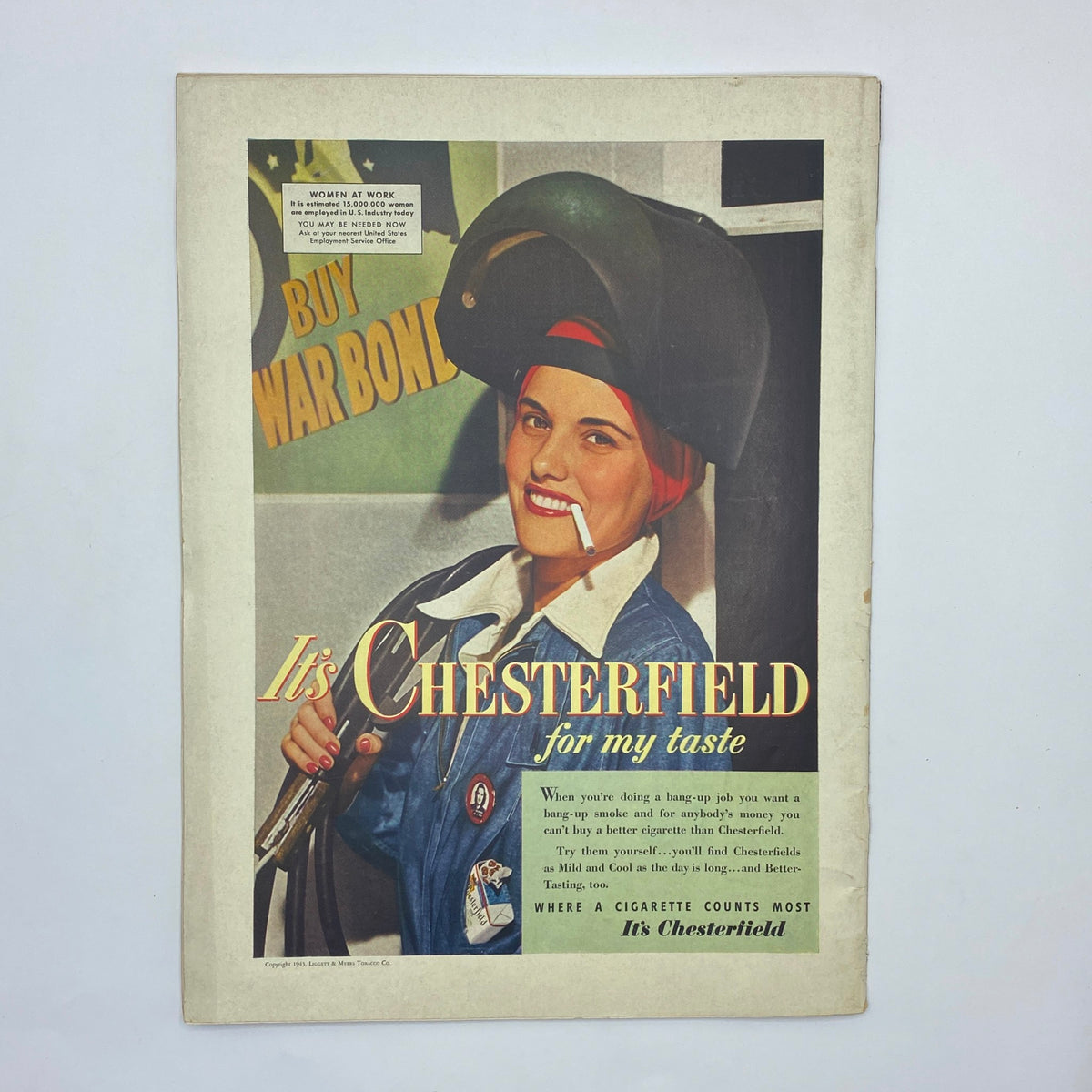
Good condition for a complete New Yorker issue from February 1943 is a meaningful and realistic assessment for a publication now more than eighty years old. Wartime New Yorker issues were produced under paper rationing constraints that affected the stock quality of American magazines during this period, which means 1943 issues are somewhat more physically fragile than their prewar predecessors and have aged accordingly over eight decades of storage. Good condition accurately describes a complete issue that retains its full structural integrity, legible cover art, and complete interior editorial content despite the expected yellowing, edge wear, and minor physical deterioration that paper of this age and wartime quality inevitably shows. For collectors of complete wartime New Yorker issues featuring Alajalov's distinctive colorful cover art specifically, good condition for an eighty-plus-year-old complete magazine is a genuinely preservable primary document whose artistic and historical significance is fully intact regardless of the honest acknowledgment of age-appropriate physical wear. Collectors should examine the provided photographs to assess specific condition details relevant to their individual display and research requirements.
Looking for More Issues Like This?
Complete New Yorker issues from the winter of 1943 featuring Constantin Alajalov's cover work are among the more specifically sought items for collectors interested in both the wartime magazine's visual program and the career of an illustrator who worked across the full spectrum of mid-century American periodical publishing. The broader New Yorker magazine collection is the most reliable starting point for finding other significant complete issues and covers from across the publication's history, including other wartime issues from the early 1940s and other covers from the diverse range of artists who contributed to the magazine's visual program during its most historically charged period. Collectors building a focused archive of 1943 as a pivotal wartime year will find the complete 1943 magazine collection an invaluable resource for locating other titles and issues that document this extraordinary year from the multiple perspectives that serious archival research requires.