



Description
Collector's Note – Why This Issue Matters
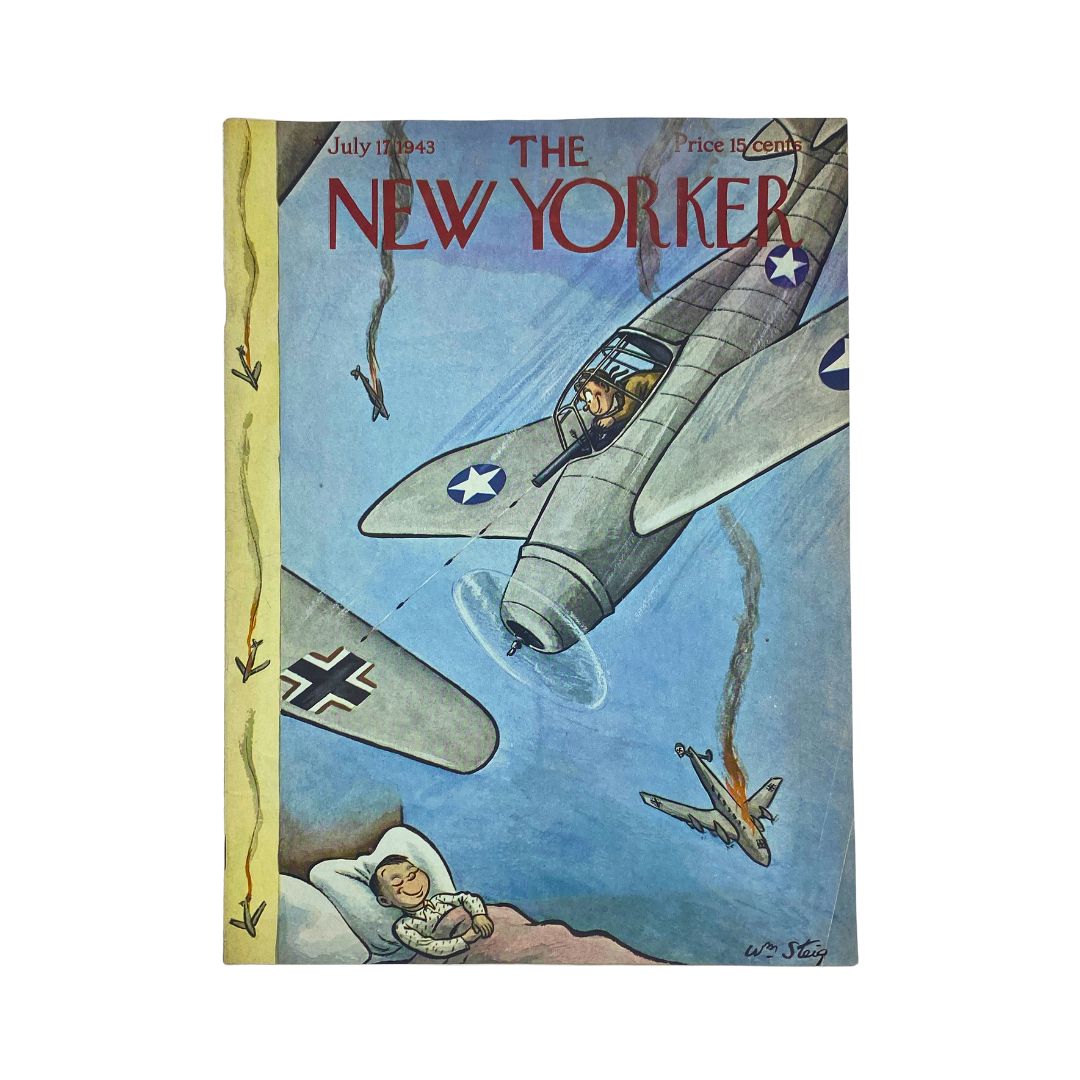
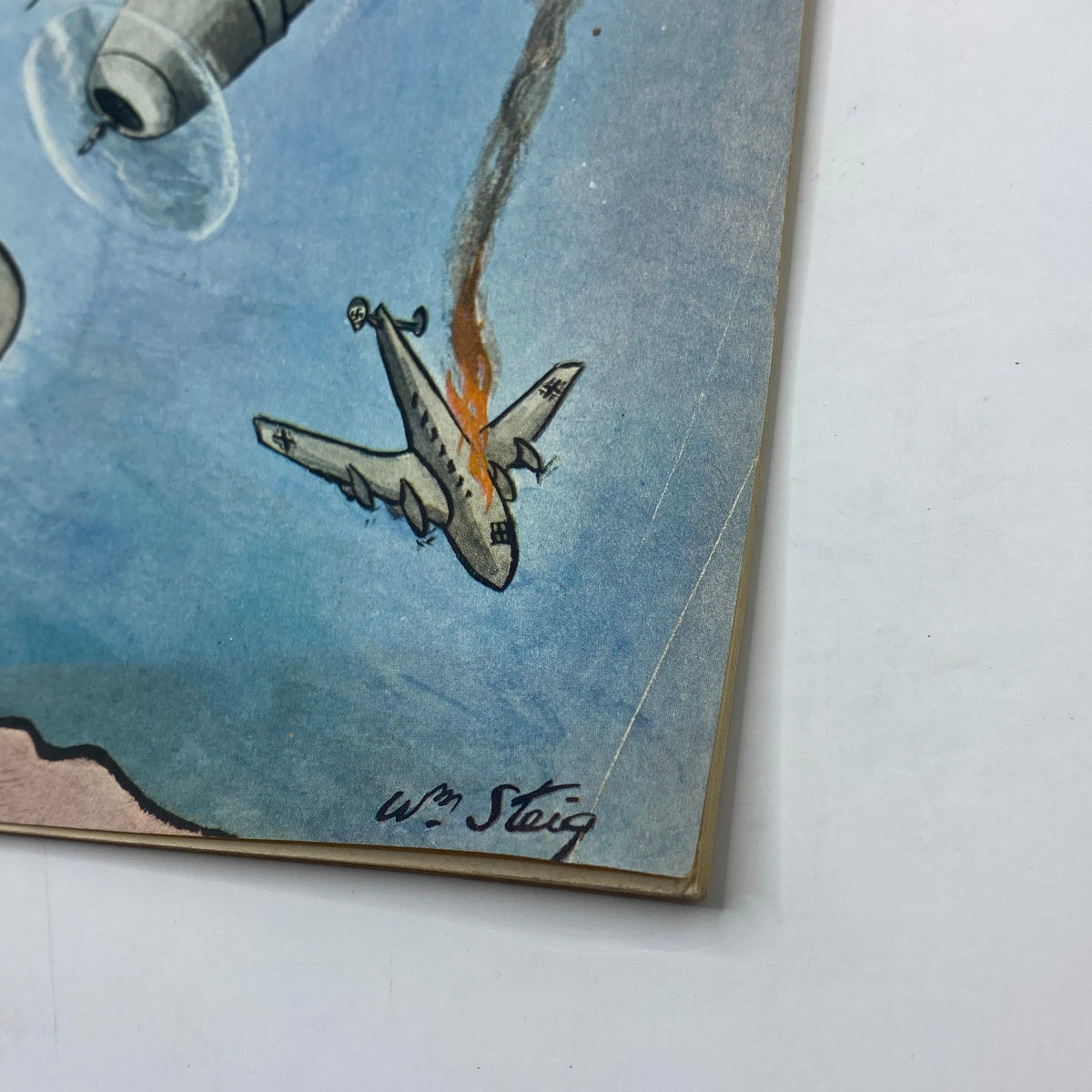
The July 17, 1943 issue of The New Yorker, featuring a cover by William Steig, is a primary artifact of a career that would span more than seven decades and produce some of the most beloved work in both adult cartooning and children's literature. Steig had joined The New Yorker in 1930 at the age of twenty-three — partly to help support his family during the Depression — and his relationship with the magazine would continue for the rest of his extraordinarily long and productive life. By 1943 he had already established himself as one of the publication's most distinctive and psychologically penetrating cartoonists, whose work went considerably deeper than the social comedy that characterized much New Yorker cartooning of the era. Steig was interested in the inner life, in the gap between what people felt and what they were able to express, in the particular comedy and pathos of human emotional experience — concerns that would eventually lead him to psychoanalysis as a patient and to the creation of the Shrek character decades later. A summer 1943 cover by Steig is therefore a primary document of an artist at a specific and important moment in the development of a major twentieth-century creative career, produced for the publication that had been central to his artistic formation and continued to be his primary professional home. Collectors building a focused archive of New Yorker cover art and complete issues will find the New Yorker magazine collection the most comprehensive resource for the full range of covers and issues across the publication's most celebrated decades.
July 1943 places this issue in one of the most consequential periods of World War II — the Allied invasion of Sicily had just begun on July 9, 1943, a week before this issue's publication date, marking the beginning of the Allied campaign in Europe that would eventually lead to Italy's surrender in September. American civilian life in July 1943 was deeply shaped by the war: rationing, war work, military service, and the specific emotional landscape of a country with millions of its citizens in uniform overseas. The New Yorker's response to the war across the period of Steig's cover — maintaining its commitment to wit, sophistication, and the pleasures of art and literature even under wartime conditions — was itself a cultural statement, and a complete July 1943 issue preserves the full editorial program of the magazine at this specific historical moment. Steig's cover, whatever its specific subject, was produced by an artist whose personal and professional engagement with human psychology gave his work a particular quality of emotional attentiveness that makes wartime New Yorker covers from his hand more than simply decorative artifacts. Collectors focused on the wartime period will find that 1943 magazine issues document one of the most historically charged years in American life with a primary source specificity that no retrospective account can replicate.
The complete magazine format of this artifact is worth specific emphasis for collector purposes. A complete July 17, 1943 New Yorker preserves not only Steig's cover but the full editorial program of the magazine on that date — the journalism, fiction, poetry, criticism, and cartoons that its editors assembled for that specific week during the war. This totality is what distinguishes a complete issue from a cover-only artifact and gives it a documentary value that extends from the visual to the literary, from the artistic to the journalistic. For researchers and collectors working to understand The New Yorker's wartime editorial program in its full complexity, complete issues are the primary sources that make that understanding possible.
About the Publication
The New Yorker was founded in 1925 by Harold Ross and had established itself by 1943 as one of the most culturally significant weekly magazines in the world, combining long-form journalism, fiction, poetry, criticism, and the distinctive visual identity — cartoons, covers, and illustrations — that made it immediately recognizable and that had given it a particular place in American cultural life for nearly two decades. During the World War II years under Harold Ross's editorship, the magazine produced some of the most enduring American journalism of the century while maintaining the wit, sophistication, and commitment to quality that had defined it from its founding — a balancing act that the wartime issues document with unusual clarity. William Steig's contributions to the magazine across this period were part of the visual program that gave each issue its character, and his covers were understood by readers and editors alike as significant artistic events within the weekly publication cycle rather than simply as packaging for the editorial contents they preceded.
Key Highlights Inside
- Cover painting by William Steig — a primary artifact of the early wartime period of a creative career that would eventually produce Shrek and some of the most celebrated children's books of the twentieth century, but that in 1943 was focused on the psychologically penetrating adult cartooning that had made Steig one of The New Yorker's most distinctive and important visual contributors since his arrival in 1930.
- July 17, 1943 publication date — one week after the Allied invasion of Sicily began on July 9, placing this issue at a specific and historically significant military and political turning point in World War II, when the Allied campaign in Europe had entered its first direct phase of engagement with the European continent.
- Complete magazine format — preserving the full editorial program of this specific issue, including whatever journalism, fiction, poetry, criticism, and cartoons The New Yorker assembled for the week of July 17, 1943, providing a complete primary document of the magazine's wartime editorial voice on this specific date.
- Minor water damage noted — a condition detail addressed specifically in the condition section below, which affects the evaluation of surviving copies of this issue for display and research purposes and should be carefully assessed against the provided photographs.
- Note: Specific interior article titles, fiction contributors, poetry, criticism, and additional editorial content from this issue are unconfirmed beyond what is indicated by the cover artist, date, and complete magazine format. The above reflects what is verifiable from these attributes and the thoroughly documented history of William Steig's New Yorker career and the wartime editorial context of July 1943.
Condition & Rarity
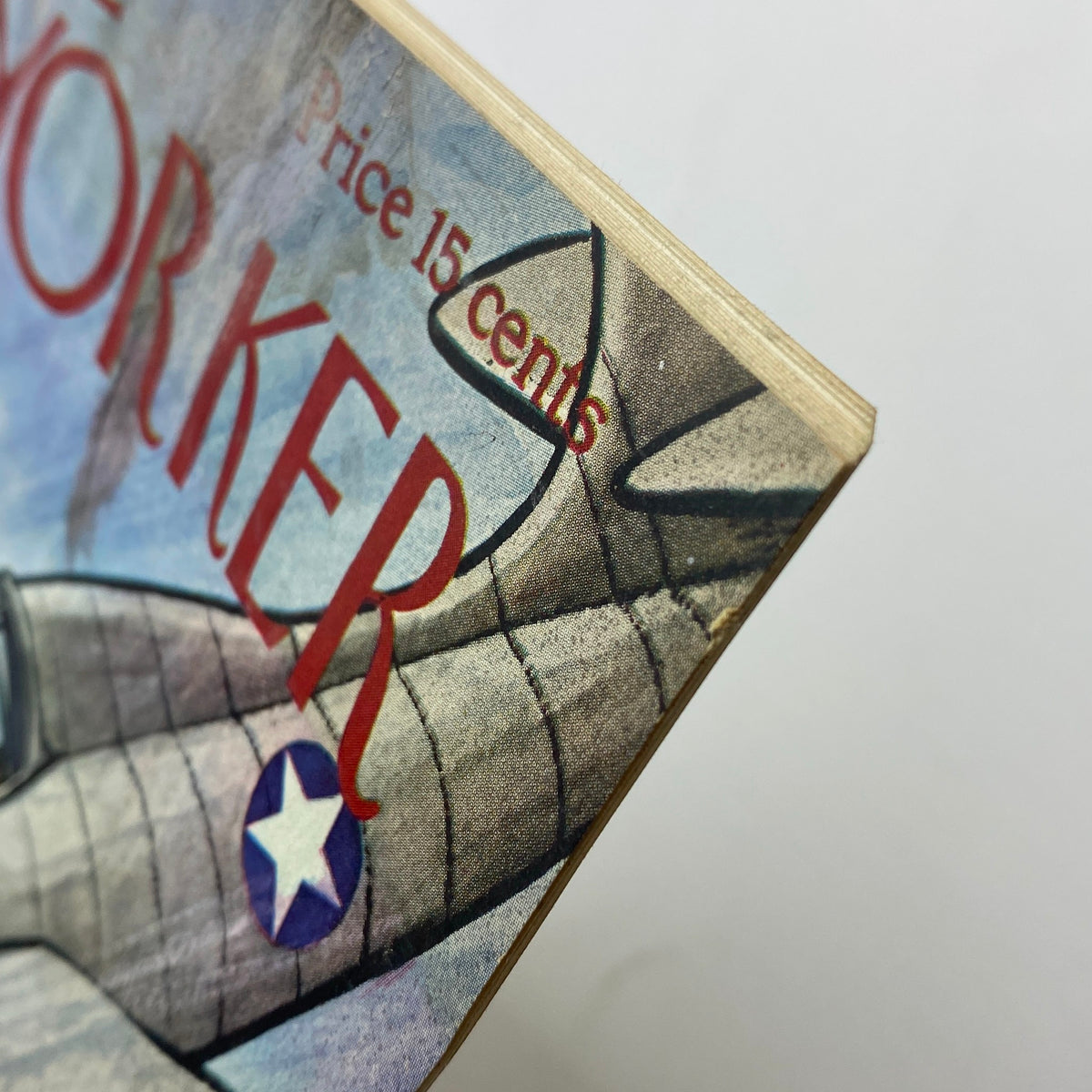
Good condition with minor water damage requires transparent and specific assessment for collectors evaluating this issue's research and display utility. Water damage is among the more significant condition issues for vintage magazines because it affects paper integrity in ways that vary by severity — minor water damage typically manifests as light tide marks, slight waviness of affected pages, or minor staining that is visually apparent at close inspection but does not compromise the legibility of text or the overall structural coherence of the publication. More significant water damage can affect page adhesion, cause brittleness in affected areas, or produce discoloration that extends across substantial portions of pages. The degree of water damage noted for surviving copies of this issue is described as minor, which in the context of a 1943 wartime magazine already aged more than eighty years means it should be evaluated against the baseline of a publication that has already been through multiple decades of natural aging and whose overall good condition indicates the water exposure was limited rather than extensive. Collectors should examine the provided photographs carefully to assess the specific location and visual impact of the water damage relative to Steig's cover and the interior editorial content that are the primary documentary values of this issue.
Looking for More Issues Like This?
Complete New Yorker issues from the World War II summer of 1943 — particularly those featuring cover work by William Steig, whose wartime New Yorker output represents a specific and important chapter in one of the most remarkable creative careers in twentieth-century American illustration and children's literature — are among the more specifically valuable items in the wartime New Yorker collector market. The broader New Yorker magazine collection is the most reliable starting point for finding other significant complete issues and covers from across the publication's history, including other wartime issues and other Steig covers from his long and prolific relationship with the magazine. Collectors building a focused archive of 1943 across American cultural and journalistic publications will find the complete 1943 magazine collection an invaluable resource for locating other titles and issues that document this extraordinary wartime year from the multiple perspectives that serious archival research requires.