



Description
Collector's Note – Why This Issue Matters
July 25, 1936 places this issue of The New Yorker at a specific and historically charged moment in the mid-Depression decade. The summer of 1936 was one of unusual political and international intensity. The Spanish Civil War had broken out just five days earlier, on July 17-18, when Franco's Nationalist uprising began — the conflict that would become the defining international cause for American intellectuals and writers across the following three years, many of them closely associated with The New Yorker. The Berlin Olympics were underway, their international pageantry providing a stage for the Nazi regime's propaganda ambitions while Jesse Owens was in the process of winning four gold medals in the face of the racial ideology the Games were designed to celebrate. In the United States, Roosevelt's re-election campaign was in full swing ahead of the November election that would produce his historic landslide. For collectors building a serious documentary archive through original magazines from 1936, a July 25 issue carries an extraordinary convergence of historical events — published in the first week of the Spanish Civil War, during the Berlin Olympics, in a presidential election summer — that makes it one of the most historically dense specific dates in the magazine's entire 1930s run.
The cover by William Galbraith gives this issue a specific place within the magazine's mid-1930s visual history. Galbraith contributed cover art to The New Yorker during this period, working in the tradition of imaginative and whimsical illustration that the magazine's art department had cultivated under founding art editor Rea Irvin. The listing's description of his work as imaginative and whimsical — with a playful spirit that reflects the era — is consistent with the broader aesthetic sensibility that characterized the magazine's contributing illustrators of this period, artists who brought individual visual personalities to the demanding cover format while working within the publication's established expectations of wit and sophistication. A Galbraith cover from July 1936 is a relatively uncommon artifact in the magazine's visual archive, representing the work of a contributing artist whose output during this period is encountered less frequently in the collector market than that of the publication's most recognized names. For collectors tracing the complete visual history of the publication through original New Yorker issues, covers by artists of this kind — whimsical, characteristic of their moment, and less frequently competed for — represent some of the most historically honest and personally rewarding material available.
It is also worth pausing on what the first week of the Spanish Civil War meant specifically for The New Yorker and its readership. The magazine's writers, critics, and editors included many figures for whom the Spanish Republic's fate was a matter of passionate personal and political concern, and the outbreak of the conflict on July 17-18 would reverberate through the magazine's coverage, correspondence, and editorial atmosphere for the next three years. An issue dated July 25, 1936 — the first New Yorker to appear after the Civil War began — is a document of the magazine's world at the precise moment of that conflict's opening, before its full implications had been absorbed or its ultimate outcome had become clear.
About the Publication
Founded in February 1925 by Harold Ross, The New Yorker was by the summer of 1936 a fully established institution of American cultural life, eleven years into its run and operating with the editorial confidence and literary ambition that would define its reputation for generations. Its readership was urban, educated, and expected the combination of wit, critical intelligence, and serious engagement with the world that Ross enforced with legendary editorial discipline. The magazine's format was mature and consistent: "Talk of the Town" commentary opened each issue, followed by reported features, fiction, poetry, and critical reviews spanning theater, books, art, and film, all interwoven with cartoons and spot illustrations that had developed by mid-decade into one of the most celebrated creative traditions in American periodical publishing. Covers were individually commissioned works of illustration, each a complete artistic statement, produced by a rotating roster of contributing artists whose collective mid-1930s output constitutes one of the most visually accomplished periods in the publication's long history.
Key Highlights Inside
- William Galbraith cover illustration: The cover is the most historically documentable feature of this issue — original artwork by a contributing illustrator known for imaginative and whimsical illustrations rendered with the playful spirit that characterized The New Yorker's mid-1930s cover aesthetic.
- First week of the Spanish Civil War: Published July 25, 1936 — one week after Franco's Nationalist uprising began the Spanish Civil War on July 17-18 — this is the first New Yorker issue to appear after the outbreak of the conflict that would become the defining international cause for the magazine's writers and readers across the following three years.
- Berlin Olympics underway: The summer of 1936 coincided with the Berlin Olympics — a propaganda showcase for the Nazi regime that was simultaneously the stage for Jesse Owens's historic four gold medals — an international event that The New Yorker's internationally attentive readership was following with complex and conflicted attention.
- Roosevelt re-election summer: July 1936 was the height of Roosevelt's re-election campaign ahead of the November landslide — a political atmosphere that pervaded American public life and informed the magazine's commentary and social observation throughout this period.
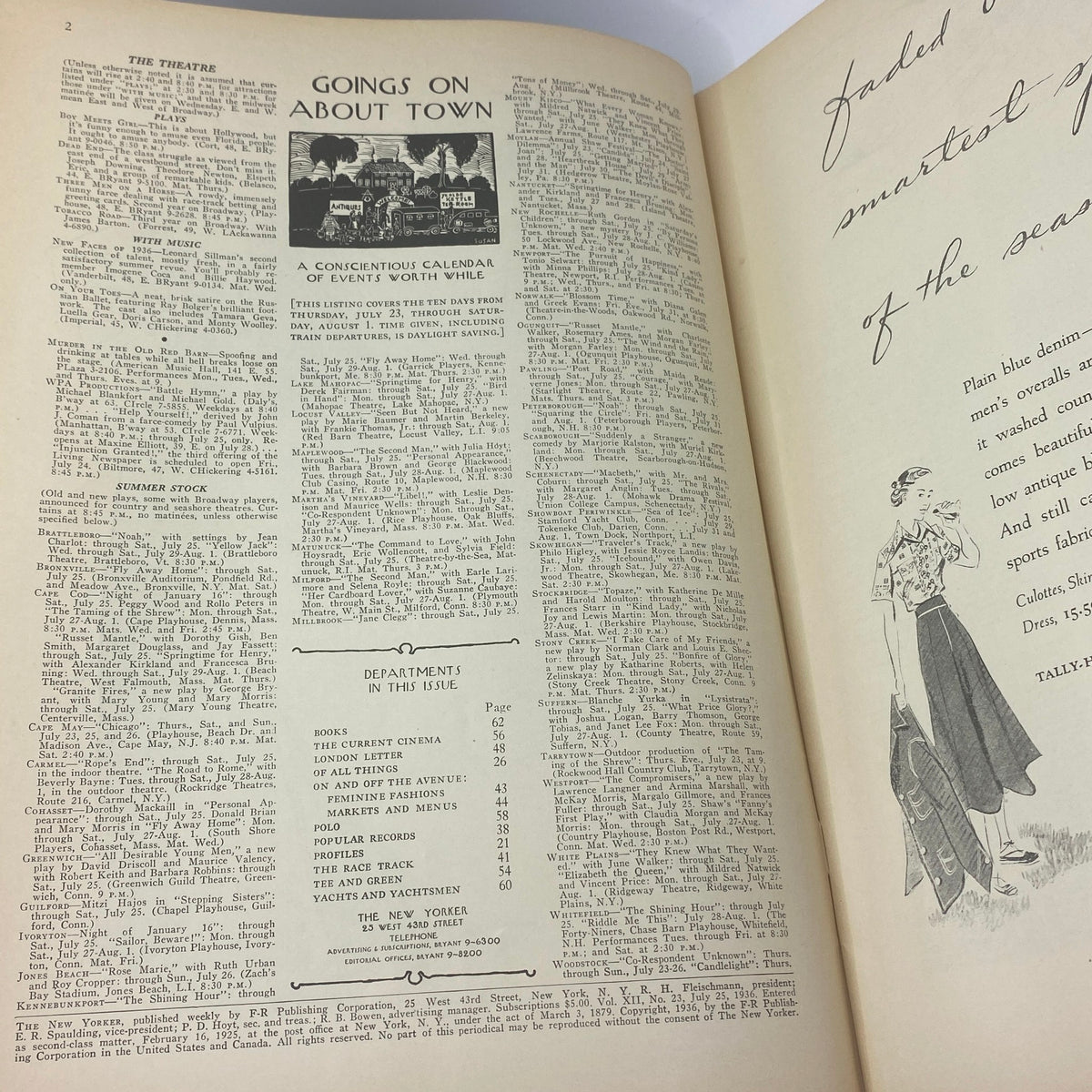
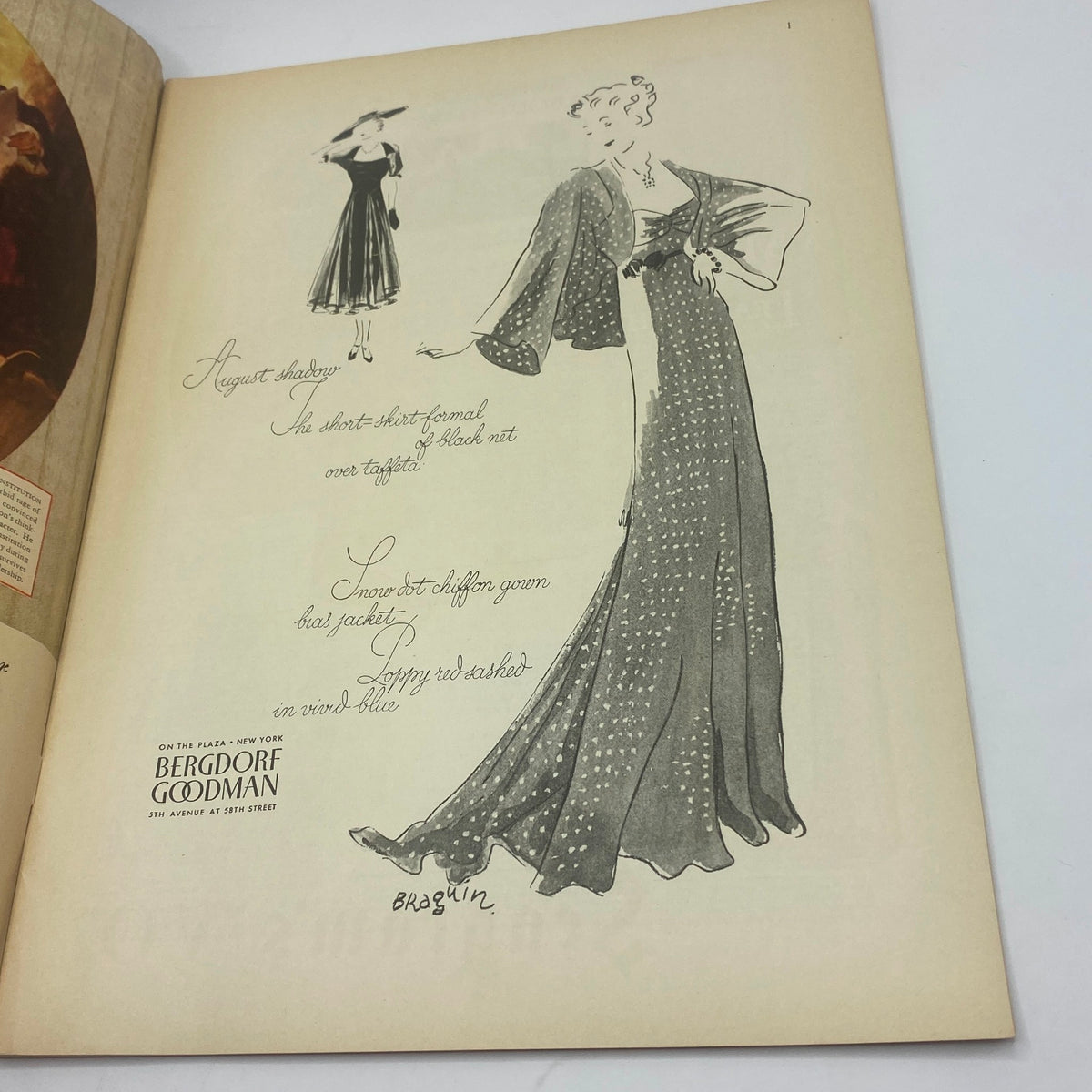
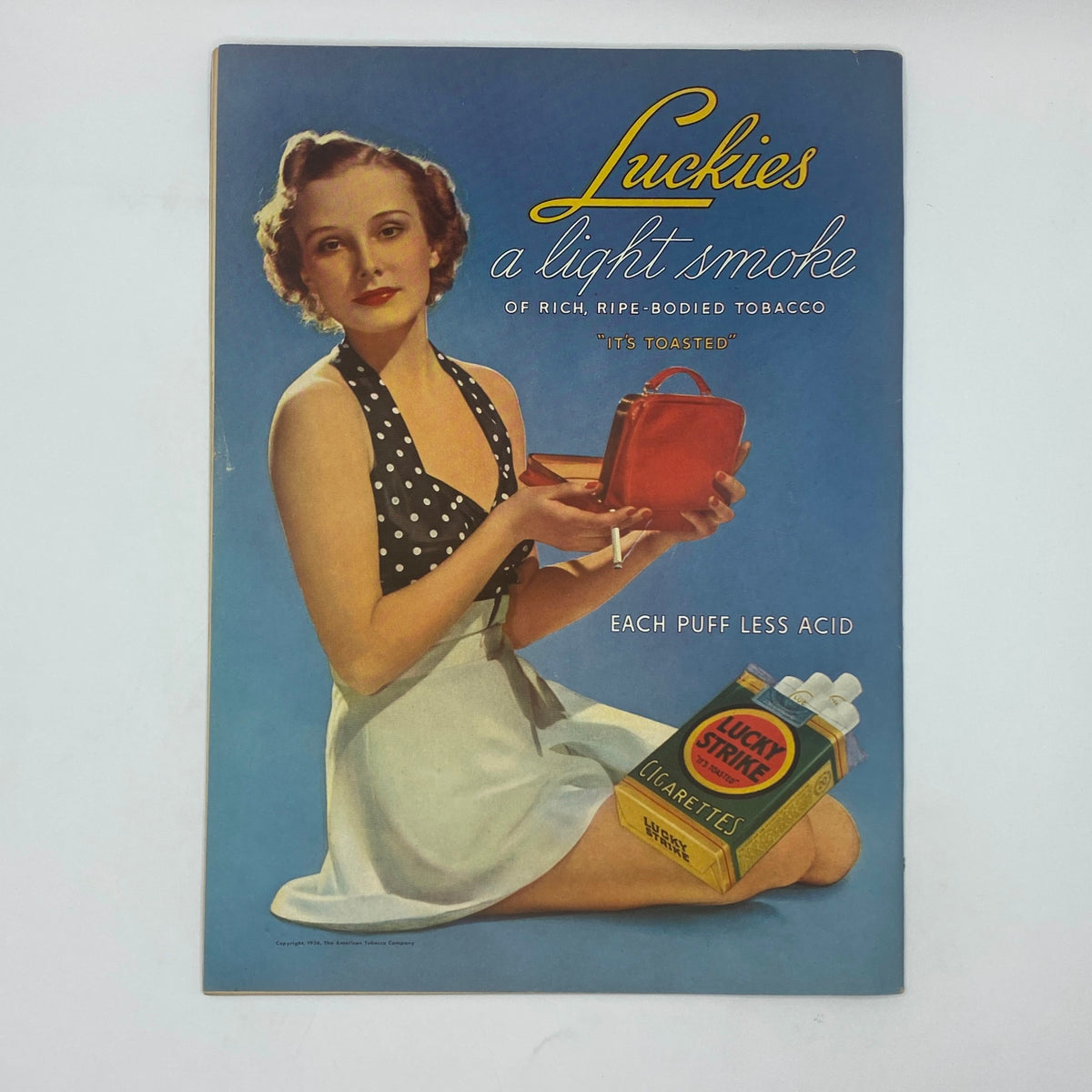
- Period cartoons and advertising: Issues from the mid-1930s are consistently valued by collectors and cultural historians for the cartoons, spot illustrations, and advertising that together provide a granular record of everyday life and social observation in Depression-era New York.
Note: Specific article titles, bylines, and interior content for this exact issue have not been independently confirmed beyond what appears in the listing. The highlights above reflect only what is verifiable from the cover credit, publication date, and the magazine's well-documented editorial format during this period.
Condition & Rarity
A surviving copy of a weekly newsstand magazine from July 1936 presenting in very good condition — with minor edge wear as the only noted imperfection — is a strong preservation result for a publication now approaching ninety years old. The New Yorker was printed on acidic wood-pulp paper stock standard for weekly periodicals of the era, a material inherently prone to toning, brittleness, and structural degradation over time. Edge wear of the kind described is entirely consistent with honest age and careful storage rather than mishandling or neglect. When evaluating any surviving copy of this issue, the meaningful criteria are the integrity and color fidelity of Galbraith's cover art, the completeness of all interior pages, the absence of subscription label adhesive residue or moisture damage, and the structural soundness of the spine. A copy meeting the standard described — visually strong at nearly ninety years of age, with wear confined to the margins — represents the preservation grade that serious collectors of Depression-era and pre-war periodicals actively seek.
Looking for More Issues Like This?
A William Galbraith cover published in the first week of the Spanish Civil War, during the Berlin Olympics, in a presidential election summer, is one of the most historically dense specific dates in the mid-1930s New Yorker archive — and July 25, 1936 is not a date that surfaces with any regularity. If it is no longer available, the extensive original New Yorker collection at OriginalMagazines.com is one of the deepest archives of the magazine accessible to collectors anywhere, spanning many decades of its publishing history. For those drawn to the mid-Depression era at its most historically charged and culturally rich, the full 1936 magazine collection rewards careful and unhurried exploration — it is a year whose historical momentum is present in every issue that has survived to the present day.