


Description
Collector's Note – Why This Issue Matters
July 31, 1937 places this issue of The New Yorker at a specific and historically charged moment in the late Depression decade. The summer of 1937 was defined by several converging crises that gave it an unusual intensity. Domestically, the Roosevelt court-packing controversy — the president's failed attempt to expand the Supreme Court in response to its invalidation of New Deal programs — had consumed American political life through the spring and summer, generating the most significant constitutional debate of the New Deal era. Simultaneously, the so-called Roosevelt Recession was beginning to take shape, as premature withdrawal of economic stimulus threatened to reverse the fragile gains of the preceding years. Internationally, the Second Sino-Japanese War had escalated dramatically with Japan's full-scale invasion of China in early July, the Spanish Civil War was in its second year with no resolution in sight, and the European situation was darkening in ways that attentive observers were tracking with growing alarm. For collectors building a serious documentary archive through original magazines from 1937, a late July issue carries the full atmospheric weight of one of the decade's most turbulent and consequential summers.
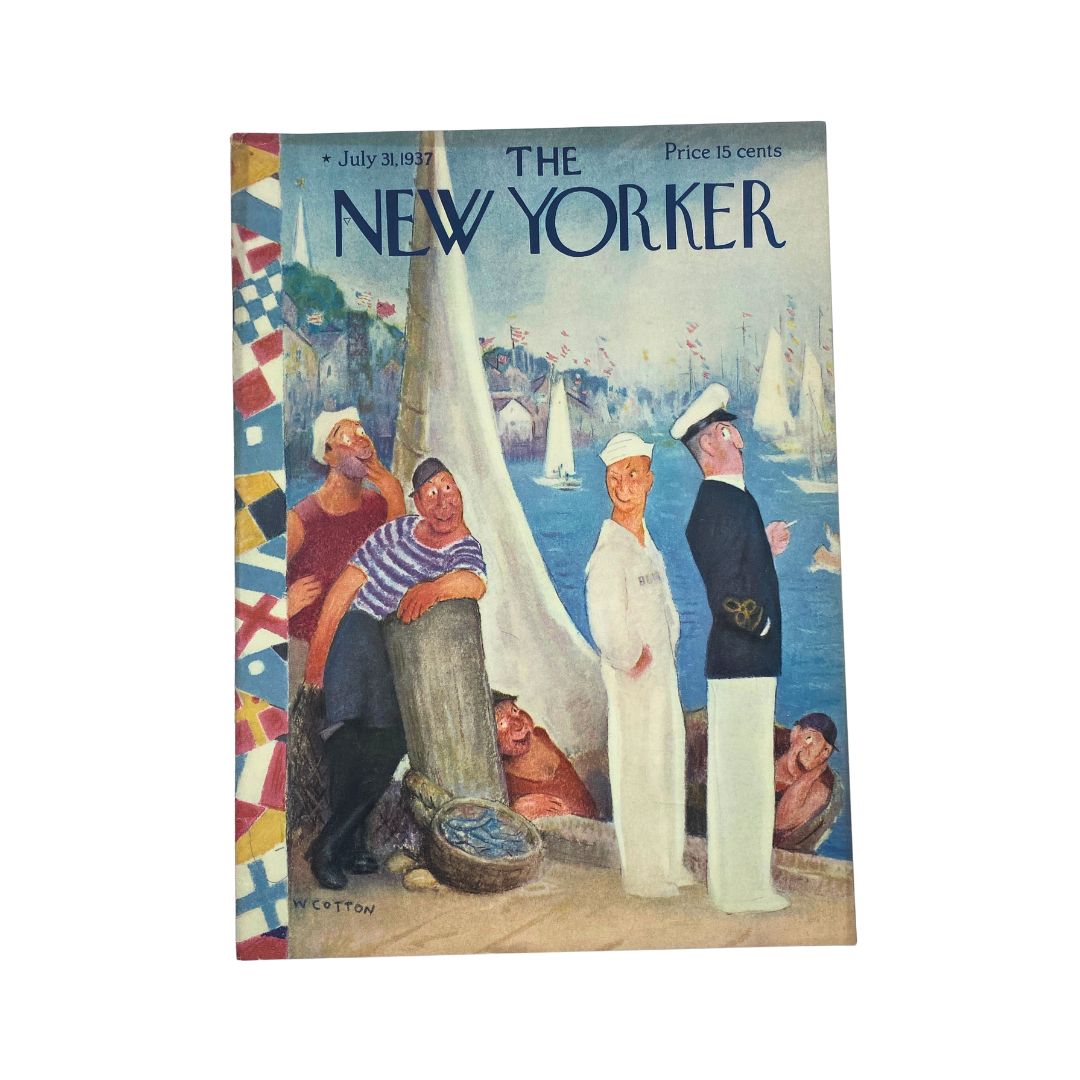
The cover by William Cotton gives this issue a specific place within the magazine's late 1930s visual tradition. Cotton was an American artist whose work for The New Yorker was recognized for exactly the qualities the listing identifies — keen social commentary delivered through whimsical, refined illustration that found the absurdity in American high society's rituals and pretensions with an affectionate rather than cutting satirical eye. His covers from this period reflect a mature and confident engagement with the magazine's visual format, and his capacity for finding both elegance and comedy in the same image gave his work a quality that fit the publication's established sensibility with particular precision. A Cotton cover from July 31, 1937 is a document of that sensibility operating against the backdrop of a summer whose domestic constitutional controversy and international crises gave even the most polished social comedy an underlying seriousness. For collectors tracing the complete visual history of the publication through original New Yorker issues, Cotton covers from the late 1930s represent an important and sometimes overlooked strand of the magazine's pre-war visual legacy.
Late July also occupies a specific position in the magazine's annual publishing rhythm. End-of-July numbers from this period mark the height of the summer season — a somewhat lighter editorial register than the autumn issues, but in the summer of 1937 one operating against a backdrop of domestic and international pressures that the magazine's editorial intelligence could not set aside entirely. The combination of Cotton's social comedy and the charged atmosphere of late July 1937 gives this issue a quality that purely peacetime summer numbers from quieter years cannot replicate.
About the Publication
Founded in February 1925 by Harold Ross, The New Yorker was by the summer of 1937 one of the most editorially distinguished and culturally influential weekly magazines in America, twelve years into its run and fully secure in its literary and journalistic identity. Its readership was urban, educated, and expected the combination of wit, critical intelligence, and serious engagement with the world that Ross enforced with legendary editorial discipline. The magazine's format was mature and consistent: "Talk of the Town" commentary opened each issue, followed by reported features, fiction, poetry, and critical reviews spanning theater, books, art, and film, all interwoven with cartoons and spot illustrations that represented the full flowering of the magazine's interwar visual tradition. Covers were individually commissioned works of illustration, each a complete artistic statement, produced by a rotating roster of contributing artists whose collective late-1930s output constitutes one of the most visually accomplished periods in the publication's long history.
Key Highlights Inside
- William Cotton cover illustration: The cover is the defining collectible feature of this issue — original artwork by an American artist known for whimsical social commentary that found the absurdities and elegances of American high society with a refined and affectionate satirical eye, working within the visual tradition that defined The New Yorker's late 1930s cover aesthetic.
- Roosevelt court-packing controversy summer: Published in late July 1937 during the final phase of the Roosevelt court-packing controversy — the most significant constitutional debate of the New Deal era — this issue appeared at a moment of unusual domestic political intensity whose implications for American democracy were being widely and anxiously discussed.
- Third week of the Second Sino-Japanese War: Published three weeks after Japan's full-scale invasion of China on July 7 — the opening of the Second Sino-Japanese War — this issue appeared as a second major international military conflict was escalating alongside the ongoing Spanish Civil War.
- Roosevelt Recession taking shape: The economic reversal of 1937 was beginning to become visible in the summer months, as the premature withdrawal of New Deal stimulus threatened to undo several years of fragile recovery — a development that the magazine's economically attentive readership was following with considerable anxiety.
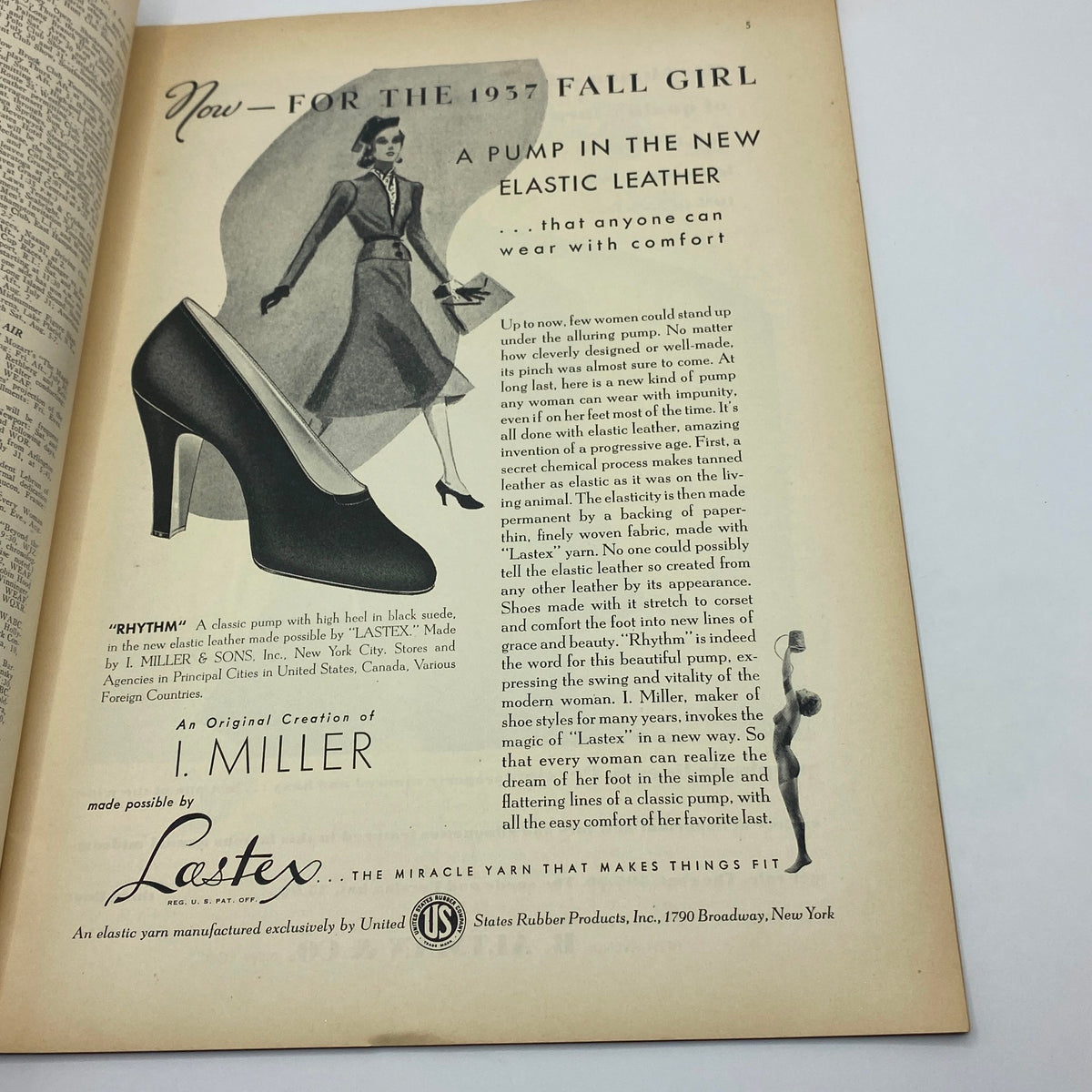
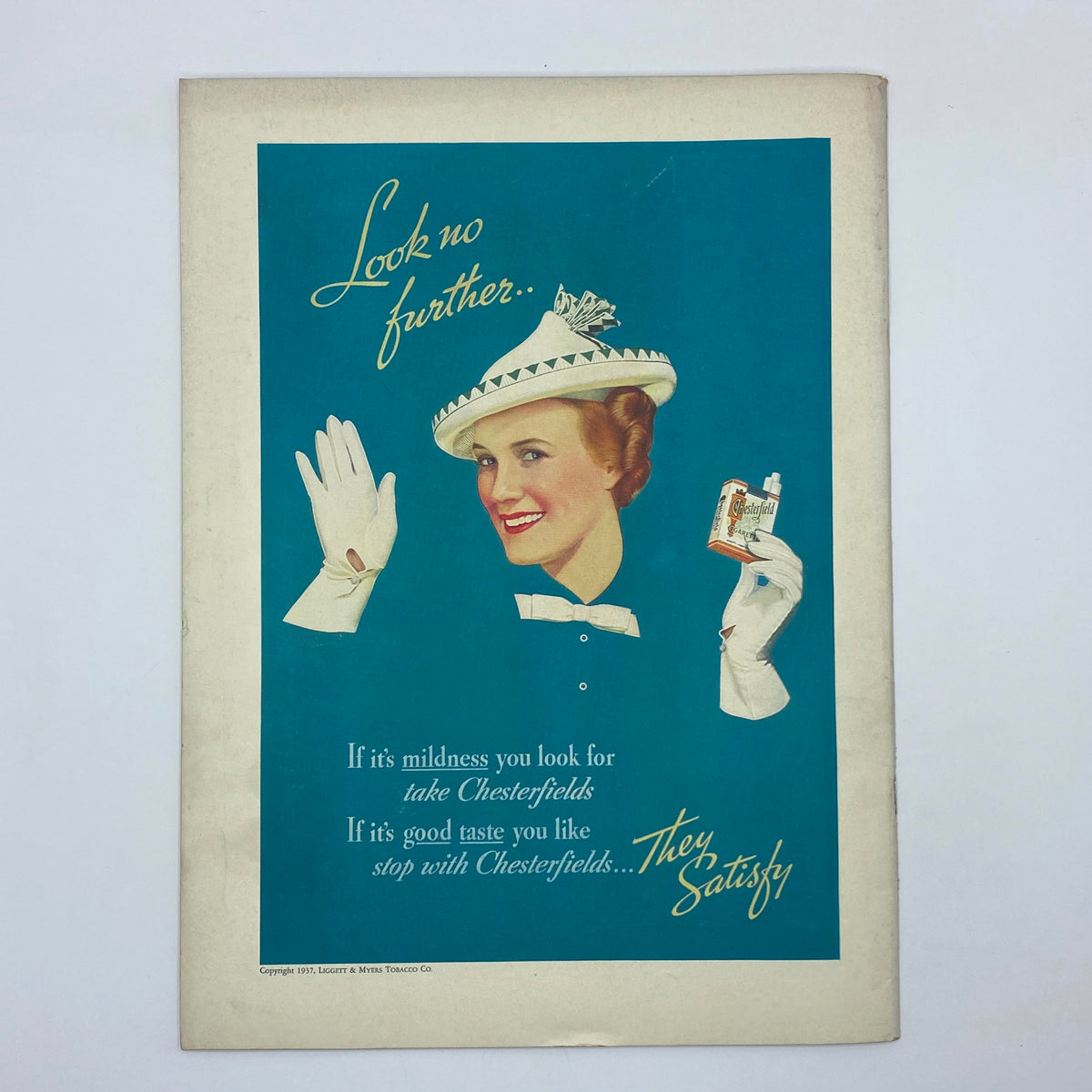
- Period cartoons and advertising: Issues from the late 1930s are consistently valued by collectors and cultural historians for the cartoons, illustrations, and advertising that together document American social life and consumer culture in the final years before the Second World War.
Note: Specific article titles, bylines, and interior content for this exact issue have not been independently confirmed beyond what appears in the listing. The highlights above reflect only what is verifiable from the cover credit, publication date, and the magazine's well-documented editorial format during this period.
Condition & Rarity
A surviving copy of a weekly newsstand magazine from July 1937 presenting in very good condition — with minor edge wear as the only noted imperfection — is a sound and desirable preservation result for a publication now approaching ninety years old. The New Yorker was printed on acidic wood-pulp paper stock standard for weekly periodicals of the era, a material inherently prone to toning, brittleness, and structural degradation over time. Edge wear of the kind described is entirely consistent with honest age and careful storage rather than mishandling or neglect. When evaluating any surviving copy of this issue, the meaningful criteria are the integrity and color fidelity of Cotton's cover art, the completeness of all interior pages, the absence of subscription label adhesive residue or moisture damage, and the structural soundness of the spine. A copy meeting the standard described — visually strong at nearly ninety years of age, with wear confined to the margins — represents the preservation grade that serious collectors of Depression-era and pre-war periodicals actively seek.
Looking for More Issues Like This?
William Cotton covers from the late 1930s are among the more rewarding finds in the pre-war New Yorker collector market, and this specific July 31, 1937 date — at the height of the court-packing controversy summer and three weeks into the Sino-Japanese War — is not one that surfaces frequently. If it is no longer available, the extensive original New Yorker collection at OriginalMagazines.com is one of the deepest archives of the magazine accessible to collectors anywhere, spanning many decades of its publishing history. For those drawn to the charged atmosphere of the late 1930s, the full 1937 magazine collection rewards careful and patient exploration — it is a year whose domestic and international complexity are present in every issue that has survived to the present day.