




Description
Collector's Note – Why This Issue Matters
July 9, 1938 places this issue of The New Yorker at a moment of acute international tension and impending catastrophe. Hitler had annexed Austria in March — the Anschluss had been accomplished with barely a murmur of effective resistance — and the German pressure on Czechoslovakia's Sudetenland was building toward the crisis that would culminate in the Munich Agreement in September. The summer of 1938 was the last summer of European peace in the full sense of the word, and for those paying close attention — and The New Yorker's readership was, by definition, among the most attentive in America — the direction of events was unmistakably clear. In New York, the large Central European immigrant community and the city's deep cultural ties to Europe gave the international situation a personal dimension that most of the country could still maintain some distance from. For collectors building a serious historical archive through original magazines from 1938, a July issue from this year is a document of the last full summer before Munich — produced at the moment of maximum pre-war tension, before the capitulation that would make war inevitable.
The cover by Ilonka Karasz makes this issue one of the most formally distinguished and historically interesting objects in the magazine's late pre-war visual archive. Karasz was one of the most remarkable and historically significant artists ever to contribute cover work to The New Yorker — a Hungarian-American modernist whose background in Central European design tradition brought to her covers a formal sensibility that set her apart from virtually all of her contemporaries at the publication. The listing's description of her work as striking geometric patterns and intricate artwork is consistent with what is documented about her approach: a bold, formally inventive style shaped by the European modernist design movements she had absorbed before emigrating to the United States, deployed within the magazine's cover format with a confidence and originality that made her one of its most visually distinctive contributors. Her work spanned from the late 1920s through the 1960s — one of the longest tenures of any contributing artist in the magazine's history. For collectors tracing the visual history of the publication through original New Yorker issues, a Karasz cover from July 1938 is a primary artifact of European modernist design sensibility operating at the height of its expression within one of the most prestigious cover formats in American publishing — and doing so at the precise historical moment when the European tradition she embodied was under existential threat.
That last point deserves to be stated plainly. Karasz was Hungarian-American, trained in the Central European modernist tradition. A July 1938 Karasz cover appears ten weeks before the Munich Agreement would confirm the capitulation of Western democracies to the regime that was in the process of destroying the cultural world from which she had come. The formal confidence and geometric precision of her modernist aesthetic, produced at this specific moment, gives this issue a documentary weight that extends well beyond its considerable artistic merit.
About the Publication
Founded in February 1925 by Harold Ross, The New Yorker was by the summer of 1938 one of the most editorially distinguished and internationally attentive weekly publications in America, thirteen years into its run and fully secure in its literary and journalistic identity. Its readership was urban, educated, and expected the combination of wit, critical intelligence, and serious engagement with the world that Ross enforced with legendary editorial discipline. The magazine's format was mature and consistent: "Talk of the Town" commentary opened each issue, followed by reported features, fiction, poetry, and critical reviews spanning theater, books, art, and film, all interwoven with cartoons and spot illustrations representing the full flowering of the magazine's interwar visual tradition. Covers were individually commissioned works of illustration, and Karasz's contributions were among the most formally ambitious and visually distinctive in the publication's history.
Key Highlights Inside
- Ilonka Karasz cover illustration: The cover is the defining collectible and artistically significant feature of this issue — original artwork by one of the most formally distinguished and historically important artists in The New Yorker's visual history, a Hungarian-American modernist whose geometric, design-forward covers brought a Central European sensibility to the publication that was unlike anything produced by her contemporaries.
- Ten weeks before the Munich Agreement: Published on July 9, 1938 — ten weeks before the Munich Agreement of September 30 — this issue appeared at the height of the Sudeten crisis, during the last full summer before the diplomatic capitulation that made a second world war effectively inevitable.
- Post-Anschluss European crisis: By July 1938, Hitler's annexation of Austria in March had been absorbed by international opinion with minimal resistance, and the pressure on Czechoslovakia was intensifying in ways that were clearly visible to attentive observers — an atmosphere that the magazine's internationally minded editorial staff was tracking with full awareness.
- Modernist visual tradition at a historical threshold: A Karasz cover from July 1938 represents the Central European modernist design tradition — the tradition she had absorbed and embodied — at the precise moment that tradition was under existential threat from the regime whose territorial demands were dominating the international news.
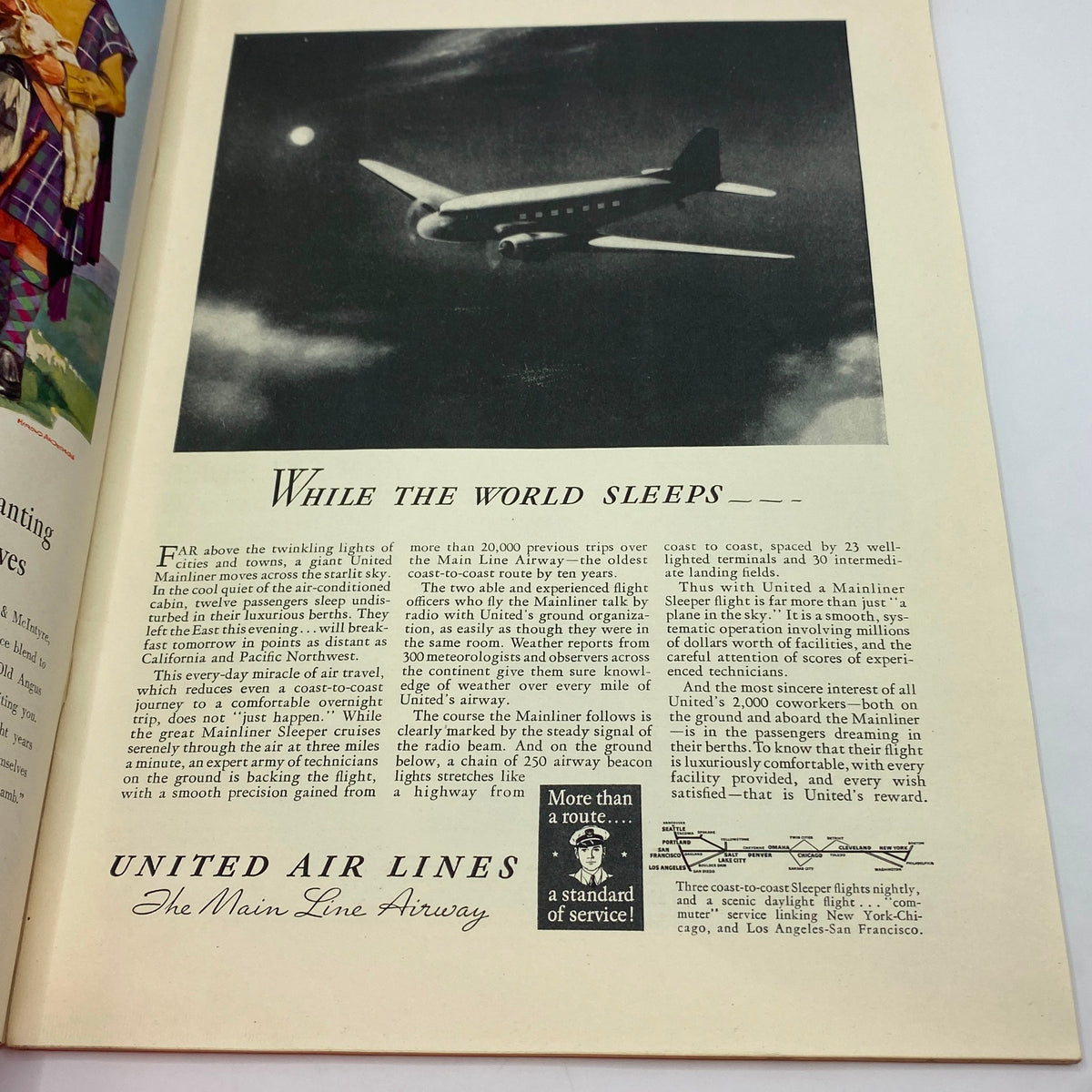
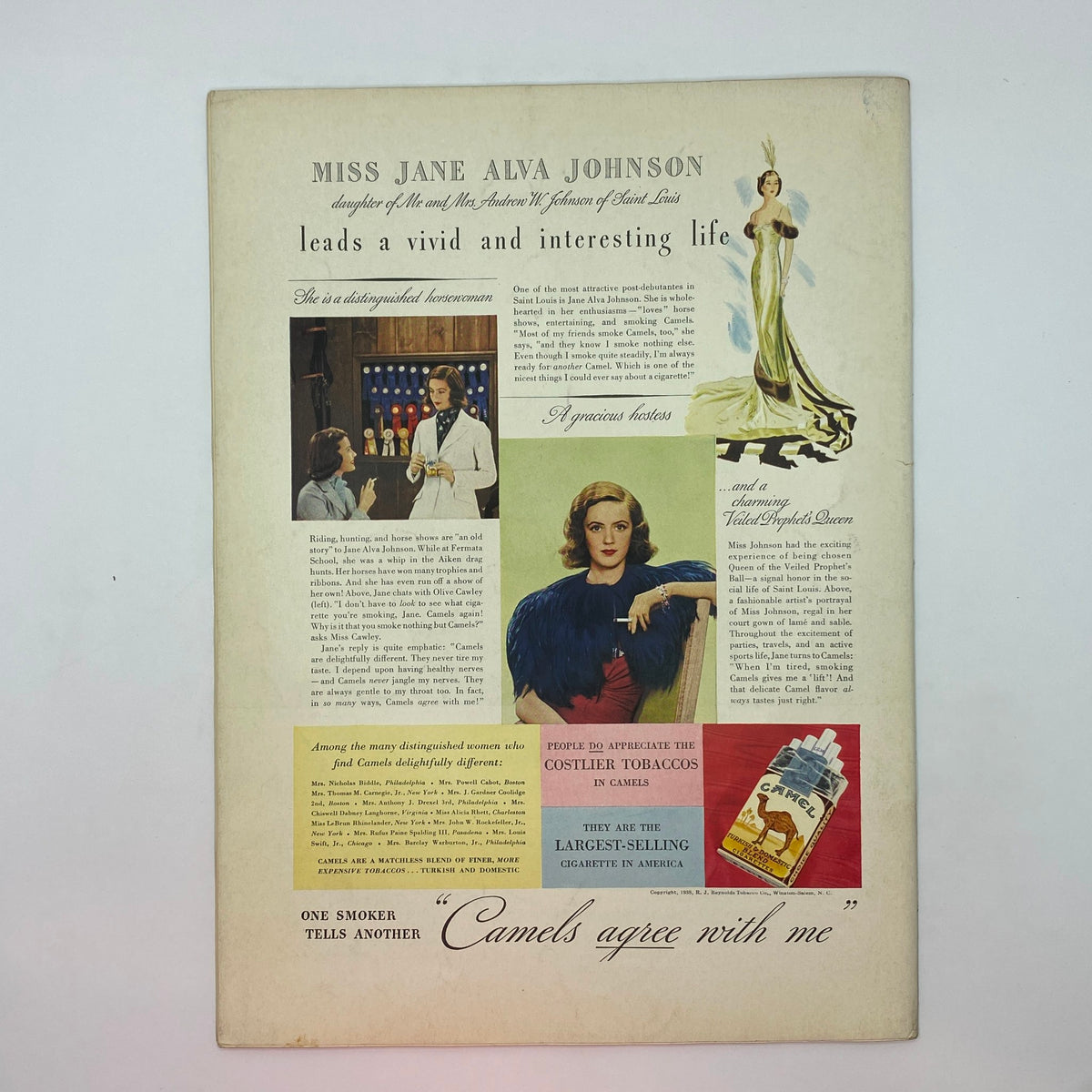
- Period cartoons and advertising: Issues from the summer of 1938 are valued by collectors and cultural historians for the cartoons, illustrations, and advertising that together document American social life and consumer culture in the final year before the European war began.
Note: Specific article titles, bylines, and interior content for this exact issue have not been independently confirmed beyond what appears in the listing. The highlights above reflect only what is verifiable from the cover credit, publication date, and the magazine's well-documented editorial format during this period.
Condition & Rarity
A surviving copy of a weekly newsstand magazine from July 1938 presenting in very good condition — with minor edge wear as the only noted imperfection — is a sound and desirable preservation result for a publication now approaching ninety years old. The New Yorker was printed on acidic wood-pulp paper stock standard for weekly periodicals of this era, a material inherently prone to toning, brittleness, and structural fatigue over time. Edge wear of the kind described is entirely consistent with honest age and careful storage rather than mishandling or neglect. When evaluating any surviving copy of this issue, the meaningful criteria are the integrity and color fidelity of Karasz's cover art — her geometric, design-forward compositions are particularly sensitive to fading or toning that diminishes the precision and vibrancy of their formal elements — the completeness of all interior pages, the absence of subscription label adhesive residue or moisture damage, and the structural soundness of the spine. A copy meeting the standard described represents the preservation grade that serious collectors of pre-war periodicals, and particularly of Karasz-associated material, actively seek.
Looking for More Issues Like This?
An Ilonka Karasz cover from ten weeks before the Munich Agreement — a piece of European modernist visual culture produced at the precise moment that culture was under existential threat — is one of the most historically layered and formally distinguished objects in the late 1930s New Yorker collector market, and July 9, 1938 is a date that rewards the collector who understands its full significance. If it is no longer available, the extensive original New Yorker collection at OriginalMagazines.com is one of the deepest archives of the magazine accessible to collectors anywhere, spanning many decades of its publishing history. For those drawn to the charged pre-war atmosphere of the late 1930s, the full 1938 magazine collection rewards careful and patient exploration — it is a year whose historical momentum carries through every issue that has survived to the present day.