



Description
Collector's Note – Why This Issue Matters
June 26, 1937 places this issue of The New Yorker at a moment of considerable historical complexity and cultural intensity. The Spanish Civil War was well into its second year, with Franco's Nationalist forces backed by German and Italian military support pressing against the Republican government — a conflict that had become the defining international cause for American intellectuals and writers, many of whom were among the magazine's most valued contributors and closest readers. Domestically, 1937 was the year of Roosevelt's ill-fated court-packing plan, his attempt to expand the Supreme Court in response to its invalidation of New Deal legislation — a political controversy that generated fierce debate about the separation of powers and dominated American political conversation through the spring and summer. In New York, the late June atmosphere combined the heat of a city moving into summer with the charged intellectual energy of a metropolis engaged with both the domestic constitutional crisis and the gathering catastrophe in Europe. For collectors building a serious documentary archive through original magazines from 1937, a late June issue from this year carries the full weight of one of the most politically and internationally eventful summers of the entire decade.
The cover by Richard Decker gives this issue a specific place within the magazine's mid-1930s visual tradition. Decker was a regular contributor to The New Yorker across multiple decades, producing both cover art and interior cartoons that were recognized for the qualities the listing identifies — sharp wit and humor operating within the magazine's characteristic social register. He was part of the generation of cartoonists and illustrators who had defined the magazine's visual identity by the mid-1930s, working in the tradition of sophisticated observational humor that founding art editor Rea Irvin had established as the publication's dominant aesthetic mode. His covers from the late 1930s represent a mature and confident phase of his contribution to that tradition, and a Decker cover from June 1937 is an artifact of the magazine's visual culture at a moment when its interwar sensibility was fully developed but had not yet encountered the pressures that the war years would bring. For collectors tracing the complete visual history of the publication through original New Yorker issues, Decker's covers from this period represent a valued and sometimes overlooked strand of the magazine's rich interwar visual legacy.
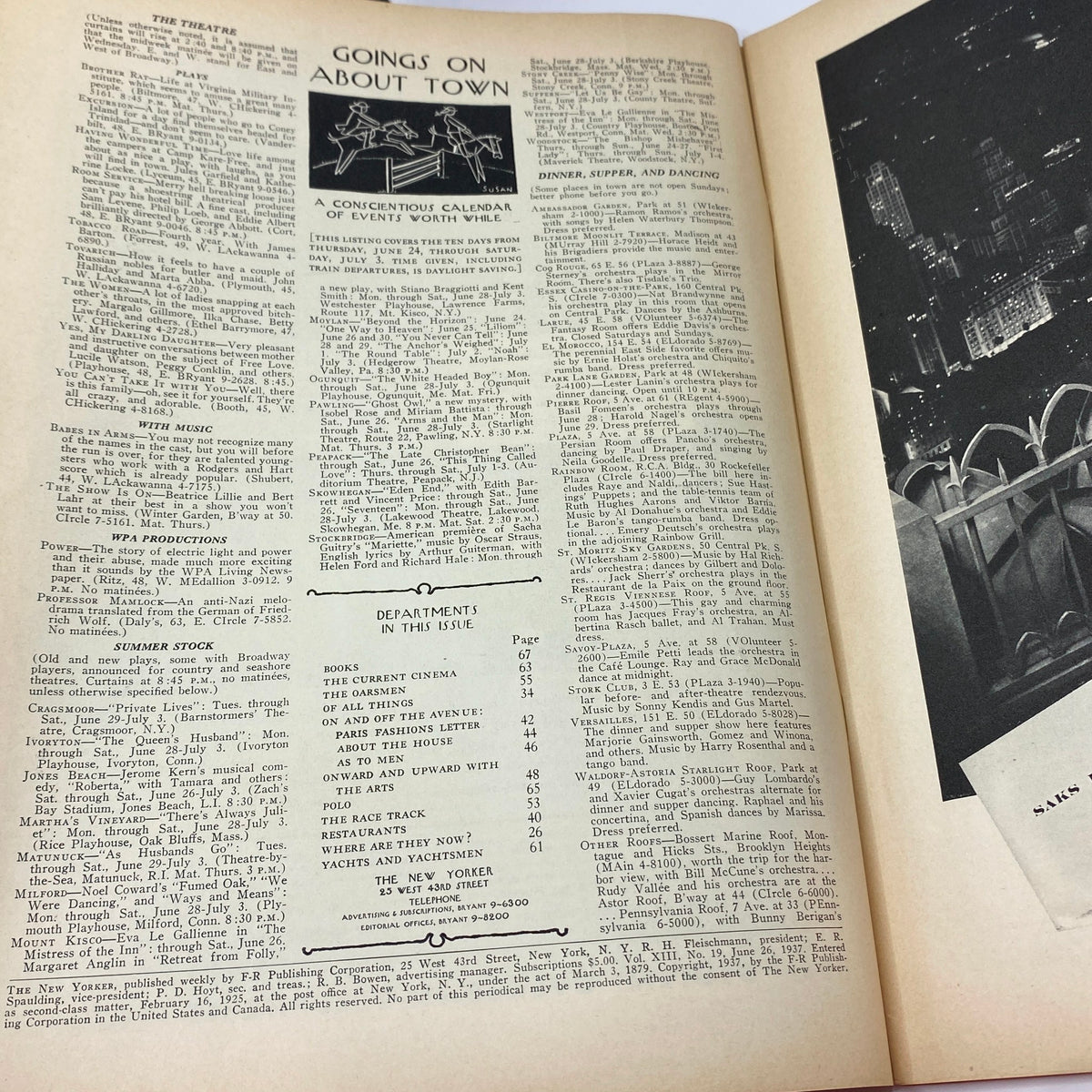
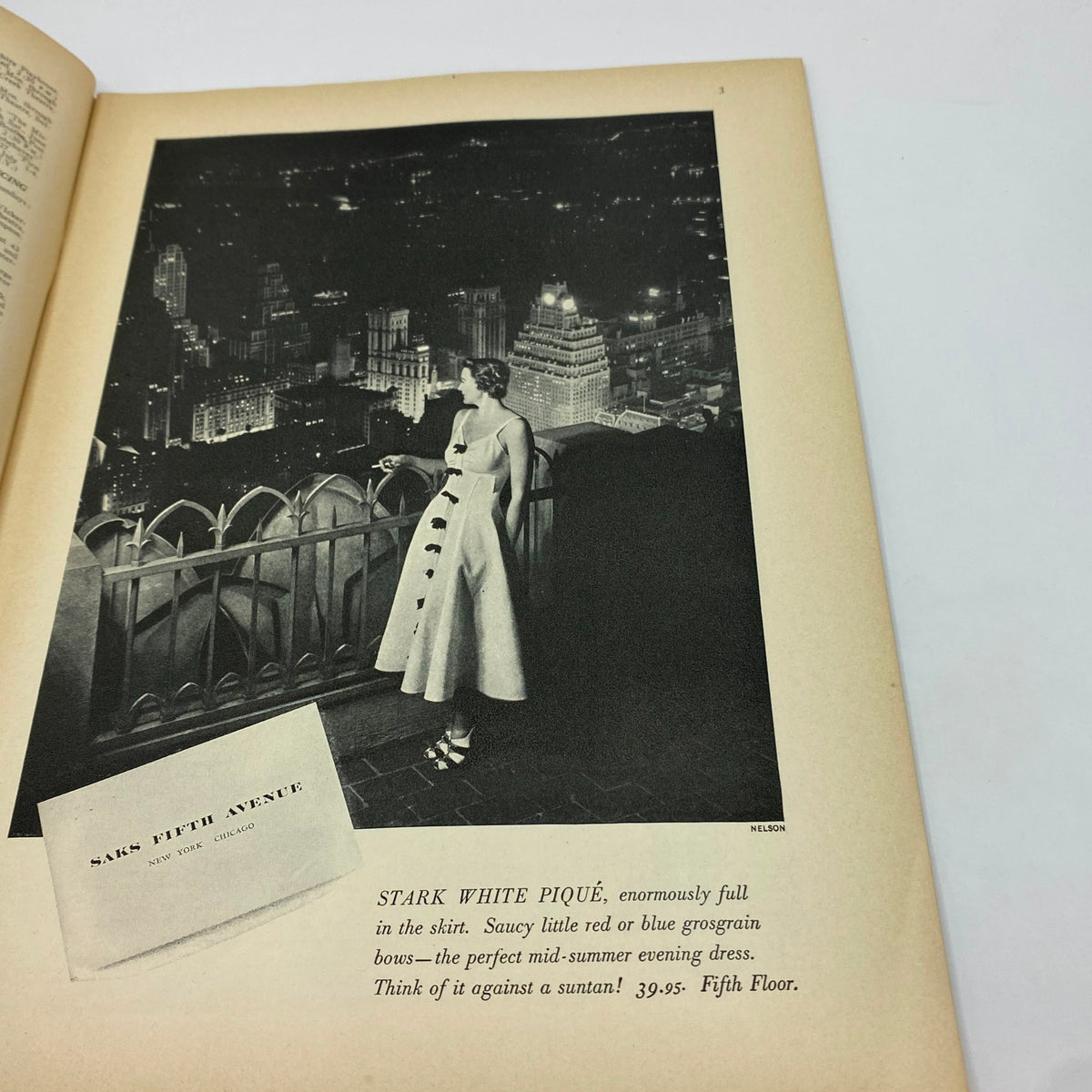
The listing's specific mention that the pages are clean and vibrant adds a dimension worth noting for collectors who use interior condition as a meaningful evaluation criterion. For issues from the late 1930s, paper toning and color degradation are common enough that a surviving copy described as retaining clean, vibrant pages represents a preservation outcome above the typical baseline for this era. That interior quality, combined with the cover art and the historical moment, makes this a particularly complete survivor of its specific date.
About the Publication
Founded in February 1925 by Harold Ross, The New Yorker was by the summer of 1937 one of the most editorially distinguished and culturally influential weekly magazines in America, twelve years into its run and fully secure in its literary and journalistic identity. Its readership was urban, educated, and expected the combination of wit, critical intelligence, and serious engagement with the world that Ross enforced with legendary editorial discipline. The magazine's format was mature and consistent: "Talk of the Town" commentary opened each issue, followed by reported features, fiction, poetry, and critical reviews spanning theater, books, art, and film, all interwoven with cartoons and spot illustrations that represented what many consider the first fully mature generation of the magazine's celebrated visual tradition. Covers were individually commissioned works of illustration, produced by a rotating roster of contributing artists whose collective late-1930s output constitutes one of the most visually distinguished periods in the magazine's long publishing history.
Key Highlights Inside
- Richard Decker cover illustration: The cover is the most historically documentable feature of this issue — original artwork by a long-serving New Yorker contributor known for sharp wit and humor rendered within the magazine's characteristic social observation tradition.
- Spanish Civil War context: By June 1937, the Spanish Civil War had become the defining international cause for American intellectuals and writers — many of them closely associated with The New Yorker — and the magazine's editorial voice was operating in full awareness of the conflict's implications for democracy in Europe.
- Roosevelt court-packing controversy: The summer of 1937 was dominated domestically by the political fallout from Roosevelt's court-packing proposal — a constitutional controversy that generated some of the most intense political debate of the entire New Deal era and would have informed the magazine's commentary throughout this period.
- Clean and vibrant interior pages: The listing specifically notes clean and vibrant pages — a meaningful condition detail for an issue from this era, where paper toning and color degradation are common enough that their absence represents a preservation outcome above the typical baseline.
- Late 1930s cartoon and illustration tradition: By June 1937, The New Yorker's art department represented what many consider the full maturity of its interwar visual tradition — a roster of contributing artists whose collective work defined American periodical illustration for a generation.
Note: Specific article titles, bylines, and interior content for this exact issue have not been independently confirmed beyond what appears in the listing. The highlights above reflect only what is verifiable from the cover credit, publication date, condition notes, and the magazine's well-documented editorial format during this period.
Condition & Rarity
A surviving copy of a weekly newsstand magazine from June 1937 presenting in very good condition — with minor edge wear as the only noted imperfection and interior pages described as clean and vibrant — is a particularly strong preservation result for a publication now approaching ninety years old. The New Yorker was printed on acidic wood-pulp paper stock standard for weekly periodicals of the era, a material inherently prone to toning, brittleness, and color degradation over time. The specific mention of clean and vibrant pages distinguishes this from the more typical survival condition for issues of this age, where some degree of interior toning is the norm rather than the exception. Edge wear of the kind described is entirely consistent with honest age and careful storage. When evaluating any surviving copy of this issue, the meaningful criteria are the integrity and color fidelity of Decker's cover art, the completeness of all interior pages, the absence of subscription label adhesive residue or moisture damage, and the structural soundness of the spine. A copy meeting the full standard described here — exterior wear confined to the margins, interior pages clean and retaining their original color — represents the upper range of what is realistically available for issues from this decade.
Looking for More Issues Like This?
Richard Decker covers from the late 1930s are genuinely rewarding finds, and this specific June 1937 date — arriving at such a politically and internationally charged moment, with notably well-preserved interior pages — makes it a particularly complete and desirable survivor. If it is no longer available, the extensive original New Yorker collection at OriginalMagazines.com is one of the deepest archives of the magazine accessible to collectors anywhere, with issues spanning many decades of its publishing history. For those drawn to the charged atmosphere of the late 1930s, the full 1937 magazine collection rewards careful exploration — it is a year whose political and international complexity shows up clearly in every issue that has survived to the present day.