




Description
Collector's Note – Why This Issue Matters
June 29, 1940 is one of the most historically freighted dates of the entire twentieth century. France had fallen just nine days earlier — the armistice with Germany was signed on June 22, ending six weeks of fighting that had shocked the world and left Britain standing virtually alone against Nazi Germany. Dunkirk had happened in late May and early June. The map of Europe had been redrawn with terrifying speed, and the question of whether democracy itself could survive on the continent was no longer rhetorical. In New York, the summer of 1940 carried a quality of stunned disbelief that pervades the journalism and personal correspondence of anyone who lived through it. The New Yorker, with its deep cultural and intellectual ties to Europe and its tradition of serious engagement with the world beyond Manhattan, was a publication whose editorial staff understood with particular clarity what the fall of France meant. For collectors assembling a historical record through original magazines from 1940, a late June issue from this year is among the most consequential documents the decade produced — printed in the immediate aftermath of a catastrophe whose implications were still being absorbed.
The cover by Mary Petty gives this issue a quality that is characteristic of The New Yorker's most interesting moments: a surface of cultivated wit and social observation held against a backdrop of genuine historical crisis. Petty was one of the magazine's most beloved and distinctive contributing artists, known for exactly the qualities the listing describes — satirical illustrations of upper-class society rendered with intricate detail, whimsical charm, and a dry humor that found the absurdity in the rituals of the American leisure class. Her work appeared in the magazine from the 1920s through the 1950s, and her covers are recognizable for their elaborate interiors, fussily appointed drawing rooms, and the particular species of elderly, oblivious wealth she depicted with such affectionate precision. A Petty cover from late June 1940 — arriving at the moment of France's fall — carries an almost poignant quality: the magazine's characteristic social comedy proceeding with perfect composure while the world it was observing came apart at the seams. For collectors building a comprehensive visual archive through original New Yorker issues, Petty covers from the early 1940s are among the most layered and historically resonant objects in the magazine's wartime archive.
It is also worth noting what a late June issue represents within the magazine's annual rhythm. Early summer numbers from this period tend to reflect a lighter editorial register, but the summer of 1940 was categorically different from any that had preceded it. The editorial voice of a New Yorker issue dated June 29, 1940 was operating in a world that had changed more in the previous ten days than in the previous decade, and that context is inseparable from any honest reading of the issue as a historical document.
About the Publication
Founded in February 1925 by Harold Ross, The New Yorker was by the summer of 1940 one of the most editorially distinguished and internationally attentive weekly magazines in American publishing. Its readership was urban, educated, and expected both the wit and the serious journalism that Ross enforced with legendary editorial rigor. The magazine's format was consistent and mature: "Talk of the Town" commentary opened each issue, followed by reported features, fiction, poetry, and critical reviews spanning theater, books, art, and film, all interwoven with cartoons and spot illustrations that represented one of the most celebrated creative traditions in American periodical art. Covers were individually commissioned works of illustration, each functioning as a complete artistic statement in its own right, produced by a stable of contributing artists whose collective output defined the visual culture of sophisticated American publishing across the interwar and wartime decades.
Key Highlights Inside
- Mary Petty cover illustration: The cover is the defining collectible feature of this issue — original artwork by one of The New Yorker's most beloved contributing artists, renowned for her satirical, detail-rich depictions of upper-class American society rendered with whimsical elegance and dry humor.
- Immediate aftermath of the fall of France: Published one week after the French armistice with Germany, this issue appeared at the single most shocking moment of the European war to that point — a context that would have been impossible for any attentive reader or editorial voice to set aside.
- Britain standing alone: The summer of 1940 was the period of the Battle of Britain, which began in July — the editorial and journalistic atmosphere of this specific late June issue captures the moment just before that next chapter of the war began to unfold.
- Early summer 1940 New York: Issues from this period document the particular atmosphere of a city trying to process an international catastrophe while its ordinary social and cultural rhythms continued — a tension that gives any surviving issue from this summer an unusual documentary quality.
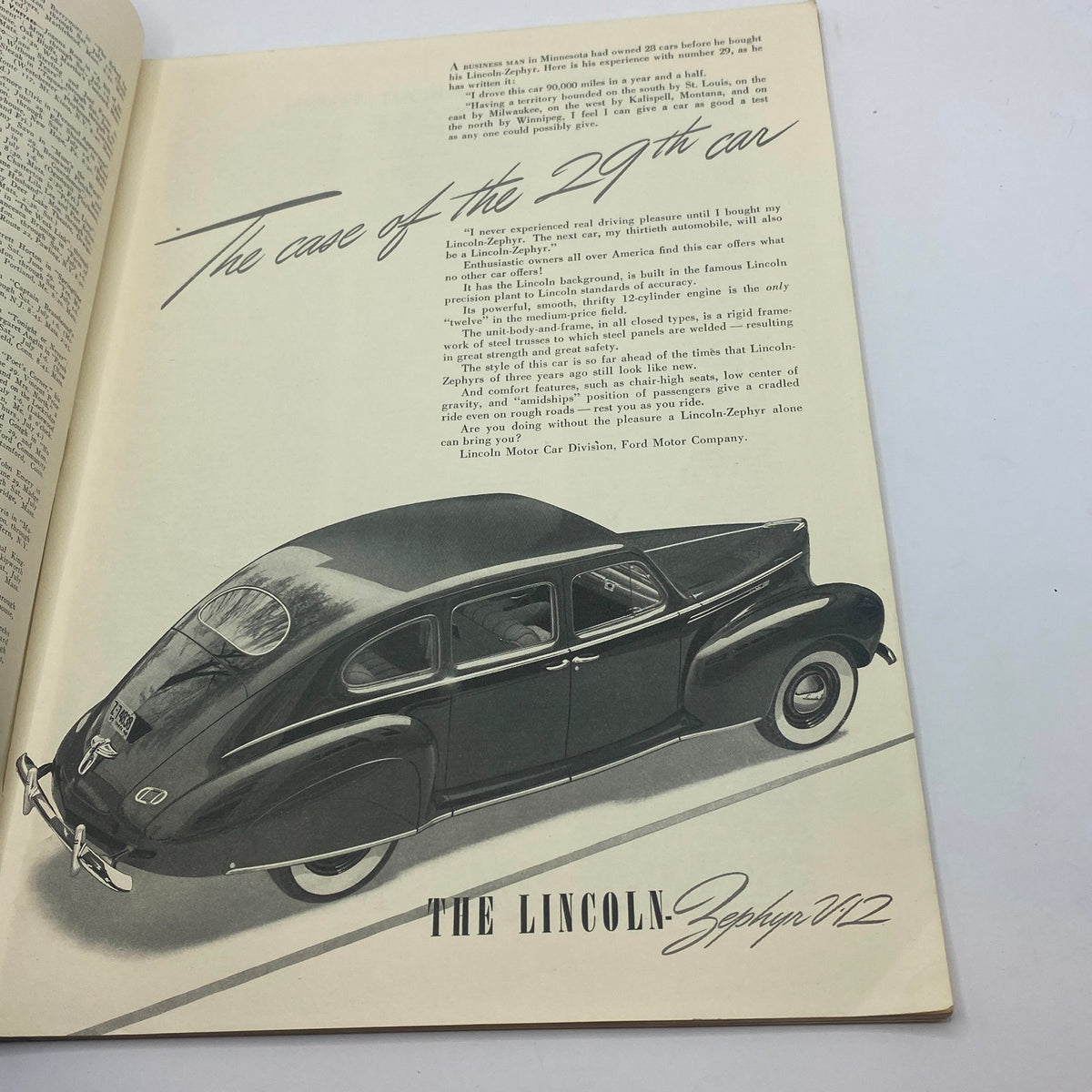
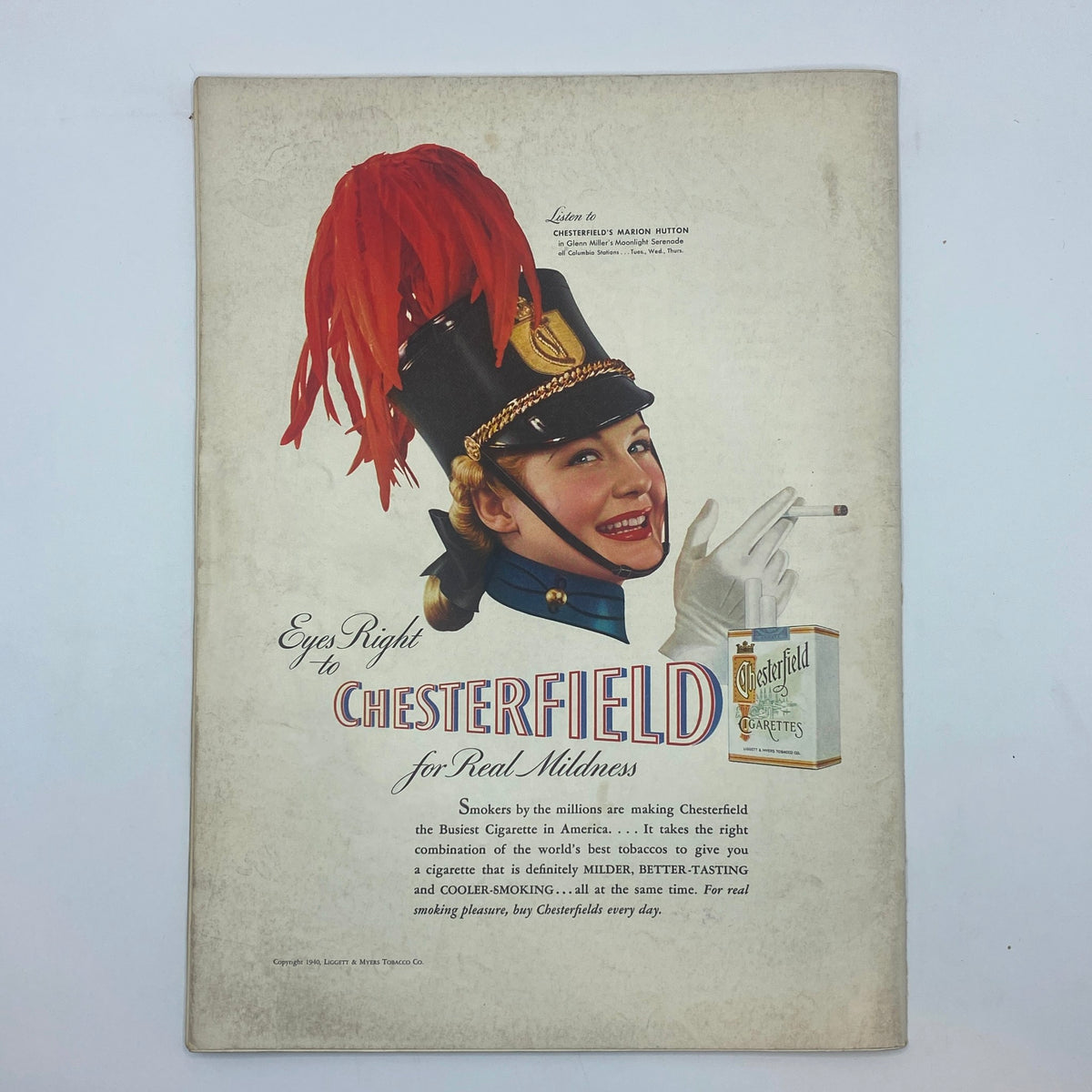
- Period cartoons and advertising: Late June 1940 issues are valued by collectors and cultural historians for the cartoons, illustrations, and period advertising that together record the texture of American civilian life at one of the most consequential moments of the twentieth century.
Note: Specific article titles, bylines, and interior content for this exact issue have not been independently confirmed beyond what appears in the listing. The highlights above reflect only what is verifiable from the cover credit, publication date, and the magazine's well-documented editorial format during this period.
Condition & Rarity
A surviving copy of a weekly newsstand magazine from June 1940 presenting in very good condition — with minor edge wear as the only noted imperfection — is a genuinely strong preservation result for a publication now eighty-five years old. The New Yorker was printed on acidic wood-pulp paper stock standard for weekly periodicals of the era, a material inherently prone to toning, brittleness, and structural degradation over time. Edge wear of the kind described is the natural and expected consequence of honest age and careful storage rather than mishandling. When evaluating any surviving copy of this issue, the meaningful criteria are the integrity and detail fidelity of Petty's intricate cover art — her elaborately rendered interiors are particularly sensitive to foxing and toning — the completeness of all interior pages, the absence of subscription label adhesive residue or moisture damage, and the structural soundness of the spine. A copy meeting the standard described here represents the preservation grade that serious collectors of wartime-era periodicals actively seek.
Looking for More Issues Like This?
Mary Petty covers are among the most warmly regarded in the New Yorker collector market, and a June 1940 date — arriving at such a singular and devastating historical moment — makes this a genuinely distinctive find. If it is no longer available, the extensive original New Yorker collection at OriginalMagazines.com is one of the deepest archives of the magazine accessible to collectors, with issues spanning many decades of its history. For those drawn to the particular atmosphere of the early war years, the full 1940 magazine collection is worth exploring carefully — it is a year whose historical weight is unlike almost any other in the magazine's long run, present in every issue that has survived to the present day.