



Description
Collector's Note – Why This Issue Matters
By March 1936, The New Yorker was eleven years into what would become one of the most remarkable runs in American magazine history — and Rea Irvin had been there from the very beginning. As the magazine's first art editor, appointed by founder Harold Ross in 1925, Irvin did not merely contribute covers; he invented the visual identity of the publication from the ground up. The typeface used in The New Yorker's logo is his. The monocle-wearing dandy known as Eustace Tilley — the figure who graced the very first cover in February 1925 and has reappeared on anniversary issues ever since — is his creation. When Irvin's name appears on a cover, collectors are not simply looking at the work of a contributor. They are looking at the hand that shaped the magazine's entire aesthetic vocabulary.
The mid-1930s were a period of consolidation and deepening confidence for the publication. Harold Ross had assembled a remarkable editorial stable by this point — James Thurber, E.B. White, Dorothy Parker, and others whose work defined a particular strain of American literary wit — and the magazine's visual identity, under Irvin's ongoing influence, had become as recognizable as any in American print culture. A cover from March 14, 1936 documents the magazine at a moment of genuine artistic maturity, well past its experimental early years and still a decade away from the wartime and postwar shifts that would alter its tone. For collectors building a serious run of New Yorker issues from the magazine's prewar golden era, a confirmed Rea Irvin cover is among the most significant individual issues to acquire.
The broader context of 1936 adds further weight. The year fell in the depths of the Great Depression's long tail, with the New Deal in full swing and a presidential election — Roosevelt's landslide reelection over Alf Landon — dominating American political life. The New Yorker occupied a deliberately rarefied position relative to that turbulence: cosmopolitan, ironic, resolutely focused on the life of the mind and the city. That studied contrast between the magazine's tone and its historical moment is itself part of what makes issues from this period so culturally interesting. Anyone assembling a collection around American print and cultural artifacts from 1936 will find this issue occupies a distinctive place in that landscape.
About the Publication
The New Yorker, founded in February 1925 by Harold Ross, was conceived from the outset as a magazine for a sophisticated urban readership — specifically, as Ross famously put it, not edited for "the old lady in Dubuque." Its format combined original cover art, cartoons, fiction, poetry, criticism, and long-form journalism in a weekly package that set the standard for American literary magazines throughout the twentieth century. Rea Irvin served as the founding art editor and remained a central creative force through the 1930s and beyond, establishing the visual conventions — the typeface, the illustration style, the particular quality of comic draftsmanship — that the magazine maintained for decades. By the mid-1930s, The New Yorker had evolved from a promising newcomer into an institution, and its covers, commissioned from the leading illustrators of the day, were among the most widely recognized images in American periodical publishing.
Key Highlights Inside
- Cover illustration by Rea Irvin, the magazine's founding art editor and the creator of Eustace Tilley — making any issue bearing his byline a primary artifact of The New Yorker's visual history.
- Published in March 1936, during Franklin Roosevelt's first term and a year of significant political and cultural activity in Depression-era America.
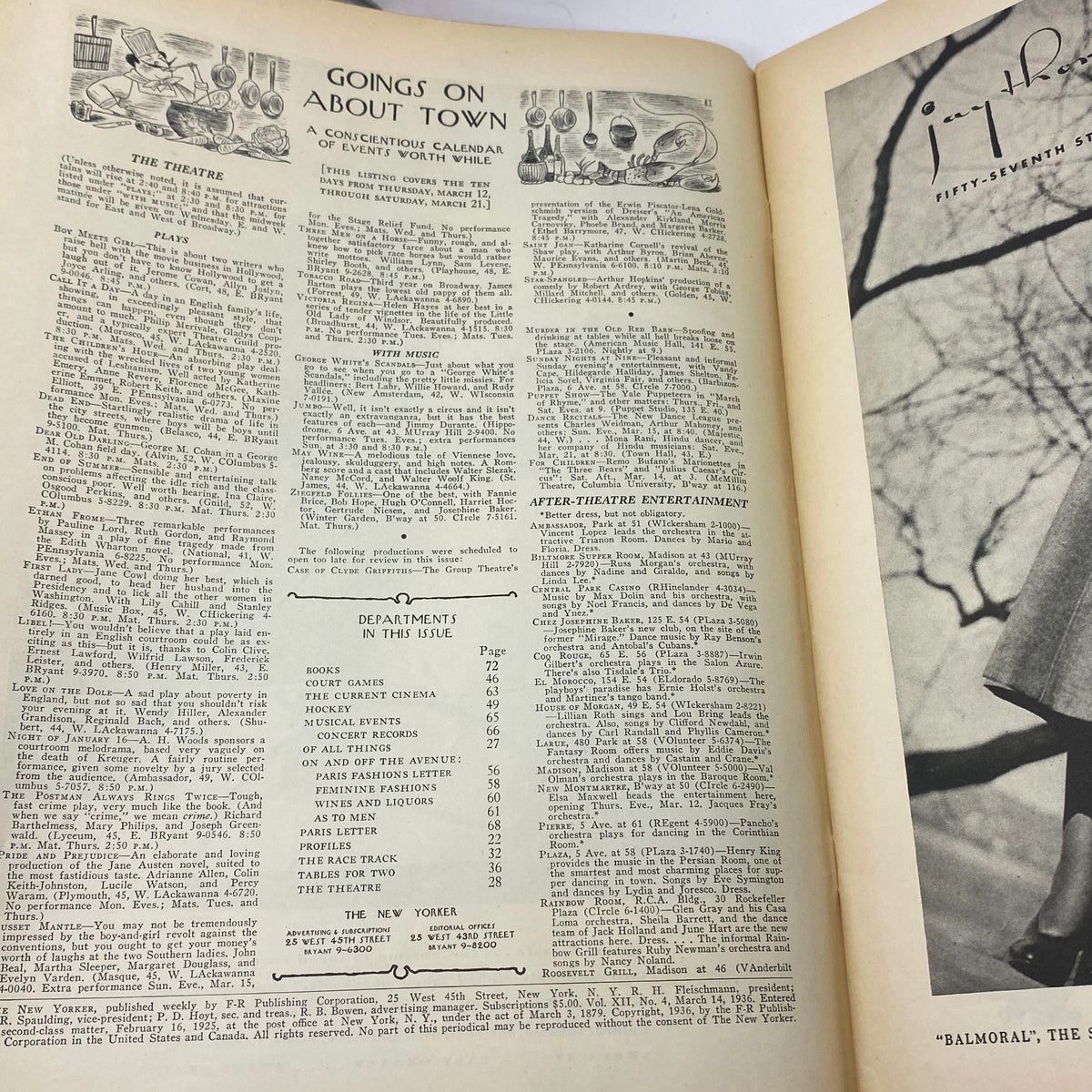
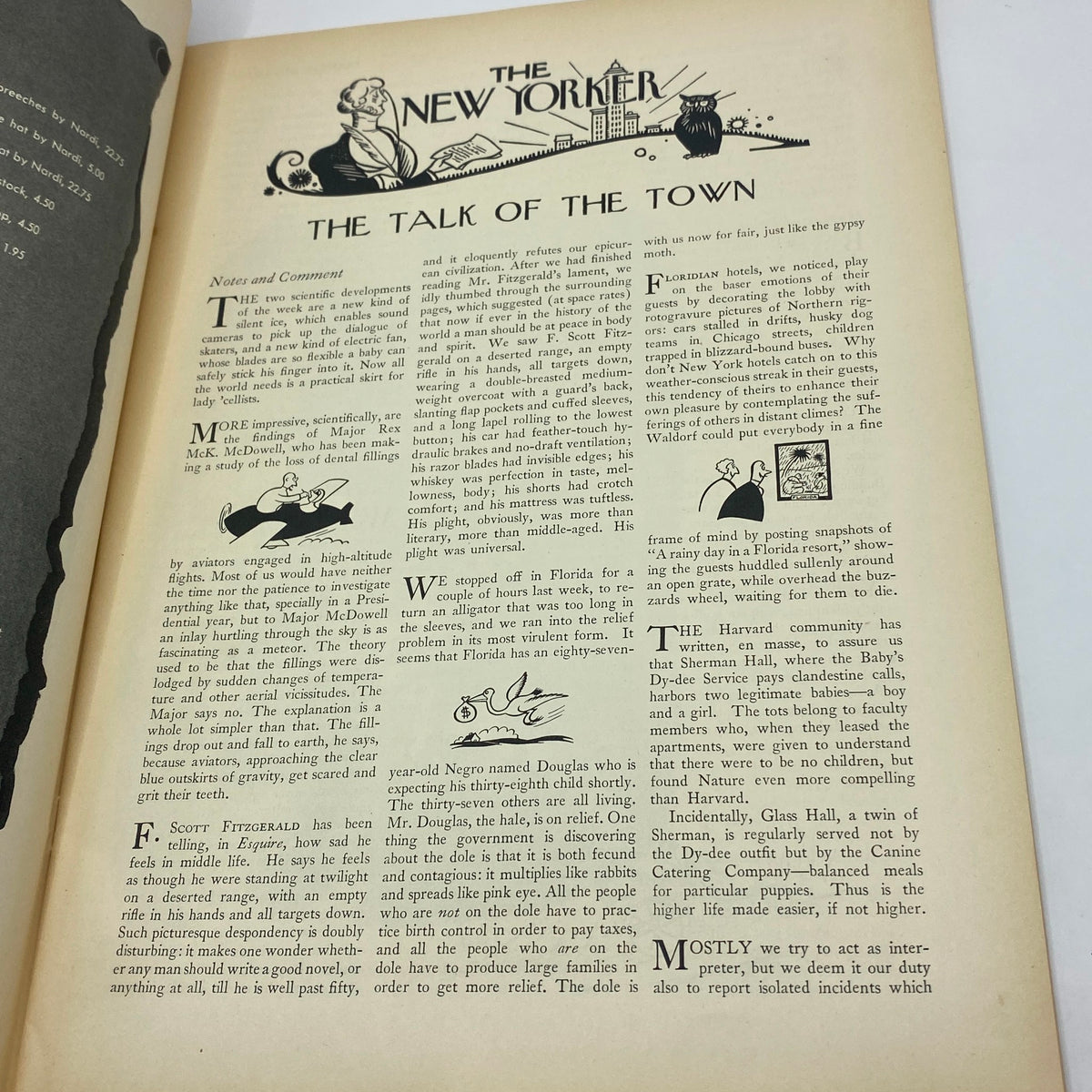
- A complete issue, meaning the full interior editorial content — cartoons, fiction, criticism, "Talk of the Town," and period advertising — is present and intact.
- Represents the magazine at a moment of genuine editorial and artistic maturity, more than a decade into its run and firmly established as the defining voice of American urban literary culture.
- Note: Specific interior articles, fiction, and features for this issue have not been confirmed from available listing details. Complete interior contents would require direct examination of a surviving copy.
Condition & Rarity
Surviving copies of this issue are graded Very Good — a strong result for a publication now nearly ninety years old. Minor edge wear is noted, which is entirely expected in a magazine of this age and does not, in standard collector grading for 1930s periodicals, diminish the Very Good designation provided the cover art remains clean, the spine is intact, and the interior pages show no significant brittleness, clipping, or moisture damage. The critical condition factors for any surviving copy of a 1936 New Yorker are cover integrity — particularly important here given the significance of the Irvin illustration — and the completeness of the interior, including all pages and the original advertising. Paper stock from this era is wood-pulp based and inherently acidic, meaning copies that have avoided prolonged humidity or light exposure are meaningfully rarer than the print run alone would suggest. A complete, unclipped copy in Very Good condition from this period of the magazine's run represents the upper tier of what the market typically offers.
Looking for More Issues Like This?
Rea Irvin covers from the 1930s are among the most sought-after individual issues in the entire New Yorker collector market, and they surface in collectible condition less often than their historical importance warrants. The New Yorker archive at OriginalMagazines.com is one of the deepest single-title collections available and is the most reliable place to search for specific issues from the magazine's prewar run. For collectors working across the broader cultural landscape of the period, the 1936 magazine collection brings together publications from across the American press in that pivotal year — a worthwhile browse for anyone serious about Depression-era print culture.