



Description
Collector's Note – Why This Issue Matters
March 14, 1942 is a date embedded in one of the most turbulent and psychologically disorienting periods in American history. The country had been at war for just over three months — Pearl Harbor was December 7, 1941, and by mid-March 1942 the full weight of that transformation was being felt in every dimension of American life. The news from the Pacific was dire: the fall of Singapore to Japan had occurred in February, the Bataan Peninsula in the Philippines was days from falling, and the scope of what the war would demand of the country was becoming unavoidably clear. On the home front, Executive Order 9066 — authorizing the forced relocation of Japanese Americans — had been signed by Roosevelt on February 19, just weeks before this issue went to press. Rationing, war bond campaigns, and the wholesale conversion of American industry to war production were reshaping daily life with startling speed. For collectors building a serious historical archive through original magazines from 1942, issues from this early wartime spring document the American home front at its most disoriented and determined — a society absorbing the reality of total war and reorganizing itself around it in real time.
The cover by Mary Petty gives this issue a quality that is among the most characteristic and poignant of The New Yorker's wartime output. Petty was one of the magazine's most beloved contributing artists, known for exactly the qualities the listing identifies — humorous, warmly observed depictions of New York's upper class, rendered with intricate detail and a whimsical affection for the particular species of genteel, slightly oblivious wealth she documented across decades of cover work and interior cartoons. A Petty cover from March 1942 carries an almost documentary quality: the magazine's signature social comedy proceeding with characteristic composure while the world its subjects inhabited was being fundamentally reorganized by war. That contrast — the elaborately appointed drawing rooms and fussily dressed figures of Petty's visual world set against the backdrop of a country three months into a global conflict — gives issues from this period an atmospheric complexity that purely peacetime Petty covers cannot quite replicate. For collectors tracing the visual history of the publication through original New Yorker issues, Petty covers from the early wartime years represent some of the most layered and historically resonant work of her long career with the magazine.
There is also something worth noting about what March 1942 represents within The New Yorker's editorial history more specifically. The magazine under Harold Ross was in the process of adapting to wartime conditions in ways that would reshape its identity across the following years — deepening its journalistic ambitions, sending correspondents to cover the war directly, and gradually incorporating the realities of the conflict into a voice that had been built around the cultivated pleasures of peacetime urban life. A March 1942 issue captures that adaptation at an early and particularly interesting stage, before the magazine had fully found its wartime register.
About the Publication
Founded in February 1925 by Harold Ross, The New Yorker entered the wartime period as the most editorially distinguished weekly magazine in America, and the demands of the conflict would test and ultimately deepen that distinction. Its readership in early 1942 was urban, educated, and navigating the same anxieties and adjustments as the broader country, though with the particular attentiveness that had always characterized the magazine's audience. The format remained consistent with its established identity: "Talk of the Town" commentary opened each issue, followed by reported features, fiction, poetry, and critical reviews across theater, books, art, and film, all interwoven with cartoons and spot illustrations whose social observation was, in wartime, doing more documentary work than the format had previously been asked to carry. Covers were individually commissioned works of illustration, and the roster of contributing artists — Petty among the most distinctive — continued producing cover art that held the magazine's visual identity steady even as the world around it changed enormously.
Key Highlights Inside
- Mary Petty cover illustration: The cover is the defining collectible feature of this issue — original artwork by one of The New Yorker's most beloved contributing artists, whose warmly satirical depictions of upper-class New York life took on an added documentary dimension against the backdrop of the early wartime home front.
- Early American wartime home front: Published three months after Pearl Harbor, this issue appeared as the country was absorbing the full scope of what total war would demand — rationing, industrial conversion, military mobilization, and the psychological reorganization of civilian life all underway simultaneously.
- Pacific war crisis: Mid-March 1942 coincided with some of the most difficult news of the early Pacific war — the fall of the Philippines was imminent, and the strategic situation in the Pacific remained deeply uncertain, a context that informed the editorial atmosphere of any publication produced during these weeks.
- Early wartime editorial adaptation: Issues from early 1942 document The New Yorker in the process of finding its wartime voice — deepening its journalistic ambitions, incorporating war coverage, and adapting a sensibility built around peacetime urban life to the demands of a country at war.
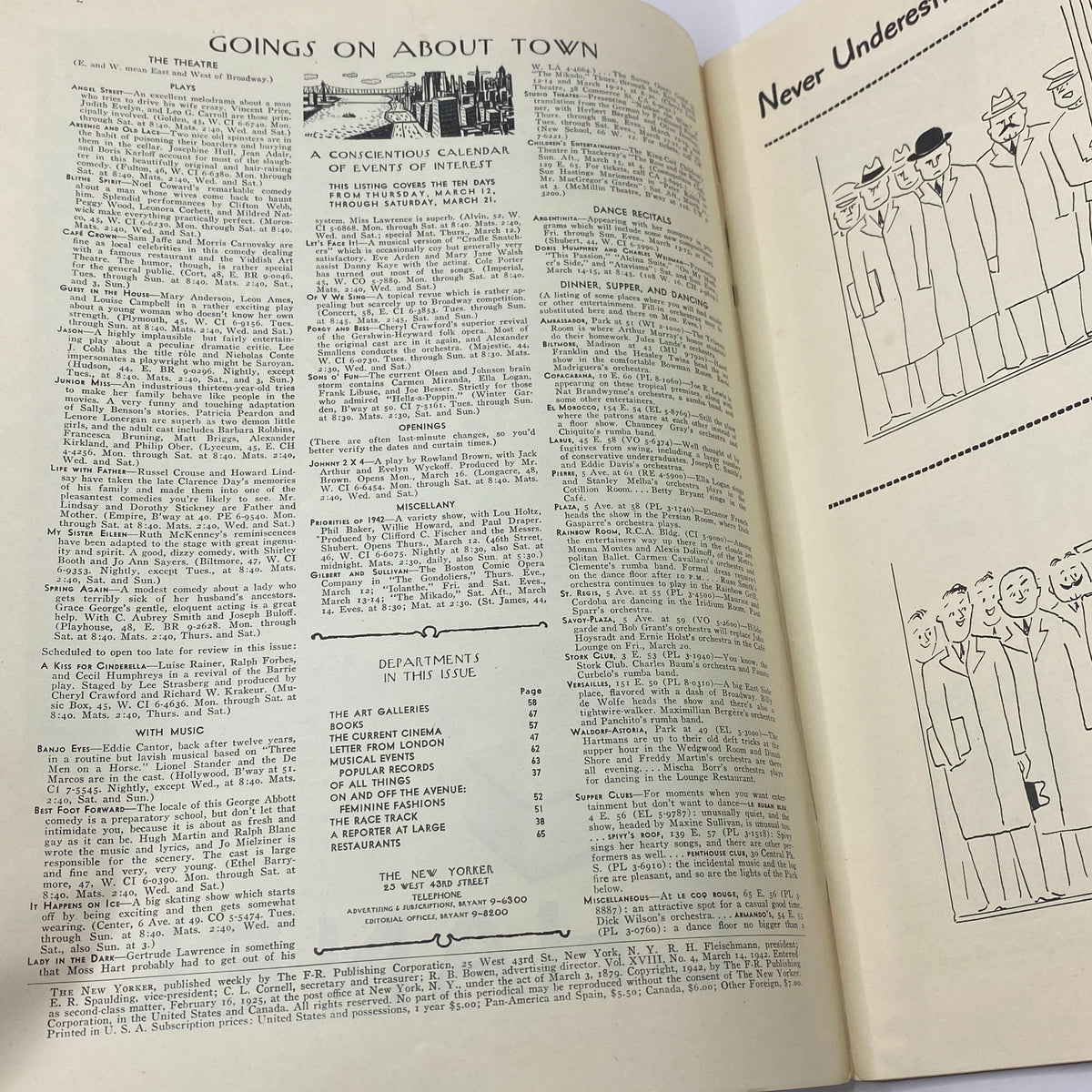
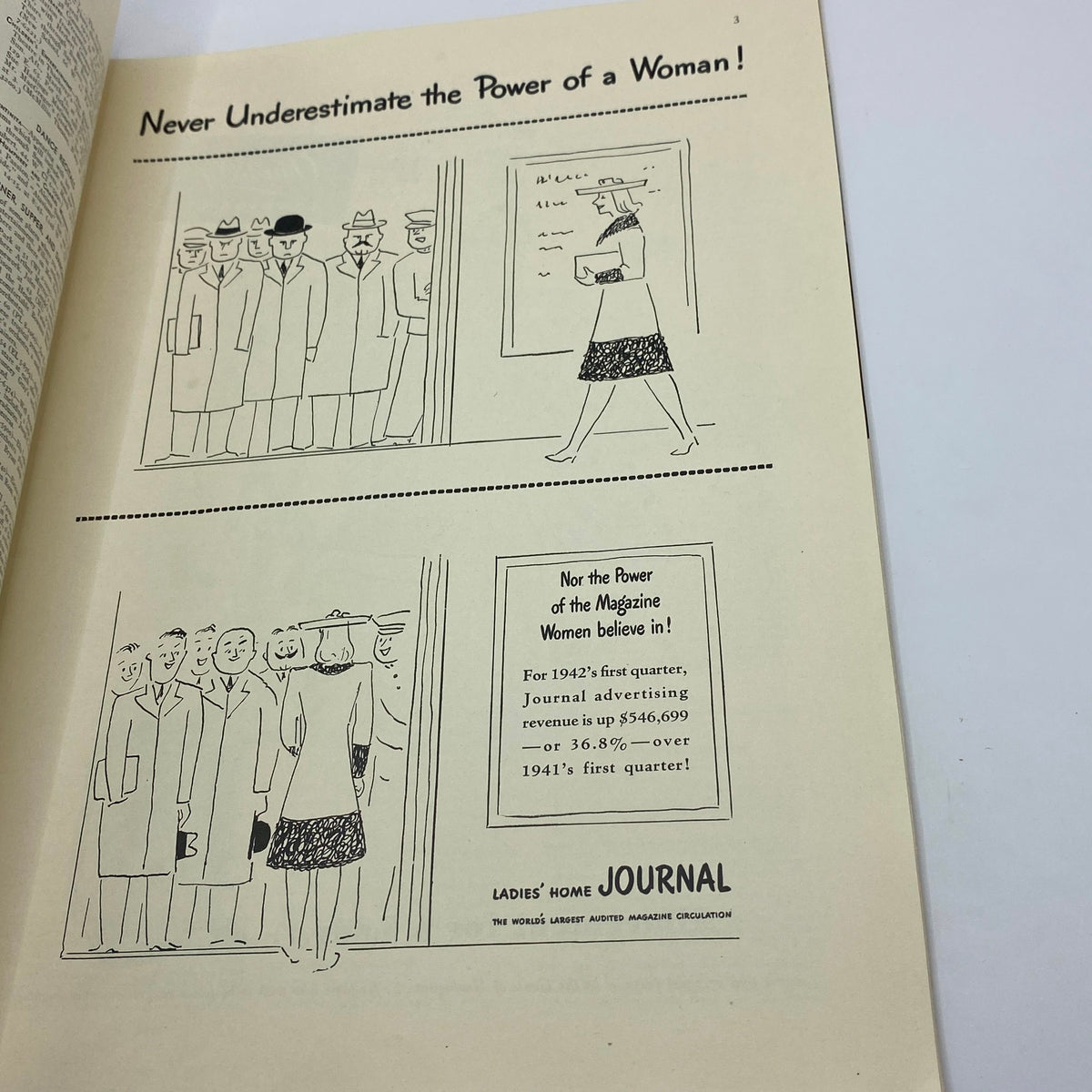
- Period cartoons and advertising: Issues from the spring of 1942 are particularly valued by collectors and cultural historians for the cartoons, illustrations, and advertising that together document the texture of American civilian life at the precise moment the country's entry into World War II was reshaping it.
Note: Specific article titles, bylines, and interior content for this exact issue have not been independently confirmed beyond what appears in the listing. The highlights above reflect only what is verifiable from the cover credit, publication date, and the magazine's well-documented editorial format during this period.
Condition & Rarity
A surviving copy of a weekly newsstand magazine from March 1942 presenting in very good condition — with minor edge wear as the only noted imperfection — is a sound and desirable preservation outcome for a publication now more than eighty years old. The New Yorker was printed on acidic wood-pulp paper stock standard for weekly periodicals of this era, a material inherently prone to toning, brittleness, and structural fatigue over time. Wartime paper quality was additionally affected by material restrictions and rationing that began to influence American publishing in 1942, making well-preserved copies from this period somewhat less common than equivalent grades from the pre-war years. Edge wear of the kind described is entirely consistent with honest age and careful storage. When evaluating any surviving copy of this issue, the meaningful criteria are the integrity and detail fidelity of Petty's intricate cover art, the completeness of all interior pages, the absence of subscription label adhesive residue or moisture damage, and the structural soundness of the spine. A copy meeting the standard described represents the preservation grade that serious collectors of wartime-era periodicals actively seek.
Looking for More Issues Like This?
Mary Petty covers from the early wartime years are among the most atmospherically rich objects in the New Yorker collector market, and this specific March 1942 date — arriving at such a consequential and disorienting moment in American history — makes it a genuinely distinctive find. If it is no longer available, the extensive original New Yorker collection at OriginalMagazines.com is one of the deepest archives of the magazine accessible to serious collectors, spanning many decades of its history. For those drawn to the home front atmosphere of the early war years, the full 1942 magazine collection is worth exploring carefully — it is a year whose historical urgency and human complexity show up on every page of every issue that has survived it.