



Description
Collector's Note – Why This Issue Matters
The March 16, 1963 issue of The New Yorker is a small but precise artifact of the magazine at what many consider its editorial and artistic peak. By 1963, The New Yorker under editor William Shawn had become the most prestigious literary and cultural weekly in America — a publication where the cover art was treated with the same seriousness as the prose inside. This issue's cover was illustrated by Ilonka Karasz, a Hungarian-born designer and illustrator whose relationship with The New Yorker spanned an extraordinary thirty-seven years and nearly two hundred covers. That history alone makes any Karasz-illustrated issue a significant find for collectors focused on the golden era of American magazine cover art.
Karasz brought a distinctly modernist sensibility to her New Yorker work — her covers were often deceptively simple, built from clean geometric forms and an acute sensitivity to seasonal and domestic detail. A mid-March 1963 cover would likely reflect the ambiguous turn from late winter toward early spring that she returned to repeatedly across her career, rendered in her characteristic flat, elegant style. For collectors building a serious archive of The New Yorker's print history, Karasz covers are among the most sought-after, representing a body of work that art historians now recognize as a foundational chapter in American graphic design.
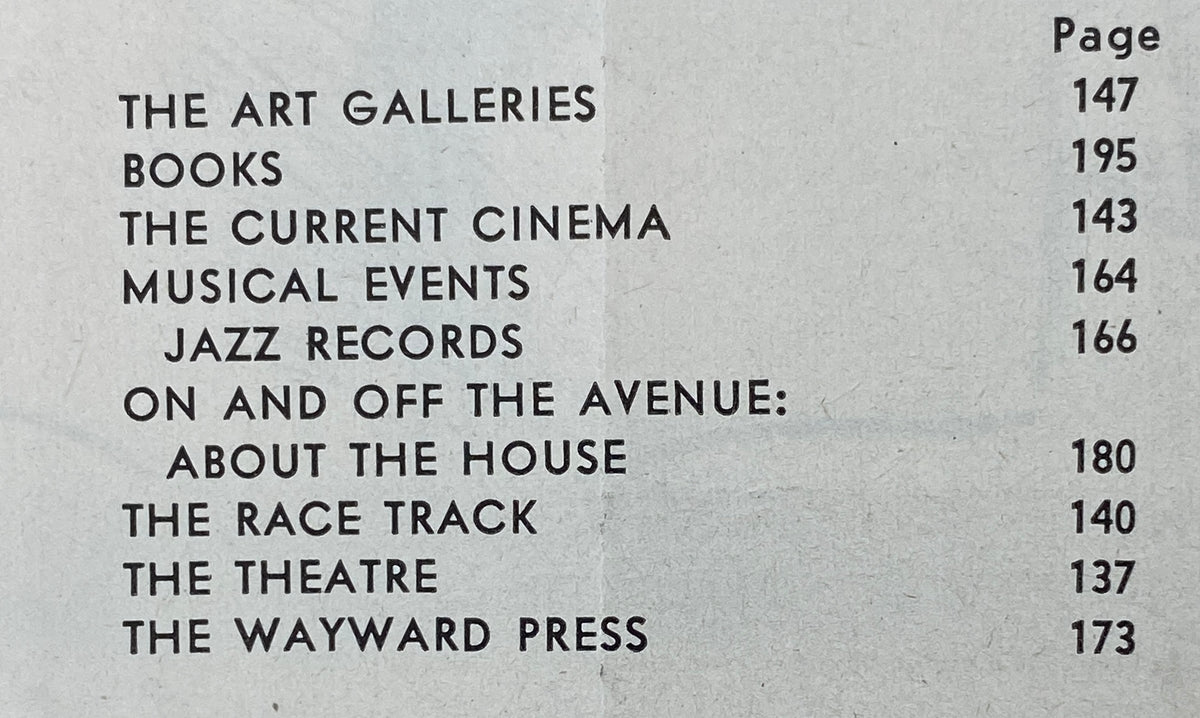
Nineteen sixty-three was also a year of enormous cultural weight in America — the final year before the ruptures of 1964 and beyond, a moment when the magazine's urbane, deeply literary voice still felt like the center of national intellectual life. The interior departments documented in this issue — theatre, cinema, jazz, books, the art galleries — collectively form a detailed register of what serious New York cultural life looked like in early spring of that year. Collectors who focus on this decade will find extensive related material in the 1963 magazine archive at OriginalMagazines.com, which spans the full range of American print culture from that pivotal year.
About the Publication
The New Yorker was founded in 1925 by Harold Ross and by the early 1960s, under William Shawn's editorship, had long since transcended its origins as a humor and entertainment weekly to become the defining journal of American literary culture. Its readership was educated, urban, and culturally engaged — the magazine's audience expected long-form journalism, short fiction of the highest order, poetry, and criticism that took its subjects seriously. The format followed a consistent structure of editorial cartoons, "Talk of the Town" commentary, longer features, and regular critical departments covering theatre, film, music, books, and the visual arts. Its covers, commissioned from a rotating roster of illustrators, were never photographs — always original art, treated as a distinct creative form in their own right.
Key Highlights Inside
- Cover art by Ilonka Karasz — one of the most prolific and celebrated cover artists in The New Yorker's history, whose modernist illustrations for the magazine spanned from 1925 to 1962.
- Theatre criticism beginning on page 137, reflecting the Broadway season of early 1963.
- Film criticism under "The Current Cinema" beginning on page 143, documenting the theatrical releases of mid-March 1963.
- Art gallery reviews beginning on page 147, covering the New York gallery scene during one of the most dynamic periods in postwar American art.
- Musical events coverage beginning on page 164, alongside a dedicated jazz records column on page 166 — a reflection of The New Yorker's serious ongoing engagement with jazz as an art form.
- Book reviews beginning on page 195, and a "Wayward Press" press criticism column on page 173 — one of the magazine's most distinctive and long-running features.
Condition & Rarity
Surviving copies of this issue should be evaluated with attention to the cover art first — Karasz's illustrations reward close inspection, and any fading, foxing, or moisture damage to the cover will diminish both visual and collector value significantly. As with all New Yorker issues from this era, the interior pages were printed on paper stock that ages to a warm cream rather than yellowing aggressively, provided the copy was stored away from direct light and humidity. A protective plastic sleeve, applied early in a copy's storage history, is a meaningful positive indicator for page integrity and cover freshness. Complete, unclipped copies — with no address labels on the cover and all listed interior sections present and intact — represent the standard serious collectors apply to issues from this period. Given Karasz's stature in the history of American illustration, her covers attract interest not only from New Yorker collectors but from graphic design and vintage print art collectors as well, broadening the field of demand for well-preserved copies.
Looking for More Issues Like This?
Ilonka Karasz covers are consistently among the harder finds for New Yorker collectors — her long tenure with the magazine means her work appears across several decades, but well-preserved individual issues still require patience to track down. The full New Yorker collection at OriginalMagazines.com is the best place to browse what's currently available across the magazine's remarkable print history. For collectors assembling a broader portrait of 1963 American culture in print, the 1963 magazine archive offers a wide range of titles from that singular year.