



Description
Collector's Note – Why This Issue Matters
The March 20, 1943 issue of The New Yorker, featuring a cover by William Cotton, is a primary document of the wartime magazine and of a visual artist whose relationship with the publication spans a specific and interesting chapter in the history of American magazine illustration. William Cotton was an American painter and illustrator who contributed covers to The New Yorker across the 1930s and into the 1940s, and his work occupied a distinctive register within the magazine's visual program — sophisticated in its social observation, elegant in its draftsmanship, and attentive to the textures of upper-class American and New York social life in ways that reflected his background as a painter who moved comfortably in those worlds. His covers were among the more formally restrained and visually polished in the magazine's pre- and wartime output, reflecting a sensibility closer to painting than to cartooning, and they provide a specific and identifiable visual perspective on the mid-century American social landscape that complements the more broadly comic approaches of colleagues like Peter Arno or Charles Addams. Collectors building a focused archive of New Yorker wartime cover art will find the New Yorker magazine collection the most comprehensive resource for identifying Cotton covers and other significant complete issues from across the publication's most historically distinguished visual decades.
March 20, 1943 places this issue at a specific and historically significant moment in World War II. American forces were fighting in North Africa, where the Tunisian campaign was in its final phase — the Allied victory would come in May 1943. The planning for the invasion of Sicily was underway. The Soviet Union was beginning the counteroffensives that would follow the catastrophic German defeat at Stalingrad in February. American civilian life in late March 1943 was fully engaged with the war's demands: rationing, war work, military service, and the particular emotional landscape of a nation in its second full spring of global conflict. The New Yorker's editorial program during this period maintained the magazine's characteristic combination of wit, literary quality, and serious journalism, and a complete March 20 issue preserves that full editorial program for this specific week in the war's trajectory. Whatever social observation Cotton chose for this cover, it would have been produced by an artist working within the specific wartime context that shaped all American creative production in 1943. Collectors focused on this period will find that 1943 magazine issues document one of the most historically charged years in American life with a primary source directness that no retrospective account can replicate.
The complete magazine format preserved here is the appropriate framework for understanding this issue's collector and research value. A complete March 20, 1943 New Yorker is not simply a Cotton cover artifact — it is the full editorial program of one of the most respected magazines in American publishing on a specific wartime spring Saturday, including the journalism, fiction, poetry, criticism, and cartoons that its editors assembled for that week's readership. The cover is the visual frame for that complete editorial event, and Cotton's contribution is best understood in the context it was designed to introduce rather than as a standalone object. This is why complete wartime New Yorker issues with named cover artists carry a different and fuller kind of historical significance than cover-only artifacts from the same issues.
About the Publication
The New Yorker was founded in 1925 by Harold Ross and had established itself by 1943 as one of the most culturally significant weekly magazines in the world, combining long-form journalism, fiction, poetry, criticism, and the distinctive visual identity — cartoons, covers, and illustrations — that had made it immediately recognizable to its educated, urban readership. During the World War II years under Harold Ross's editorship, the magazine produced some of the most enduring American journalism of the century while maintaining the wit, sophistication, and commitment to quality that had defined it from its founding. William Cotton's cover contributions during this period were part of the visual diversity that characterized The New Yorker's wartime cover program — an anthology of distinct artistic sensibilities, each bringing its own perspective on American social and cultural life to the magazine's weekly appearance, and collectively constituting one of the most significant bodies of commissioned illustration produced by any American publication during the war years.
Key Highlights Inside
- Cover painting by William Cotton — a primary artifact of this American painter-illustrator's wartime New Yorker cover work, representing a sophisticated visual sensibility attentive to upper-class American social life and formal in its pictorial approach, occupying a distinct register within the magazine's visual program that complements the more broadly comic styles of his contemporaries among the publication's regular cover contributors.
- March 20, 1943 publication date — during the final phase of the North African campaign and the second full spring of American engagement in World War II, placing this issue at a specific moment in the war's trajectory and in the sustained wartime civilian life that defined the daily experience of The New Yorker's readership.
- Complete magazine format — preserving the full editorial program of this specific issue, including whatever journalism, fiction, poetry, criticism, and cartoons The New Yorker assembled for the week of March 20, 1943, providing a complete primary document of the magazine's wartime editorial voice on this specific spring date.
- Good condition for age — an honest assessment for a complete issue now more than eighty years old, indicating the magazine retains its structural integrity and editorial accessibility despite the expected physical aging of paper from this wartime vintage.
- Note: Specific interior article titles, fiction contributors, poetry, criticism, and additional editorial content from this issue are unconfirmed beyond what is indicated by the cover artist, date, and condition description. The above reflects what is verifiable from these attributes and the documented history of William Cotton's New Yorker career and the wartime editorial context of March 1943.
Condition & Rarity
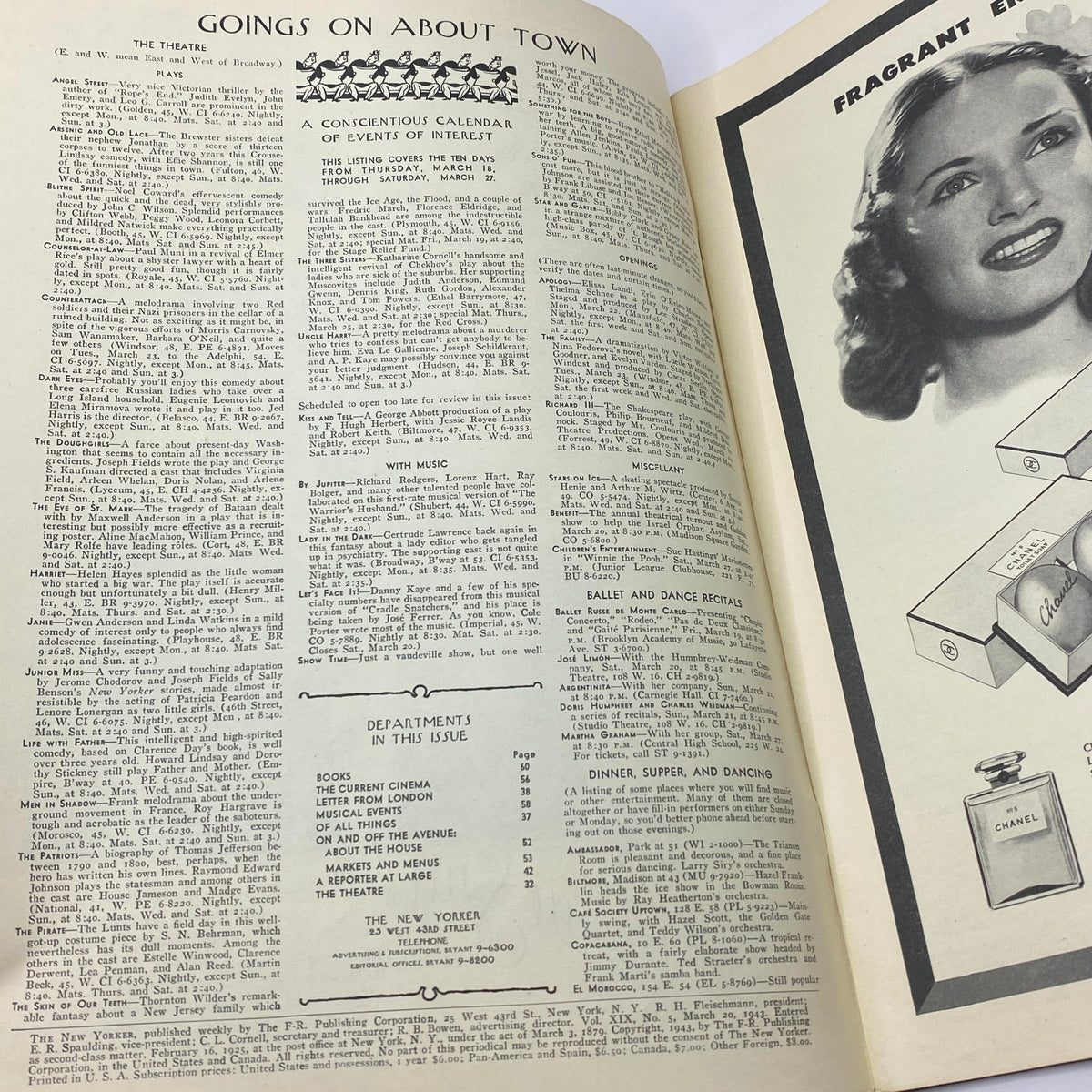
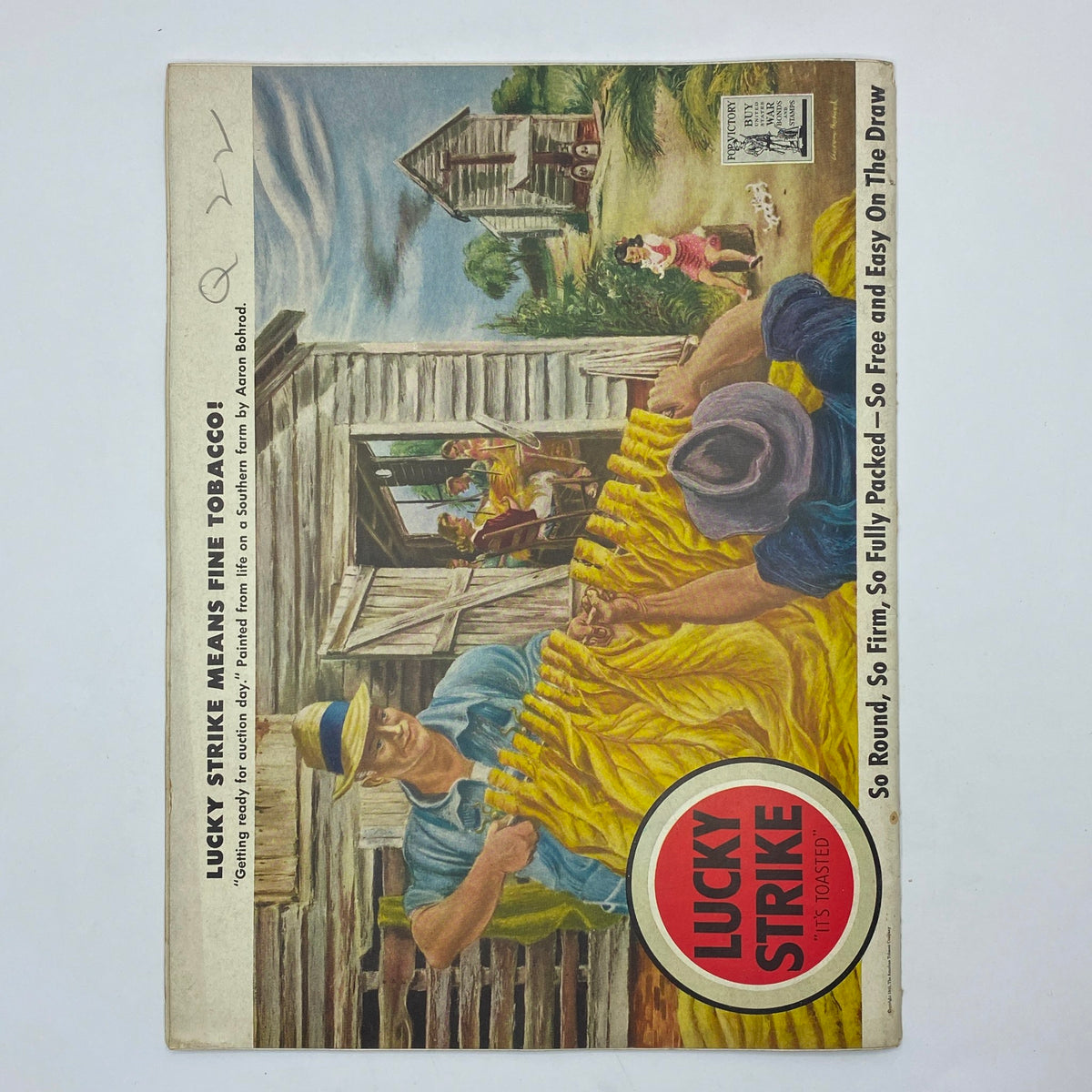
Good condition for age is an honest and appropriate assessment for a complete New Yorker issue from March 1943 now more than eighty years old. Wartime New Yorker issues were produced under paper rationing constraints that affected the stock quality of American magazines during this period, which means 1943 issues are somewhat more physically fragile than their prewar predecessors and have aged accordingly over eight decades of storage. Good condition accurately describes a complete issue that retains its structural integrity, legible cover art, and complete interior editorial content despite the expected yellowing, edge wear, and minor physical deterioration that paper of this age and wartime quality inevitably shows. For collectors of complete wartime New Yorker issues featuring named cover artists whose work spans specific and identifiable chapters of the magazine's visual history, good condition for an eighty-plus-year-old complete magazine is a genuinely preservable primary document whose historical significance is fully intact. Collectors should examine the provided photographs to assess specific condition details relevant to their individual display and research requirements before making decisions about the issue's suitability for their collecting purposes.
Looking for More Issues Like This?
Complete New Yorker issues from the spring of 1943 featuring William Cotton's sophisticated cover work are among the more specifically sought items for collectors interested in the full range of visual artists who contributed to the magazine's wartime program — an often-overlooked category that rewards the collector who moves beyond the most frequently discussed names to explore the full depth of the publication's illustrated history. The broader New Yorker magazine collection is the most reliable starting point for finding other significant complete issues and covers from across the publication's history, including other wartime issues from the early 1940s that document the magazine at its most historically consequential. Collectors building a focused archive of 1943 across American cultural and journalistic publications will find the complete 1943 magazine collection an invaluable resource for locating other titles and issues that document this extraordinary wartime year from the multiple perspectives that serious archival research requires.