




Description
Collector's Note – Why This Issue Matters
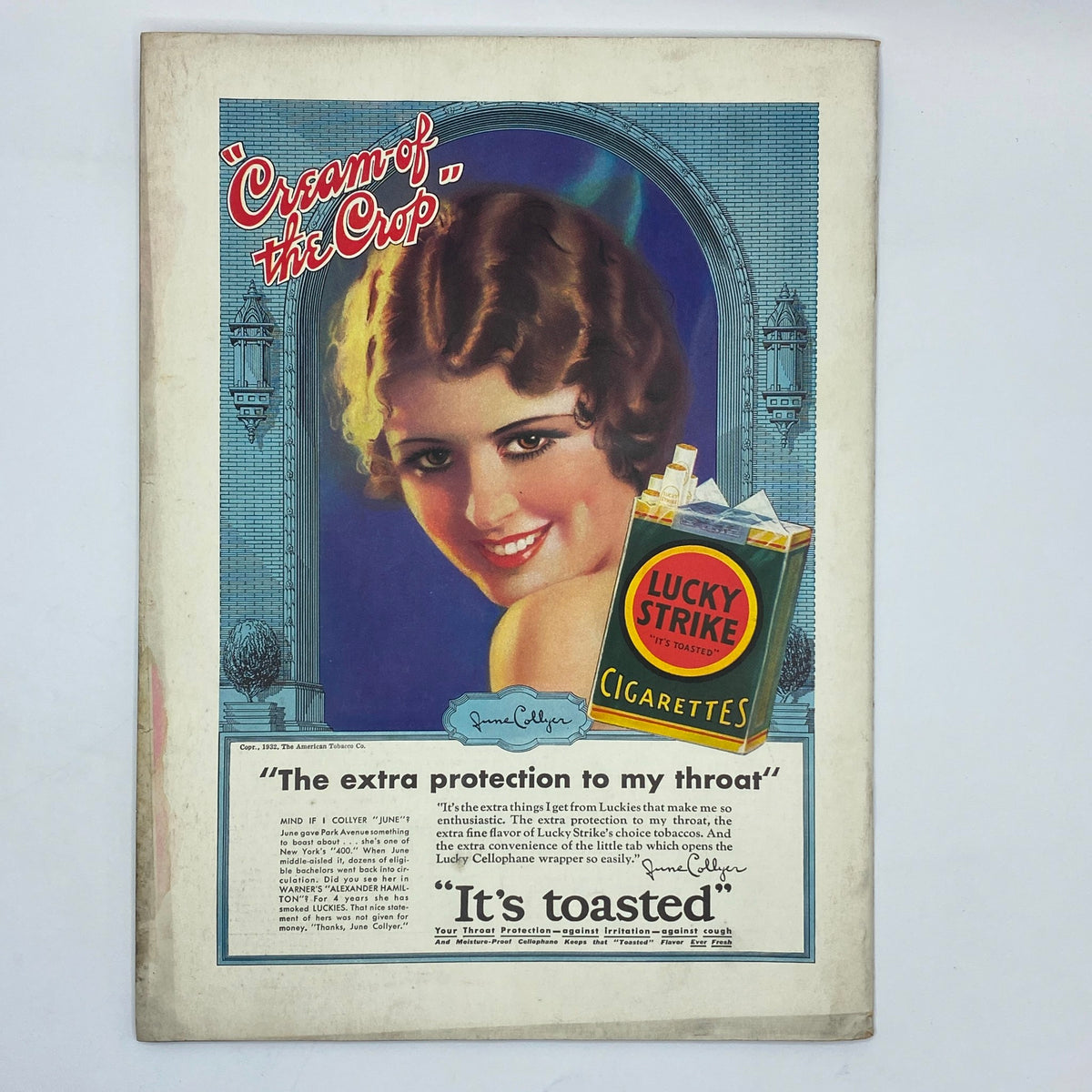
This complete March 5, 1932 issue of The New Yorker features a cover illustration by Leo Rackow, arriving during a particularly significant period in both the magazine's own history and the broader cultural life of New York City. By 1932, The New Yorker had been in publication for roughly seven years, having launched in 1925 under founding editor Harold Ross with the explicit aim of creating a sophisticated weekly that combined urbane humor, serious journalism, fiction, and distinctive cover illustration aimed at a literate metropolitan readership. The magazine's cover tradition, relying entirely on original artwork rather than photography, had already become one of its most recognizable features by this point, and Rackow's contribution to that tradition reflects the kind of whimsical, observational illustration style the magazine consistently favored throughout its early decades.
The early months of 1932 fell within one of the most difficult stretches of the Great Depression, with unemployment and economic hardship deeply affecting New York City and the broader country. A New Yorker cover from this exact period, often noted for its lighter, more whimsical visual sensibility even during periods of national hardship, offers an interesting point of contrast between the publication's characteristic tone and the genuinely difficult economic backdrop against which it was being produced and sold. The magazine's continued weekly publication throughout this period reflects its established readership base among New York's literate, culturally engaged population, even as the broader economic environment placed significant strain on publishing and consumer spending more generally.
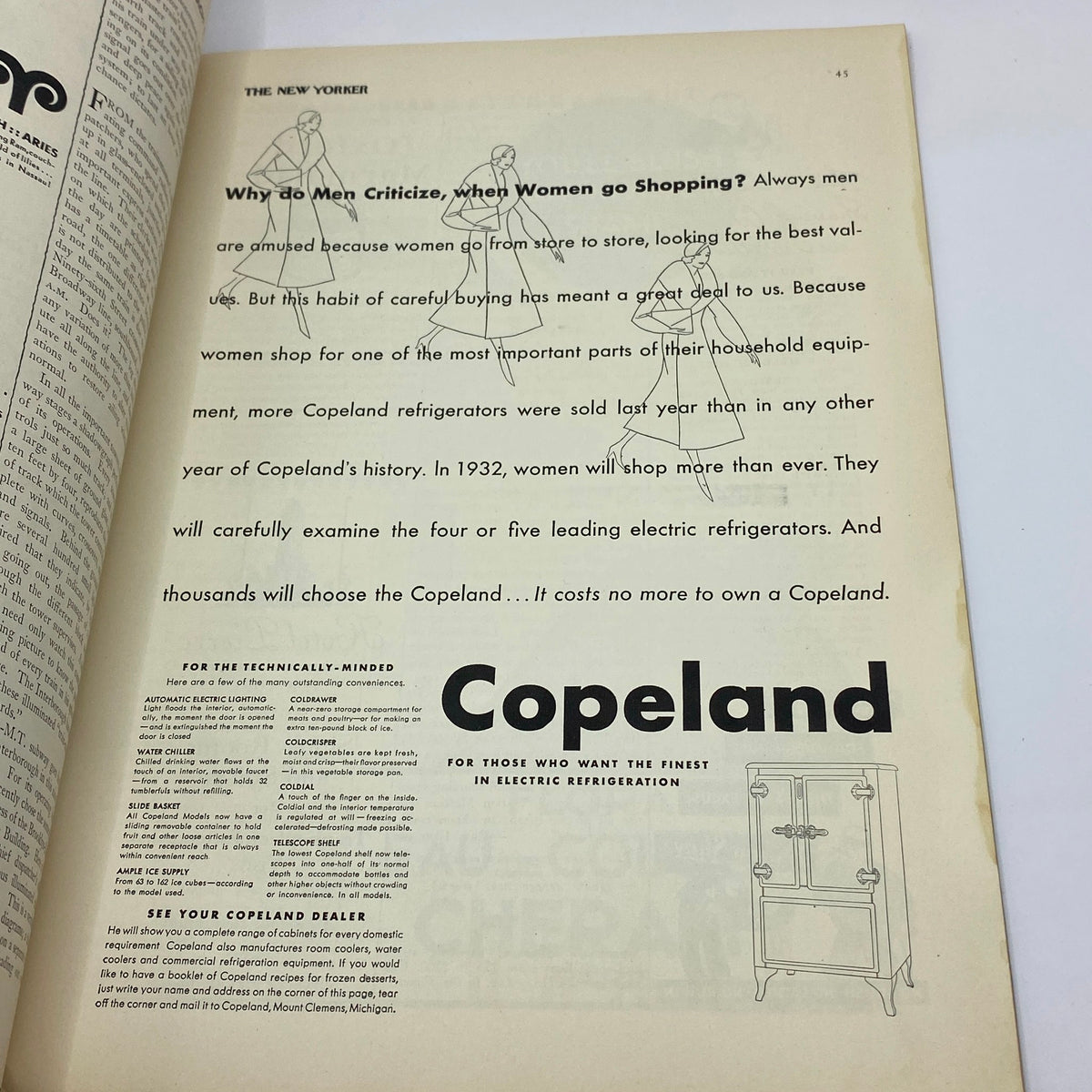
This issue's status as a complete magazine, rather than a cover-only example, means it preserves The New Yorker's full early-1930s editorial format, including its characteristic blend of "Talk of the Town" front-of-book material, fiction, criticism, and cartoons alongside Rackow's cover illustration. The magazine's early-1930s content reflected the editorial voice Harold Ross had spent the prior several years cultivating, marked by a distinctive combination of wit, sophistication, and genuine literary ambition that distinguished The New Yorker from more conventional general-interest magazines of the period. A complete issue from this era offers collectors and researchers a fuller picture of that editorial approach than cover art alone can provide.
For collectors of early-1930s American magazine history, this issue offers a richly preserved artifact from a formative period in both The New Yorker's own publishing history and the broader cultural backdrop of Depression-era New York. It sits within the context of 1932 magazines and the long editorial run of The New Yorker itself, situating this issue within both a precise calendar moment and a particularly significant chapter of the magazine's overall history. Its completeness as a full issue, combined with Rackow's credited cover artwork, gives it genuine standalone value for collectors focused on this era of the magazine's development.
About the Publication
The New Yorker was founded in 1925 by Harold Ross and Jane Grant, conceived from the outset as a sophisticated weekly aimed at an urbane, literate readership rather than a mass-market audience. Its editorial format combined long-form journalism, fiction, poetry, and criticism with a distinctive visual identity built around original cover illustration and single-panel cartoons, a structure already firmly established by the time of this March 1932 issue. Unlike most general-interest magazines of its era, The New Yorker rarely used cover photography or cover text, relying instead on commissioned artwork to convey mood, season, or commentary without a single word of explanation, a tradition reflected directly in Leo Rackow's contribution to this issue. By the early 1930s, the magazine had built a roster of contributing illustrators and writers whose work was instrumental in establishing the publication's lasting reputation for wit and literary sophistication, even as the broader American economy struggled through the early years of the Great Depression. Editorially, each issue followed a consistent rhythm of opening "Talk of the Town" pieces, feature journalism or fiction, criticism, and cartoons interspersed throughout, a structure that remained largely stable even during this economically difficult period. This March 5, 1932 issue would have followed that same established format, combining Rackow's cover illustration with the magazine's characteristic blend of urbane commentary and serious literary content.
Key Highlights Inside
- A full cover illustration credited to Leo Rackow, reflecting The New Yorker's longstanding tradition of commissioning original artist-driven cover designs rather than relying on photography or cover text. Rackow's contribution fits within the magazine's characteristic whimsical, observational illustration style. This cover represents the issue's primary visual identifier within the magazine's broader early-1930s output.
- Complete magazine content, including the full range of editorial material typical of The New Yorker's early-1930s format, such as front-of-book "Talk of the Town" pieces, fiction, criticism, and cartoons. This completeness distinguishes the issue from cover-only examples, preserving the magazine's full editorial structure from this period. Specific named articles, authors, or cartoonists featured in this particular issue are not detailed in available listing information.
- Publication during a particularly difficult early stretch of the Great Depression, offering an interesting point of contrast between the magazine's characteristically light, sophisticated tone and the genuinely challenging economic backdrop of early 1932. This timing situates the issue within a historically significant period for both New York City and the broader American economy. The issue's specific editorial response, if any, to contemporary economic conditions is not detailed in available listing information.
- Placement within The New Yorker's seventh year of continuous weekly publication, reflecting the magazine's established editorial voice under founding editor Harold Ross by this point in its history. This issue captures the publication operating within a well-developed version of its now-iconic editorial format. Its dating offers collectors a precise chronological reference point within the magazine's broader early publishing history.
Condition & Rarity
Condition for a complete magazine of this age, now approaching a century old, is generally assessed through binding integrity, page completeness, cover and interior paper condition, and the overall legibility of printed text and illustration. A copy described as good condition despite its age, with notable preservation through the decades, reflects a meaningfully strong outcome for a periodical surviving from the early 1930s, given that paper stock from this period was not designed with long-term archival stability in mind. Binding integrity is a particularly important factor for a complete magazine of this vintage, since a fully intact issue, with all interior pages present and securely bound, carries considerably more reference and display value than a partial or loose-paged example. Cover condition also matters significantly for an issue valued in part for its credited Leo Rackow illustration, with strong color retention and minimal creasing or soiling preserving the visual impact of the original artwork. Surviving complete magazines from the early 1930s are generally considered more difficult to find in strong condition than later decades' issues, given the additional decades of potential wear, handling, and storage risk involved. Collectors evaluating any surviving copy of this issue should weigh overall structural completeness, binding security, and cover clarity as the primary indicators of long-term collectible and reference value, referring closely to available photographs for a precise assessment of the specific item's condition.
Looking for More Issues Like This?
A complete New Yorker issue from as early as 1932, featuring a credited cover artist like Leo Rackow, represents a genuinely significant category of early American magazine collecting, given how few periodicals from this period survive intact nearly a century later. If this exact March 1932 issue isn't what you're looking for, the broader New Yorker collection spans material from across the magazine's long publishing history, offering a wider range of issues, cover artists, and editorial eras for collectors interested in the title's overall legacy. For those more focused on this specific year, the full range of 1932 magazines brings together material from across that year, spanning multiple publications beyond The New Yorker alone. Browsing the New Yorker collection can be especially useful for collectors building a set around specific cover artists or specific decades of the magazine's early editorial history. Browsing by year, on the other hand, suits collectors more interested in capturing a broader cultural snapshot of 1932 across different types of periodicals. Either approach offers a practical way to continue exploring material connected to this issue's particular combination of era and editorial identity. Both collections represent solid starting points for finding comparable issues from this formative period in The New Yorker's publishing history.