





Description
Collector's Note – Why This Issue Matters
The March 9, 1929 issue of The New Yorker arrives at a fascinating crossroads in American cultural history. The United States was in the final, giddy months of the Roaring Twenties — just seven months before the stock market crash of October 1929 would bring the era to an abrupt and devastating close. The magazine that landed on newsstands that week was, in many ways, a document of peak Jazz Age confidence: urbane, witty, and visually bold. Collectors drawn to 1929 magazines will find this issue particularly resonant, sitting as it does on the cusp of one of the most dramatic turning points in modern American life.
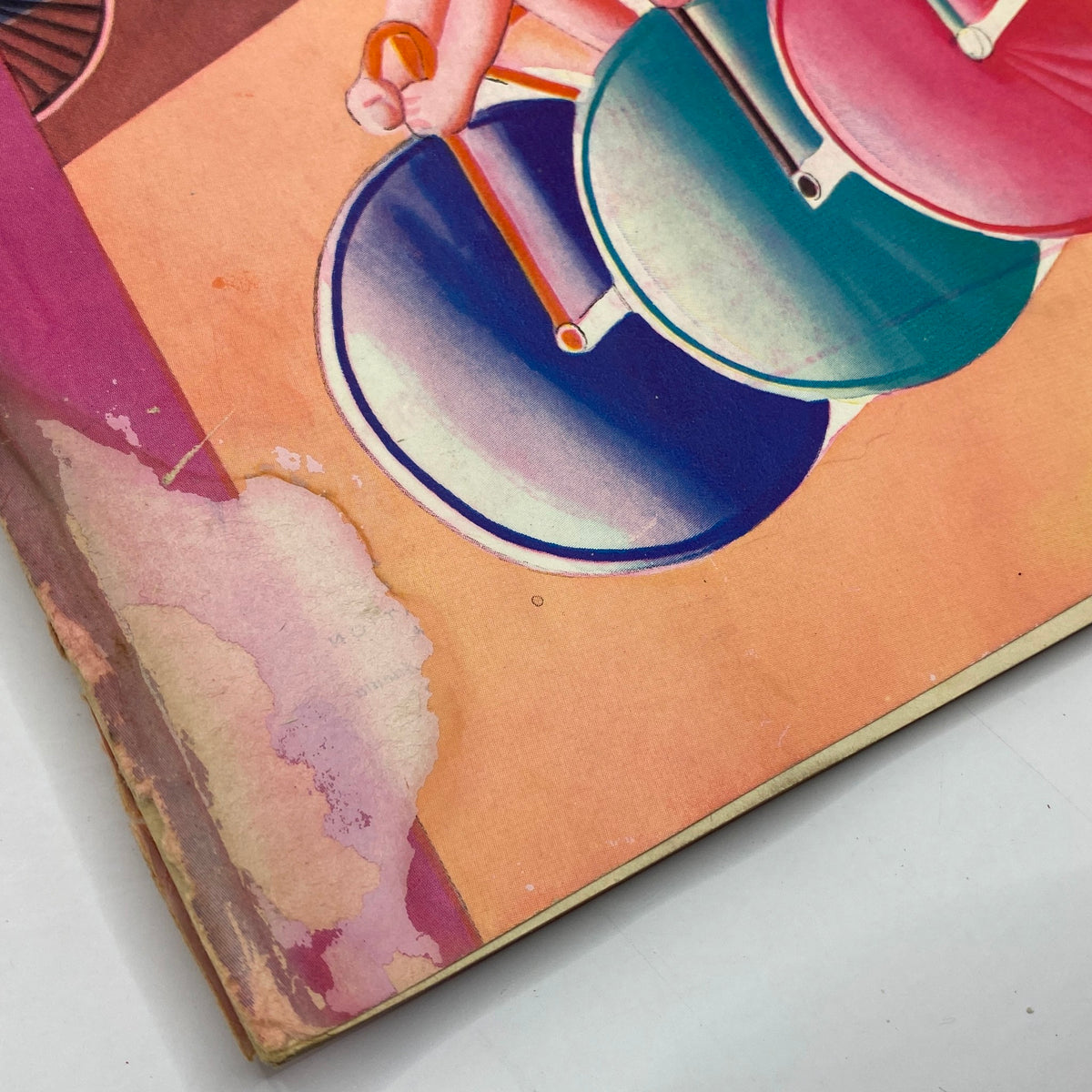
The cover is the work of Theodore Haupt, one of the more distinctive contributors to The New Yorker's visual identity during the late 1920s. Haupt's approach drew heavily from the modernist and Art Deco currents sweeping through commercial illustration at the time — dynamic geometry, flattened forms, and a graphic sensibility that felt genuinely new. His covers for the magazine during this period helped establish the publication's reputation as a home for serious visual art, not merely editorial decoration. For anyone building a focused collection around The New Yorker's early artistic legacy, a Haupt cover issue from 1929 represents exactly the kind of artifact that anchors that story.
It is worth remembering that The New Yorker was itself still a young publication in March 1929 — founded only in February 1925 by Harold Ross. These early years were formative ones, during which the magazine was actively defining what it would become: its voice, its contributors, its visual language. An issue from this period is not merely vintage ephemera. It is primary source material for understanding how one of the most influential American magazines of the twentieth century found its identity.
About the Publication
The New Yorker launched in 1925 under editor Harold Ross with a stated mission to serve a sophisticated metropolitan readership — specifically, as Ross famously put it, not the "old lady in Dubuque." From its earliest issues, the magazine distinguished itself through a combination of sharp humor, serious journalism, short fiction, poetry, and a commitment to cover art as genuine visual expression rather than mere decoration. By 1929, it had attracted a roster of writers and illustrators who would define American letters for decades, and its weekly format meant each issue was a complete snapshot of the cultural moment. Its audience was educated, urban, and attuned to both the arts and current affairs — a readership that the magazine's editorial voice consistently treated as intelligent equals.
Key Highlights Inside
- A Theodore Haupt cover rendered in the geometric, modernist style characteristic of his late-1920s contributions to the magazine — a strong example of Art Deco influence on American commercial illustration.
- Period advertising throughout the issue, which for collectors and historians functions as a primary record of consumer culture, brand aesthetics, and commercial illustration in pre-Depression America.
- Editorial cartoons and spot illustrations typical of The New Yorker's format in this era, reflecting the graphic sensibility the magazine was actively developing under Harold Ross's editorship.
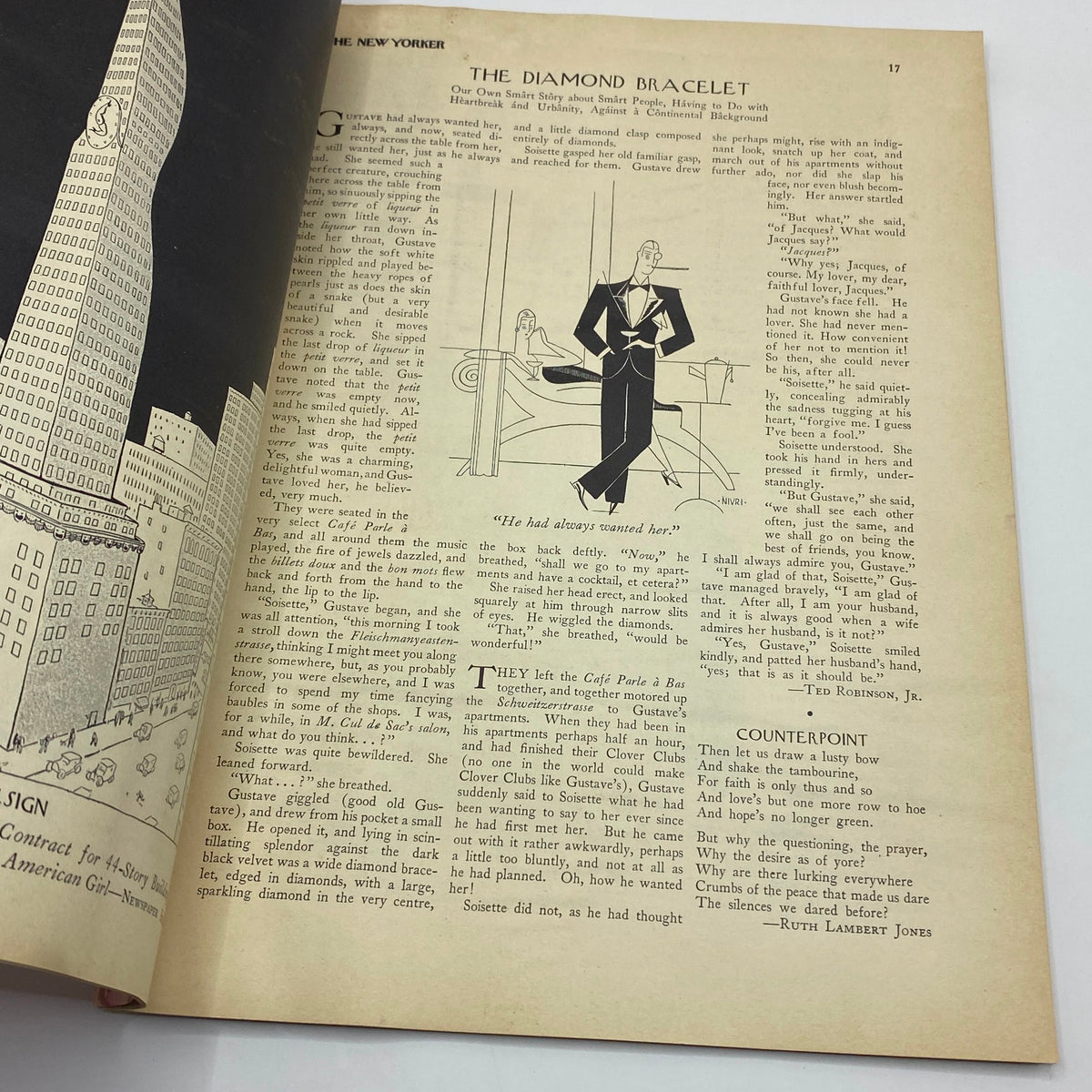
- Written content consistent with the magazine's 1929 editorial range — short fiction, criticism, commentary, and the "Talk of the Town" column that had become a signature feature of the publication by this point.
- Note: Specific article titles and interior features for this individual issue have not been independently confirmed. The highlights above reflect the verified format and editorial character of The New Yorker during this period.
Condition & Rarity
The listing describes this issue as in good condition for its age — a meaningful designation for a weekly newsprint publication nearly a century old. Magazines of this era were printed on acidic wood-pulp paper and were never intended for long-term preservation; most copies were discarded, damaged, or lost within years of publication. Surviving issues from The New Yorker's 1925–1930 run are genuinely scarce, and those that have held together structurally — retaining cover integrity, legible interior pages, and reasonable color — represent only a small fraction of original print runs. When evaluating any copy of this issue, the key attributes to assess are spine integrity, cover attachment, absence of significant foxing or moisture damage, and whether the cover art retains readable contrast and color. A complete, unrestored copy from 1929 that has remained intact without label adhesion or heavy subscription markings carries meaningful premium over reading copies in the collector market.
Looking for More Issues Like This?
Early The New Yorker issues from the late 1920s are among the more difficult finds in vintage magazine collecting — patient searching is usually required. If this particular issue is unavailable, the broader The New Yorker collection at OriginalMagazines.com is one of the most extensive available anywhere, with holdings spanning decades of the publication's run. For collectors focused specifically on the pre-Depression era, browsing the full 1929 magazine archive will surface other issues and titles that document the same remarkable cultural moment this issue represents.