


Description
Collector's Note – Why This Issue Matters
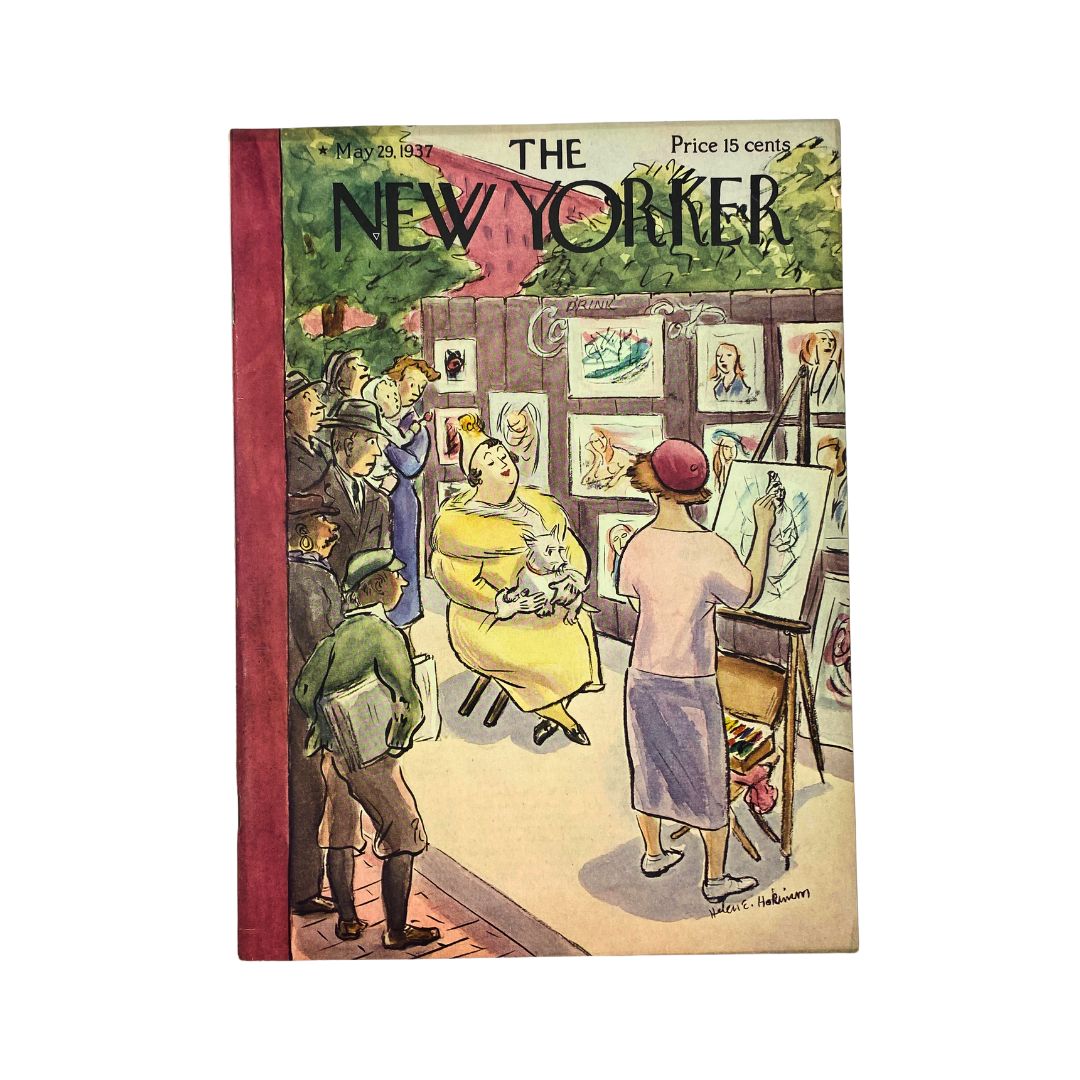
The May 29, 1937 issue of The New Yorker with a cover by Helen E. Hokinson is a document of one of the magazine's most beloved and historically significant artistic contributors at the height of her creative powers. Hokinson joined The New Yorker in its very first year — 1925 — and her cartoons and cover illustrations became among the most recognized and affectionately regarded work the magazine ever published. Her particular subject was the American clubwoman: the middle-aged, middle-class woman of comfortable means who participated in garden clubs, civic organizations, department store sales, and the social rituals of respectable urban and suburban life. Hokinson depicted these women with a combination of gentle satire and genuine warmth that never tipped into cruelty, and that balance gave her work a quality that readers found both funny and humanizing. By May 1937, she had been contributing to the magazine for twelve years and was at full creative maturity, her visual shorthand for the clubwoman type so thoroughly established that a single cover image could communicate an entire social world. For collectors who trace the magazine's artistic contributors across its long history, Hokinson's work represents one of its defining visual signatures, and the full range of issues featuring her contributions is documented throughout the New Yorker collection at OriginalMagazines.com.
The historical context of May 1937 adds its own layer of significance to this issue. The month of May 1937 was one of the most eventful in the decade: the Hindenburg disaster occurred on May 6, 1937 — just three weeks before this issue's cover date — when the German airship exploded while attempting to dock in Lakehurst, New Jersey, killing thirty-six people and ending the era of commercial airship travel in a single catastrophic moment captured by radio and newsreel. The Spanish Civil War continued its devastating course. Roosevelt's court-packing controversy was still consuming Washington. George VI's coronation took place on May 12. The world that Hokinson's cover subjects inhabited — the world of civic clubs, department stores, and comfortable social routines — was the same world that processed all of these events through the newspaper, the radio, and the weekly magazine. A Hokinson cover from May 1937 documents that particular American domesticity at a moment of genuine historical turbulence, and the juxtaposition is part of what makes The New Yorker's covers from this period such interesting historical artifacts. The broader cultural and historical landscape of this pivotal year is documented in the 1937 magazines collection.
About the Publication
The New Yorker was founded in New York in 1925 by Harold Ross with the explicit intention of creating a magazine of sophisticated urban wit and literary quality aimed at a cosmopolitan readership rather than the rural mainstream. Helen E. Hokinson was among the founding generation of contributors, joining the magazine in its first year and remaining one of its most recognizable voices until her death in 1949. By May 1937, the magazine had been publishing for twelve years and had firmly established its editorial identity, with Hokinson's work representing one of its most distinctive and beloved recurring visual elements. Its format combined long-form journalism, short fiction, poetry, and cultural criticism with the "Talk of the Town" section, cartoons, and the weekly cover — the last of which Hokinson contributed to regularly across her twenty-four-year association with the publication.
Key Highlights Inside
- Helen E. Hokinson cover art — A cover by one of The New Yorker's most beloved and historically significant illustrators, produced in her twelfth year at the magazine at the full height of her creative maturity, and representing her characteristic warm satirical depiction of American clubwomen and social life.
- May 1937 historical context — Published three weeks after the Hindenburg disaster and during the ongoing controversy over Roosevelt's court-packing plan, the issue documents the magazine's characteristic blend of urbane wit and cultural engagement during a period of genuine national and international turbulence.
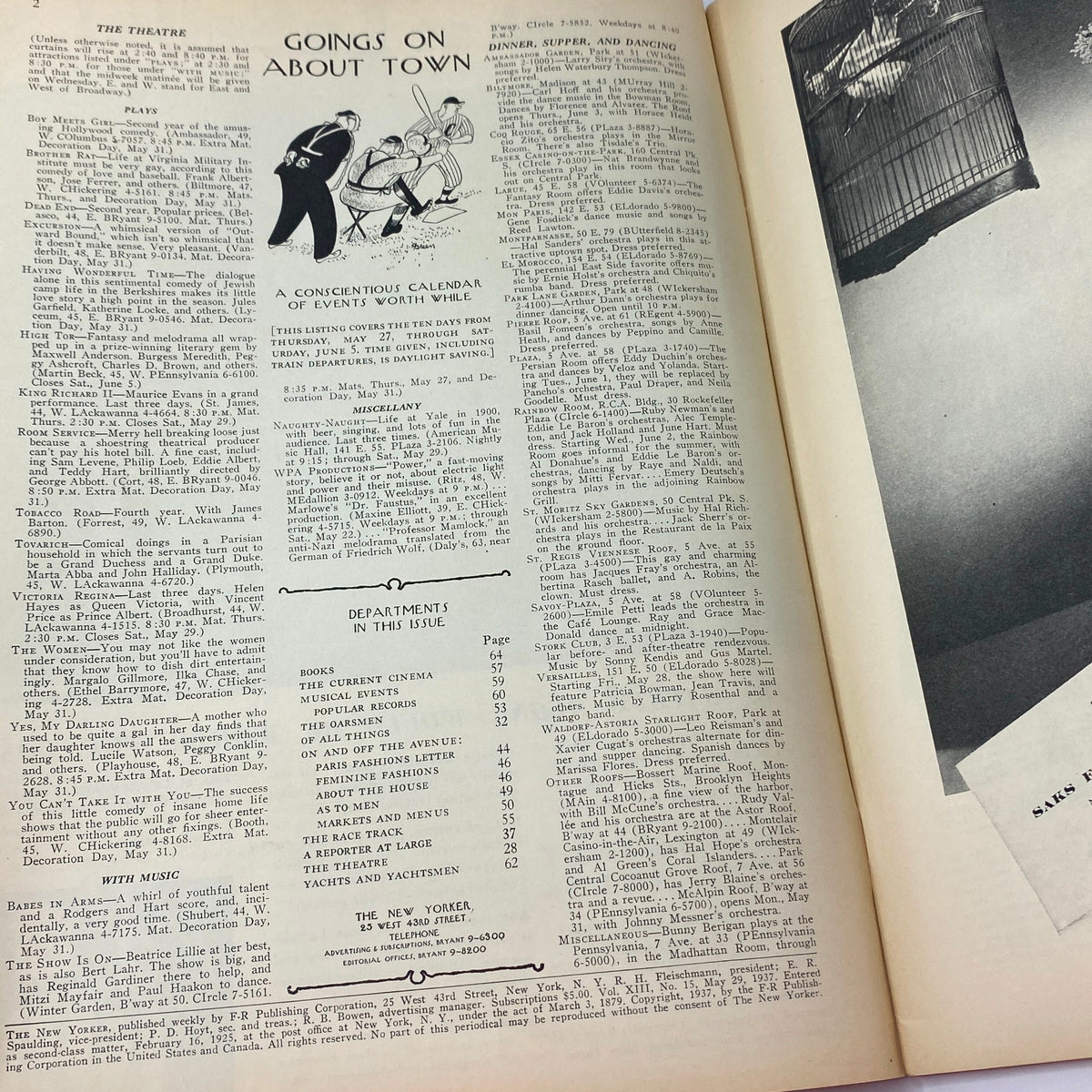
- Late Depression-era literary and editorial content — Consistent with the magazine's well-documented format of this period, the issue would have included short fiction, poetry, cultural criticism, Talk of the Town observations, and cartoons from the roster of contributors who defined the magazine's 1930s golden period.
- Note: Specific interior article titles, fiction contributors, and additional content have not been independently confirmed for this issue. The highlights above reflect the well-documented editorial format of The New Yorker during this period and the verifiable identity of the cover artist and historical moment.
Condition & Rarity
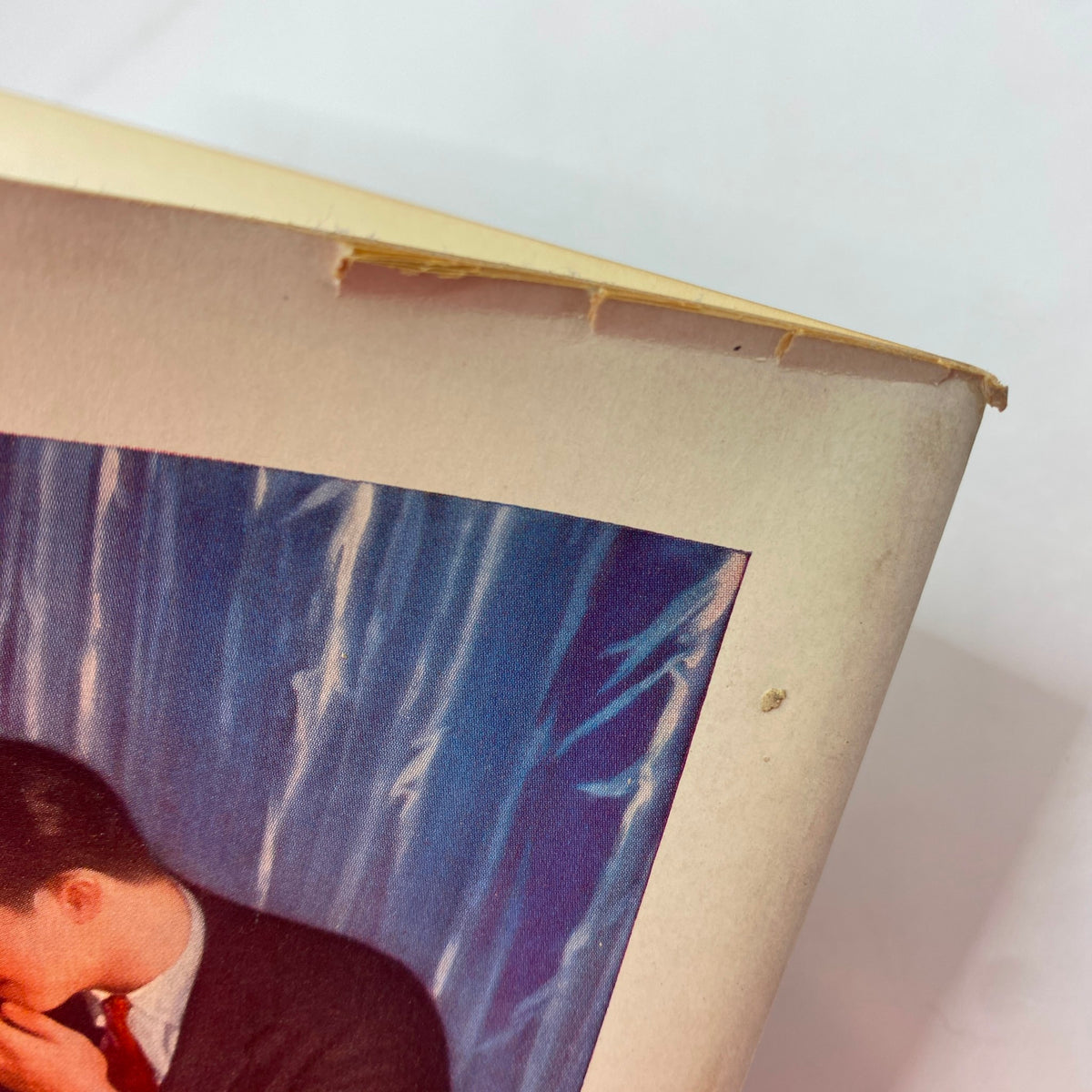
Issues of The New Yorker from May 1937 are eighty-eight years old, and the paper stock used in the magazine's weekly production during this era was not manufactured with archival longevity in mind. When evaluating any surviving copy of this issue, the attributes that matter most to serious collectors are the condition of the Hokinson cover art — its color integrity, surface cleanliness, and freedom from significant staining, tearing, or fading — the structural integrity of the spine and staple binding, and the completeness of interior pages. The good condition noted for a publication of this age indicates a survivor in the better range of what typically circulates for late-1930s New Yorker issues. The natural wear described in the listing is an honest characterization of authentic age patina on an eighty-eight-year-old weekly periodical and does not meaningfully diminish the issue's collectible or historical value. Hokinson's covers are among the most recognizable in the magazine's history, and the quality and integrity of her cover image is the primary condition variable collectors should assess through available photographs.
Looking for More Issues Like This?
Issues of The New Yorker featuring Helen E. Hokinson covers are among the most warmly sought-after in the publication's long history, and the May 29, 1937 issue captures her work at full maturity during one of the decade's most historically charged months. If it is currently unavailable, the New Yorker collection at OriginalMagazines.com is the best place to browse what has recently surfaced from across the magazine's remarkable publishing run. Collectors with a broader interest in the print culture of this pivotal prewar year should also explore the 1937 magazines collection for a wider view of American media during one of the 1930s' most turbulent and consequential years.