


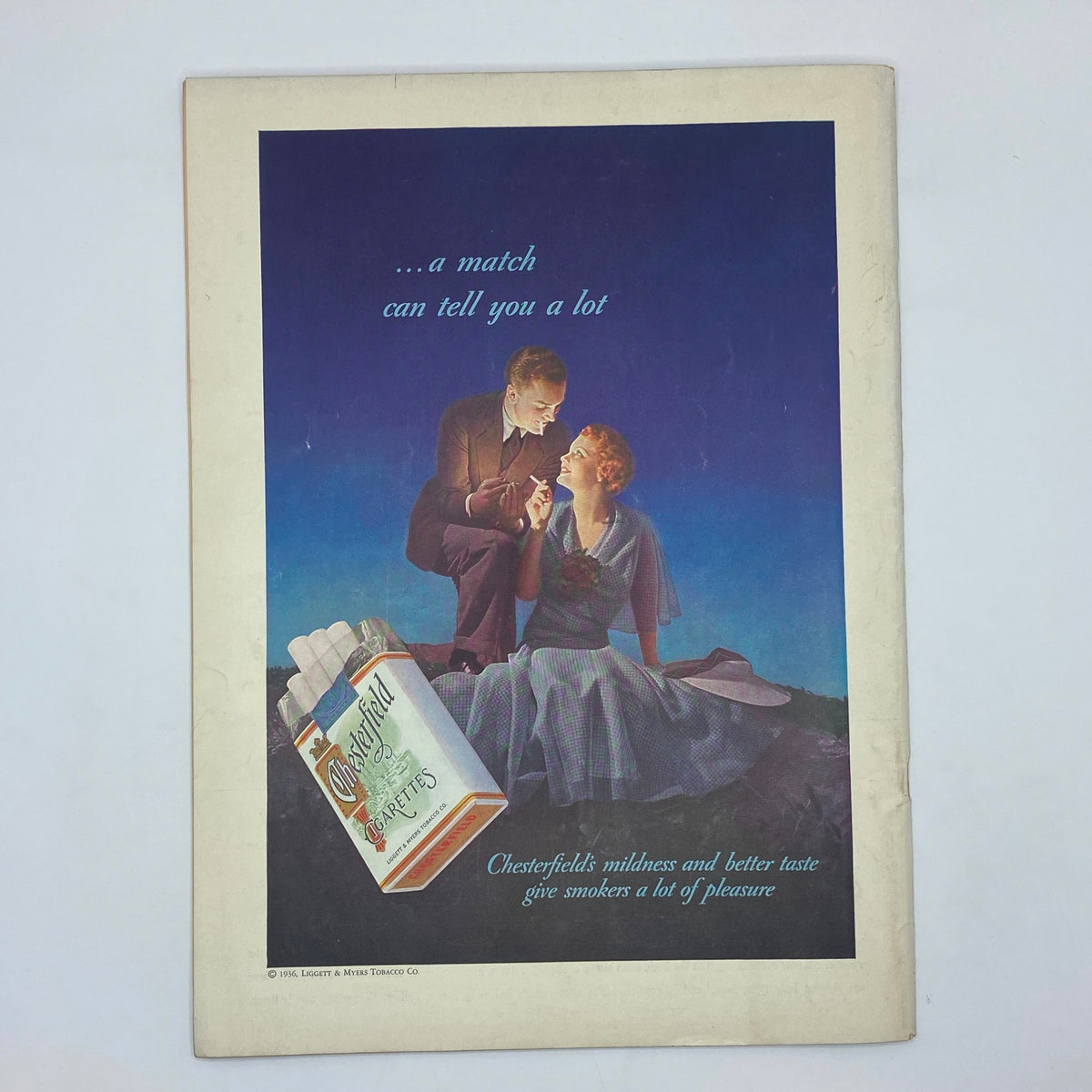


Description
Collector's Note – Why This Issue Matters
This complete May 30, 1936 issue of The New Yorker features a cover by Rea Irvin, a figure whose influence on the magazine extended far beyond any single illustration. Irvin served as The New Yorker's first art director, a role he took on at the magazine's founding in 1925, and in that capacity he was directly responsible for establishing much of the visual identity that would come to define the publication for decades afterward. Most notably, Irvin created Eustace Tilley, the dandyish, monocled figure who appeared on the magazine's very first cover in 1925 and became one of the most enduring mascots in American magazine publishing. He is also credited with designing the distinctive typeface used in The New Yorker's logo, a design element that has remained largely unchanged across the magazine's entire publishing history. A cover from 1936, more than a decade into his tenure shaping the magazine's look, reflects Irvin's work at a point when the visual language he had created was already firmly established as inseparable from the publication's identity.
The mid-1930s found The New Yorker operating with a thoroughly developed editorial and visual voice, the direct result of Irvin's foundational work alongside founding editor Harold Ross during the magazine's earliest years. By 1936, the publication had survived the most difficult years of the Great Depression while maintaining the sophisticated, urbane tone that had distinguished it from its competitors since its 1925 launch. Irvin's continued involvement in the magazine's cover art during this period reflects the lasting influence of his original design vision, even as a growing roster of other illustrators contributed their own distinctive covers alongside his throughout the 1930s.
This issue's status as a complete magazine, rather than a cover-only example, means it preserves the full breadth of The New Yorker's mid-1930s editorial content alongside Irvin's cover art, including the magazine's characteristic "Talk of the Town" front-of-book section, fiction, criticism, and cartoons. Given Irvin's foundational role in shaping the magazine's overall visual and editorial sensibility, a complete issue featuring his cover work offers a particularly direct connection between his original creative vision and the fully realized publication it helped produce by the mid-1930s.
For collectors of early American magazine and design history, this issue offers a meaningful artifact connecting one of the most historically significant figures in The New Yorker's visual development to a specific, dated moment within the magazine's broader publishing history. It sits within the context of 1936 magazines and the long editorial run of The New Yorker itself, situating this issue within both a precise calendar moment and a foundational chapter of the magazine's overall visual identity. Its completeness as a full issue, combined with its credited Irvin cover, gives it genuine standalone interest for collectors focused on the magazine's earliest design history.
About the Publication
The New Yorker was founded in 1925 by Harold Ross and Jane Grant, conceived from the outset as a sophisticated weekly aimed at an urbane, literate readership rather than a mass-market audience. Its editorial format combined long-form journalism, fiction, poetry, and criticism with a distinctive visual identity built around original cover illustration and single-panel cartoons, a structure shaped in large part by Rea Irvin, who served as the magazine's first art director starting at its 1925 founding. Irvin's contributions during this foundational period included creating Eustace Tilley, the magazine's enduring mascot figure, and designing the distinctive logo typeface that has remained associated with the publication throughout its entire history. By the mid-1930s, reflected in this May 1936 issue, the magazine had built on that foundational visual identity to establish a reputation for combining wit, sophistication, and literary ambition that distinguished it from more conventional general-interest publications of the period. Editorially, each issue followed a consistent rhythm of opening "Talk of the Town" pieces, feature journalism or fiction, criticism, and cartoons interspersed throughout, a structure that had become firmly established by this point in the magazine's history. This May 30, 1936 issue would have followed that same established format, combining Irvin's cover illustration with the magazine's characteristic blend of urbane commentary and serious literary content.
Key Highlights Inside
- A full cover illustration credited to Rea Irvin, The New Yorker's first art director and the figure most directly responsible for establishing the magazine's foundational visual identity. Irvin's work at the magazine dates back to its 1925 founding. This cover reflects his continued creative involvement more than a decade into the publication's history.
- Complete magazine content, including the full range of editorial material typical of The New Yorker's mid-1930s format, such as front-of-book "Talk of the Town" pieces, fiction, criticism, and cartoons. This completeness distinguishes the issue from cover-only examples, preserving the magazine's full editorial structure from this period. Specific named articles, authors, or cartoonists featured in this particular issue are not detailed in available listing information.
- Connection to Irvin's broader legacy as the creator of Eustace Tilley, The New Yorker's iconic mascot figure who first appeared on the magazine's debut cover in 1925. This issue situates Irvin's later cover work within the context of that foundational visual legacy. Eustace Tilley remains one of the most recognizable figures in the magazine's entire publishing history.
- Connection to Irvin's design of The New Yorker's distinctive logo typeface, a visual element that has remained associated with the magazine across its entire publishing history. This issue reflects the lasting influence of Irvin's original design decisions made over a decade before this cover's publication. His combined contributions represent one of the most foundational individual influences on the magazine's overall visual identity.
Condition & Rarity
Condition for a complete magazine of this age, now approaching a century old, is generally assessed through binding integrity, page completeness, cover and interior paper condition, and the overall legibility of printed text and illustration. A copy described as very good condition for its age, with only minor wear around the edges and pages reported intact and well preserved, reflects a notably strong outcome for a periodical surviving from the mid-1930s, given that paper stock from this period was not designed with long-term archival stability in mind. Binding integrity is a particularly important factor for a complete magazine of this vintage, since a fully intact issue, with all interior pages present and securely bound, carries considerably more reference and display value than a partial or loose-paged example. Cover condition also matters significantly for an issue valued in part for its credited Rea Irvin illustration, with strong color retention and minimal creasing or soiling preserving the visual impact of his original artwork. Surviving complete magazines from the 1930s are generally considered more difficult to find in strong condition than later decades' issues, given the additional decades of potential wear, handling, and storage risk involved. Collectors evaluating any surviving copy of this issue should weigh overall structural completeness, binding security, and cover clarity as the primary indicators of long-term collectible and reference value, referring closely to available photographs for a precise assessment of the specific item's condition.
Looking for More Issues Like This?
A complete New Yorker issue from the mid-1930s, featuring a credited cover artist as historically significant as Rea Irvin, represents a genuinely notable category of early American magazine and design collecting, given how few periodicals from this period survive intact nearly a century later. If this exact May 1936 issue isn't what you're looking for, the broader New Yorker collection spans material from across the magazine's long publishing history, offering a wider range of issues, cover artists, and editorial eras for collectors interested in the title's overall legacy. For those more focused on this specific year, the full range of 1936 magazines brings together material from across that year, spanning multiple publications beyond The New Yorker alone. Browsing the New Yorker collection can be especially useful for collectors building a set around specific cover artists like Irvin or specific decades of the magazine's foundational design history. Browsing by year, on the other hand, suits collectors more interested in capturing a broader cultural snapshot of 1936 across different types of periodicals. Either approach offers a practical way to continue exploring material connected to this issue's particular combination of era and editorial identity. Both collections represent solid starting points for finding comparable issues from this period in The New Yorker's publishing history.