




Description
Collector's Note – Why This Issue Matters
November 21, 1936 arrives at one of the most politically electric moments of the entire interwar period. The Spanish Civil War was four months old, with Franco's Nationalist forces backed by Hitler and Mussolini pressing toward Madrid — a conflict that American intellectuals and writers were following with intense, anguished attention. Just two weeks earlier, Franklin Roosevelt had won re-election in one of the most lopsided landslides in American presidential history, carrying 46 of 48 states. And on the international stage, Germany and Japan had signed the Anti-Comintern Pact on November 25, just days after this issue went to press — a diplomatic alignment whose implications were not lost on the attentive readers The New Yorker had always assumed it was addressing. For collectors assembling a documentary record through original magazines from 1936, a late November issue carries the full weight of a year that had tested nearly every assumption about the stability of the democratic world.
The cover by Rea Irvin gives this issue a specific gravity within the magazine's own institutional history. Irvin was not a contributing illustrator in the ordinary sense — he was the founding art editor of The New Yorker, the person who designed the magazine's masthead typeface, established the visual conventions of its covers and interior illustrations, and created Eustace Tilley, the monocled dandy who had appeared on the inaugural February 21, 1925 issue and become the publication's enduring mascot. By November 1936, Irvin had been shaping the magazine's aesthetic identity for nearly twelve years. A cover from this point in his tenure is a document of mature, authoritative work — not the experimental confidence of the founding era, but something more settled and assured, the product of an artist who had essentially invented the visual language he was now fluent in. For collectors tracing the complete visual arc of the publication through original New Yorker issues, Irvin covers from the mid-to-late 1930s represent the full flowering of his foundational contribution to American periodical art.
A late November issue also occupies a specific position in the magazine's annual editorial rhythm. By the third week of November, The New Yorker was fully into its most substantive season — the theater calendar at its busiest, the literary year reaching its end-of-year intensity, and the editorial voice operating at its most critically engaged. The combination of that editorial energy with the particular historical atmosphere of November 1936 — a world simultaneously celebrating American democratic renewal and watching democratic institutions crumble in Europe — gives this issue a layered quality that rewards careful attention.
About the Publication
Founded in February 1925 by Harold Ross, The New Yorker was by late 1936 the most editorially distinguished and culturally influential weekly magazine in America. Its readership was urban, educated, and held the publication to standards of prose quality and intellectual seriousness that Ross enforced with legendary rigor. The magazine's format was mature and consistent by this point: "Talk of the Town" commentary opened each issue, followed by reported features, fiction, poetry, and critical reviews across theater, books, art, and film, all interwoven with cartoons and spot illustrations representing what many consider the first golden generation of the magazine's celebrated visual tradition. Covers were individually commissioned works of illustration, each functioning as a complete artistic statement, produced by a rotating roster of contributing artists whose collective interwar output constitutes one of the most significant bodies of American periodical art from the twentieth century.
Key Highlights Inside
- Rea Irvin cover illustration: The cover is the defining feature of this issue from a collector's perspective — original artwork by the magazine's founding art editor, the creator of Eustace Tilley, and the single most influential figure in establishing The New Yorker's visual identity across its first three decades of publication.
- Post-election America: Published two weeks after Roosevelt's historic 1936 landslide re-election, this issue appeared at a moment of unusual domestic political clarity — a rare condition in a decade otherwise defined by economic and international uncertainty.
- Spanish Civil War context: By November 1936, the Spanish Civil War had become the defining international cause for American intellectuals and writers, many of whom were among The New Yorker's most valued contributors and closest readers.
- Peak autumn editorial season: Late November issues from this period reflect the magazine at its most critically intensive — theater season in full force, the literary year concluding, the writing staff producing some of its most substantive work of the annual calendar.
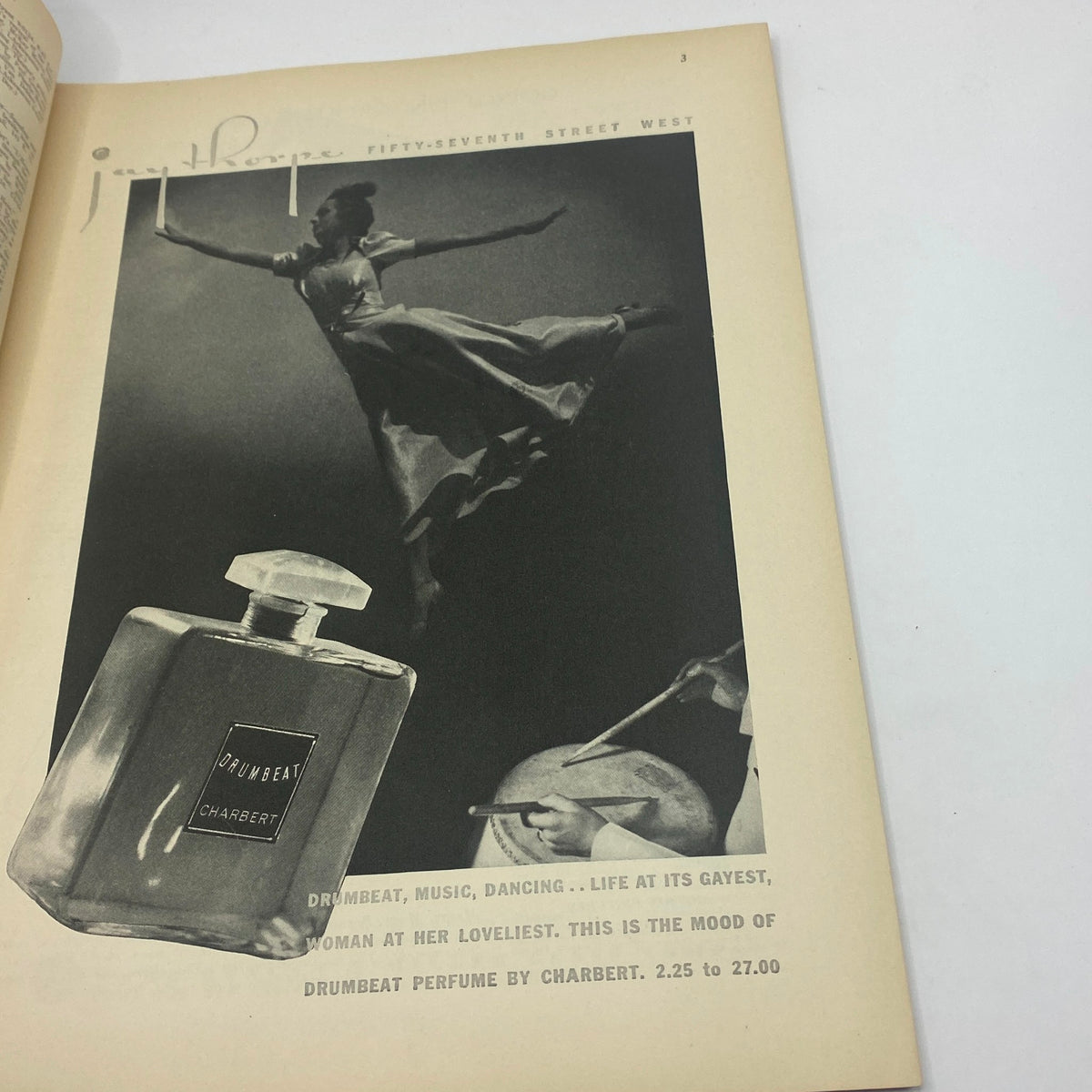
- Period cartoons and advertising: Issues from late 1936 are valued by collectors and cultural historians for the cartoons, spot illustrations, and period advertising that together document the texture of New York life at a pivotal moment in the decade.
Note: Specific article titles, bylines, and interior content for this exact issue have not been independently confirmed beyond what appears in the listing. The highlights above reflect only what is verifiable from the cover credit, publication date, and the magazine's well-documented editorial format during this period.
Condition & Rarity
A surviving copy of a weekly newsstand magazine from November 1936 presenting in very good condition — with minor edge wear as the only noted imperfection — is a strong preservation result for a publication now approaching ninety years old. The New Yorker was printed on acidic wood-pulp paper stock standard for weekly periodicals of the era, a material inherently prone to toning, brittleness, and structural degradation over time. Edge wear of the kind described is the honest and expected consequence of age and does not indicate poor storage or handling. When assessing any surviving copy of this issue, the meaningful criteria are the integrity and color fidelity of Irvin's cover art, the completeness of all interior pages, the absence of subscription label adhesive residue or moisture staining, and the structural soundness of the spine. A copy meeting the standard described — visually strong at nearly nine decades of age, with wear confined to the margins — is precisely the kind of survivor that serious collectors of interwar periodicals actively seek out and value.
Looking for More Issues Like This?
Rea Irvin covers from the mid-to-late 1930s are among the most historically grounded objects in the New Yorker collector market, and this specific November 1936 date — arriving at such a charged political and international moment — is not one that surfaces frequently. If it is no longer available, the extensive original New Yorker collection at OriginalMagazines.com is one of the deepest archives of the magazine accessible to collectors, with issues spanning many decades of the publication's history. For those drawn to the particular intensity of the late Depression years, the full 1936 magazine collection rewards careful exploration — it is a year whose historical weight shows up on every page of every issue that has survived to the present day.