



Description
Collector's Note – Why This Issue Matters
The November 6, 1943 issue of The New Yorker, featuring a cover by Ludwig Bemelmans, is a primary document of the wartime magazine at a specific and historically significant autumn moment, and it adds another chapter to one of the more distinctive and underappreciated artist-magazine relationships in the publication's history. Bemelmans was an Austrian-born writer and illustrator whose cultural formation — the Vienna of the late Habsburg era, the world of European grand hotels and cosmopolitan café life — gave his visual work a quality that was simultaneously American in its humor and European in its elegance. By November 1943 he had published the first Madeline book (1939) and was fully established as both a children's book figure and a sophisticated contributor to adult publications including The New Yorker, where his covers demonstrated a range and wit that his children's book reputation sometimes obscures. His covers for the magazine from the early 1940s belong to a specific phase of his career when he was producing his most confident and accomplished adult illustration work, and they are among the more specifically sought in the wartime New Yorker archive by collectors who know his full body of output. Collectors building a focused archive of wartime New Yorker issues and their cover art will find the New Yorker magazine collection the most comprehensive resource for identifying Bemelmans covers and other significant complete issues from across the publication's most historically charged decades.
November 6, 1943 places this issue at a specific and consequential moment in World War II. The Allied invasion of mainland Italy had begun in September and was proceeding — with considerable difficulty — up the Italian peninsula. American forces had landed at Anzio the previous November in a campaign that would prove far more costly and prolonged than initially anticipated. In the Pacific, the island-hopping campaign was underway. American civilian life in November 1943 was in its third autumn of wartime, with all the accumulated weight of extended conflict: the rationing and war work were no longer novel but simply the established texture of daily life, and the emotional reality of a prolonged war with an uncertain end date was part of every American family's experience. The listing's specific attention to the interior condition — noting well-preserved pages with minimal aging and good readability — is a meaningful positive attribute for a complete issue of this vintage, indicating that the full editorial program of this November 6 date is accessible for research and reading despite the cover's more visible age wear. Collectors focused on the wartime period will find that 1943 magazine issues are among the most historically significant primary documents in the American periodical archive, capturing a year whose military and domestic dimensions were equally extraordinary.
The differentiated condition profile noted for this issue — well-preserved interior alongside a cover showing wear typical for age — is a characteristic and honest condition description for wartime New Yorker issues that have been stored carefully over eight decades. The interior pages, shielded from direct environmental exposure by the cover, frequently preserve better than the cover itself across this length of time, and a complete issue with genuinely good interior condition and readable content is more useful as both a research document and a reading artifact than a cover-worn exterior might initially suggest. For collectors whose primary interest is in the complete editorial contents of a wartime New Yorker — the journalism, fiction, cartoons, and cultural documents that make these issues irreplaceable as primary sources — an issue with this specific condition profile is a more complete and accessible artifact than many surviving examples of the same vintage.
About the Publication
The New Yorker was founded in 1925 by Harold Ross and had established itself by 1943 as one of the most culturally significant weekly magazines in the world, combining long-form journalism, fiction, poetry, criticism, and the distinctive visual identity — cartoons, covers, and illustrations — that had made it immediately recognizable to its educated, urban readership. During the World War II years under Harold Ross's editorship, the magazine produced some of the most enduring American journalism of the century while maintaining the wit, sophistication, and commitment to quality that had defined it from its founding. Ludwig Bemelmans's cover contributions during the wartime period were part of the visual program that gave The New Yorker's wartime archive its distinctive character — covers produced by artists whose individual styles and cultural backgrounds brought a genuine diversity of visual sensibility to the magazine's weekly appearance, and that together constitute one of the most significant bodies of commissioned illustration art produced by any American publication during the war years.
Key Highlights Inside
- Cover painting by Ludwig Bemelmans — a primary artifact of this Austrian-born artist's wartime New Yorker cover work, representing the adult visual register of a figure whose Madeline books had established him in children's literature but whose New Yorker covers demonstrate a cosmopolitan sophistication and European artistic formation that his children's book reputation does not fully capture.
- November 6, 1943 publication date — during the Allied Italian campaign's difficult early autumn phase, in the third wartime autumn of American engagement, placing this issue at a specific moment when the war's duration and cost were becoming fully apparent to the American civilian population that constituted The New Yorker's readership.
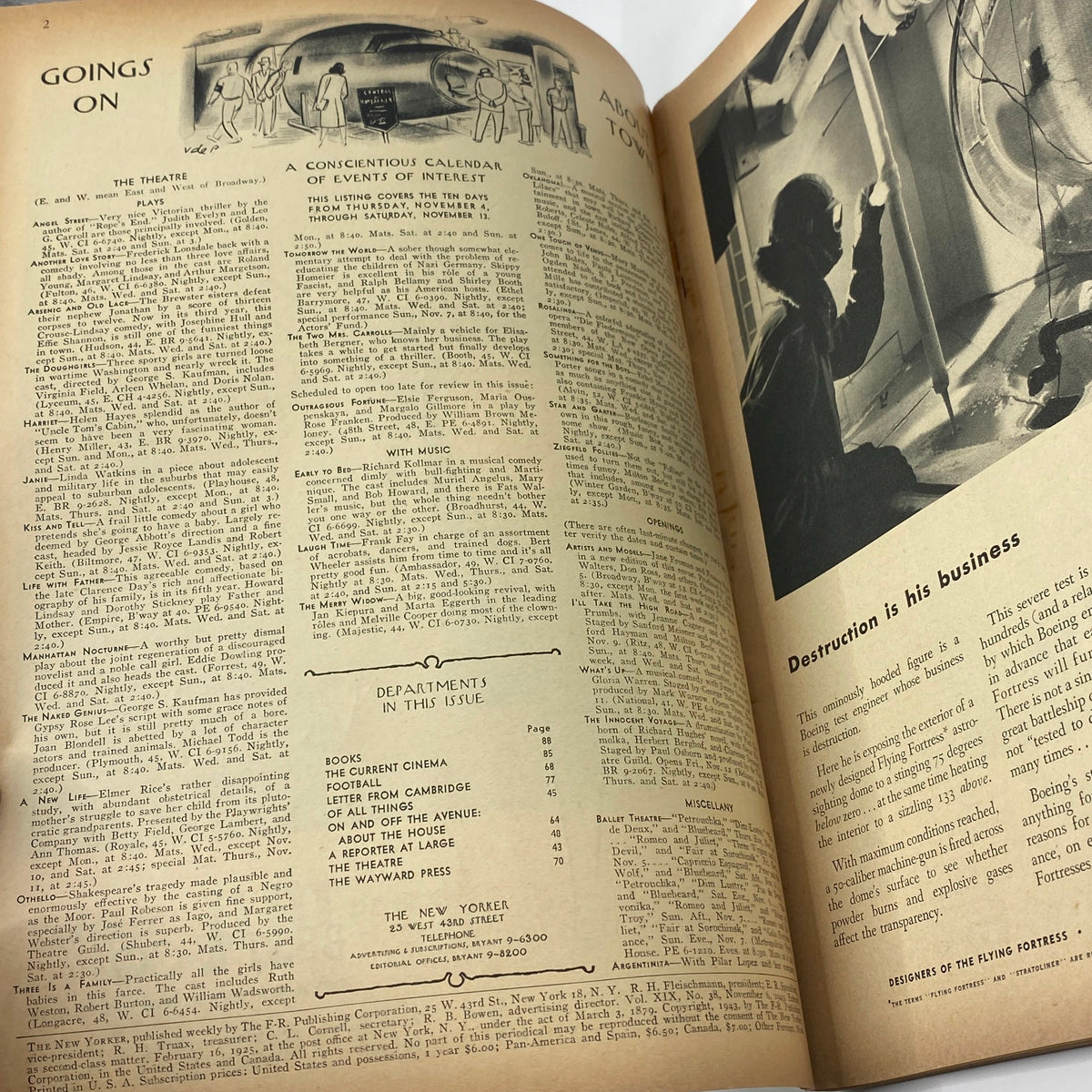
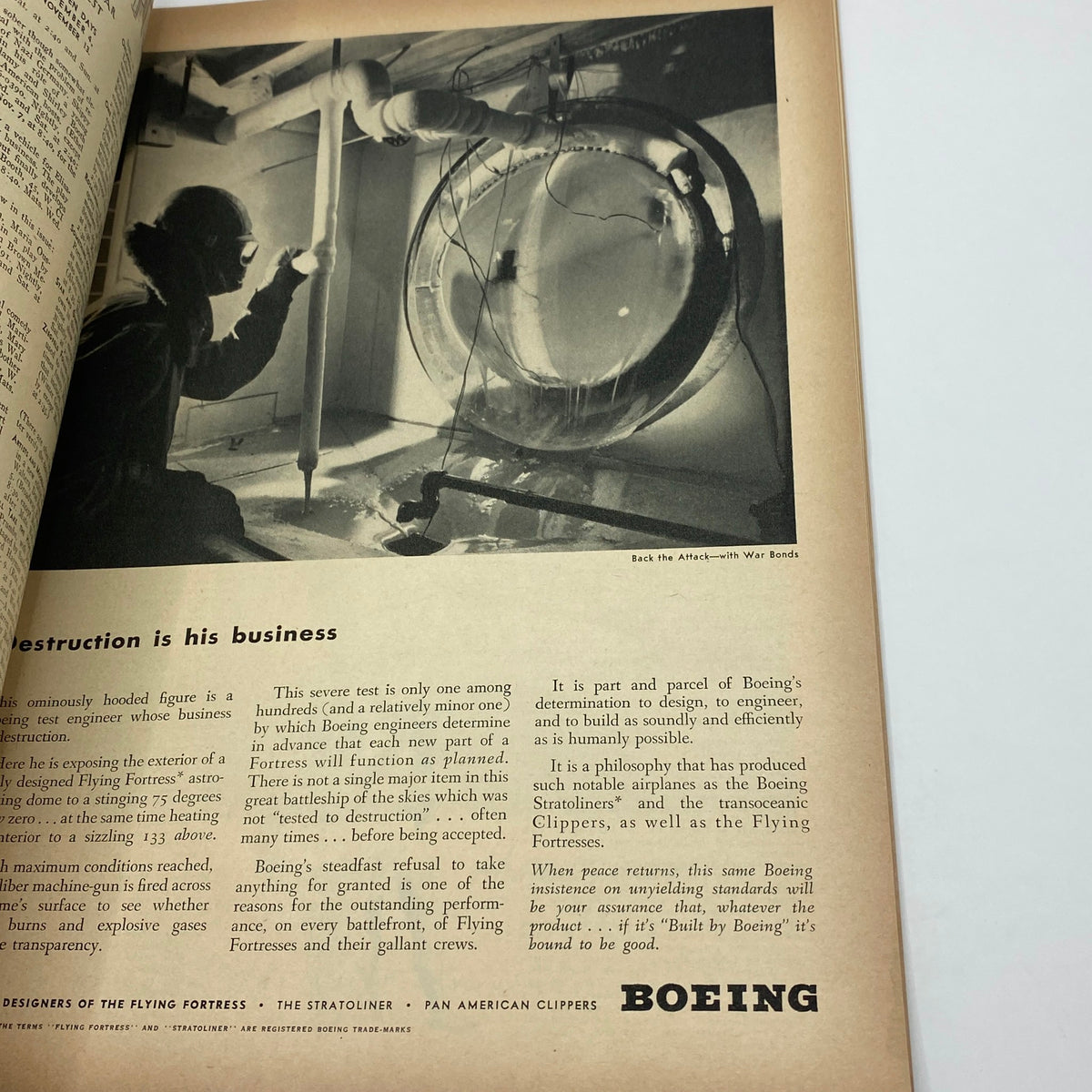
- Well-preserved interior with minimal aging and good readability — a specific and positive condition attribute for a complete issue now more than eighty years old, indicating that the full editorial contents of this wartime New Yorker are accessible for research and reading despite the cover's more visible age wear.
- Complete magazine format — preserving the full editorial program of this specific issue, including whatever journalism, fiction, poetry, criticism, and cartoons The New Yorker assembled for the week of November 6, 1943, providing a complete primary document of the magazine's wartime editorial voice on this specific autumn date.
- Note: Specific interior article titles, fiction contributors, poetry, criticism, and additional editorial content from this issue are unconfirmed beyond what is indicated by the cover artist, date, and condition description. The above reflects what is verifiable from these attributes and the thoroughly documented history of Ludwig Bemelmans's New Yorker career and the wartime editorial context of November 1943.
Condition & Rarity
Good vintage condition overall — with a well-preserved, readable interior and a cover showing wear typical for age — is a transparent and specific condition profile for a complete New Yorker issue from November 1943 now more than eighty years old. The differentiated condition description reflects the characteristic aging pattern of well-stored wartime New Yorker issues: the cover, exposed to whatever light and environmental conditions the magazine experienced during storage, shows more visible aging than the interior pages that it protected. This is a common and expected condition pattern for publications of this vintage rather than an unusual deficiency. The well-preserved interior is the more practically significant attribute for the majority of collector and research uses — a complete issue with genuinely readable content provides full access to the editorial program of this specific November 6 date, including the journalism, fiction, and cartoons that surrounded Bemelmans's cover on a specific wartime autumn Saturday. Cover wear does not eliminate the issue's value as a complete primary document of its era, and collectors who prioritize research access over display presentation will find the interior condition more relevant to their evaluation.
Looking for More Issues Like This?
Complete New Yorker issues from the autumn of 1943 featuring Ludwig Bemelmans cover work — with the additional positive attribute of well-preserved interiors that make the full editorial program accessible for reading and research — are among the more specifically valuable items for collectors interested in the full dimensions of Bemelmans's artistic career or in the wartime magazine's complete editorial program. The broader New Yorker magazine collection is the most reliable starting point for finding other significant complete issues and covers from across the publication's history, including other wartime issues from the early 1940s and other Bemelmans covers from his productive period of contribution to the magazine. Collectors building a focused archive of 1943 as a pivotal wartime year will find the complete 1943 magazine collection an invaluable resource for locating other titles and issues that document this extraordinary year from the multiple perspectives that serious archival research requires.