



Description
Collector's Note – Why This Issue Matters
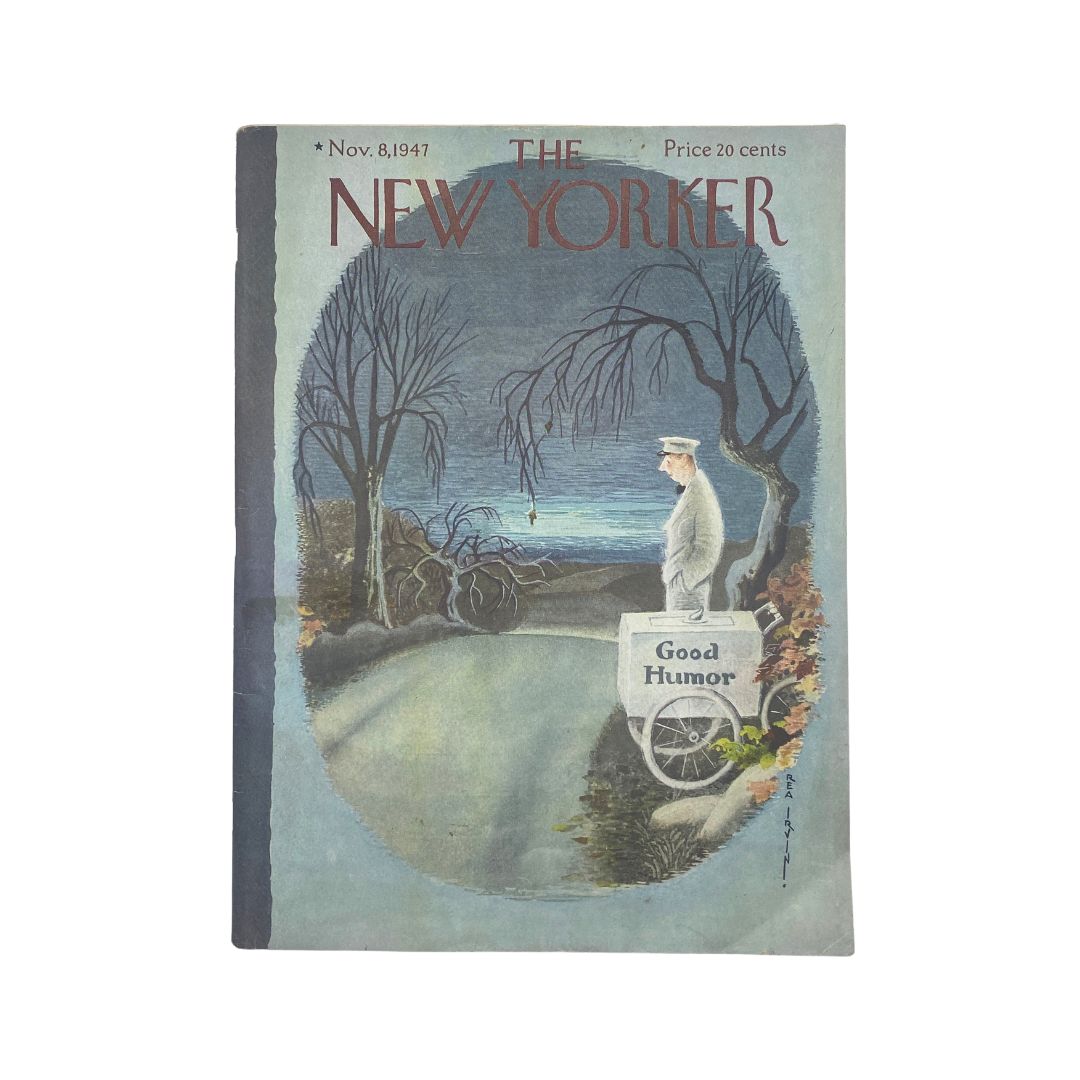
The November 8, 1947 issue of The New Yorker features a cover by Rea Irvin — and that attribution carries a weight in the history of American magazine design that few other names can match. Irvin was not simply a cover artist for The New Yorker. He was the magazine's first art editor, the person who established its visual identity from the very first issue in 1925, and the designer of both the magazine's distinctive typeface and its most enduring icon: Eustace Tilley, the monocled dandy who has appeared on anniversary covers ever since his debut on the inaugural February 21, 1925 issue. By 1947, Irvin had been shaping The New Yorker's visual character for over two decades, and a cover from this late period of his tenure represents the full maturity of the aesthetic sensibility he had built. For collectors building an archive of New Yorker issues with significant cover art and design history, a 1947 Rea Irvin cover is a document of the publication's founding visual intelligence at work — not an early experiment but a refined expression of a style that had by then become synonymous with American wit and sophistication.
The November 8, 1947 date places this issue in the specific atmosphere of postwar American cultural confidence. The war had ended two years earlier, and by late 1947 the United States was settling into a new role as the dominant Western power — prosperous, anxious about communism, and genuinely uncertain about what its postwar identity would look like in cultural terms. The New Yorker of this period was navigating that uncertainty with characteristic self-assurance, maintaining the voice it had developed across the Depression and war years while addressing a readership that was itself in transition. Publications from 1947 document this transitional moment with particular clarity, and a New Yorker from the fall of that year — complete, in very good condition, with a Rea Irvin cover — is a primary artifact of postwar American literary and artistic culture as it was actually being produced, not as it has been retrospectively mythologized.
About the Publication
The New Yorker, founded by Harold Ross in 1925 with Rea Irvin as its first art editor, had by November 1947 established itself as the defining voice of American literary and cultural sophistication across more than two decades of continuous publication. Its combination of fiction, poetry, humor, long-form reporting, criticism, and cover art — all produced to a standard that no competitor matched — gave it a readership that was educated, urban, and culturally engaged. The postwar New Yorker under Harold Ross, who would continue as editor until his death in 1951, retained the wit and precision that had defined the publication while beginning to engage with the larger geopolitical and social questions that the war's conclusion had placed on the American agenda. An issue from November 1947 is a product of that transition period, produced by a publication fully aware of both its own legacy and its evolving moment.
Key Highlights Inside
- Cover illustration by Rea Irvin — the magazine's founding art editor and designer of Eustace Tilley, contributing to the publication he had shaped visually since its first issue in 1925, now in the mature late period of his tenure.
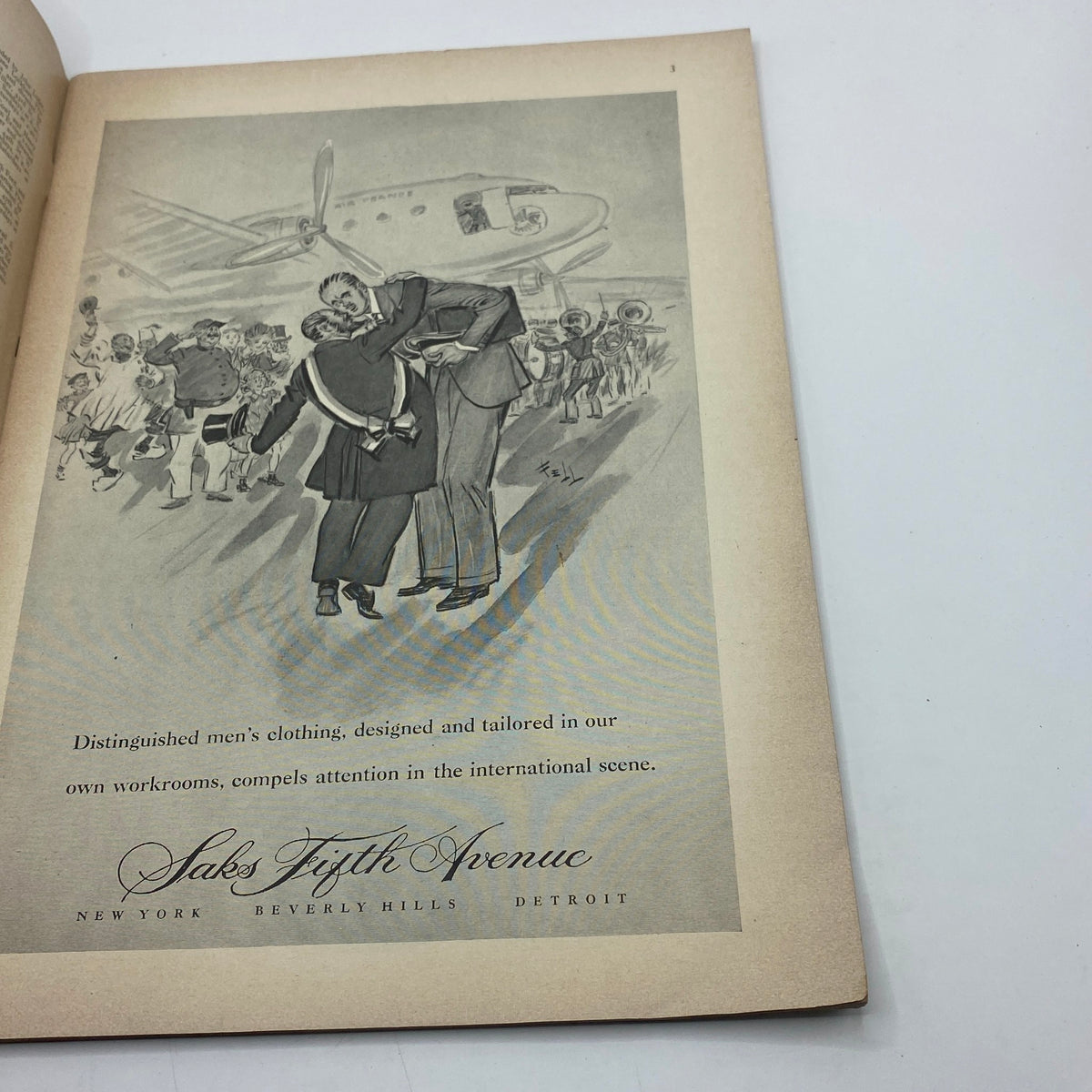
- Complete magazine confirmed in the listing — distinguishing this from cover-only examples and confirming the presence of the full editorial content characteristic of a late-1940s New Yorker issue.
- November 1947 publication date places this issue in the early postwar period of American cultural recalibration — two years after the end of World War II and at the beginning of the Cold War era that would reshape American intellectual and creative life.
- Note: Specific interior articles, fiction, poetry, cartoons, and criticism beyond what is confirmed in the listing are unverified for this issue. The New Yorker's format consistently included these elements, but individual contents for this specific issue are not confirmed here.
Condition & Rarity
Very good condition with only minor edge wear is a genuinely strong rating for a publication now approaching eighty years old. A VG designation for a 1947 New Yorker indicates a copy that has been stored with care across multiple decades — edge wear from handling and storage is expected and does not compromise either the cover art or the interior content. The complete magazine designation is a significant factor: issues from this era are most commonly encountered as cover-only examples or incomplete copies from which specific pieces have been removed, and a fully intact issue in very good condition represents the most desirable configuration for collectors and researchers alike. When evaluating any surviving copy of this issue, the primary condition factors are the clarity and surface integrity of Rea Irvin's cover illustration, the completeness of interior pages, and the degree of toning in the paper stock, which varies significantly in publications of this vintage depending on storage history.
Looking for More Issues Like This?
A complete, very good condition New Yorker from 1947 with a Rea Irvin cover is a configuration that serious collectors of the publication's design history recognize as genuinely desirable — Irvin's postwar covers are less frequently encountered in the collector market than his Depression-era and wartime work. If this one has already found a home, the full archive of New Yorker issues spans the publication's entire run and is worth exploring for other significant cover art and editorial moments. The broader 1947 magazine collection offers additional context for this pivotal postwar year across multiple publications.