




Description
Collector's Note – Why This Issue Matters
The October 11, 1930 issue of The New Yorker featuring a cover by Theodore Haupt arrives from one of the most historically charged years in modern American history. The stock market crash of October 1929 had occurred almost exactly a year before this issue's publication date, and by the autumn of 1930 the economic consequences were becoming impossible to ignore even for a magazine whose editorial identity was built on urban sophistication and a cultivated distance from the merely topical. The New Yorker of October 1930 was navigating the earliest phase of the Great Depression while maintaining the voice and visual ambition that Harold Ross had spent five years constructing — a balancing act that gives issues from this specific year a retrospective weight and historical specificity that those from more stable periods do not carry. The magazine's continued investment in bold, modernist cover art in October 1930 was itself a kind of editorial statement: that elegance and wit were not luxuries to be abandoned in hard times but the very things the publication existed to provide. Collectors building serious archives of early New Yorker material will find the New Yorker magazine archive at OriginalMagazines.com an essential resource for this historically significant stratum of the publication's run.
The cover art is the work of Theodore Haupt, one of the contributing artists who helped define The New Yorker's visual identity in its first decade. Haupt's work for the magazine is associated with the modernist and geometric sensibility that art editor Rea Irvin was cultivating during this period — an American adaptation of European avant-garde design that was sophisticated, visually confident, and distinctly urban in character. His covers from the late 1920s and early 1930s represent a specific and underappreciated chapter in the history of American magazine illustration, produced at a moment when The New Yorker was actively inventing the visual language that would become its signature. An October 1930 Haupt cover is both a document of that invention in progress and a work of early American modernist graphic art in its own right. Those interested in the full cultural and economic landscape of this pivotal year can explore the 1930 magazine archive at OriginalMagazines.com for broader context across American print culture during the Depression's early phase.
About the Publication
The New Yorker was founded in New York City in February 1925 by editor Harold Ross, with financial backing from Raoul Fleischmann, and by October 1930 had completed five and a half years of publication, firmly establishing itself as the definitive weekly journal of American urban literary and cultural life. Its format — Talk of the Town, fiction, poetry, criticism, cartoons, and commissioned cover art — was fully mature by this point, and its contributor roster in 1930 included many of the writers and artists who were actively shaping American literary culture. Rea Irvin's art direction, which oversaw the selection and commissioning of cover artists including Haupt, had by 1930 given the magazine a visual identity as distinctive and recognizable as its editorial voice. Issues from this Depression-era window document the magazine's founding generation at full creative force under conditions that tested the viability of the cosmopolitan project they had built.
Key Highlights Inside
- Cover art by Theodore Haupt, whose geometric and modernist illustration style contributed significantly to The New Yorker's early visual identity under art editor Rea Irvin — representing the magazine's continued investment in avant-garde American graphic design at the outset of the Great Depression.
- Editorial content consistent with The New Yorker's October 1930 format, including Talk of the Town, fiction, poetry, criticism, and cartoon content produced by the founding-era contributor roster at full creative expression.
- Interior cartoons and illustrations by the broader stable of artists contributing to the magazine in 1930, whose collective work in these early Depression-era issues represents some of the most historically layered American graphic humor of the twentieth century.
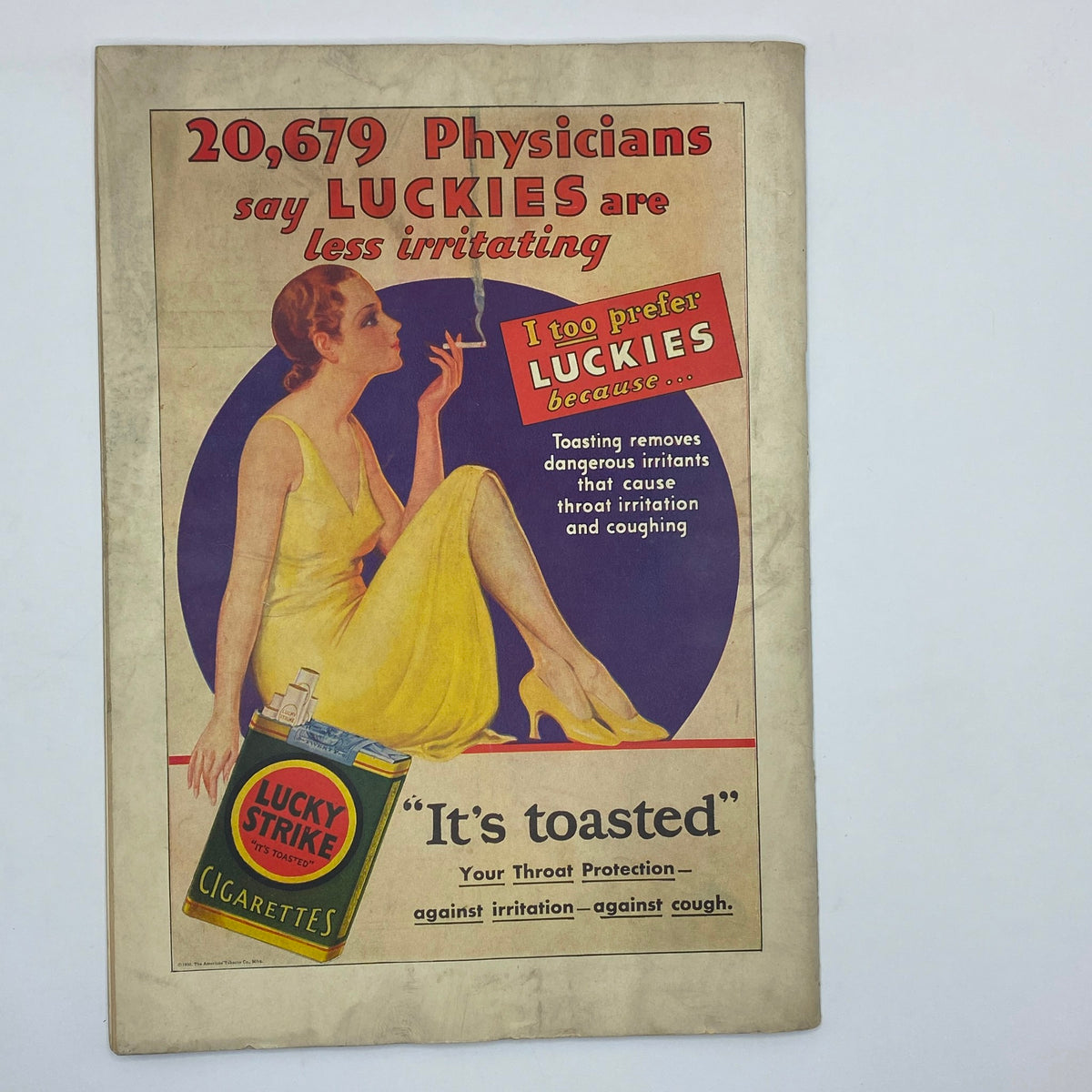
- Period advertising pages reflecting the luxury and consumer economy of New York in October 1930 — a primary-source document of the commercial landscape in the first full year of the Great Depression, as advertisers and publishers alike navigated a rapidly changed economic reality.
- Note: Specific article titles, fiction contributors, and additional interior features beyond what is documented above are not confirmed in available listing details. The above reflects what is verifiable from the cover, artist attribution, publication date, and the well-documented editorial format of the period.
Condition & Rarity
Very good condition for a New Yorker issue from October 1930 is an exceptional grade — this is a publication now approaching its ninety-fifth year of existence, and very good condition implies intact covers with retained color and surface quality, a complete interior page block in sound structural condition, and a spine that has not been compromised by rolling or moisture damage. For a weekly magazine of this vintage, achieving this grade without institutional archiving represents a genuinely unusual survival. The listing does not specify label status, which collectors should confirm directly; label-free newsstand copies are the preferred state in serious collector grading for issues of this period, as subscriber labels — even when intact — represent a surface disruption on the cover. Complete, well-preserved New Yorker issues from 1930 are meaningfully less common than those from the magazine's higher-circulation later decades, and Haupt cover issues carry additional collector interest as works of documented early American modernist illustration above the baseline scarcity of the year.
Looking for More Issues Like This?
A very good condition Theodore Haupt cover issue of The New Yorker from October 1930 is the kind of find that serious collectors of early American graphic art and Depression-era publishing history pursue with real patience — these issues don't come up often in this grade, and when they do, they tend to find homes quickly. If this issue is no longer available, the New Yorker archive at OriginalMagazines.com is the deepest available source for the magazine across its full publishing history, with strong representation in issues from the founding decade. Collectors drawn to the broader cultural and historical richness of the Depression's early phase will also find the 1930 magazine archive worth exploring for primary sources from one of the most consequential years in modern American history.