




Description
Collector's Note – Why This Issue Matters
October 5, 1929 is a date that arrives at the absolute edge of an era. Three weeks after this issue of The New Yorker reached newsstands, the stock market began its catastrophic collapse — the series of crashes beginning October 24 that would end the Jazz Age and usher in the Great Depression. The magazine's readers in early October 1929 had no way of knowing what was coming. What they held in their hands was a product of peak 1920s New York: prosperous, cosmopolitan, witty, and entirely confident in its own sophistication. That makes this issue something more than a vintage periodical. It is one of the last documents of a world that was about to cease to exist. For collectors building through the 1929 magazine archive, the issues immediately preceding the crash carry a particular historical weight that no amount of retrospective publishing could replicate.
The cover art by Theodore Haupt places this issue within a specific and important chapter of The New Yorker's visual identity. The magazine was only four years old in 1929, still establishing the aesthetic language that would define it for generations. Its art directors drew on a roster of contributors whose work reflected the modernist and Art Deco currents running through New York's cultural life, and Haupt's geometric, avant-garde sensibility was consistent with that direction. Cover art in this period was not illustrative in a journalistic sense — it was mood, atmosphere, and cultural positioning, telling the reader immediately what kind of publication they were holding. Collectors of New Yorker issues from the founding decades understand that the covers from this era are among the most visually distinctive the magazine ever produced, and issues with clearly attributed cover artists carry added documentary value.
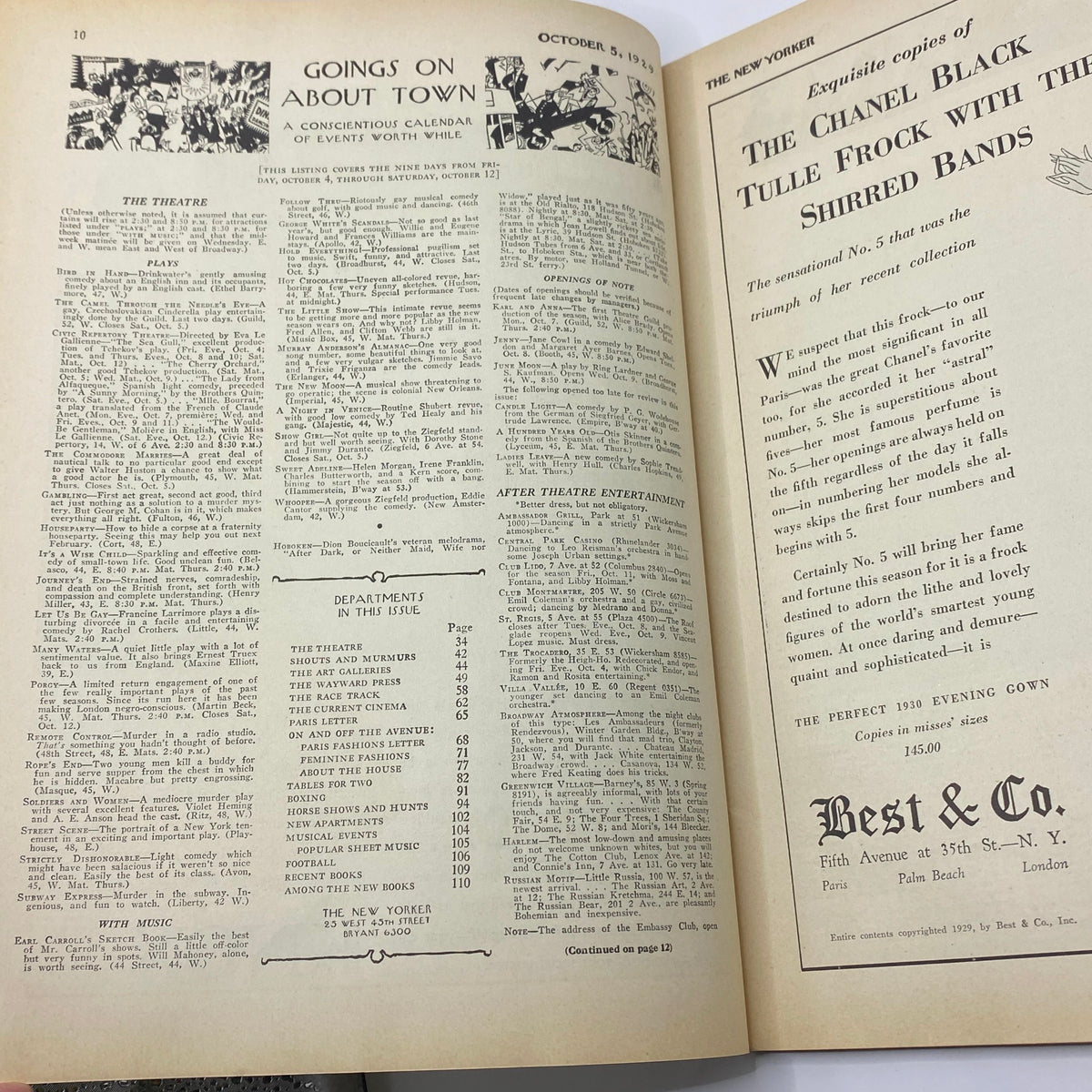
It is worth noting what the interior of a New Yorker issue from October 1929 would have contained in general terms, even without specific article confirmation from this listing. The magazine in this period ran a mix of short humor pieces, Talk of the Town dispatches, criticism across theater and books, cartoons from contributors who would become canonical figures in American illustration, and advertising that reflected the consumer exuberance of the late twenties at full pitch. Reading this issue today means reading the city as it saw itself in the last weeks before everything changed.
About the Publication
The New Yorker was founded in February 1925 by Harold Ross, with backing from Raoul Fleischmann, as a weekly magazine explicitly addressed to the sophisticated urban reader — famously "not edited for the old lady in Dubuque." By 1929 it had survived its uncertain early years and was finding its editorial footing, assembling the writers, cartoonists, and cover artists whose contributions would define American literary and visual humor for the rest of the century. Its format combined short and long-form journalism, fiction, poetry, criticism, and cartoons in a package whose design sensibility was as carefully considered as its prose. Issues from the late 1920s represent the publication in its formative period — before it became an institution, when it was still actively inventing what it wanted to be.
Key Highlights Inside
- Theodore Haupt cover art — The geometric, modernist cover design is the issue's primary visual artifact, representing the Art Deco aesthetic that characterized The New Yorker's early visual identity and distinguishing this issue clearly within the 1929 run.
- Snapshot of pre-crash New York — Published three weeks before the Black Thursday market collapse, the editorial content and advertising together constitute an unaltered record of New York's cultural and commercial life at the peak of 1920s prosperity.
- Period humor, criticism, and cartoons — Consistent with The New Yorker's established 1929 format, the issue would have included Talk of the Town items, short fiction or humor pieces, and cartoons from the roster of contributors active during the magazine's early years. Specific interior content is unconfirmed from the listing.
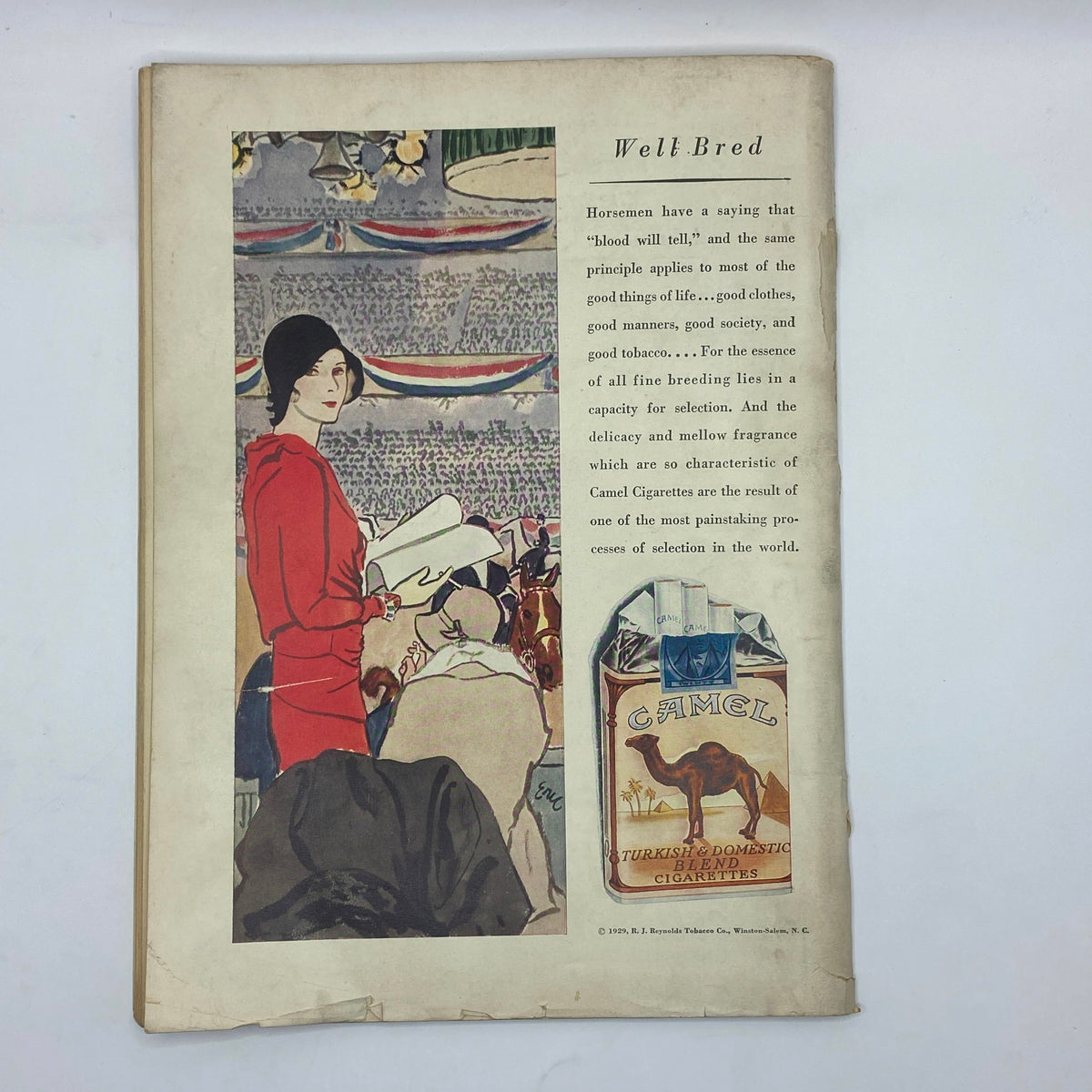
- Late-twenties advertising — Consumer advertising in a late October 1929 issue of The New Yorker represents the visual and commercial language of the Jazz Age at its final moment, making the advertisement pages historically significant in their own right.
Condition & Rarity
Any surviving complete copy of a New Yorker issue from 1929 commands serious attention on condition grounds alone. The magazine was printed on paper stock that was not designed for longevity, and nearly a century of potential exposure to light, humidity, and handling has taken its toll on the vast majority of copies that were not deliberately preserved. A copy described as good condition for its age — accompanied by a protective plastic sleeve — suggests structural integrity: pages that have not separated from the binding, a cover that retains its image clarity, and paper that has not deteriorated beyond the toning and mild brittleness expected at this age. The completeness of the issue, noted in the title, is itself a meaningful qualifier; many surviving copies of magazines this old have had pages removed, marked, or damaged over decades of handling. Collectors evaluating any copy of this issue should prioritize spine condition, cover color retention, and the absence of moisture damage or significant paper loss.
Looking for More Issues Like This?
Complete, collectible-grade copies of The New Yorker from 1929 are genuinely scarce — fewer survive in any condition than issues from even five years later, and the pre-crash issues carry historical significance that puts them in particular demand. The New Yorker collection is the best place to search across the magazine's long run, with holdings spanning from its founding decade through later eras. For collectors focused on the year itself, the 1929 magazine archive gathers material from across publications at this singular historical hinge point.